
Organizing a nursery requires a thoughtful balance between immediate accessibility for daily care and long-term safety as your child grows. The ideal storage setup adapts to your baby’s developmental stages, transitioning from a caregiver-focused space into an environment that encourages independent exploration. By selecting the right types of storage boxes for toys, books, and clothing, you can create an orderly, calm, and functional room that simplifies daily routines.
To achieve this, you must match the physical characteristics of each storage container to the specific items it will hold. Lightweight fabric bins prevent injuries during active play, while sturdy, front-facing story box units keep favorite books within a toddler’s reach. Meanwhile, sealed containers protect delicate linens from environmental factors. Understanding how to evaluate these options ensures your nursery remains both highly functional and safe.
Key Safety and Material Criteria for Nursery Storage
Before purchasing any nursery storage container, safety must be your primary consideration. Toddlers frequently use furniture and storage boxes to pull themselves up to a standing position, making stability a critical factor. Any tall shelving unit or heavy chest used to hold storage boxes must be securely anchored to the wall using appropriate furniture straps or brackets. When selecting individual boxes, look for designs with rounded corners and smooth edges to minimize the risk of cuts or bruises during inevitable bumps and falls.
Products mentioned in this guide
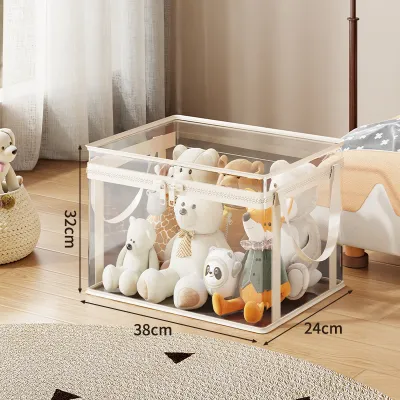
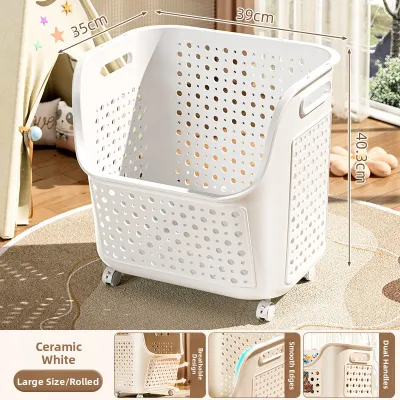
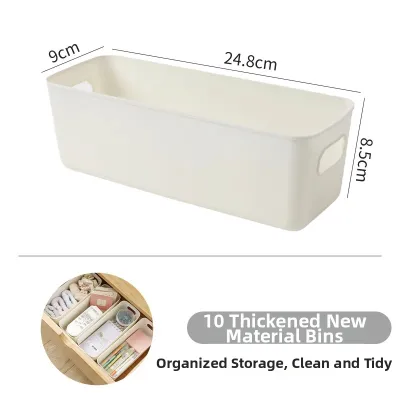
Prices are valid at publication and may change. Please refer to the product page for the latest price.
If you choose storage chests or large boxes with lids, pay close attention to the hinge mechanism. Heavy, free-falling lids pose a significant risk of pinching small fingers or trapping a child inside. Opt for containers featuring safety-stop hinges, slow-close tension mechanisms, or lids that are completely removable and lightweight. Additionally, look for designs that incorporate safety gaps or cutouts along the rim, ensuring that even if the lid closes fully, there is still a gap to protect delicate hands and allow airflow.
Material composition is another vital checkpoint for nursery items. Young children explore their world through touch and taste, meaning storage surfaces must be free from harmful chemicals. When buying wooden or painted storage boxes, verify that the manufacturer uses non-toxic, lead-free, and water-based finishes. For plastic containers, check labels to ensure they are free from bisphenol A (BPA) and phthalates. Fabric bins should be made from breathable, natural fibers like cotton or canvas, which do not trap moisture or off-gas synthetic chemicals.
Finally, consider the ease of cleaning and maintenance. Nursery items are prone to spills, spit-up, and sticky fingerprints. Storage boxes with smooth, non-porous surfaces can be wiped down quickly with a damp cloth and mild soap. If you prefer fabric bins, look for options with removable, machine-washable liners or those made from heavy-duty canvas that can be spot-cleaned easily. Keeping storage containers clean helps maintain a hygienic environment for your growing baby.
Matching Storage Box Types to Different Toy Categories
Toys come in an endless variety of shapes, sizes, and materials, meaning a single storage style rarely fits all. For lightweight items such as plush toys, rattle socks, and soft building blocks, open fabric or canvas bins are highly practical. These soft-sided containers are flexible, lightweight, and forgiving. If a toddler pulls a fabric bin down from a low shelf, the bin itself will not cause injury, making it an excellent choice for self-serve toy access.

For smaller, multi-piece toy sets like wooden blocks, train tracks, or plastic figures, clear plastic bins offer distinct advantages over opaque options. Clear containers allow you to see the contents at a glance, reducing the time spent searching for specific pieces and minimizing the frustration of tipped-over boxes. However, a room filled entirely with clear bins can look visually cluttered. To balance functionality with aesthetics, consider using opaque woven baskets on lower shelves for general toys, while reserving clear, lidded bins on higher shelves for toys that require adult supervision.
If you plan to use a large, traditional toy chest with a heavy lid, you must verify its ventilation features. Children often view large boxes as inviting hiding spots during play. To prevent suffocation hazards, any large, lidded container must have built-in ventilation holes or a permanent gap between the lid and the box frame. If a vintage or heirloom toy chest lacks these safety features, consider removing the lid entirely or replacing the hinges with safety-approved, slow-closing hardware before placing it in the nursery.
Weight limits are equally important when organizing toys. Heavy wooden blocks, metal toy cars, and electronic toys should never be stored in large, deep boxes. When heavy items are piled together, the container becomes difficult to move and poses a tipping hazard if a child attempts to climb on it. Instead, distribute heavy toys across several small, shallow bins placed on the lowest shelves of your storage units. This keeps the center of gravity low and ensures that individual boxes remain light enough for safe handling.
Organizing Books: Choosing Story Boxes and Display Bins
Introducing books early in life supports cognitive development, but traditional bookshelves are often impractical for babies and toddlers. Standard shelves display only the spines of books, which does not appeal to young children who cannot yet read. A front-facing story box or display bin solves this issue by showcasing the front covers of books. This visual presentation captures a child’s interest, encourages them to select books independently, and fosters early visual literacy.
When selecting a story box, pay close attention to the depth of the compartments and the overall weight capacity. Board books are dense and heavy; a small collection can quickly add up in weight. Ensure the story box is constructed from sturdy materials, such as solid wood or reinforced engineered wood, that will not bow or sag under pressure. The compartments should be deep enough to hold books securely without allowing them to flop forward, yet shallow enough that a toddler can easily grasp the top of the cover.
Stability is paramount for any freestanding story box placed on the floor or a low table. Because children will pull on the frame to reach their favorite books, the unit must have a wide, stable base and a low center of gravity. Avoid tall, narrow book displays that can easily tip forward. If you are placing a story box on top of a chest of drawers or a shelf, ensure it is pushed back completely and secured so it cannot be pulled down by an eager child.
For smaller nurseries, portable story boxes with built-in handles offer excellent flexibility. These compact bins allow you to move a curated selection of books from the nursery to the living room or bedside easily. When choosing a portable option, verify that the handle is smooth, rounded, and integrated into the frame rather than attached with small screws that could loosen over time. This ensures the bin remains safe for both you and your child to carry.
Efficient Storage Solutions for Baby Clothes and Linens
Managing baby clothing requires a system that accommodates rapid growth and frequent changes. For out-of-season garments, next-size-up clothing, and spare bedding, protection from environmental elements is essential. In Singapore’s warm and humid climate, moisture can quickly accumulate in dark closets, leading to mold, mildew, and musty smells. To protect these textiles, store them in airtight, sealed plastic containers with secure latching lids. Placing these boxes on upper closet shelves keeps them clean, dry, and out of the way until needed.
For daily essentials like onesies, sleepsuits, swaddles, and burp cloths, open-front bins and drawer dividers are far more efficient. During a diaper change, you often have only one hand free to retrieve fresh clothing. Open-front bins allow you to reach in and grab what you need without wrestling with lids or zippers. Drawer dividers help categorize small items like socks, beanies, and mittens, preventing them from getting lost in larger drawer spaces and streamlining your dressing routine.
While vacuum storage bags are popular for reducing the volume of bulky bedding, they have notable limitations in a nursery setting. Extreme compression can damage delicate baby fabrics, flatten the loft of sleeping bags, and crease garments permanently. Furthermore, because baby clothes are rotated frequently as the child grows, the process of sealing and unsealing vacuum bags can become tedious. Reserve vacuum sealing for long-term storage of bulky items like winter travel gear, and stick to accessible, rigid boxes for standard nursery linens.
Building Your Nursery Storage Pre-Purchase Checklist
Before purchasing new storage boxes, taking precise measurements of your nursery layout will save time and prevent costly returns. Measure the height, width, and depth of changing table shelves, under-crib clearances, and wardrobe alcoves. When selecting boxes, allow at least a two-centimeter clearance on all sides. This small gap ensures that bins can slide in and out smoothly without scraping the furniture or requiring excessive force, which is especially important when you are holding a baby.
Always verify manufacturer labels and product specifications before finalizing your purchase. Look for clear indications of safety certifications, age-appropriate usage warnings, and maximum weight limits. Avoid buying generic storage boxes that lack clear material disclosures, as these may contain harmful chemicals or lack the structural integrity required for a child’s room. Investing in certified, nursery-safe products provides peace of mind and long-term durability.
A successful nursery organization plan balances visual calm with practical accessibility. Aim for a strategic mix of closed storage (such as lidded boxes and closet drawers) and open storage (such as low fabric bins and story boxes). Closed storage hides visual clutter and protects items from dust, while open storage allows your child to access and put away their toys independently. This balanced approach creates a serene environment that supports your child’s growing independence.
Frequently Asked Questions (FAQ)
Are plastic storage boxes safe for a baby's room?
Yes, plastic storage boxes are safe for a nursery, provided you verify their material composition. Always look for food-grade plastics labeled as BPA-free and phthalate-free to ensure they do not leach harmful chemicals. Avoid cheap, brittle plastics that can crack or splinter easily, as broken edges can be sharp and pose a cutting hazard. Additionally, if you use large plastic bins with lids, ensure they have ventilation holes or are kept in areas where children cannot climb inside them.
How do I stop a storage box from tipping over?
To prevent storage boxes and their shelving units from tipping, always place the heaviest items, such as wooden blocks or heavy board books, in the lowest bins to keep the center of gravity close to the floor. Ensure that any freestanding shelving unit, bookcase, or dresser holding your storage boxes is securely anchored to the wall with furniture straps. Finally, choose storage boxes with a wide, stable base footprint and avoid stacking lightweight boxes too high on open shelves.

Community discussion
Share your experience or ask a question. Comments are reviewed before publication.