
Quick Answer: Is Nino Nana Ultra Thin Right for Your Baby?
When selecting a diaper in Singapore’s tropical climate, balancing physical bulk with reliable performance is a daily challenge for parents. The choice of a diaper like the Nino Nana Ultra Thin represents a specific design philosophy: prioritizing maximum breathability, reduced physical weight, and unrestricted mobility. This profile is highly suitable for daytime wear and active, crawling, or walking babies who benefit from a lighter, less restrictive fit.
However, choosing an ultra-thin diaper involves an inherent structural trade-off. Thinner diaper cores generally contain a lower total liquid capacity than their thicker, fluffier counterparts designed specifically for overnight use. Consequently, while they excel at keeping babies dry and comfortable during active daytime hours, they may require more frequent changes if your baby is a heavy wetter or during extended periods without a change.
As a practical rule of thumb, opt for this ultra-thin profile to support daytime movement and combat heat buildup in humid conditions. Conversely, consider transitioning to a thicker, high-capacity alternative for uninterrupted nighttime sleep or long outings where regular changes are impractical.
Products mentioned in this guide
![Nino Nana Baby Ultra-Thin Diaper Pants Carton [Bundle of 3] | M (6–11kg) / L (9–14kg) / XL (12–18kg) / XXL (15–23kg)](https://img.lazcdn.com/g/p/7f7b9dc0c6c0f8064ef573b692608178.png_400x400q80.png_.webp)
![Nino Nana Baby Ultra-Thin Diaper Pants Carton [Bundle of 3] | M (6–11kg) / L (9–14kg) / XL (12–18kg) / XXL (15-23kg)](https://img.lazcdn.com/g/p/e3895e7be18734ce4727d87c9a7ea234.jpg_400x400q80.jpg_.webp)
![Nino Nana Baby Ultra-Thin Diaper Pants Carton [Bundle of 3] | M (6–11kg) / L (9–14kg) / XL (12–18kg) / XXL (15–23kg)](https://img.lazcdn.com/g/p/9957fd368e89aa37136aced2c374aedf.png_400x400q80.png_.webp)
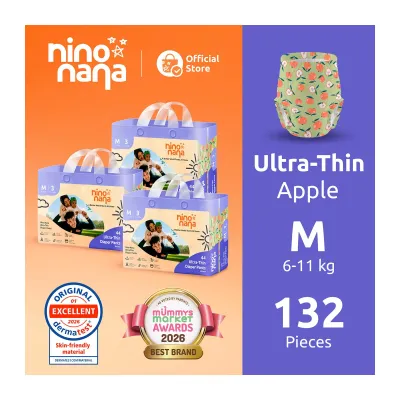
![Nino Nana Baby Ultra-Thin Diaper Pants [Single Pack] M(6-11kg) | L(9-14kg) | XL(12-18kg) | XXL(15-23kg)](https://img.lazcdn.com/g/p/f9608196ff35fc1c15c32d0121bf69a9.png_400x400q80.png_.webp)
Prices are valid at publication and may change. Please refer to the product page for the latest price.
Comfort and Breathability: Navigating the Climate with Thin Diapers
In Singapore, where daily temperatures and relative humidity levels remain consistently high, a diaper’s microclimate is a critical factor in infant skin health. Traditional thick diapers often trap warm, moist air against a baby’s delicate skin, creating an environment ripe for diaper dermatitis and painful heat rashes. Ultra-thin diapers address this issue by reducing the physical barrier between the baby’s skin and the surrounding air, allowing heat and moisture vapor to escape more efficiently.

Beyond temperature regulation, the physical thickness of a diaper directly influences a baby’s motor development and comfort. A bulky diaper can unnaturally widen a baby’s stance, potentially affecting their gait as they learn to crawl, cruise, and walk. A streamlined, thin core fits snugly between the legs without bunching, allowing for a more natural range of motion and reducing friction against the inner thighs during active play.
When evaluating different brands on the shelf or online, parents should look past marketing claims and verify specific physical features on the product packaging. Inspect the backsheet—the outermost layer of the diaper—to ensure it is made of a microporous, breathable material rather than a plastic-like film. Additionally, feel the inner top sheet and the waistband; these should consist of soft, non-woven fibers with high elasticity to prevent red marks and chafing around the waist and legs.
It is worth noting that a diaper’s plushness does not dictate its drying capability. While thin diapers lack the cushiony feel of wood-pulp-heavy alternatives, they utilize advanced super absorbent polymers (SAP) designed to lock moisture away rapidly. This ensures the surface remains dry to the touch, protecting the skin barrier even without thick layers of physical padding.
Absorbency Realities: What to Expect from an Ultra-Thin Core
To understand how an ultra-thin diaper performs, parents must distinguish between two critical performance metrics: absorption speed and total fluid capacity. Absorption speed refers to how rapidly the top sheet draws wetness away from the skin surface, whereas total capacity is the maximum volume of liquid the diaper can hold before structural failure occurs. Ultra-thin diapers are engineered to optimize speed, utilizing advanced distribution channels to pull liquid downward instantly.
Because these diapers lack thick layers of fluff pulp, they rely almost entirely on high concentrations of Super Absorbent Polymers (SAP) arranged in structured sheets. Modern diaper engineering uses multi-channel designs to guide urine evenly across the entire length of the core. This structural distribution prevents the diaper from clumping or sagging heavily in the front, a common issue that can restrict movement and cause premature leaks when a baby sits or crawls.
Parents can monitor real-world performance by observing how the diaper behaves when fully wet. A high-quality ultra-thin core should maintain its structural integrity, expanding uniformly rather than sagging into a heavy, wet ball between the baby’s legs. Additionally, check your baby’s skin during changes to ensure no gel beads have escaped from the core, and monitor for compression leaks, which occur when moisture is squeezed out of the diaper when the baby sits down firmly or rolls over.
While these thin profiles are highly efficient at handling regular daytime voids, they do have physical limits. The absence of a thick pulp buffer means they may reach their saturation point faster than dedicated overnight diapers. For long, uninterrupted sleep stretches of 10 to 12 hours, a thicker core with a higher ratio of absorbent material remains the standard choice to prevent early morning leaks.
Practical Comparison Checklist: Nino Nana vs. Other Brands
To make an objective comparison between Nino Nana Ultra Thin and competing brands, parents should look at verifiable specifications rather than generic brand promises.
Sizing and Fit Dimensions
Diaper sizing is not standardized across brands; a size “Medium” in one brand may fit like a “Small” in another. Always check the weight ranges printed on the packaging, but also look at the physical cut of the diaper. If your baby has chubby thighs, look for brands with highly elastic, double-layered leg cuffs that stretch comfortably without digging into the skin, as a poor fit is the most common cause of leaks.
Core Construction
Examine the diaper’s core technology. Look for packaging indicators that mention multi-channel distribution or 3D leak guards along the sides. These physical barriers are crucial for thin diapers, as they provide a secondary line of defense against sudden, high-volume voids before the SAP has time to fully absorb the liquid.
Skin Sensitivity and Chemical Processing
For babies with eczema, highly reactive skin, or allergies, the chemical composition of the diaper is paramount. Read the ingredient list and packaging labels carefully to verify claims such as “fragrance-free,” “lotion-free,” “latex-free,” and “elemental chlorine-free (ECF)” or “totally chlorine-free (TCF).” Do not rely solely on the term “hypoallergenic,” as this is not a legally binding standard; instead, look for independent dermatological testing certifications.
Wetness Indicators
A reliable, color-changing wetness line on the outside of the diaper is an invaluable tool for thin profiles. Because ultra-thin diapers do not bulk up as noticeably as traditional diapers when lightly wet, a clear visual indicator helps parents time their changes accurately, preventing unnecessary diaper waste while ensuring the baby does not sit in moisture for too long.
Final Decision Framework: Matching the Diaper to Your Baby's Routine
Choosing the right diaper ultimately depends on matching the product’s specific strengths to your baby’s unique daily routine and physical needs.
Choose Nino Nana Ultra Thin if:
- Your baby is highly active, crawling, or walking, and requires maximum freedom of movement without bulky padding.
- You are selecting a diaper primarily for daytime use, where changes occur regularly every few hours.
- You live in a hot, humid climate like Singapore and want to minimize the risk of heat rash by maximizing airflow around the diaper area.
- Your baby dislikes the heavy, restrictive feel of traditional thick diapers.
Choose a thicker or dedicated overnight competitor if:
- Your baby is a heavy wetter who consistently leaks through standard diapers during long sleep stretches.
- You need a diaper that can reliably last through a 10-to-12-hour uninterrupted night without a change.
- You frequently notice compression leaks when your baby sits or rolls over shortly after wetting the diaper.
Verify first before purchasing: If your baby has highly sensitive skin, a history of severe diaper dermatitis, or eczema, always consult your pediatrician or a qualified dermatologist before switching brands. When trying any new diaper brand, avoid buying bulk cartons on e-commerce platforms initially. Instead, purchase a single trial pack or request a sample to perform a fit and skin-compatibility test over a few days before committing to a larger purchase.
Frequently Asked Questions (FAQ)
Do ultra-thin diapers cause more diaper rash?
No, diaper thickness itself does not cause diaper rash. Skin irritation is primarily caused by prolonged exposure to wetness, friction, and trapped heat. In fact, ultra-thin diapers can help reduce heat-related rashes in tropical climates by facilitating better airflow and heat dissipation, provided they are changed promptly once soiled.
How often should I change an ultra-thin diaper compared to a regular one?
While ultra-thin diapers absorb liquid rapidly, their total capacity is generally lower than thick, pulp-heavy diapers. It is recommended to check the diaper every 2 to 3 hours during the day and change it immediately after any bowel movement, regardless of the diaper’s design or thickness, to maintain optimal skin health.
Can I use Nino Nana Ultra Thin for overnight sleep?
Whether an ultra-thin diaper works overnight depends on your baby’s age, feeding schedule, and bladder capacity. For younger infants who wake frequently for night feeds and are changed regularly, it may perform well. However, for older babies who sleep through the night or are heavy wetters, a thicker, dedicated overnight diaper is usually necessary to prevent leaks.

Community discussion
Share your experience or ask a question. Comments are reviewed before publication.