
When evaluating how Nature Made Pants L compare to other diaper brands in Singapore, parents must look beyond marketing claims to practical, observable metrics. Because independent laboratory test data is rarely accessible to the public, making an informed choice requires a systematic approach: evaluating packaging specifications, calculating the true cost per piece, and observing real-world performance signals on your baby. This guide establishes a practical evaluation framework based on absorbency, fit, and overall value to help you determine if this specific diaper size and style suit your baby’s daily needs.
Understanding the Baseline: What to Check on the Packaging
Before purchasing or using any diaper, the first step is to carefully review the specifications printed on the packaging. Size L is not standardized across all brands, meaning the recommended weight range can vary significantly. Check the packaging of Nature Made Pants L to verify its specific weight limits and compare them directly with your baby’s current weight, keeping in mind that a baby’s physical build also affects how the diaper fits.
Next, examine the material claims listed by the manufacturer. Look for specific callouts such as breathable outer layers, lotion-free compositions, or hypoallergenic certifications. In Singapore’s humid climate, trapped moisture can quickly lead to skin irritation, so cross-referencing these material claims with your baby’s known skin sensitivities is essential for maintaining skin health.
Products mentioned in this guide
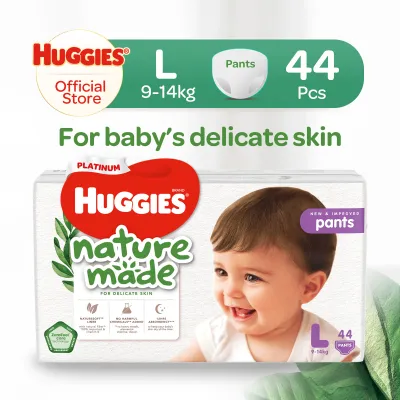
![[1 Carton] Huggies Platinum Naturemade Pants L](https://img.lazcdn.com/g/p/3fa3077f8c815e9be8e7ba61714196db.jpg_400x400q80.jpg_.webp)
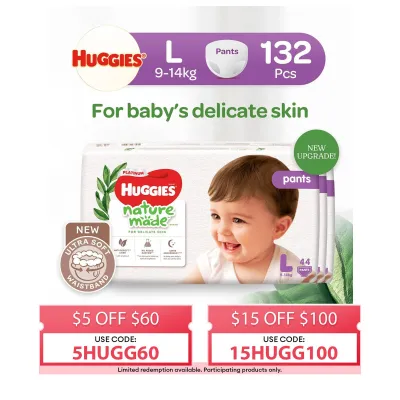
![[1 Carton] Huggies Platinum Naturemade Pants](https://img.lazcdn.com/g/p/24f017e4526d20cada55cffc39a424f6.png_400x400q80.png_.webp)
Prices are valid at publication and may change. Please refer to the product page for the latest price.
Additionally, review the description of the diaper’s absorbent core structure. Some brands highlight channel-based designs meant to distribute liquid evenly, while others rely on traditional pulp-based cores. Comparing these structural descriptions with those of competing brands gives you an initial indication of how the diaper might handle liquid distribution and whether it is designed to prevent sagging when wet.
Finally, always check the packaging for manufacturer warnings, proper disposal instructions, and safety guidelines. Diaper performance and skin compatibility are highly individual, so starting with a smaller pack to verify these baseline specifications on your baby is a practical way to avoid wasting money on bulk purchases that may not suit your needs.
Evaluating Absorbency in Real-World Use
To assess how well Nature Made Pants L perform compared to other brands, you must observe how they handle moisture during daily wear. Start by monitoring the wetness indicator line on the diaper. Note how quickly and clearly the line changes color under different levels of saturation, as a responsive indicator helps you time diaper changes accurately and prevents unnecessary waste.

Another critical test is checking for dampness on both the outer surface of the diaper and your baby’s skin after a standard wearing period of two to three hours. When you remove the diaper, the baby’s skin should feel dry to the touch. If you consistently notice dampness or cold skin, the diaper’s core may not be locking moisture away effectively, which can increase the risk of diaper rash.
Observe how the diaper performs during high-output periods, such as immediately after heavy fluid intake or when your baby wakes up from a nap. Compare the frequency of leaks during these times with other diaper brands you have used. If leaks occur frequently through the back or leg gathers, it suggests the diaper’s absorption speed or capacity may not be sufficient for your baby’s current developmental stage.
Keep a close eye on your baby’s skin health throughout this evaluation period. In warm, tropical climates, a diaper that fails to dry quickly can create a moist environment that encourages bacterial or fungal growth. If you notice persistent redness or irritation in the diaper area, consult a qualified healthcare professional for guidance rather than relying solely on diaper changes.
Assessing Fit and Comfort for Active Babies
A diaper’s fit is just as important as its absorbency, especially for active babies who are constantly moving. Immediately after removing a diaper, inspect your baby’s waistband and leg cuffs for any red marks or deep indentations. If you notice marks that do not fade within ten to fifteen minutes, the elastic may be too tight, or the diaper’s cut may not align with your baby’s body shape.
Evaluate the stretchability of the waist and side panels while your baby is playing, rolling, or crawling. The elastic should provide a secure, snug hold that keeps the diaper in place without restricting your baby’s breathing or abdominal movement. A diaper that slips down easily or bunches up during play can cause discomfort and increase the likelihood of leaks.
Pay close attention to the leg gathers, which serve as the primary barrier against side leaks. Ensure the double-layered cuffs are fully flared outward after putting the diaper on, and check for any visible gaps around the thighs when your baby bends their legs. Gaps in this area are a common cause of leaks, particularly when the baby passes loose stools.
Remember that babies grow in spurts, and their body proportions change rapidly as they transition from crawling to walking. A diaper brand that fit perfectly a month ago may suddenly start leaking or causing red marks. Regularly reassessing the fit and being open to adjusting the size or brand ensures your baby remains comfortable and leak-free.
Calculating True Value and Cost Per Diaper
To determine the true financial value of Nature Made Pants L compared to other brands, avoid comparing only the total price of the packaging. Instead, use the cost-per-diaper formula: divide the total price of the pack by the number of diapers inside. For example, if a pack costs S$24 and contains 40 diapers, the cost per piece is S$0.60, which allows for an accurate comparison across different brands and pack sizes.
While bulk buying from online marketplaces often offers a lower cost per diaper, you must weigh these savings against the risk of your baby outgrowing size L. If your baby is near the upper weight limit of the size range, purchasing multiple cartons at once may leave you with leftover diapers that no longer fit, which ultimately increases your overall expenses.
When shopping online in Singapore, factor in potential hidden costs such as shipping fees or minimum spend requirements. Many ecommerce platforms offer promotions or free shipping only when you meet a specific spending threshold, such as S$40 or S$60. Calculate whether adding more items to your cart to qualify for these deals actually saves you money or simply increases your total spend.
Additionally, consider your home’s storage capacity before committing to bulk purchases. In typical high-rise apartments where space is limited, storing several large boxes of diapers can be inconvenient. Balancing the per-piece savings of bulk orders with your available storage space and your baby’s growth rate is key to finding the best overall value.
Decision Framework: When to Choose Nature Made Pants L
Nature Made Pants L can be a highly suitable choice for daytime use if they align with your household budget and accommodate frequent changes. If your baby has sensitive skin and shows no signs of irritation while wearing them, and the diaper fits snugly without leaving red marks, it serves as a reliable option for active daytime play.
However, if you consistently observe morning leaks, wet pajamas, or heavy saturation that causes your baby to wake up uncomfortable, you may want to evaluate your overnight diapering strategy. Some diapers that perform excellently during the day may not have the capacity required for twelve hours of uninterrupted sleep, making a dedicated overnight diaper a better choice for bedtime.
Before deciding that a diaper brand is ineffective, verify your baby’s current weight and physical build. If your baby is approaching the upper limit of the size L weight range, the diaper’s absorbent core may simply be too small to handle the volume of urine. Upgrading to the next size often resolves persistent leak issues by providing a larger absorbent zone and a more secure fit.
Ultimately, diapering is a dynamic process that requires ongoing adjustments as your baby grows. If you encounter persistent diaper rash, severe leaks, or fit issues that do not resolve with sizing changes, consult a pediatrician or a qualified healthcare professional for personalized advice on skin care and hygiene practices.
Frequently Asked Questions (FAQ)
How do I know if the diaper size L is too small for my baby?
Look for persistent red marks or deep indentations on your baby’s waist or thighs that do not fade quickly after removing the diaper. These marks indicate that the elastic is under too much tension, which can cause discomfort and restrict your baby’s movement.
Note the positioning of the waistband and leg cuffs during wear. If the waistband sits significantly below your baby’s belly button, or if the leg cuffs cannot fully enclose the thighs without digging in, the diaper is likely too small and you should transition to the next size.
Track any unexplained increase in leak frequency. When a diaper is too small, its absorbent core cannot hold the volume of liquid your baby produces, leading to frequent leaks even if the diaper is put on correctly and changed regularly.
Can I mix different diaper brands for day and night use?
Yes, mixing diaper brands is a practical and cost-effective strategy used by many parents. You can use a more affordable, highly breathable brand for frequent daytime changes when the diaper is replaced every few hours anyway, helping to manage your overall diapering expenses.
For overnight use, you can transition to a higher-capacity, premium diaper designed to lock away moisture for extended periods. This ensures your baby remains dry and comfortable throughout the night, reducing the likelihood of wetness-induced wakeups and promoting better sleep.
When alternating between different brands, monitor your baby’s skin closely for any signs of redness or irritation. Different manufacturers use varying materials, adhesives, and elastic compositions, so ensure your baby’s skin tolerates both brands well before fully committing to a dual-brand strategy.

Community discussion
Share your experience or ask a question. Comments are reviewed before publication.