
Choosing between the Munchkin straw cup and other weaning cups in Singapore depends on your baby’s current developmental stage, oral motor skills, and your household’s tolerance for spills and cleaning complexity. While the Munchkin straw cup is popular for its weighted straw design that allows drinking from multiple angles, it requires active suction that may not suit every infant immediately. Other options like spout cups, 360-degree cups, and open cups offer distinct developmental benefits and challenges. By evaluating your child’s readiness and checking manufacturer specifications, you can select the cup that best supports their transition to independent drinking.
Understanding the Munchkin Straw Cup Design and Target Stage
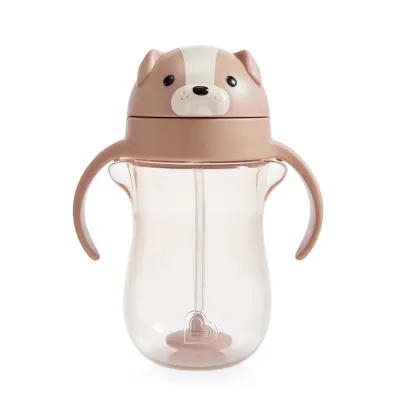
The Munchkin straw cup typically features a weighted straw mechanism designed to remain in the liquid regardless of the angle at which the child holds the cup. This design is intended to help infants transition from bottles by allowing them to drink while sitting upright or slightly reclined. Unlike traditional spout cups that rely on gravity and passive flow, a straw cup requires the child to use active suction, drawing liquid upward through a narrow channel.
Using a straw cup successfully requires a specific set of oral motor skills. A baby must coordinate lip closure around the straw, create a seal, draw back the tongue, and coordinate swallowing with breathing. These milestones typically develop in the latter half of a baby’s first year, though individual timelines vary significantly.
Products mentioned in this guide
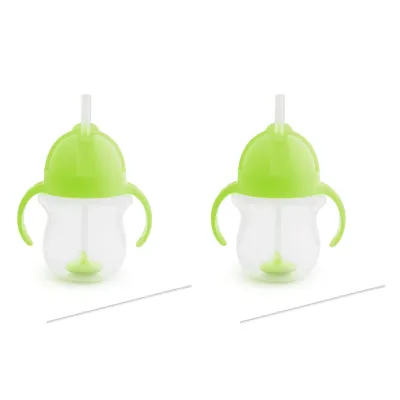
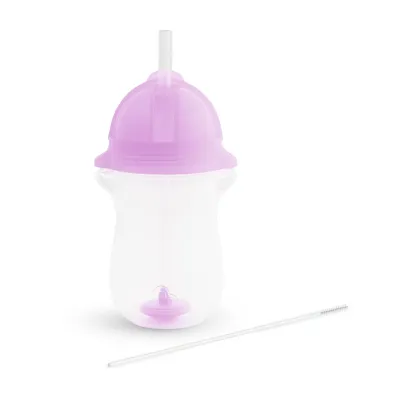
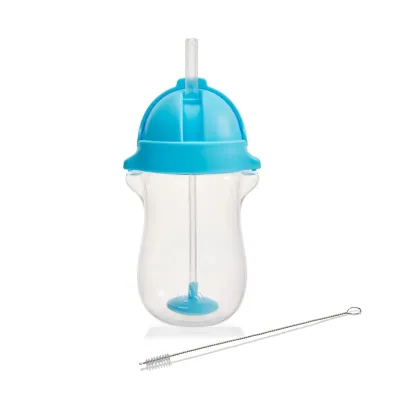
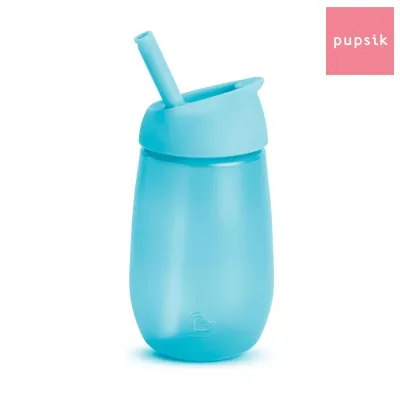
Prices are valid at publication and may change. Please refer to the product page for the latest price.
Before purchasing, caregivers should carefully inspect the product packaging or the manufacturer’s official documentation for recommended age guidelines. Many weighted straw cups are labeled for use starting around six months or older, but this is a general baseline rather than a universal rule. You should observe your baby’s ability to sit independently and show interest in cup drinking before introducing a straw.
It is also important to verify the specific weight and size of the cup to ensure your baby can hold it comfortably. Some cups feature removable handles that help younger infants grip the container, while others are designed for older toddlers with more advanced grip strength. Checking these physical specifications on the packaging helps prevent frustration during early feeding sessions.
Comparing Weaning Cup Types: Straw, Spout, and 360-Degree Options
To make an informed decision, it is helpful to compare the Munchkin straw cup with other common weaning cup categories available in Singapore. Spout cups are often the first alternative parents consider when transitioning away from bottles. These cups feature a hard or soft protruding spout that fits into the baby’s mouth, requiring a tilting motion similar to bottle feeding. While they offer familiar flow control, pediatric dental guidelines often suggest limiting their use to prevent prolonged pressure on developing gums and teeth.

Another popular alternative is the 360-degree cup, which allows a child to drink from any point along the rim. When the baby applies pressure with their lips, a silicone seal releases a controlled flow of liquid. This design simulates the mechanics of drinking from an open cup while maintaining a high level of spill resistance. However, the multi-piece lid assembly can introduce cleaning complexity, as milk or juice residue can easily become trapped in the silicone valves if not disassembled and washed thoroughly.
Open cups represent the ultimate goal of the weaning process and are highly recommended by pediatric experts for early oral motor development. Drinking from an open cup teaches babies to control their jaw, tongue, and lips without relying on a valve or straw. Because open cups offer no spill protection, they require constant, close caregiver supervision and are best introduced in small quantities during dedicated meal times at home.
Each of these cup types serves a distinct developmental purpose, and many families find that using a combination of styles works best. For instance, a straw cup might be preferred for travel and outings due to its spill-resistant nature, while an open cup is used during supervised meals at the high chair. Understanding these functional differences allows you to match the cup to your daily routine and your baby’s current abilities.
Evaluating Spill Resistance, Flow, and Cleaning for Your Routine
When comparing weaning cups, parents must balance the practical trade-off between spill resistance and flow rate. Highly spill-resistant cups, including many weighted straw models, often utilize one-way valves to prevent leaks when the cup is dropped or turned upside down. While this feature protects carpets and furniture, it also means the baby must exert more suction force to get liquid. If the valve is too restrictive, a younger baby may become frustrated and reject the cup entirely.
Cleaning and maintenance represent another major consideration for busy households. Weighted straw cups often contain narrow tubes and internal valves that require specialized cleaning tools, such as thin wire straw brushes, to remove residue completely. Before buying, check the product packaging to verify if the components are dishwasher-safe and if they can withstand steam sterilization. Some silicone parts may degrade or warp if exposed to high temperatures, so adhering to the manufacturer’s specific cleaning instructions is essential.
Material safety is a critical factor that requires direct verification rather than brand-based assumptions. When shopping on local online marketplaces or in physical baby stores in Singapore, look for explicit labels indicating that the cup is made from food-grade silicone, polypropylene, or other BPA-free materials. Do not assume a cup is safe simply because it is a well-known brand; always inspect the packaging for compliance with food contact safety standards.
Additionally, consider the availability of replacement parts. Straws and valves are subject to wear and tear from biting and frequent washing. Choosing a cup brand that offers easily accessible replacement straws can extend the lifespan of the cup and save money over time, especially if your baby tends to chew on the silicone components.
Verifying Safety Labels and Hygiene Maintenance at Home
Ensuring your baby’s safety during weaning involves active inspection and adherence to manufacturer warnings. Always read the product insert for specific safety guidelines before the first use. Most manufacturers explicitly warn against using straw or spout cups with hot, carbonated, or pulpy liquids, as these can cause pressure build-up, leading to sudden leaks or choking hazards. Furthermore, weaning cups should never be used as a pacifier or left with a sleeping baby.
Daily hygiene maintenance is vital to prevent the growth of mold and bacteria in hidden crevices. Caregivers should fully disassemble all parts of the cup—including the straw, weighted base, and sealing rings—after every use. Inspect these components closely for any signs of discoloration, black spots, or tears in the silicone. Because babies often bite down on straws, a damaged or partially torn straw can become a choking hazard and must be replaced immediately.
Knowing when to stop using a cup or seek professional advice is a key aspect of safe feeding. If your baby consistently coughs, sputters, or shows signs of distress while drinking from a straw cup, temporarily discontinue its use. You should consult a pediatrician, lactation consultant, or pediatric speech therapist if your child experiences ongoing feeding difficulties or if you suspect oral motor delays that interfere with their ability to swallow safely.
Making the Final Choice: A Conditional Decision Framework
To select the right weaning cup for your household, consider a conditional decision framework based on your baby’s developmental stage and your daily priorities. The Munchkin straw cup is an excellent choice if your baby has already demonstrated basic suction skills and you need a highly spill-resistant, portable option for outings around Singapore. Its weighted straw ensures they can drink from almost any angle, making it highly functional for active infants.
Conversely, if your baby is just beginning the transition from breast or bottle and struggles with active suction, a soft-spout cup or a 360-degree cup may offer a gentler introduction to flow control. These options allow the baby to learn the mechanics of tilting a cup and sipping from a rim without the physical effort required by a valved straw.
Before making a final purchase, verify whether your baby has any specific oral motor needs or developmental delays that might make certain cup types unsuitable. If you prefer a minimalist cleaning routine with fewer small parts to scrub, an open cup or a simple, valve-free spout cup may be more practical for your lifestyle. Always prioritize the guidance of your pediatrician or feeding specialist if they have recommended a specific cup style for your child’s unique developmental path.
Frequently Asked Questions (FAQ)
At what age should a baby switch from a spout cup to a straw cup?
There is no single age at which every baby must switch from a spout cup to a straw cup. Many pediatric experts suggest introducing a straw cup around six to nine months of age as babies develop the oral motor skills required for active suction. Instead of relying strictly on age, observe your baby for readiness signs, such as the ability to sit upright unsupported and interest in your own drinking cups. Always check the manufacturer’s packaging for specific age recommendations and consult your pediatrician for personalized guidance.
Are straw cups better for speech development than spout cups?
Straw cups and open cups are generally favored by pediatric speech-language pathologists because they promote a mature swallowing pattern and strengthen the lips, tongue, and cheek muscles. Spout cups, particularly those with hard spouts, can sometimes encourage a forward tongue thrust similar to bottle feeding if used long-term. However, using a variety of cup types in moderation is typically fine for most infants. If you have specific concerns about your child’s speech or oral motor development, seek a professional evaluation from a qualified pediatric speech therapist.

Community discussion
Share your experience or ask a question. Comments are reviewed before publication.