
Selecting the right diaper is one of the most frequent decisions you will make during your baby’s first few years. In Singapore’s hot and humid tropical climate, finding a diaper that balances reliable absorbency with excellent breathability is essential for preventing skin irritation and ensuring your baby remains comfortable throughout the day and night. Three brands dominate the local market: Moony, MamyPoko, and Pampers. Each brand offers distinct product lines designed to cater to different infant developmental stages, body shapes, and parental budgets.
To make an informed choice, you must look beyond brand names and understand how specific design features align with your baby’s unique needs. This guide provides a detailed, objective comparison of Moony, MamyPoko, and Pampers, focusing on absorbency, fit, skin sensitivity, and cost-effectiveness within the Singapore market. By evaluating these factors, you can determine which diaper brand offers the best combination of performance and value for your household.
Quick Answer: Which Diaper Brand Fits Your Baby Best?
Choosing the ideal diaper brand depends heavily on your baby’s current developmental stage, skin sensitivity, and your primary daily priorities. There is no single diaper that excels in every category for every baby, as infant body shapes and skin reactions vary widely. Instead, each of the three major brands has carved out a specific reputation based on its core design philosophy and product performance.
Products mentioned in this guide
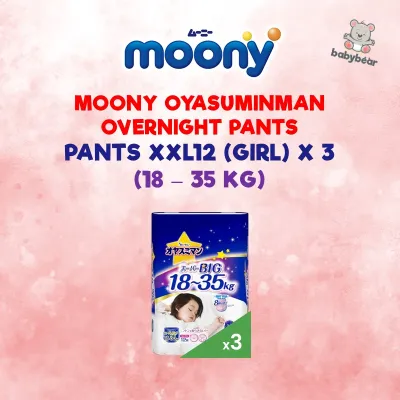
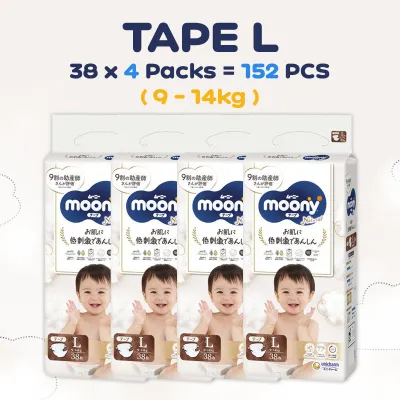
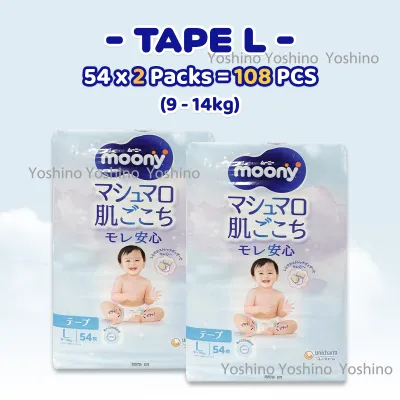
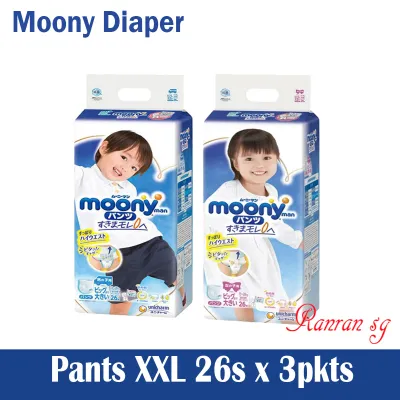
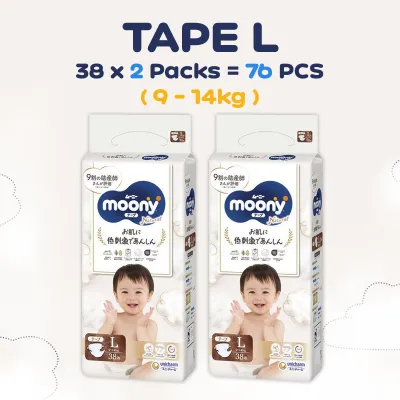
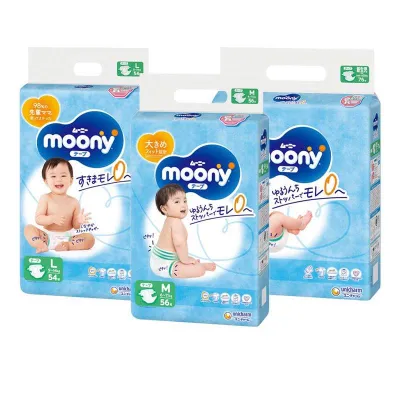
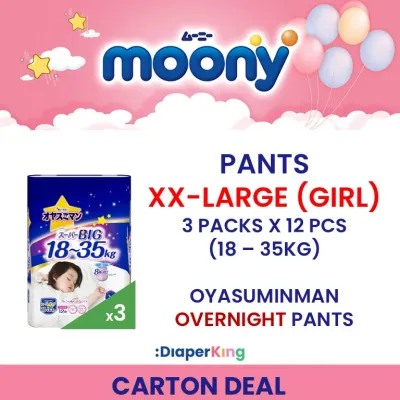
Prices are valid at publication and may change. Please refer to the product page for the latest price.
Moony diapers are generally preferred if your primary goal is finding ultra-soft, premium materials that minimize friction against highly sensitive newborn skin. The brand is highly regarded for its use of soft fibers and gentle inner linings, making it a popular choice for parents of infants prone to mild skin redness.
MamyPoko diapers are typically favored if you require high-capacity absorbency for heavy wetters or extended overnight use, particularly in active babies who have transitioned to pants-style diapers. The brand’s signature absorption cores are designed to handle significant volumes of liquid, reducing the likelihood of midnight changes.
Pampers diapers are often chosen if you prioritize a slim, flexible fit that accommodates rapid movement, combined with widespread availability across local supermarkets and online stores. Pampers products generally offer a balanced performance profile, making them a reliable option for everyday wear from infancy through toddlerhood.
Comparing Absorbency and Leak Protection
A diaper’s primary function is to contain moisture efficiently while keeping your baby’s skin dry. When comparing Moony, MamyPoko, and Pampers, you will find distinct differences in how each manufacturer approaches core construction and leak prevention. Understanding these engineering differences helps you choose a diaper that matches your baby’s wetting patterns.

Evaluating Core Absorbency
To assess the core absorbency of these brands, you should examine the product packaging for specific technological claims and structural features. Look for mentions of superabsorbent polymers (SAP), which are the tiny beads inside the diaper core responsible for trapping liquid and turning it into a gel. The distribution and quality of these polymers determine how well the diaper keeps moisture away from your baby’s skin.
When evaluating a diaper’s real-world performance, observe how the core expands and distributes weight after your baby urinates. A high-quality absorbent core should distribute liquid evenly along its length rather than sagging or pooling in a single spot, which can cause discomfort and premature leaks. You can also monitor the wetness indicator lines on the outside of the diaper; these lines change color when moisture is present, helping you gauge the diaper’s remaining capacity.
For overnight use, look for packages that explicitly state extended protection times, such as twelve-hour dry claims. While these claims are tested under standardized laboratory conditions, your baby’s actual experience will depend on their fluid intake and sleeping position. If you notice the diaper feels heavy but dry to the touch on the inside surface, the core is successfully locking moisture away. If the inner lining feels damp, it may be time to switch to a higher-tier product or a larger size with more absorbent material.
Leak Guard Design
Even the most absorbent core will fail if the diaper’s physical structure does not create an effective seal against your baby’s body. To prevent side leaks and sudden blowouts, pay close attention to the design of the leg cuffs and waistbands. Most modern disposable diapers feature double-layered leg gussets, which act as physical barriers to contain liquid and solid waste.
When comparing Moony, MamyPoko, and Pampers, examine the elasticity and height of these leg cuffs. Moony often utilizes highly flexible, gathered elastics designed to hug the thighs gently without digging into the skin. MamyPoko frequently incorporates deep, pocketed waistbands and tall leg guards that are particularly effective at catching loose stools. Pampers typically focuses on slim, high-stretch leg bands that move dynamically with active babies, reducing gaps during play.
To ensure the leak guards function correctly, you must perform a manual check during every diaper change. Always run your finger along the inside of the leg cuffs to ensure the outer frills are flared outward rather than tucked inward. If the cuffs are folded inside, liquid will easily bypass the absorbent core and leak onto your baby’s clothing. Additionally, check that the waistband sits flat against your baby’s back and stomach, with no gaps that could allow waste to escape when your baby is lying down.
Evaluating Comfort, Fit, and Skin Sensitivity
In Singapore’s warm, humid climate, skin comfort is just as important as leak protection. Prolonged exposure to trapped moisture and friction can quickly lead to diaper rash or heat rashes. Evaluating how each brand handles material softness, breathability, and physical fit is crucial for maintaining healthy skin.
Softness and Inner Lining
When evaluating the softness of a diaper, do not rely solely on marketing terms like “cotton-soft” or “silk-like” printed on the box. Instead, physically touch the inner lining of the diaper to assess its texture. Moony is widely recognized for its textured, embossed inner sheets that create tiny air channels between the diaper and your baby’s skin, reducing the total surface area in direct contact with moisture.
Many premium diaper lines, including Moony Natural and select Pampers premium ranges, feature lotion-free or organic material claims designed to minimize the risk of contact dermatitis. While these features are beneficial for babies with highly sensitive skin, remember that no material can guarantee absolute safety against rashes. You must monitor your baby’s skin regularly for signs of redness, particularly in the skin folds where sweat and moisture tend to accumulate.
Breathability is another critical factor to verify on the packaging. Look for indicators of micro-porous outer covers that allow warm air and humidity to escape while keeping liquid contained. A highly breathable diaper will feel slightly warm on the outside when full, which indicates that heat is successfully escaping from the core. If a diaper feels completely cold and plastic-like on the exterior, it may be trapping humidity inside, increasing the risk of diaper rash.
Fit and Stretch Dynamics
As babies grow and become more active, their diapering needs shift from simple containment to dynamic fit. You must choose between traditional tape diapers and pants-style diapers based on your baby’s developmental stage. Tape diapers offer highly adjustable waist sizing, making them ideal for newborns and younger infants who spend most of their time lying down. Pants-style diapers, on the other hand, feature highly elastic, 360-degree waistbands that allow for quick changes on active, crawling, or standing toddlers.
When comparing the fit of the three brands, observe how the waistbands stretch and recover. Moony pants are known for a soft, high-waisted cut that sits comfortably above the navel, distributing pressure evenly across the abdomen. MamyPoko pants generally offer a robust, secure stretch that prevents the diaper from sagging even when fully saturated. Pampers pants typically feature a lower-profile, highly flexible waistband that mimics underwear, providing a discreet fit under clothing.
To prevent red marks around your baby’s waist and thighs, ensure the diaper is not fastened too tightly. For tape diapers, you should be able to slide two fingers comfortably between the waistband and your baby’s stomach. For pants-style diapers, check that the elastic bands do not leave deep indentations on the skin after a few hours of wear. If you consistently notice red marks, it is usually a clear sign that your baby has outgrown the current size, even if their weight still falls within the range printed on the packaging.
Calculating True Value and Cost Per Diaper
Managing a household budget in Singapore requires a practical approach to recurring expenses like diapering. To accurately compare the cost of Moony, MamyPoko, and Pampers, you must look past the retail price of a single pack and calculate the true cost per diaper. Because different brands and size ranges pack varying quantities of diapers into a single bag, the price per bag can be highly misleading.
To find the cost per diaper, use this simple formula:
Cost Per Diaper = Total Pack Price / Number of Diapers in the Pack
For example, if a pack of size M diapers costs S$24.00 and contains 60 pieces, the cost per diaper is S$0.40. If another brand costs S$22.00 but only contains 48 pieces, the cost per diaper rises to S$0.46, making the seemingly cheaper pack more expensive in the long run.
You can optimize your diaper budget by utilizing several local buying strategies:
- Bulk Buying: Purchasing diapers by the carton rather than individual packs often secures a lower unit price, especially during major promotional events on local online marketplaces.
- Subscription Models: Many e-commerce platforms and baby specialty stores in Singapore offer recurring subscription discounts, delivering diapers to your doorstep while shaving a percentage off the retail price.
- Supermarket Promotions: Keep an eye on weekly discount flyers from physical supermarkets, which frequently run "buy two, get one free" or direct price reductions on specific diaper brands.
When comparing prices, always ensure you are comparing equivalent product tiers. Each of these brands offers standard, premium, and budget-friendly lines. For instance, comparing the price of a standard MamyPoko diaper to a premium organic Moony diaper will not yield a fair comparison, as the materials and target audiences are entirely different. Always compare premium lines against premium lines, and standard lines against standard lines, to make an accurate value judgment.
Diaper Feature Comparison Checklist
To help you verify specific diaper specifications while shopping, use the checklist below. This table highlights the general tendencies of each brand’s primary product lines, along with guidance on what to verify on the packaging before making a purchase.
| Feature/Spec | Moony | MamyPoko | Pampers | What to Check on Pack |
|---|---|---|---|---|
| Primary Style | Tape & Pants | Tape & Pants | Tape & Pants | Verify if the package is labeled "Tape" or "Pants/Pull-ups" as the application method differs. |
| Wetness Indicator | Present on most lines | Present on most lines | Present on most lines | Check for a yellow line on the outer cover that turns blue when wet; some budget lines omit this. |
| Inner Material Claim | Air-silky, organic cotton options | Textured sheets, standard soft fibers | Soft woven layers, lotion-infused options | Look for terms like "Organic Cotton" (Moony Natural) or "Premium Care" (Pampers) to identify premium materials. |
| Size Range | Newborn to XXL | Newborn to XXXL | Newborn to XXL | Check the weight chart on the back of the pack; sizing varies significantly between Japanese and Western cuts. |
Final Decision Framework: Matching the Diaper to Your Baby
To make your final decision, evaluate your baby’s physical characteristics, daily routine, and skin health against the strengths of each brand. Use the following guidelines to match the right diaper to your household’s specific needs.
Choose Moony if:
- Your baby has highly sensitive skin that is easily irritated by friction or synthetic materials.
- You prefer organic or ultra-soft textures and are willing to pay a premium price for enhanced skin comfort.
- Your baby is in the newborn or infant stage, where gentle contact and delicate materials are of the utmost importance.
Choose MamyPoko if:
- Your baby is a heavy wetter, particularly during long overnight sleep stretches.
- You are transitioning to pants-style diapers for an active toddler who requires a secure, high-capacity fit.
- You want a highly reliable, leak-resistant diaper that performs exceptionally well during active play and movement.
Choose Pampers if:
- You prefer a slim, lightweight diaper that fits discreetly under clothing and allows for maximum freedom of movement.
- You value widespread availability, ensuring you can easily purchase refills at almost any local supermarket or neighborhood shop in Singapore.
- You want a balanced, dependable everyday diaper that offers consistent performance across various developmental stages.
Verify first if: Before committing to any brand in bulk, always purchase a single small pack to test the fit and skin compatibility on your baby. If your baby suffers from severe eczema, persistent diaper rash, or open skin lesions, consult a pediatrician or qualified healthcare professional before trying new diaper brands. A medical professional can help identify if the issue is a contact allergy or requires a specialized therapeutic barrier cream, regardless of the diaper brand you choose.
Frequently Asked Questions (FAQ)
Can I mix different diaper brands during the day and night?
Yes, mixing diaper brands is a highly practical and cost-effective strategy used by many parents in Singapore. You can utilize a lighter, more budget-friendly diaper for daytime hours when changes are frequent (typically every two to three hours) and switch to a highly absorbent, premium diaper for overnight sleep. This approach helps manage your monthly diapering expenses while ensuring your baby remains dry and comfortable during long sleep stretches. When introducing a new brand into your rotation, monitor your baby’s skin for a few days to ensure they do not experience any adverse reactions to the different materials.
How do I know if a diaper brand is causing a rash?
To determine if a specific diaper brand is causing a rash, observe the exact location and appearance of the skin irritation. A rash caused by sensitivity to a diaper’s materials, known as contact dermatitis, typically appears as localized redness, bumps, or dry patches directly where the diaper’s inner lining, waistband, or elastic leg cuffs touch the skin. In contrast, a friction or moisture rash usually develops in the warm, damp skin folds of the groin and thighs. If you suspect a brand sensitivity, stop using that diaper immediately, switch to a hypoallergenic alternative, and consult a healthcare professional if the redness does not improve within a few days.

Community discussion
Share your experience or ask a question. Comments are reviewed before publication.