
Finding the right diaper for your newborn is a highly individualized process. While many parents in Singapore seek out Moony Tape Size S due to its reputation, the ideal tape diaper ultimately depends on your baby’s unique body shape, skin sensitivity, and wetting patterns. Comparing Moony Tape Size S against other leading brands requires evaluating verifiable physical features, material labels, and fit indicators rather than assuming a universal winner. By focusing on objective design elements, you can make an informed decision that keeps your baby dry and comfortable in Singapore’s warm, humid climate.
Identifying Your Newborn’s Specific Diaper Needs
Before comparing brands, it is essential to establish a baseline by assessing your newborn’s physical traits. A primary consideration for newborns is the umbilical cord stump, which typically takes one to three weeks to dry and fall off. During this period, the friction from a standard diaper waistband can cause irritation or delay healing. Parents must determine whether they require a diaper with a dedicated navel cutout or if they are comfortable folding down the front waistband of a standard diaper to keep the area exposed to air.
Skin sensitivity is another critical factor. Newborn skin is exceptionally thin and vulnerable to friction, moisture, and chemical irritants. In Singapore’s humid environment, trapped moisture can quickly lead to heat rash or diaper dermatitis. Parents should monitor their baby’s skin for early signs of sensitivity, such as mild redness along the leg cuffs, friction marks around the waist, or localized allergic reactions to fragrances and lotions.
Products mentioned in this guide
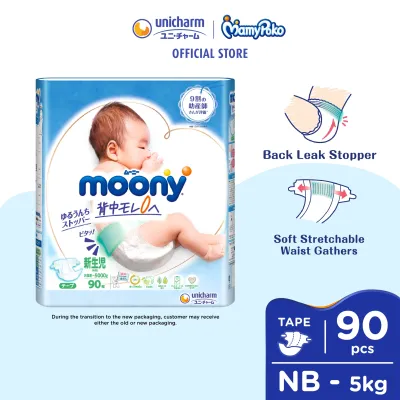
![Moony Low Irritation Tape Baby Diapers S 58pcs (4-8 kg) [Single]](https://img.lazcdn.com/g/p/e140f2b48b51fdf122e40dc7ee1f34c9.jpg_400x400q80.jpg_.webp)
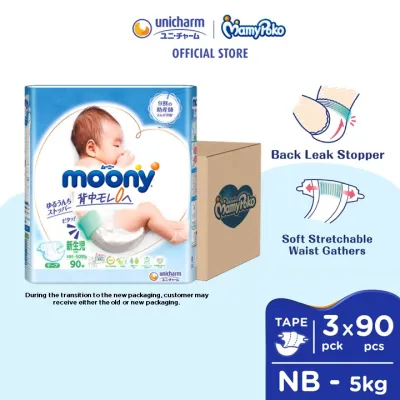
![Moony Low Irritation Tape Baby Diapers S 58pcs x 4 packs (4-8 kg) [Carton]](https://img.lazcdn.com/g/p/27c482602057bf85f6e64e7442d53a3f.jpg_400x400q80.jpg_.webp)
Prices are valid at publication and may change. Please refer to the product page for the latest price.
Finally, understanding your newborn’s urination frequency and volume helps determine your baseline absorbency requirements. Newborns typically wet their diapers six to eight times a day, often in small, frequent amounts. However, some babies have heavier wetting patterns or more frequent bowel movements, requiring a diaper with rapid absorption and robust containment features to prevent leaks.
Evaluating Moony Tape Size S: Structural and Material Features
When examining Moony Tape Size S, parents should look closely at the physical diaper and its packaging to verify its structural features. Start by checking the front waistband for an umbilical cord cutout. Some newborn and small-size diapers feature a pre-cut, curved dip at the front to prevent the material from rubbing against the healing navel. Verify whether this cutout is present on the specific Moony packaging you are reviewing, as design features can vary by region and product line.

Next, inspect the waistband and leg cuff elasticity. Gently stretch the side tabs and the back waistband to evaluate the flexibility of the materials. The elastic should offer a gentle, non-restrictive stretch that conforms to a baby’s rounded belly without digging into the skin. Examine the leg gathers, often referred to as leg cuffs, to ensure they are soft, double-layered, and sufficiently elasticated to create a secure barrier against liquid stools.
Lastly, read the product packaging carefully to verify material composition and breathability claims. Look for labels indicating the use of breathable outer covers, which allow hot air and moisture to escape—a crucial feature for babies living in Singapore’s tropical climate. Check the placement and visibility of the wetness indicator, which typically changes color when wet, allowing caregivers to monitor diaper status without opening the diaper.
Comparing Core Dimensions: Moony vs. Other Leading Brands
To make an objective comparison between Moony Tape Size S and other leading tape diaper brands, parents can evaluate three core dimensions: absorbency, fit, and material quality.
Absorbency and Leak Protection
Physically inspect the core thickness of each diaper. A thicker core does not always guarantee better performance, as modern diapers often use superabsorbent polymers (SAP) that remain thin until wet. Look at the height of the inner leak guards along the leg openings; taller, more structured guards generally provide better containment for runny newborn stools. Additionally, check if the diaper features a back pocket or a specialized textured inner sheet designed to trap loose stool and prevent back blowouts, which are common when babies are lying flat.
Fit and Flexibility
Lay the diapers flat side-by-side to compare their contoured shapes. Some brands use a straight, rectangular cut, while others feature a more curved, hourglass shape. Compare the stretchability and width of the side tabs. Wider, highly stretchable tabs allow for a more customizable fit around the waist. Note the overall bulkiness of the diaper when dry; a bulkier diaper may restrict natural leg movement as your baby becomes more active.
Material Quality
Examine the inner lining texture by running your fingers over the surface. Look for a soft, quilted, or embossed texture, which minimizes direct skin contact with wetness. Read the packaging for fragrance-free, elemental chlorine-free, or lotion-infused claims. If your baby has sensitive skin, prioritizing diapers free from added fragrances and synthetic lotions is a prudent step.
To assist in your comparison, use the following blank matrix to record your observations when inspecting Moony Tape Size S against alternative brands available in Singapore:
| Feature to Inspect | Moony Tape Size S | Brand A | Brand B |
|---|---|---|---|
| Umbilical Cutout (Yes/No) | |||
| Wetness Indicator Visibility | |||
| Inner Lining Texture (Smooth/Textured) | |||
| Side Tab Stretch (Low/Medium/High) | |||
| Leak Guard Height (Low/Medium/Tall) | |||
| Fragrance-Free Label (Yes/No) |
Practical Testing: How to Verify the Right Fit and Performance
Once you have selected a diaper brand to test, practical application is the only way to confirm if it suits your baby’s unique shape. When fastening the tape diaper, apply the two-finger rule: you should be able to comfortably slide two fingers between the diaper waistband and your baby’s tummy. This ensures the diaper is snug enough to prevent leaks but loose enough to allow comfortable breathing and digestion. Similarly, run your finger along the inside of the leg cuffs to ensure the elastic gathers are flared outward rather than tucked inward, which is a common cause of leg leaks.
After your baby has worn the diaper for a few hours, perform a skin check during a diaper change. Look for red marks, deep indentations, or localized friction rashes along the waistline and thighs. If you notice persistent red marks that do not fade within ten to fifteen minutes, the diaper may be fastened too tightly, or the elastic material may be too restrictive for your baby’s current weight and shape.
Analyze any leak patterns to diagnose fit or design issues. If leaks consistently occur around the legs, the leg cuffs may be too loose, or the diaper’s leg openings may not match your baby’s thigh circumference. If you experience frequent back blowouts, the diaper may lack a back pocket, or the waist rise may be too low, suggesting it is time to adjust the fastening angle or transition to a larger size.
Always prioritize your baby’s skin health. If you observe persistent diaper rash, severe redness, or signs of skin infection, stop using the current diaper brand immediately. Consult a qualified pediatrician to address the skin irritation and obtain professional guidance on suitable skincare routines and diapering materials.
Frequently Asked Questions (FAQ)
Can I use Moony Tape Size S if my baby already has a diaper rash?
If your baby is currently experiencing a diaper rash, your primary step should be to consult a pediatrician for an accurate diagnosis and treatment plan. When selecting diapers during this period, read the packaging carefully to verify that the materials are fragrance-free and free from potential chemical irritants. Prioritize frequent diaper changes—ideally as soon as the wetness indicator changes color—to minimize the time your baby’s skin is exposed to moisture and enzymes in urine and stool. While Moony Tape Size S features soft materials, resolving a rash depends more on diligent moisture management, gentle cleansing, and pediatric-approved barrier creams than on a specific diaper brand alone.
How do I know when it is time to switch from tape to pants diapers?
The transition from tape diapers to pants diapers is guided by your baby’s developmental milestones and physical growth rather than age alone. Look for signs of increased mobility, such as rolling over, crawling, or constant wriggling during diaper changes, which can make fastening tape tabs difficult and precise fitment nearly impossible. Additionally, if you find that the tape tabs must be fastened at the very edge of the landing zone to fit the waist, or if your baby’s weight is approaching the upper limit of the Size S range indicated on the packaging, it is time to consider transitioning to pants diapers for a more secure and flexible fit.

Community discussion
Share your experience or ask a question. Comments are reviewed before publication.