
When your toddler transitions into larger sizes, finding the right diaper involves balancing comfort, leak protection, and budget. If you are considering Mommy Poko Pants XXL for your active toddler, you are likely comparing it against other major brands available in Singapore’s supermarkets and online marketplaces.
At this developmental stage, toddlers are constantly on the move—climbing, running, and exploring indoor playgrounds or outdoor parks like East Coast Park. This increased physical activity, combined with a larger bladder capacity, means that standard diaper designs may no longer suffice. Choosing the wrong fit or absorbency level can lead to messy leaks, skin chafing, and interrupted sleep.
Evaluating how Mommy Poko Pants XXL measures up against competing brands requires looking closely at physical design, material performance, and overall cost-efficiency. By understanding what to look for on the packaging and how to perform simple at-home checks, you can make an informed decision that keeps your toddler dry and comfortable throughout the day and night.
Products mentioned in this guide
![Mamypoko Kids Pants Premium Baby Diapers [GIRL] XXL30 (3 Packs) (15 - 25kg)](https://img.lazcdn.com/g/p/8ff7ce281a48fcef8b3e2585d95b692c.jpg_400x400q80.jpg_.webp)
![MamyPoko Air Fit Marshmallow Pants Super Premium Baby Diapers [BOY] XXL26 (1Pack) (13 - 28kg)](https://img.lazcdn.com/g/p/f9ff53b584c309d883e8187e7e545163.jpg_400x400q80.jpg_.webp)
![MamyPoko Air Fit Marshmallow Pants Super Premium Baby Diapers [GIRL] XXL26 (1Pack) (13 - 28kg)](https://img.lazcdn.com/g/p/d0b52013b9364dfb9d4b00bbb3d3109f.jpg_400x400q80.jpg_.webp)
![Mamypoko Kids Pants Premium Baby Diapers [BOY] XXL30 (1 Pack) (15 - 25kg)](https://img.lazcdn.com/g/p/81357a9f2263875287c18d1cbf6f298f.jpg_400x400q80.jpg_.webp)
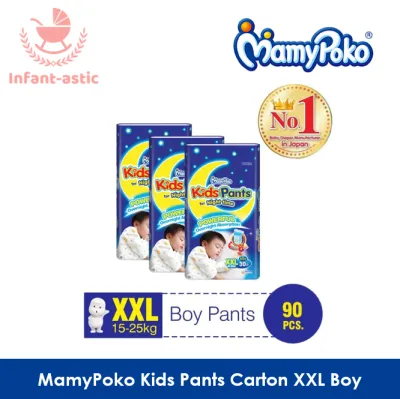
![[1 Carton] MamyPoko Kids Night Pants Size XXL (30s x 3)](https://img.lazcdn.com/g/p/33addd1cd5190e329d5f73df0f575fcb.png_400x400q80.png_.webp)
![[1 Carton] MamyPoko Kids Night Pants Boy Size XXL (30s x 3)](https://img.lazcdn.com/g/p/7063f05ec74c7f20073211a29f38ae0d.png_400x400q80.png_.webp)
![MamyPoko Royal Soft Pants Diapers [GIRL] XXL38 (4 Packs)](https://img.lazcdn.com/g/p/8a76191abb4aa1254072ce92d436341d.jpg_400x400q80.jpg_.webp)
Prices are valid at publication and may change. Please refer to the product page for the latest price.
Quick Answer: Is Mommy Poko Pants XXL the Right Choice?
Choosing the ideal XXL diaper depends on your toddler’s unique body shape, skin sensitivity, and your household budget. There is no single brand that fits every child perfectly, but a conditional decision framework can help you determine if Mommy Poko Pants XXL is the right match for your family.
Choose Mommy Poko Pants XXL if:
- Your toddler fits comfortably within the manufacturer's specified weight range on the packaging and has a balanced thigh-to-waist ratio.
- You prefer a high-coverage waistband with generous stretch that distributes pressure evenly across your child's midsection.
- You value a brand that is widely accessible across Singapore supermarket chains and local online retailers, making bulk purchasing straightforward.
Choose competing brands if:
- Your toddler has a highly slender build, where a wider waistband design might lead to gaps around the legs and subsequent leaks.
- Your child has extremely sensitive skin that requires specialized, hypoallergenic, or organic cotton materials not featured in this specific product line.
- You require a diaper with a reinforced rear core specifically optimized for heavy overnight wetness, rather than a general-use daytime pant.
Verify first if:
- Your child is on the borderline between diaper sizes. It is highly recommended to purchase a single, smaller trial pack to observe the physical fit and skin reaction before committing to bulk carton deliveries.
Defining the Comparison: What to Look for in XXL Diapers
Transitioning to XXL diapers represents a major milestone in your diapering journey. Children wearing this size are typically older toddlers or preschoolers who are either toilet training or require reliable containment during active play. Because their movements are more vigorous, the mechanical stress placed on diaper seams, waistbands, and leg cuffs is significantly higher than it is for younger infants.

Furthermore, older toddlers consume more liquids, resulting in larger, sudden volumes of urine. A diaper must not only absorb this liquid quickly but also lock it away to prevent wetness from re-wetting the skin during sitting or jumping. In Singapore’s hot and humid tropical climate, this moisture management is even more critical to prevent heat rash and discomfort.
To compare Mommy Poko Pants XXL with other brands effectively, parents should focus on three primary dimensions:
- Accurate Fit and Sizing Mold: How the diaper conforms to different toddler body types without causing red marks or gaps.
- Core Absorbency Structure: The speed of liquid intake and the diaper's ability to distribute wetness evenly without sagging.
- Cost-per-Diaper Value: The actual cost per piece, balanced against the performance reliability to minimize overall diaper consumption.
Because different manufacturers use distinct sizing molds, a toddler who fits perfectly in an XXL diaper from one brand might experience frequent leaks or tight marks in another. Understanding these design differences is key to finding the best option.
Fit and Sizing: Comparing Waistbands and Leg Cuffs
Weight Ranges and Proportions
When comparing Mommy Poko Pants XXL to alternative brands, the first step is to examine the weight guidelines printed on the packaging. Different brands define their XXL ranges differently; for instance, some brands design their XXL pants for children weighing 15 to 25 kg, while others may target a narrower range such as 18 to 22 kg.
However, weight ranges are only general guidelines. Two toddlers weighing exactly 16 kg can have vastly different body shapes—one may have a round tummy and slender legs, while the other may have a lean waist and chunky thighs.
When trying Mommy Poko Pants XXL, observe how the diaper sits relative to your toddler’s belly button. A diaper that rides too low may slide down during play, while one that sits too high might bunch up and cause discomfort. Check that the diaper fully covers the buttocks and sits snugly in the groin creases without drooping.
Waistband Elasticity and Leg Cuff Design
To evaluate the physical comfort of the diaper, stretch the waistband fully with your hands before putting it on your child. A high-quality waistband should offer a soft, highly elastic stretch that expands easily but retracts with gentle, consistent tension. If the elastic feels stiff or rigid, it is more likely to dig into your toddler’s skin.
Next, examine the leg cuffs, which act as the primary barrier against side leaks. Most modern XXL pants feature double-layer leg gathers. When putting the diaper on, always run your fingers around the inner thighs to ensure these outer gathers are flared outward rather than folded inward.
Perform a real-world “red mark” test after your toddler has been wearing the diaper for several hours of active play or after a nap. Inspect the skin around the waist and upper thighs. If you notice deep, persistent red indentations that do not fade within a few minutes, the elastic tension may be too high for your child’s current proportions, indicating that a different brand’s cut or a larger size might be necessary.
Absorbency and Leak Protection: Evaluating Core Performance
Core Technology and Material Indicators
To understand how well Mommy Poko Pants XXL performs compared to competitors, look at the packaging for specific descriptions of the absorbent core. Manufacturers often highlight features such as “absorbent channels,” “speed wave sheets,” or “superabsorbent polymer (SAP) distribution.” These structural elements are designed to draw liquid away from the surface quickly and distribute it along the length of the diaper.
Without channels, liquid tends to pool in a single spot, causing the diaper to sag heavily between the toddler’s legs. This sagging not only compromises comfort but also pulls the waistband down, increasing the risk of leaks.
Wetness indicators—lines on the outside of the diaper that change color when wet—are common across many brands. While helpful for a quick visual check, the ultimate test of absorbency is the dryness of your toddler’s skin during diaper changes. Gently touch the inner lining of a moderately wet diaper; a high-performing core should feel dry to the touch, indicating that moisture is securely locked away.
Daytime vs. Overnight Performance
Active daytime wear and long overnight sleep stretches place very different demands on an XXL diaper. During the day, the primary requirements are flexibility, thinness, and breathability. A thinner profile allows your toddler to run and play without bulkiness interfering with their natural stride.
Overnight use, however, requires maximum storage capacity. During a 10-to-12-hour sleep cycle, a toddler’s bladder may empty multiple times. If Mommy Poko Pants XXL is designed primarily as a versatile daytime pant, it may reach its saturation limit before morning if your child is a heavy wetter.
To assess suitability for overnight use, monitor the diaper’s saturation level over a typical night. If you frequently encounter morning leaks or find the diaper completely saturated and heavy, you may need to compare it against specialized “night” pants from competing brands. These dedicated overnight options often feature reinforced absorbent zones at the back or middle, specifically designed to handle prolonged wetness while your child is lying down.
Price and Value: Calculating the True Cost per Diaper
Because XXL diapers contain the largest amount of materials, they typically have the lowest sheet count per pack, making them the most expensive size tier. In Singapore, diaper prices can vary significantly depending on whether you purchase them at local supermarkets, bulk warehouse clubs, or through online marketplaces during promotional events.
To make an accurate financial comparison between Mommy Poko Pants XXL and other brands, do not rely on the total price of the pack. Instead, calculate the exact cost per piece using this simple formula:
$$\text{Cost per Diaper} = \frac{ ext{Total Pack Price}}{\text{Number of Diapers in the Pack}}$$
For example, if Pack A costs S$24.00 and contains 26 diapers, the cost per piece is approximately S$0.92. If Pack B costs S$21.00 but contains only 20 diapers, the cost per piece is S$1.05, making Pack A the more economical choice despite its higher shelf price.
When evaluating these costs, consider the concept of “effective value.” A cheaper diaper that suffers from frequent leaks is not truly economical. If a lower-priced alternative requires you to change your toddler more frequently, or results in extra laundry cycles and ruined bedding, the overall household expenses will rise. A slightly more expensive, highly reliable diaper that keeps your child dry can often provide better long-term value.
Skin Sensitivity and Breathability Considerations
Singapore’s year-round high humidity and heat make diaper breathability a major priority for parents. When moisture and sweat are trapped against a toddler’s skin under a non-breathable plastic backing, it creates an ideal environment for diaper rash (diaper dermatitis) and friction chafing.
When comparing brands, check the packaging for material specifications. Look for terms like “breathable outer cover,” “cotton-like softness,” or indications that the materials are hypoallergenic and free from added fragrances or parabens. Some premium diaper lines incorporate botanical extracts, such as organic cotton or olive oil infusions, to help protect the skin barrier.
Monitor your child’s skin closely whenever you switch diaper brands. Pay attention to the waistband area and the leg creases, where friction is highest. If you notice tiny red bumps, dry patches, or a generalized rash, it may indicate a sensitivity to the specific materials or adhesives used in that brand.
Safety Warning: If your toddler develops a persistent, bright red rash that does not improve after applying standard barrier creams or switching back to a familiar brand, stop using the product immediately and consult a pediatrician or qualified healthcare professional. Skin sensitivities are highly individual, and professional medical guidance is essential for persistent skin conditions.
Final Decision Framework: Choosing the Best XXL Diaper
To find the best XXL diaper for your toddler without overspending, follow this structured evaluation process:
- Step 1: Check the Weight and Fit Guidelines. Confirm that your toddler falls within the recommended weight range on the Mommy Poko Pants XXL packaging, and compare this range with competing brands.
- Step 2: Calculate the Unit Cost. Use the cost-per-diaper formula to compare the actual price of Mommy Poko against other options available at your preferred local retailers.
- Step 3: Purchase a Trial Pack. Avoid buying large multi-pack cartons when testing a new brand. Buy a single pack or look for official sample distribution channels online to test the diaper first.
- Step 4: Conduct a 48-Hour Wear Test. Use the trial diapers during the day to observe your toddler's movement. Check for any red marks on the skin after wear, and monitor the diaper's surface dryness during changes.
- Step 5: Assess Overnight Performance. If the diaper passes the daytime test, try using it overnight. If leaks occur, consider keeping this brand for daytime use and choosing a specialized overnight diaper for bedtime.
By systematically testing these factors, you can find a diaper that offers the perfect balance of comfort, dryness, and value for your growing toddler.
Frequently Asked Questions (FAQ)
How do I know if my toddler is ready to move up to XXL diapers?
There are several clear physical signs that indicate your toddler has outgrown their current XL diapers and is ready for XXL. First, look for frequent leaks, especially if the diaper does not appear fully saturated. This often happens because the diaper’s cup capacity is too small or the leg cuffs are no longer sitting in the correct position. Second, check for persistent red marks or deep elastic indentations around your child’s waist or thighs. Finally, if the waistband sits significantly below the belly button or if you find yourself struggling to pull the pants up over your toddler’s hips, it is time to transition to the next size up.
Can I use standard XXL diapers overnight if they are marketed for daytime use?
Yes, standard XXL pants can be used overnight, but their performance will depend on your toddler’s sleeping habits and bladder volume. Because daytime diapers prioritize a thinner, more flexible profile for active play, they may contain less absorbent material than dedicated overnight variants. If your toddler sleeps through the night without drinking large amounts of fluids beforehand, a standard XXL diaper may work perfectly. However, if you experience frequent leaks in the early morning hours, it is highly recommended to use a specialized overnight diaper with enhanced absorption capacity for bedtime, while keeping the standard pants for daytime activities.

Community discussion
Share your experience or ask a question. Comments are reviewed before publication.