
When purchasing a child car seat in Singapore, ensuring legal compliance is just as critical as selecting a model that offers superior comfort and protection. For parents considering a maxi cosi car seat, the seat must meet specific international safety standards recognized by Singapore’s Land Transport Authority (LTA). Specifically, the seat must be certified under the United Nations Economic Commission for Europe (UNECE) standards, which are ECE R44/04 or the newer, more stringent ECE R129 (commonly known as i-Size). Understanding how these regulations apply to your vehicle, your child’s developmental stage, and the specific model of your car seat is essential for both legal compliance and peace of mind on the road.
Singapore's Legal Car Seat Requirements for Children
Singapore’s road safety laws are highly specific regarding the protection of young passengers. Under the Road Traffic Act, it is mandatory for any passenger under 1.35 meters in height to be properly secured in an approved child restraint system appropriate for their height and weight. This law applies regardless of the child’s age; height is the sole legal metric used to determine whether a child requires a dedicated restraint or can safely transition to using the vehicle’s standard three-point seatbelt. The 1.35-meter threshold is chosen because standard vehicle seatbelts are designed to protect adults, and placing a child below this height directly under a standard seatbelt can cause severe abdominal or neck injuries during a sudden stop or collision.
To comply with these regulations, parents must select a child restraint system that matches their child’s physical development. These systems are broadly categorized into four types: infant carriers, convertible car seats, high-back boosters, and booster cushions. Infant carriers are rear-facing seats designed specifically for newborns and young infants, offering optimal support for their delicate necks and spines. Convertible car seats are versatile options that can transition from rear-facing to forward-facing as the child grows. High-back boosters elevate the child so the vehicle’s seatbelt aligns correctly across the shoulder and pelvis while providing crucial side-impact protection. Booster cushions, or backless boosters, also elevate the child but lack the lateral support and side-impact shielding of high-back models.
Products mentioned in this guide
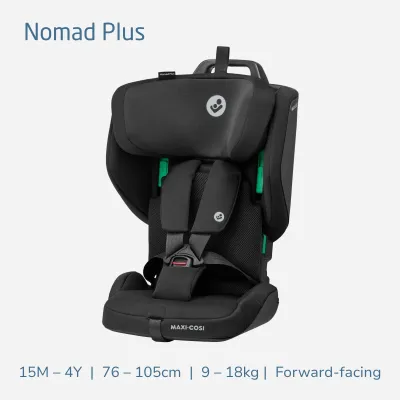
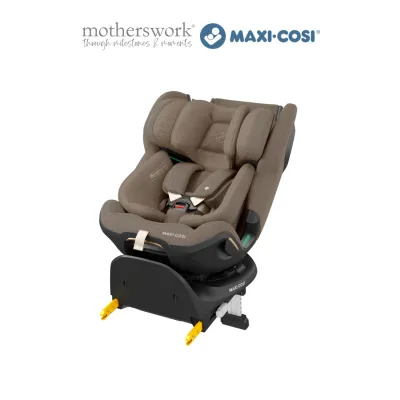
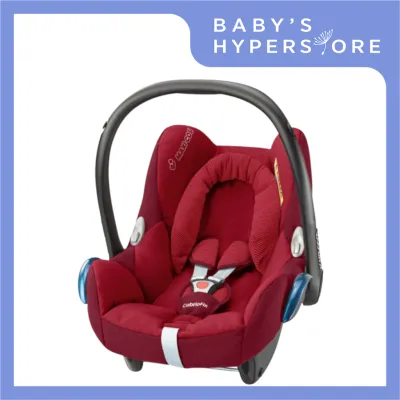
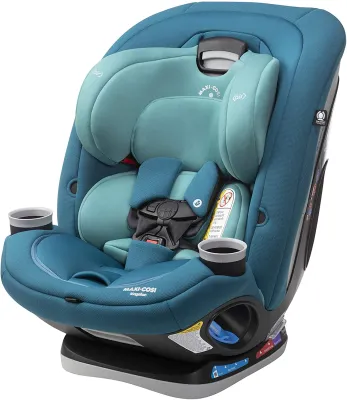
![[NEW] Maxi Cosi Nomad Plus Foldable Toddler Car Seat - 15M -4Y / 9kg - 18kg / 76 - 105 cm](https://img.lazcdn.com/g/p/f2a7fd1067ff7e20755010697c42ba39.jpg_400x400q80.jpg_.webp)
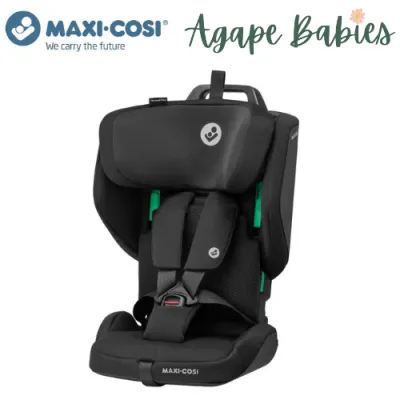
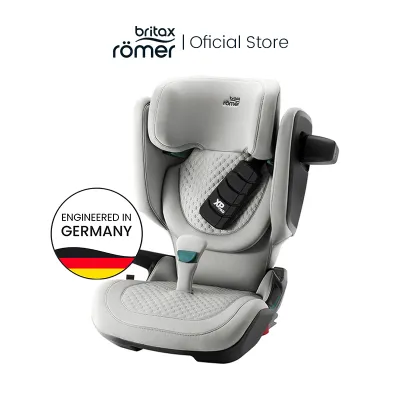
Prices are valid at publication and may change. Please refer to the product page for the latest price.
Failing to secure a child under 1.35 meters in a compliant car seat carries strict legal penalties in Singapore. Drivers found in violation of this law face a composition fine for first-time offenses, along with three demerit points on their driving record. If the case proceeds to court, repeat offenders can face significantly higher fines and potential imprisonment. These penalties underscore the government’s commitment to reducing pediatric traffic injuries and emphasize that securing your child is a non-negotiable legal obligation every time you start the engine.
It is also important to understand how these laws apply across different types of vehicles. In Singapore, public buses are exempt from child restraint requirements. Taxis are also legally exempt from the mandatory child restraint law, allowing children under 1.35 meters to travel in the rear seat using the standard seatbelt, though this is highly discouraged by safety experts. However, this exemption does not extend to private hire vehicles (PHVs) or ride-hailing services. Because PHVs are classified as pre-booked private transport rather than public service vehicles, any child under 1.35 meters traveling in a PHV must be secured in an appropriate child restraint. Parents must verify these rules with the Land Transport Authority and ensure they either carry a portable car seat or book specialized ride-hailing services that provide compliant child seats.
Recognized Safety Standards for Car Seats in Singapore
To be legally used on Singapore roads, a child restraint system must comply with recognized international safety standards. The Land Transport Authority officially recognizes the standards set by the United Nations Economic Commission for Europe (UNECE). The two primary UNECE standards currently in force are ECE R44/04 and ECE R129. ECE R44/04 is a weight-based standard that has been the benchmark for decades, categorizing seats into groups based on the child’s weight. ECE R129, also known as i-Size, is the newer, height-based standard introduced to address key safety gaps. It mandates rear-facing travel for infants up to at least 15 months, introduces mandatory side-impact testing, and utilizes high-tech Q-dummies with advanced sensors to simulate crash forces more accurately.

While Maxi-Cosi is a highly respected European brand that designs its products to meet or exceed these rigorous UNECE standards, parents must not assume that every Maxi-Cosi seat available on the market is automatically compliant with Singapore law. Because car seat manufacturers produce different variants of the same model for different global regions, a seat purchased from an overseas retailer or an unauthorized parallel importer might be built to comply with non-European standards. For example, a Maxi-Cosi seat designed for the North American market will be certified under the United States Federal Motor Vehicle Safety Standards (FMVSS 213) rather than the UNECE standards.
The differences between UNECE and US FMVSS standards are structural and functional. US-certified seats typically feature a chest clip on the harness to keep the straps positioned over the child’s shoulders, and they are self-certified by the manufacturer rather than undergoing independent laboratory testing. In contrast, UNECE standards prohibit chest clips to ensure a single-action release mechanism, allowing emergency responders to remove a child from the seat with a single click. Because of these design and testing differences, US-standard seats are generally not legally recognized under Singapore’s regulatory framework. Parents must physically verify that the specific model they purchase carries the correct UNECE certification label to ensure both legal compliance and safety.
How to Verify Your Maxi-Cosi Car Seat's Compliance
Verifying the compliance of your maxi cosi car seat is a straightforward process that requires a physical inspection of the seat itself. Every legally compliant car seat must display an official orange homologation label. This label is typically a sticker or a stitched tag located on the back, base, or side of the seat’s plastic shell. If a car seat does not have this orange label, or if the label has been removed or defaced, the seat cannot be verified as compliant and should not be used.
When inspecting the orange homologation label, there are several key pieces of information you must identify to confirm its validity. First, look for the ‘E’ mark, which consists of a circle containing the letter ‘E’ followed by a number. This number represents the European country that granted the safety approval (for example, E1 represents Germany, E4 represents the Netherlands, and E22 represents Russia). Second, check the standard version printed on the label; it must clearly state ‘ECE R44/04’ or ‘ECE R129’ (often accompanied by the i-Size logo). Third, verify the physical limits specified on the tag. For ECE R129 seats, this will be a height range (e.g., 45 cm to 75 cm) and a maximum weight limit. For ECE R44/04 seats, it will specify a weight group (e.g., 0 to 13 kg). Finally, check the fitment code, which indicates whether the seat is ‘Universal’ (compatible with most vehicles), ‘Semi-Universal’ (requiring a vehicle compatibility check), or ‘Specific Vehicle’.
Parents must exercise extreme caution when purchasing car seats online. The rise of unauthorized online marketplaces and parallel importers has made it easier for non-compliant, counterfeit, or expired regional variants to enter the Singapore market. These seats may look identical to compliant models but lack the necessary UNECE certification, or they may have been stored in sub-optimal conditions that compromise the integrity of the safety materials. In some cases, parallel-imported seats may even be models that have been recalled in other jurisdictions but are still being sold to unsuspecting buyers.
To eliminate these risks, it is highly recommended to purchase your Maxi-Cosi car seat only from authorized local retailers or the official brand store in Singapore. Buying from authorized channels ensures that the seat is fully compliant with local traffic laws and has been imported through official supply chains. Additionally, authorized purchases come with a valid local warranty, giving you access to professional customer support, replacement parts, and direct notifications in the event of a safety recall.
Safe Installation and Usage Boundaries
Acquiring a compliant car seat is only the first step; ensuring it is installed and used correctly within its designed boundaries is what ultimately protects your child. One of the most critical safety boundaries is the transition from rear-facing to forward-facing. Under the older ECE R44/04 standard, children could legally transition to forward-facing seats once they reached 9 kg (approximately 9 months). However, the newer ECE R129 (i-Size) standard mandates that children must remain rear-facing until they are at least 15 months old. Safety experts and Maxi-Cosi strongly advocate for extended rear-facing travel for as long as the seat’s height and weight limits allow—often up to 4 years of age. In a frontal collision, a rear-facing seat cradles the child’s head, neck, and spine, distributing the crash forces across the seat shell and significantly reducing the risk of severe injury.
Correct installation is equally vital, and parents must choose between using the vehicle’s ISOFIX anchor points or the standard three-point seatbelt. ISOFIX is a standardized attachment system that connects the car seat directly to the vehicle’s chassis, minimizing the risk of installation errors. Many Maxi-Cosi ISOFIX bases and seats are equipped with visual and auditory indicators—such as green and red mechanical markers or electronic lights and warning sounds—to confirm that the ISOFIX connectors are securely locked, the support leg is properly tensioned against the vehicle floor, and the seat is correctly clicked into the base. If you are installing the seat using the vehicle’s seatbelt, you must ensure the belt is routed precisely through the designated color-coded guides (usually blue for rear-facing and red for forward-facing) and pulled taut to eliminate any slack.
The use of second-hand car seats introduces significant safety risks and should generally be avoided. While it may be tempting to accept a pre-loved seat from a friend or purchase one from a second-hand marketplace, you can rarely verify the seat’s complete history. A car seat that has been involved in even a minor collision may have sustained internal structural damage or hairline fractures in the plastic shell that are invisible to the eye but will cause the seat to fail in a subsequent crash. Furthermore, second-hand seats often lack the original instruction manuals, which are essential for correct installation, and may be missing critical components like harness pads or infant inserts.
Before installing any car seat, parents must cross-reference the Maxi-Cosi user manual with their specific vehicle owner’s manual. This step is crucial for verifying seatbelt routing compatibility, identifying the location of ISOFIX anchor points, and checking for any vehicle-specific restrictions. Most importantly, if you plan to install a rear-facing car seat on the front passenger seat, you must verify that the front passenger airbag is completely deactivated. An deploying airbag strikes a rear-facing car seat with immense force, which can cause catastrophic injuries to an infant. If your vehicle does not allow you to manually deactivate the front passenger airbag, the car seat must be installed in the rear seat. If instructions conflict, the item is unidentified, or the use is not covered, stop and consult the manufacturer or a qualified professional.
Managing Recalls, Expiration, and Post-Accident Protocols
Maintaining the safety of your child’s car seat extends beyond daily use; it requires proactive management of product recalls, expiration dates, and post-accident protocols. Manufacturers occasionally issue safety recalls to address design flaws or manufacturing defects discovered after a product has entered the market. To check if your Maxi-Cosi seat is subject to a recall, you should regularly visit the official Maxi-Cosi website or contact the authorized distributor in Singapore. You will need to locate the white barcode sticker on the seat’s shell, which contains the model name, serial number, and manufacturing date. Comparing this information against official recall notices is the only way to ensure your seat remains safe for use.
Another critical factor to consider is car seat expiration. Car seats are not designed to last indefinitely. Over time, the plastic shell, EPS foam, and webbing materials degrade due to exposure to UV rays, extreme temperature fluctuations, and general wear and tear. This degradation is particularly accelerated in Singapore’s hot, humid tropical climate, where parked cars can reach extremely high internal temperatures. Maxi-Cosi car seats typically have an expiration period ranging from 6 to 10 years from the date of manufacture or first use, depending on the specific materials used in the model. Parents should consult the product manual to determine the exact lifespan of their seat and replace it once it reaches the end of its usable life to avoid compromising safety.
Finally, there is a strict safety rule regarding post-accident protocols: any car seat involved in a moderate to severe vehicle collision must be replaced immediately, regardless of whether there is visible damage. The forces exerted during a crash are designed to be absorbed by the car seat’s shell and internal foam, which can cause micro-fractures and structural weakening that cannot be detected visually. Using a crash-involved seat again puts your child at extreme risk. Fortunately, many comprehensive car insurance policies in Singapore cover the cost of replacing a child car seat after an accident. Parents should contact their insurance provider to file a claim and secure a brand-new, fully compliant replacement seat before traveling with their child again.
Frequently Asked Questions (FAQ)
Can I use a US-standard (FMVSS 213) Maxi-Cosi car seat in Singapore?
Singapore’s Land Transport Authority primarily recognizes UNECE (European) standards, specifically ECE R44/04 and ECE R129, for child restraints used in motor vehicles. Maxi-Cosi seats manufactured for the United States market comply with the US Federal Motor Vehicle Safety Standard (FMVSS 213) and do not carry the required European ‘E’ mark. Consequently, these US-spec seats are generally not legally recognized for use on Singapore roads. Parents should avoid importing US-spec models and instead purchase European-spec Maxi-Cosi seats from authorized local distributors to ensure full legal compliance. For specific regulatory questions, consult the Land Transport Authority or an authorized local dealer.
Are backless booster cushions legal for children under 1.35m?
Under Singapore’s Road Traffic Act, any child under 1.35 meters must be secured in an appropriate child restraint. While backless booster cushions are legally permitted under certain weight or height brackets—typically corresponding to ECE R44/04 Group 3 or specific height ranges under ECE R129—they are only suitable for older children who have outgrown high-back booster seats. Backless boosters do not provide any side-impact protection or lateral support, leaving a child’s head and torso vulnerable in a side collision. Parents must check the latest LTA guidelines and the specific car seat’s manufacturer instructions to verify that their child meets the minimum height and weight thresholds before transitioning to a backless booster. High-back boosters are strongly recommended for maximum safety.
How do I register my Maxi-Cosi car seat for safety updates?
To ensure you receive immediate notifications regarding safety updates, product improvements, or recalls, you should register your maxi cosi car seat as soon as possible after purchase. This can be done by visiting the official Maxi-Cosi website or the registration portal of the authorized distributor in Singapore. You will need to provide your contact information along with the seat’s model number, serial number, and batch code, which are printed on the white barcode sticker located on the car seat’s shell. Registering your product is a vital step in proactive safety management, ensuring you are always informed of any critical safety notices.

Community discussion
Share your experience or ask a question. Comments are reviewed before publication.