
Quick Answer: Which Baby Food Masher Fits Your Routine?
Choosing between a manual and an electric baby food masher depends on your daily meal preparation style, weaning approach, and lifestyle. If you prefer to prepare small, fresh portions of food right before mealtime, travel frequently, or want a simple tool with minimal cleanup, a manual baby food masher is your ideal companion. Conversely, if you plan to batch-cook and freeze meals for the week, require ultra-smooth purees for the very beginning of your baby’s weaning journey, or value hands-free convenience while multitasking in the kitchen, an electric baby food masher is the more efficient choice.
There is no single “best” appliance for every family. The right decision hinges on finding a balance between the batch sizes you intend to make, how much control you want over food textures as your baby grows, and how much time you can realistically dedicate to setup and cleanup in your daily kitchen workflow. Understanding these nuances will help you select a tool that seamlessly integrates into your parenting routine without adding unnecessary friction.
Manual vs Electric Baby Food Mashers at a Glance
While both manual and electric baby food mashers share the fundamental goal of preparing safe, digestible solid foods for your little one, their operational workflows, capabilities, and daily demands differ significantly. A manual masher relies entirely on physical effort to break down soft-cooked ingredients, making it highly tactile and simple. An electric masher utilizes motorized blades or blending mechanisms to process food rapidly, trading physical effort for mechanical speed and power.
Products mentioned in this guide
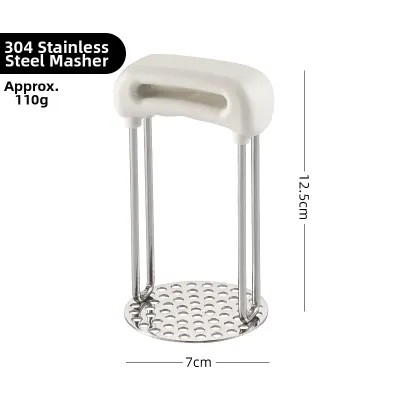
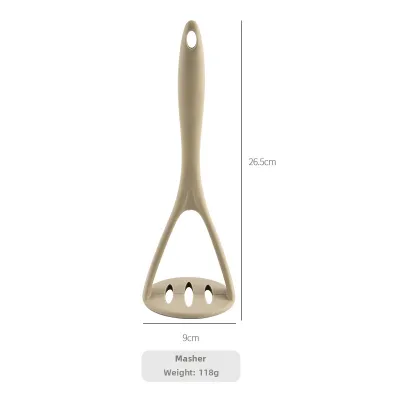

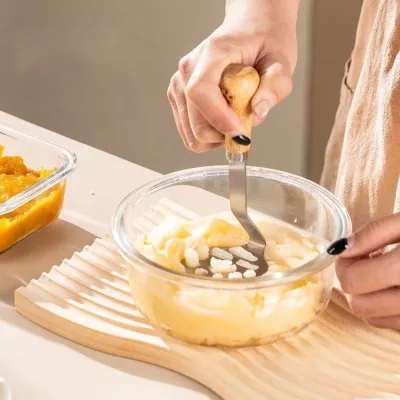
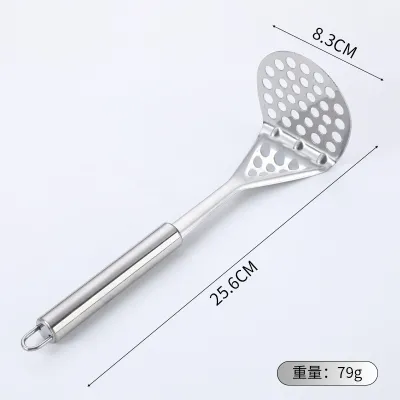
![[SG Seller] Stainless Steel Potato Masher Ricer Puree Fruit Vegetable Juicer Press Maker Baby Food Making Tool Multifunction Kitchen Tools](https://img.lazcdn.com/g/p/02143d29cfd8ff20f141b6fde4c3290d.jpg_400x400q80.jpg_.webp)
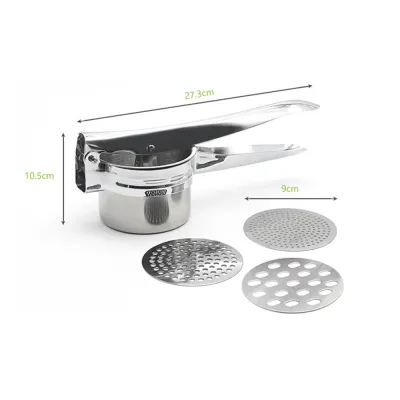

Prices are valid at publication and may change. Please refer to the product page for the latest price.

To help you quickly scan the primary differences before diving into the detailed analysis, the table below outlines how these two types of mashers compare across core functional dimensions:
| Dimension | Manual Baby Food Masher | Electric Baby Food Masher |
|---|---|---|
| Power Source | Manual physical effort (hand-held) | Electricity (mains power or rechargeable battery) |
| Ideal Batch Size | Small, single-serving fresh portions | Large batches for meal prep and freezing |
| Texture Consistency | Variable, ranges from textured mash to coarse purees | Highly uniform, ranges from ultra-smooth to fine purees |
| Cleanup Effort | Very low; few parts, highly dishwasher-safe | Moderate; multiple parts, blades, and seals to wash |
| Portability | Excellent; compact, lightweight, cordless | Limited; bulkier, requires power source or charging |
| Typical Price Positioning | Budget-friendly initial cost | Higher initial investment |
When reviewing these options, it is helpful to consider your specific kitchen environment. For instance, in a compact kitchen where counter space and cabinet storage are at a premium, a manual tool’s small footprint is highly advantageous. On the other hand, if you have ample counter space and prioritize reducing physical prep time, the higher initial investment of an electric model may offer greater long-term value.
Texture Control: Matching Consistency to Weaning Stages
To support your baby’s oral motor development, the texture of their food must evolve as they grow. Different tools offer varying degrees of control over these texture transitions, which can impact how smoothly your baby progresses from liquid milk to solid family meals.
Early Weaning (Smooth Purees)
At the start of the weaning journey, typically around six months of age, babies require incredibly smooth, lump-free purees to help them transition safely to swallowing solids. Electric baby food mashers excel in this initial phase. Their high-speed motorized blades can pulverise tough fibres in vegetables like broccoli or celery, creating a silky, completely uniform consistency in seconds.
Achieving this level of smoothness with a manual masher is possible but demands a significant amount of physical effort and time. Parents must steam or boil the food until it is exceptionally soft, then repeatedly press, grind, or push the ingredients through a fine mesh or textured bowl. Even with thorough manual mashing, tiny lumps may remain, which some babies in the very early stages of weaning might reject or struggle to swallow comfortably.
Mid to Late Weaning (Mashed and Chunky Textures)
As your baby reaches seven to nine months and beyond, their feeding needs shift from smooth purees to textured mashes, small lumps, and soft finger foods. This progression is vital for developing their chewing muscles and jaw coordination. In this stage, manual baby food mashers offer a distinct advantage due to their excellent tactile feedback.
When using a hand-held manual masher, you can feel the resistance of the food directly. This physical connection allows you to easily control the exact level of chunkiness, leaving intentional small lumps of sweet potato, carrot, or banana for your baby to practice chewing. With an electric masher, the line between a textured mash and a completely liquefied puree is incredibly thin. Just a few extra seconds of blending or failing to pulse the motor carefully can over-process the meal, removing the textured elements your baby needs to practice their oral skills.
Convenience and Daily Workflow: Prep, Cleaning, and Storage
The practicality of a baby food tool is tested daily in the kitchen. Evaluating how much time and energy each option demands during preparation, washing, and storage can help prevent caregiver burnout during a busy weaning schedule.
Preparation and Operation
The daily preparation routine looks very different depending on the machine you choose. Electric models offer a plug-and-play or charge-and-play experience. Once your ingredients are cooked, you simply place them into the blending cup, secure the lid, and press a button. This hands-free or minimal-effort operation is incredibly helpful for processing large volumes of food. If you prefer to dedicate a Sunday afternoon to batch-cooking and freezing a week’s worth of purees in silicone trays, an electric model will save you hours of physical labor.
Conversely, manual mashers require active physical effort, which can become tiring if you are preparing large quantities. However, they shine when it comes to preparing a single fresh portion right before a meal. If you want to mash a small piece of steamed pumpkin or half a ripe avocado directly into your baby’s bowl, retrieving, assembling, and plugging in a large electric processor can feel like unnecessary hassle. A manual hand-held masher allows you to prep the food, feed your baby, and finish the job without ever needing to look for an electrical outlet.
Cleaning and Storage
Post-meal cleanup is another critical factor to weigh. Manual baby food mashers typically consist of just one or two simple pieces, such as a textured mashing bowl and a hand-held grinding tool. They have no electrical components, no hidden crevices, and are almost always completely dishwasher-safe. You can rinse them under running tap water immediately after use, and they are clean in seconds.
Electric mashers require a more involved, careful cleaning routine. You must disassemble the unit, separating the blending jar, the sharp blade assembly, silicone gaskets, and the lid. Because these parts come into direct contact with moist food, they must be thoroughly washed and dried to prevent the growth of mold or bacteria—a critical hygiene priority for infant feeding equipment. The motor base itself cannot be submerged in water and must be wiped down manually. Additionally, storing an electric appliance with its cords and multiple attachments requires more dedicated cupboard or countertop space compared to a manual masher, which fits easily into a standard kitchen drawer.
Portability and Travel: Feeding on the Go
Maintaining a weaning routine while away from home presents its own set of challenges, whether you are running errands, visiting relatives, or traveling.
Manual baby food mashers are inherently designed for mobility. They are compact, lightweight, and completely cordless, making them incredibly easy to pack into a diaper bag. If you are dining out at a cafe or hawker centre in Singapore, you can simply order a side of steamed vegetables or use soft food from your own plate, mash it on the spot in a manual bowl, and feed your baby immediately. There is no need to worry about finding an electrical outlet, carrying heavy adapters, or managing battery life.
Electric mashers, even compact or rechargeable cordless models, are less practical for mobile lifestyles. They are heavier, take up valuable space in your luggage or diaper bag, and require you to carry charging cables or search for power sources. If you are traveling abroad, you also have to consider voltage compatibility for plug-in models. Because of these challenges, many parents who prefer the power of an electric model at home choose to adopt a dual approach, keeping a simple, inexpensive manual masher specifically for travel and dining out.
Decision Framework: Choosing the Right Masher for Your Family
To help you make the final choice for your household, use this structured decision framework to align each option with your lifestyle and weaning goals.
Choose a Manual Masher if:
- You prefer preparing small, fresh portions of food directly before each meal rather than storing leftovers.
- You travel frequently, enjoy dining out, or need a highly portable tool that fits easily into a diaper bag.
- You want a quick, hassle-free cleanup process with minimal parts to wash and dry.
- You value precise, hands-on control over food textures, especially as your baby transitions to chunkier, mashed meals.
- You are working with a limited budget or prefer not to dedicate precious kitchen counter space to another electrical appliance.
Choose an Electric Masher if:
- You prefer batch-cooking large quantities of baby food to freeze and store in portion-sized containers for the week.
- You want to achieve perfectly smooth, lump-free purees during the early stages of weaning with minimal physical effort.
- You have limited hand or wrist mobility, making the physical action of manual mashing uncomfortable or difficult.
- You appreciate hands-free operation and want to multitask in the kitchen while the machine processes the food.
- You are comfortable with a more detailed cleanup routine involving multiple disassembled parts, blades, and seals.
Verify First if:
- You are considering a multi-function electric baby food processor that steams and blends in one unit. Before purchasing, verify the manufacturer's minimum capacity requirements. Some larger electric blenders require a minimum volume of food to engage the blades effectively. If you attempt to blend a micro-portion, the blades may spin empty or push the food to the sides of the bowl without processing it, leading to food waste and frustration.
Safety and Maintenance: What to Verify Before Use
Regardless of which baby food masher you choose, prioritizing safety and hygiene is essential during your weaning journey. Always check the manufacturer’s guidelines for age suitability, developmental stage recommendations, and specific material care instructions before using any new product.
When using a manual masher, regularly inspect the tool for signs of wear and tear. Look closely for cracking plastic, fraying mesh screens, or loose components. Over time, physical stress can cause these materials to degrade, potentially creating small pieces that could pose a choking hazard to your baby. If you notice any structural damage, discontinue use immediately and replace the item.
For electric mashers, blade integrity and hygiene are paramount. Inspect the blades regularly to ensure they remain sharp and free of chips or rust. When cleaning, pay close attention to the silicone seals and gaskets. In Singapore’s warm, humid climate, any trapped moisture can quickly lead to hidden mold or bacterial growth. Ensure all parts are completely dry before reassembling and storing the unit. Additionally, if your electric model features a built-in heating or steaming function, always verify the temperature of the food yourself before serving it to your baby to prevent accidental burns.
Finally, always supervise your baby closely during every feed. If you are ever unsure about your baby’s developmental readiness for specific food textures, or if they experience persistent gagging or difficulty swallowing, consult your pediatrician or a qualified pediatric healthcare professional for personalized guidance.
Frequently Asked Questions (FAQ)
Can I use a regular household blender instead of a baby food masher?
Yes, you can use a standard household blender to prepare baby food, but it comes with practical trade-offs. Standard kitchen blenders are designed for larger volumes of food. When you try to blend a single, small portion of baby food, the ingredients often get stuck under or around the blades, or the blades fail to catch the food entirely, requiring you to add excess liquid which can dilute the nutritional density of the meal. Furthermore, standard household blenders have complex, non-removable blade assemblies and deep jars that can be difficult to sanitize thoroughly. Dedicated baby food mashers, whether manual or electric, are specifically designed for small, hygienic batches and are much easier to disassemble and sterilize completely for exclusive infant use.
When should I stop using a baby food masher?
You can gradually phase out using a baby food masher as your baby demonstrates the oral motor skills necessary to handle soft, chopped family foods. This transition typically occurs between 10 to 12 months of age, though every child develops at their own pace. Look for developmental cues, such as your baby successfully chewing and swallowing soft lumps, showing an active interest in picking up finger foods, and mimicking the chewing motions of adults. Once your baby can comfortably manage soft, bite-sized pieces of family meals, you can transition to simply cutting their food into safe, age-appropriate sizes with a knife or kitchen shears. Always consult your pediatrician or a feeding specialist if you have concerns about your child’s chewing or swallowing development.

Community discussion
Share your experience or ask a question. Comments are reviewed before publication.