
Finding the right diaper for a growing toddler in Singapore’s warm, humid climate requires balancing fit, absorption, and skin comfort. While MamyPoko Tape XL, Pampers, and Huggies are three of the most popular options on the market, no single brand offers a universal solution for every child. Toddlers at the XL size stage are highly active, meaning their physical proportions, movement patterns, and skin sensitivity will dictate which diaper performs best.
To make an informed choice, parents must look beyond brand reputation and evaluate specific design elements. This comparison focuses on how to assess waistband elasticity, core absorption structures, material breathability, and overall cost-efficiency in S$. By understanding what to look for on product packaging and how to observe the diaper in action, you can identify the option that keeps your toddler dry and comfortable throughout the day and night.
Evaluating Fit and Sizing for Active XL Toddlers
As toddlers transition into XL sizes, their body shapes vary significantly. Some toddlers have rounder bellies and thicker thighs, while others are taller and leaner. The fastening tape system of a diaper plays a crucial role in accommodating these diverse shapes. When evaluating MamyPoko Tape XL, Pampers, and Huggies, pay close attention to the stretchability of the fastening zones. A high-quality tape diaper should feature elasticated tabs or a flexible back waistband that stretches smoothly to secure a snug fit without restricting your toddler’s natural movements or breathing.
Products mentioned in this guide
![MamyPoko Royal Soft Tape XL 34pcs x 4 Packs Diapers [ORGANIC COTTON]](https://img.lazcdn.com/g/ff/kf/Sde2b29ef979f49669d69dda1f05caa89v.jpg_400x400q80.jpg_.webp)
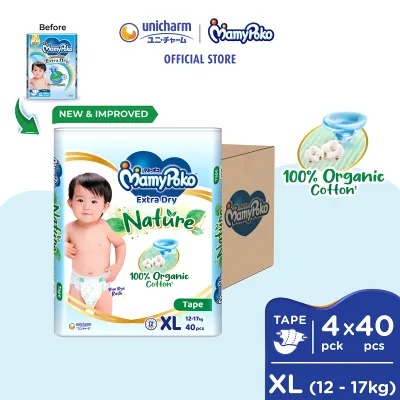
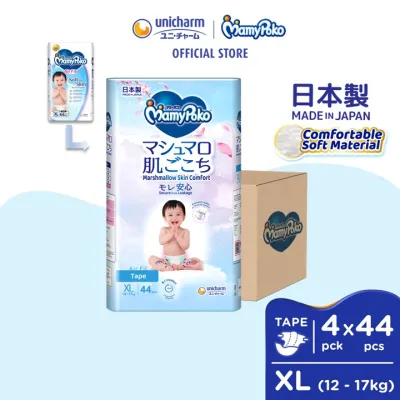
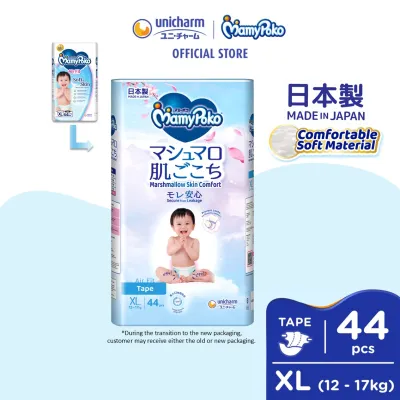
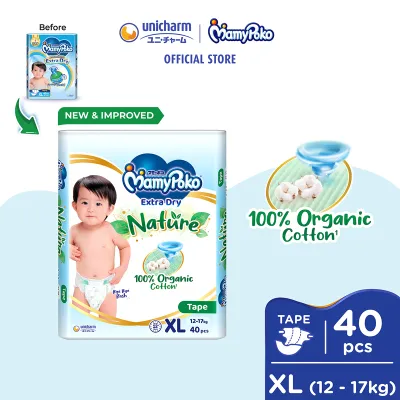
![[1 Carton] MamyPoko Extra Dry Tape Diapers](https://img.lazcdn.com/g/p/d852ac4a243f0ee6be2d315b15b2408a.png_400x400q80.png_.webp)
![[BUY 2 FREE 1] MamyPoko Air Fit Tape Super Premium Baby Diapers NB90/S84 (3 options)](https://img.lazcdn.com/g/p/be89baf2238c1f1e4df47eb9c8b1a726.jpg_400x400q80.jpg_.webp)
Prices are valid at publication and may change. Please refer to the product page for the latest price.
Leg cuffs and leak guards are equally critical for active toddlers who spend their days running, climbing, and sitting. Look for double-layered leg gathers that contour gently around the thighs. These cuffs should stand upright when the diaper is unfolded, acting as a physical barrier against leaks. When comparing brands, observe how deeply the leg cuffs sit in the groin crease. A cuff that is too tight can cause chafing, especially in Singapore’s humid weather, while a cuff that is too loose will inevitably lead to side leaks during active play.
To determine the ideal fit for your toddler, perform a simple physical check after fastening the diaper. You should be able to slide two fingers comfortably between the diaper waistband and your toddler’s stomach. Additionally, check the tape positioning indicators on the front landing zone; if the tapes must be fastened at the very outer edges to secure the diaper, it is time to transition to a larger size or a brand with a wider cut. Conversely, if the diaper gaps at the thighs when your toddler bends their knees, the current cut may be too generous for their frame.
Comparing Absorption and Leak Protection Capabilities
Absorption needs change dramatically as toddlers grow, with higher urine volumes concentrated in shorter periods. Different brands utilize distinct core technologies to distribute this liquid. Some designs feature centralized channels that guide moisture away from the point of impact, preventing the diaper from sagging or pooling in one spot. When comparing MamyPoko, Pampers, and Huggies, examine the manufacturer’s descriptions of their core structures—such as gel-based absorbents or fibrous distribution layers—to understand how they manage heavy wetting.

Daytime active wear and nighttime sleep require different absorption profiles. During the day, a diaper must withstand constant compression from sitting and crawling without squeezing moisture back onto the skin. For overnight use, the priority shifts to total capacity and long-term dryness. Parents should verify whether a brand offers a dedicated night-use variant or if their standard XL tape diaper is rated for extended wear. A diaper with a high-capacity core reduces the need for disruptive midnight changes, supporting better sleep quality for both toddler and caregiver.
Monitoring saturation indicators is the most reliable way to assess real-world performance. Many modern XL diapers include a wetness indicator strip that changes color when wet. However, parents should also perform physical checks by feeling the outside of the diaper for coldness or heavy sagging. If the diaper feels full or damp to the touch within two hours of wear, or if you notice frequent leaks despite a proper fit, the absorption capacity may not be matching your toddler’s output, indicating a need to adjust your changing frequency or try a different core design.
Assessing Materials, Breathability, and Skin Comfort
Singapore’s tropical climate makes breathability a primary concern for diapering. High humidity and heat can trap moisture inside the diaper, creating an environment prone to diaper rash and skin irritation. The top sheet—the layer in direct contact with your toddler’s skin—must quickly wick moisture away into the absorbent core. When evaluating diaper samples, feel the inner lining for softness and look for textured surfaces, such as 3D embossed patterns, which minimize skin contact and allow air to circulate.
The outer cover, or back sheet, is just as important for temperature regulation. Breathable back sheets feature microscopic pores that allow hot air and moisture vapor to escape while keeping liquid safely contained. Brands often highlight these breathable membranes on their packaging. To verify these claims, observe your toddler’s skin during changes; if the skin consistently feels damp or warm, the diaper may not be ventilating adequately for your child’s activity level in local weather conditions.
For toddlers with sensitive skin or a history of eczema, checking product labels for chemical additives is essential. Look for clear indications that the diapers are fragrance-free, lotion-free, and elemental chlorine-free. Some brands incorporate natural botanical extracts or hypoallergenic materials to soothe the skin, but these can vary by product line. Always consult the manufacturer’s ingredient list and packaging certifications to verify these claims, and stop use immediately if you observe persistent redness or hives, consulting a pediatrician for professional guidance.
Calculating True Value and Cost-Per-Diaper in S$
Evaluating diaper costs requires looking past the shelf price of a single pack. Because pack counts vary widely between brands and sizes, calculating the unit cost—or cost-per-diaper—is the most accurate way to compare value. To find this, divide the total price of the pack in S$ by the number of diapers inside. For example, if a pack costs S$24.00 and contains 40 diapers, the unit cost is S$0.60 per diaper. Keeping a simple log of these unit prices helps you identify genuine savings when shopping across different online marketplaces or local supermarkets.
Bulk purchasing and promotional bundles are common ways to reduce diaper expenses in Singapore, but they require careful planning. Consider your home’s storage space, especially if you live in a compact apartment where bulky boxes can quickly clutter living areas. Additionally, keep your toddler’s growth rate in mind; buying multiple cartons of XL tape diapers might lead to leftover stock if your toddler suddenly spurts in growth or transitions to toilet training sooner than expected. Always check the manufacturer’s recommended weight ranges to ensure you do not overbuy a size they are about to outgrow.
Hidden costs can quickly offset any initial savings from a cheaper diaper brand. If a lower-priced diaper suffers from frequent leaks, you will face increased costs from extra laundry cycles, water bills, and ruined clothing or bedding. Furthermore, if a diaper has lower absorption capacity, you may find yourself changing your toddler twice as often, doubling your daily diaper consumption. Factor these practical observations into your overall budget calculations to determine which brand offers the best long-term value for your household.
Decision Framework: Choosing the Right Brand for Your Toddler
Selecting the right diaper involves matching your toddler’s physical traits and your daily routine to the specific strengths of each brand. Consider MamyPoko Tape XL if your toddler has a body shape that benefits from a highly adjustable tape system and a core layout designed to handle heavy, localized wetting. This option is often favored by parents who prefer a generous cut that accommodates active movements without slipping.
Evaluate Pampers if your primary focus is on material softness, lightweight construction, and advanced moisture-wicking technology. This brand is often suitable for parents prioritizing a slim profile under clothing and a gentle, flexible fit that moves easily with a busy toddler. It is a strong candidate for daytime wear when maximum flexibility and skin dryness are key.
Look into Huggies if your toddler requires robust leg cuff containment and a secure, snug waistband fit to prevent blowouts. This design is particularly useful for toddlers who are highly active or prone to sudden, heavy bowel movements, as the structured barriers provide reliable physical containment.
Before making a final decision, always verify your toddler’s current weight against the manufacturer’s sizing guidelines, as fit can vary between different product lines of the same brand. If your child has known skin sensitivities, prioritize checking for hypoallergenic and fragrance-free labels. Testing small packs or requesting sample diapers from official brand channels is highly recommended before committing to bulk purchases, allowing you to observe how the diaper performs on your toddler in real-world conditions.
Frequently Asked Questions (FAQ)
When should I switch my toddler from pants to tape diapers in XL?
While many parents transition to pants diapers as toddlers become more active, tape diapers in XL remain highly practical in several scenarios. If your toddler strongly resists standing still during diaper changes, tape diapers allow you to secure the fit quickly while they are lying down. They are also exceptionally convenient for nighttime changes, as you can replace the diaper without completely removing your toddler’s pants, pajamas, or shoes. Additionally, tape diapers often have a lower unit cost in S$ compared to their pants counterparts, making them a budget-friendly choice for household savings.
How do I know if the XL tape diaper is too small for my toddler?
Several physical indicators suggest your toddler has outgrown their XL tape diaper or needs a different brand’s cut. Look for red marks or deep indentations left on your toddler’s waist, hips, or inner thighs after wear, which indicate the elastic or tape is too tight. Frequent leaks, especially around the waist or legs during sleep, are another common sign that the diaper’s absorption capacity or physical coverage is no longer sufficient. If the fastening tapes can only be secured at the very edges of the landing zone, consult the manufacturer’s weight chart to see if it is time to transition to the next size up.

Community discussion
Share your experience or ask a question. Comments are reviewed before publication.