
Finding the right pull-up diaper for an active toddler is a balancing act between reliable leak protection and a comfortable, secure fit. As babies transition from crawling to walking, their movement patterns change, requiring diapering solutions that move with them without sagging or causing friction. MamyPoko Pants have long been a popular choice among parents in Singapore, but understanding how they compare to other leading pull-up diaper brands requires looking closely at key performance indicators like absorbency speed, core capacity, waistband flexibility, and leg cuff design. By evaluating these features systematically, caregivers can make an informed decision that keeps their child dry and comfortable throughout the day and night.
How to Evaluate Absorbency in Pull-Up Diapers
Absorbency is the primary function of any diaper, but the way a pull-up diaper handles liquid is structurally different from a traditional tape diaper. Because pull-up pants are designed for active toddlers who spend more time upright, walking, and climbing, the absorbent core must distribute liquid quickly and evenly to prevent sagging in the crotch area. When evaluating absorbency, parents should look at the core construction, which typically consists of a blend of superabsorbent polymers (SAP) and wood pulp, or in some modern designs, a pure SAP channel core.
The speed of absorption is critical for preventing skin irritation. An acquisition distribution layer (ADL) sits just beneath the top sheet to draw liquid away from the baby’s skin rapidly and direct it into the absorbent core. To evaluate this at home, observe the surface of the diaper during changes; a high-performing diaper should feel relatively dry to the touch even when full. If the inner lining feels damp or if your child develops redness in the diaper area, the absorption speed or the capacity may not be sufficient for their needs.
Products mentioned in this guide
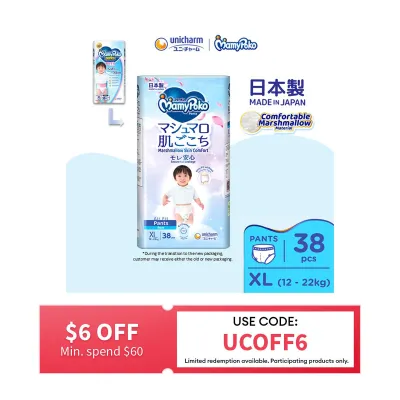
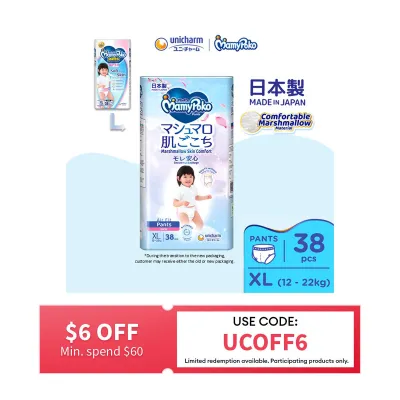
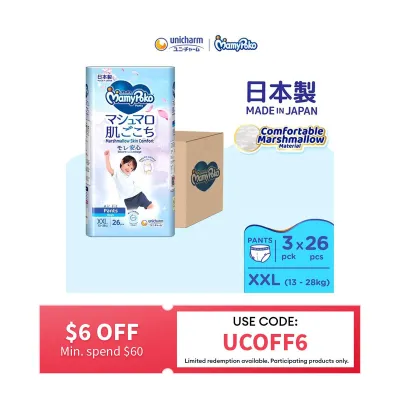
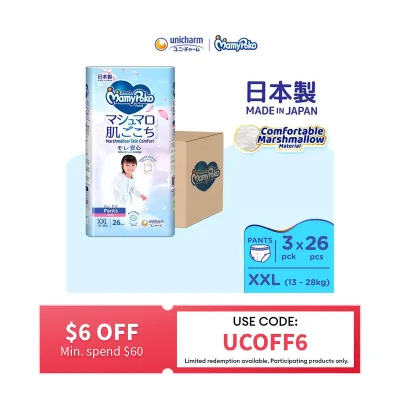
![MamyPoko Air Fit Marshmallow Pants Super Premium Baby Diapers [GIRL] XXL26 (3 Packs) (13 - 28kg)](https://img.lazcdn.com/g/p/9e635e643a164e1d30d3f2a97fbf7113.jpg_400x400q80.jpg_.webp)
![Mamypoko Kids Pants Premium Baby Diapers [BOY] XXL30 (3 Packs) (15 - 25kg)](https://img.lazcdn.com/g/p/4f2d24b5d1279206ae4f73815d755047.jpg_400x400q80.jpg_.webp)
![MamyPoko Air Fit Marshmallow Pants Super Premium Baby Diapers [GIRL] XL38 (1 Pack) (12 - 22kg)](https://img.lazcdn.com/g/p/695472e6615fc8e51f00c424e0f89297.jpg_400x400q80.jpg_.webp)
Prices are valid at publication and may change. Please refer to the product page for the latest price.
Another factor is core stability. Some diapers use channel technology, which locks the absorbent material into specific vertical columns. This prevents the wet core from clumping or breaking apart when the child runs or jumps. Traditional pulp-and-polymer cores may swell into a single large gel mass, which can sometimes sag and pull the waistband down. When comparing brands, consider whether the diaper maintains its structural integrity when wet, as a sagging diaper is far more prone to leaking around the legs.
Assessing Fit and Comfort for Active Toddlers
A diaper with excellent absorbency can still leak if the fit is incorrect. For active toddlers, the fit around the waist and thighs is paramount. Unlike tape diapers, which allow for custom adjustments at the waist, pull-up pants rely entirely on the built-in elasticity of the waistband and leg cuffs. A proper fit should be snug enough to prevent gaps when the child bends or sits, yet gentle enough to leave no deep red marks on the skin.

The waistband should offer 360-degree elasticity. High-quality pull-up pants feature multi-strand elastic bands wrapped in soft, non-woven fabric. This design allows the waistband to expand and contract naturally with the child’s breathing and abdominal movement, especially after meals. When trying a new brand, check how easily the waistband stretches; it should require minimal effort to pull up over the hips but retract fully to sit securely against the lower back and stomach.
Leg cuffs, or leak guards, are the second line of defense against messes. Most modern pull-up diapers feature double-layered leg gathers. The inner gather should stand upright against the baby’s thigh, while the outer gather flares outward to create a secure seal. If the leg cuffs are too loose, liquid will escape before the core can absorb it. Conversely, if they are too tight, they can restrict circulation and cause chafing. Always run a finger around the leg bands after putting on a pull-up diaper to ensure the cuffs are fully extended and not tucked inward.
MamyPoko Pants vs. Competing Brands: Feature Breakdown
When comparing MamyPoko Pants to other major pull-up diaper brands available on the market, several distinct design philosophies emerge. MamyPoko is widely recognized for its focus on generous sizing, deep waistbands, and robust absorbent cores. Their signature designs often feature a highly elastic, high-rise waistband that sits comfortably above the hips, reducing the likelihood of the diaper sliding down during vigorous play. Additionally, many of their product lines utilize a specialized wavy or criss-cross top sheet designed to distribute wetness quickly across the entire length of the core.
In contrast, many premium European and organic brands prioritize an ultra-thin profile. These brands often utilize advanced channel technology that minimizes bulk, making the diaper virtually invisible under clothing. While these thin-core diapers are highly flexible and lightweight, some parents find that they have a lower total liquid capacity compared to the thicker, pulp-rich cores found in traditional brands like MamyPoko. For daytime wear, a thin-core diaper may offer superior freedom of movement, while a thicker, high-capacity core may be preferred for long outings or overnight use.
Another category of competitors includes budget-friendly house brands and standard-tier diapers. These options often simplify the waistband construction, utilizing fewer elastic strands or slightly stiffer materials. While they provide an economical choice for frequent daytime changes, they may lack the specialized distribution layers or the ultra-soft leg cuffs found in premium lines. This can sometimes result in a higher frequency of sagging or minor leaks if the diaper is not changed immediately after wetting.
Finally, premium organic pull-up diapers focus heavily on material purity, using unbleached wood pulp, plant-based outer sheets, and hypoallergenic materials free from fragrances and chlorine. While excellent for children with extremely sensitive skin or eczema, these diapers sometimes feature less stretch in their waistbands due to the use of natural fibers, which can affect the overall snugness of the fit compared to the highly synthetic, high-stretch elastics used in mainstream brands like MamyPoko.
How to Choose the Right Pull-Up Diaper for Your Child
Choosing the ideal pull-up diaper involves matching your child’s unique body shape, skin sensitivity, and daily routine to the right product features. There is no single diaper that works perfectly for every child, so a systematic selection process is the best approach. Start by assessing your child’s body shape; babies with rounder bellies and thighs often benefit from high-rise, highly elastic waistbands like those found on MamyPoko Pants, while slimmer babies may get a better seal from brands with narrower cuts and tighter leg gathers.
Next, consider the primary usage scenario. If you are looking for a diaper primarily for daytime active wear, flexibility, thinness, and breathability should be your top priorities. For overnight use, focus on maximum absorbency capacity and a secure waist seal to prevent leaks when your child rolls over. Many parents find success by using a lighter, thinner diaper during the day and a high-capacity, dedicated overnight diaper or a larger size of their regular brand at night.
Budget is also a practical factor for most families. In Singapore, pull-up diapers can range from approximately S$0.30 to over S$0.80 per piece. To balance cost and performance, some households use budget-friendly or thinner diapers during the day when changes are frequent, and reserve premium, high-absorbency diapers for nighttime or long travel periods. When calculating costs, always compare the price per piece rather than the price per pack, as pack counts vary significantly between brands and sizes.
Before purchasing diapers in bulk, it is highly recommended to obtain sample packs or small trial packages. This allows you to test the fit, observe how the materials interact with your child’s skin, and evaluate the absorbency under real-world conditions. Look for signs of success: the diaper should remain in place during play, leave no red marks upon removal, and keep the skin dry and free from irritation.
Frequently Asked Questions (FAQ)
When should I transition my baby from tape diapers to pull-up pants?
The transition from tape diapers to pull-up pants is typically driven by developmental milestones rather than a specific age. A clear sign that it is time to switch is when your baby becomes highly active during diaper changes, making it difficult or unsafe to keep them still on a changing mat. If your child constantly rolls over, crawls away, or stands up while you are trying to fasten diaper tapes, pull-up pants offer a much faster and less stressful diapering experience. Additionally, pull-up pants are excellent for toddlers who are starting to show interest in potty training, as they can be easily pulled down and up like regular underwear, fostering independence.
Can pull-up diapers be used overnight instead of regular tape diapers?
Yes, pull-up diapers can be highly effective for overnight use, provided you choose a variant with sufficient absorbency and a secure fit. Many standard pull-up pants offer excellent core capacity that can handle multiple wettings throughout the night. However, because babies move frequently in their sleep, ensuring a snug fit around the waist and legs is crucial to prevent side leaks. If you experience leaks overnight, consider sizing up by one size for nighttime wear to gain extra absorbency capacity, or look for specialized overnight pull-up pants that feature reinforced absorbent zones and enhanced leak guards designed specifically for extended wear.

Community discussion
Share your experience or ask a question. Comments are reviewed before publication.