
Choosing the right premium diaper for an active toddler in Singapore is a balancing act between leak protection, physical comfort, and household budget. As toddlers transition into the XL size, their physical needs change. They are no longer stationary infants; they are running, climbing, and testing the limits of their diaper’s waistband and leg cuffs. At the same time, their bladder capacity increases, making overnight absorbency a critical factor for uninterrupted sleep.
MamyPoko XL, Pampers, and Huggies represent three of the most popular premium choices available to parents. Each brand approaches toddler mobility and containment with distinct design philosophies. MamyPoko is frequently noted for its generous, accommodating cut and high-absorbency core designs. Pampers typically prioritizes a lightweight, low-bulk profile that mimics real underwear, while Huggies often emphasizes structured, form-fitting waistbands to prevent sagging. Deciding which brand is right for your household requires looking past marketing slogans and examining the physical construction, sizing accuracy, and unit economics of each option.
What Matters Most in a Premium Toddler Diaper?
When a child reaches the weight range requiring an XL diaper, diaper performance is tested in ways that smaller sizes rarely experience. Toddlers possess a high degree of mobility, which subjects diaper seams and waistbands to constant friction and stretching. A diaper that fits perfectly while a toddler is lying down may gap or sag when they squat, climb, or run, leading to unexpected leaks.
Products mentioned in this guide
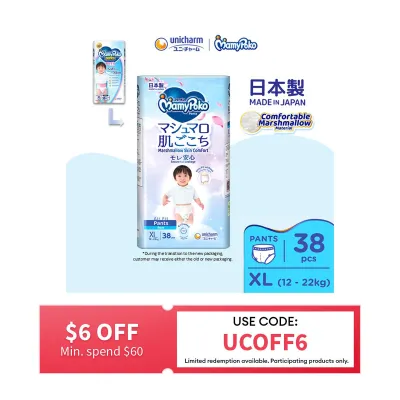
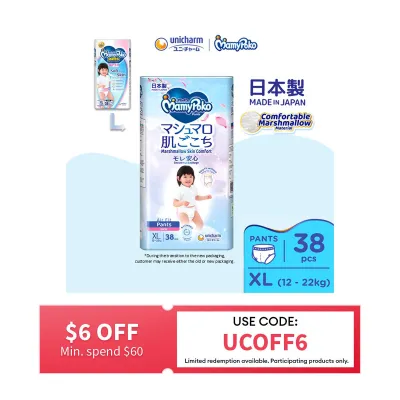
![MamyPoko Extra Dry Pants Premium Baby Diapers [UNISEX] XL32 (4 Packs) (12 - 17kg)](https://img.lazcdn.com/g/p/5b6058567bfc55657495390de0e16873.jpg_400x400q80.jpg_.webp)
![MamyPoko Air Fit Marshmallow Pants Super Premium Baby Diapers [BOY] XL38 (4 Packs) (12 - 22kg)](https://img.lazcdn.com/g/p/eacd96335d996f78b394f6a3845f958a.jpg_400x400q80.jpg_.webp)
![MamyPoko Air Fit Marshmallow Pants Super Premium Baby Diapers [GIRL] XL38 (4 Packs) (12 - 22kg)](https://img.lazcdn.com/g/p/7e9abcc54adccb541468bb7826797a40.jpg_400x400q80.jpg_.webp)
![MamyPoko Air Fit Marshmallow Pants Super Premium Baby Diapers [GIRL] XL38 (1 Pack) (12 - 22kg)](https://img.lazcdn.com/g/p/695472e6615fc8e51f00c424e0f89297.jpg_400x400q80.jpg_.webp)
Prices are valid at publication and may change. Please refer to the product page for the latest price.
Bladder capacity also increases significantly during the toddler stage. Diapers must not only absorb larger volumes of liquid quickly but must also distribute that moisture evenly to prevent sagging and skin irritation. Because toddlers spend more time upright and active, gravity can cause liquid to pool in one area of the diaper if the absorbent core lacks structured channels.
Skin sensitivity remains a primary concern for parents of toddlers. Although older babies generally have more resilient skin than newborns, the combination of friction from constant movement and prolonged exposure to moisture can quickly lead to diaper rash. A premium diaper must balance effective moisture isolation with breathable outer materials that allow heat and humidity to escape, especially in warm, humid climates. If persistent skin irritation or severe diaper rash occurs, parents should consult a healthcare professional rather than relying solely on diaper changes.
Finally, cost-efficiency becomes a major factor as children remain in diaper pants for an extended period before toilet training is complete. Because XL diapers contain fewer pieces per pack than smaller sizes, the unit cost rises. Parents must evaluate whether a diaper’s performance justifies its premium price tag, or if a more economical option can deliver comparable results for daytime use.
Absorbency and Leak Protection Compared
The core technology of a diaper determines how well it manages heavy wetting and prevents leaks during active play and long overnight stretches. MamyPoko, Pampers, and Huggies utilize different structural designs to absorb and distribute liquid. Understanding these differences helps parents select a diaper that matches their toddler’s specific wetting patterns.

MamyPoko often utilizes a thick, highly absorbent core design that focuses on maximum storage capacity. This structure is designed to handle multiple wettings over several hours, making it a common choice for overnight use. The trade-off for this high capacity is often a bulkier profile, which can become noticeably heavy when fully saturated. Parents should observe whether the diaper sags excessively between the legs, as this can restrict a toddler’s movement.
Pampers typically employs a channeled core design that distributes liquid rapidly along parallel paths. This design aims to keep the diaper thin and lightweight, even when wet, by preventing liquid from pooling in a single spot. While this thin profile is highly beneficial for daytime mobility, parents should monitor whether the rapid distribution system keeps up with sudden, heavy bursts of urine, which are common as toddlers grow.
Huggies generally focuses on a balanced core structure that combines uniform padding with targeted absorption zones. This design is intended to provide reliable protection for both boys and girls by placing absorbent materials where they are needed most. When evaluating Huggies, parents should check the integrity of the absorbent material after several hours of active play to ensure it does not clump or break apart inside the diaper casing.
To evaluate leak protection at home, parents can perform simple, observable checks rather than relying on brand claims. First, inspect the leg cuffs after your toddler has been running or climbing; the inner barriers should stand upright and wrap snugly around the thighs without gaps. Second, check the waistband after a long nap; a damp waistband often indicates that the absorbent core has reached its limit or that liquid is escaping from the top of the diaper due to poor fit.
Fit, Comfort, and Mobility for Active Play
An active toddler requires a diaper that moves with them without causing chafing, red marks, or restriction. The fit of a diaper pant is determined by its waistband elasticity, leg cuff construction, and overall cut. Because toddlers have vastly different body shapes—some being tall and lean, others having rounder bellies and thighs—one brand’s cut may perform significantly better than another.
MamyPoko XL pants are characterized by a generous, high-waisted cut. The elastic waistband is designed to stretch easily over rounder bellies and stay in place without digging into the skin. This accommodating fit makes MamyPoko a popular option for toddlers who find other brands too restrictive or tight around the waist. However, for leaner toddlers, this generous cut can sometimes result in loose fabric around the thighs, increasing the risk of leg leaks.
Pampers pants usually feature a highly flexible, form-fitting waistband that mimics the feel of regular underwear. The material is designed to be exceptionally soft and low-profile, reducing friction against the skin during rapid movements. This snug, underwear-like fit is highly beneficial for toddlers transitioning toward toilet training, but parents of chunkier toddlers should verify that the elastic does not leave deep red impressions on the waist or hips.
Huggies pants often emphasize a secure, structured fit with reinforced leg cuffs and a snug waistband. This design is engineered to prevent the diaper from sagging even when it is fully loaded with liquid. The structured fit provides excellent security for highly active toddlers who climb and jump, but it may feel stiffer compared to the softer, more pliable materials used by competitors. Parents should touch the inner lining and outer cover to assess whether the texture meets their standards for softness.
Breathability is another critical comfort factor that parents must verify. In warm climates, trapped heat and moisture can quickly cause discomfort and skin irritation. When examining diaper packaging, look for indicators of micro-pore materials or breathable outer layers. You can observe breathability in practice by checking if your toddler’s skin feels excessively hot or sweaty immediately after removing a diaper that has been worn during active outdoor play.
Evaluating Value: Cost per Diaper and Pack Economics
Comparing diaper prices based solely on the cost of a single pack can be highly misleading. Because different brands pack varying quantities of diapers into their bags, the only accurate way to measure value is to calculate the cost per individual diaper. This calculation allows parents to compare premium brands on an equal footing and make informed financial decisions.
To find the cost per diaper, divide the total price of the pack by the number of diapers inside. For example, if a pack costs S$24.00 and contains 40 diapers, the cost per diaper is S$0.60. Performing this simple calculation across different retailers and pack sizes often reveals that larger bulk boxes or multi-pack bundles offer a significantly lower unit cost than single packs purchased at standard retail prices.
E-commerce platforms and online marketplaces frequently offer subscription services, seasonal sales, or bulk-buy discounts that can substantially reduce the cost of premium diapers. Parents can leverage these digital tools to stock up on their preferred brand when prices are low. However, before buying in bulk, it is essential to check the weight range printed on the packaging. Toddlers grow rapidly, and purchasing too many packs of a single size can lead to wasted diapers if the child outgrows them before the supply is exhausted.
Sizing up prematurely is a common cause of unnecessary diaper spending. While it is tempting to move up to an XL size at the first sign of a leak, doing so reduces the number of diapers per pack, thereby increasing your ongoing expenses. Parents should verify that the current size is truly too small—indicated by a tight waistband, red marks, or insufficient coverage—before transitioning to the more expensive XL size.
Decision Framework: Which Brand Should You Choose?
Selecting the ideal diaper brand for your toddler involves matching their physical characteristics and daily routine to the strengths of each product. No single diaper is the perfect solution for every child, but a structured decision framework can help you narrow down the choices based on your primary priorities.
Choose MamyPoko XL if your toddler has a rounder build, requires a generous and high-waisted fit, or needs maximum overnight absorbency. This brand is highly suitable for long stretches of sleep and for children who experience red marks from tighter, more structured waistbands. It is an excellent choice for parents who prioritize raw absorption capacity and a comfortable, non-restrictive fit over a slim profile.
Choose Pampers if your toddler is highly active, has a lean to average build, and prefers a lightweight, low-bulk diaper that feels like real underwear. This option is ideal for daytime wear, outdoor activities, and toddlers who are beginning to show interest in toilet training. It is best suited for parents who value flexibility, softness, and a discreet fit under clothing.
Choose Huggies if your toddler is exceptionally active, climbs frequently, and requires a highly structured diaper that resists sagging even when wet. This brand is well-suited for parents who want maximum security against leaks during vigorous play and prefer a snug, reinforced fit around the legs and waist.
Verify first if your toddler has extremely sensitive skin or unique body proportions. Before committing to a large bulk purchase on an e-commerce platform, always buy a single small trial pack or request samples from the manufacturer. Testing a small quantity in real-world conditions allows you to observe how the diaper interacts with your toddler’s skin, movement, and wetting habits without risking a significant financial loss.
Frequently Asked Questions (FAQ)
When should I transition my toddler to XL diapers?
You should consider transitioning your toddler to XL diapers when they approach or exceed the lower weight limit printed on the XL packaging, or when the current size no longer provides adequate coverage. Physical indicators include deep red marks around your toddler’s thighs or waist, indicating the elastic is too tight. Additionally, if you experience frequent leaks or find that the absorbent core is completely saturated and heavy after only a couple of hours, it is usually a sign that your child’s bladder capacity has outgrown their current diaper size.
Can I mix different diaper brands for day and night use?
Yes, mixing different diaper brands for daytime and overnight use is a highly practical and cost-effective strategy for many families. During the day, when diapers are changed more frequently, you might opt for a lighter, more flexible, or more economical brand that supports active play and movement. For overnight use, you can switch to a highly absorbent premium brand like MamyPoko XL, which is designed to handle larger volumes of liquid over twelve hours, ensuring your toddler stays dry and sleeps soundly. If you choose this approach, monitor your toddler’s skin closely to ensure that switching between different materials and elastic designs does not cause irritation or localized chafing.

Community discussion
Share your experience or ask a question. Comments are reviewed before publication.