
Trimming a baby’s nails can be one of the most nerve-wracking tasks for new parents. Infant nails are incredibly tiny, grow surprisingly fast, and are often surrounded by delicate, squirming fingers. Choosing between the Lollababy electric nail trimmer and traditional manual baby nail clippers depends largely on your baby’s age, nail thickness, and tolerance for noise or vibration. While electric files significantly reduce the risk of cutting the skin, they require more time and may startle sensitive newborns. Manual clippers offer a quick, quiet cut but demand a steady hand to avoid nicks.
To establish a stress-free grooming routine, it helps to understand how each tool operates, where the potential safety risks lie, and how your child’s nails change as they grow. Some parents prefer the absolute control of a manual clip, while others find peace of mind in the gentle, buffer-style action of an electric trimmer. By comparing these two popular grooming methods, you can select the tool that best fits your comfort level and your baby’s developmental stage.
Ultimately, the goal is to keep those sharp little nails short enough to prevent accidental face scratches without causing any discomfort to your little one. Whether you choose a high-tech electric file or a classic pair of stainless steel clippers, proper technique and regular maintenance are key to keeping the process safe and efficient.
Products mentioned in this guide

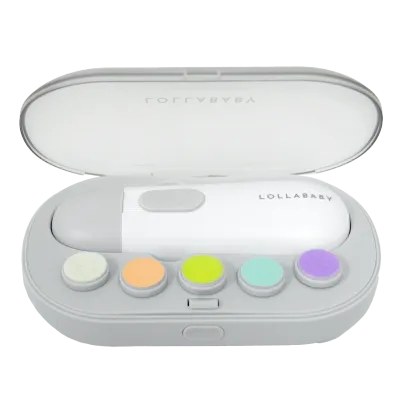
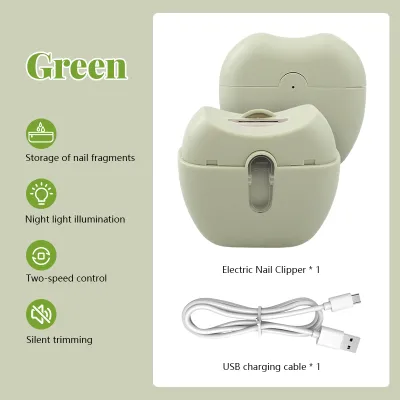
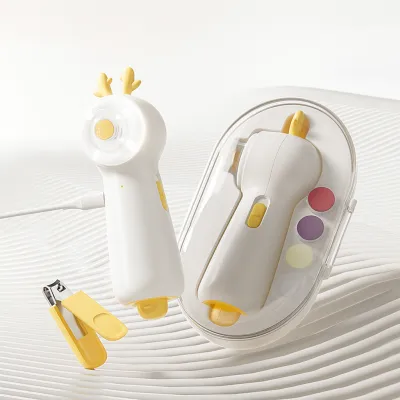
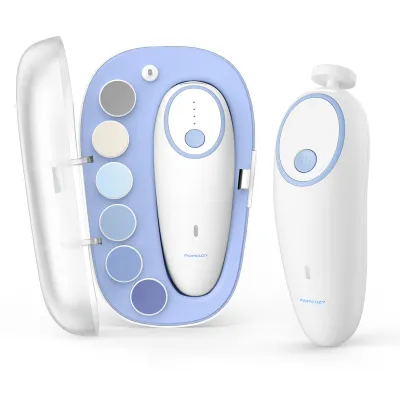
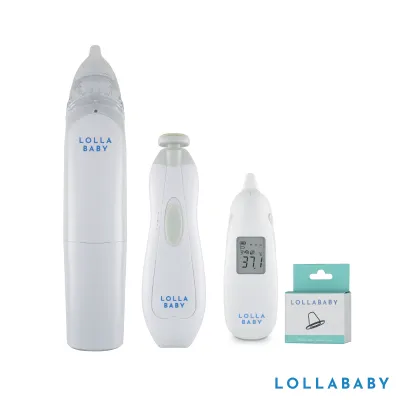
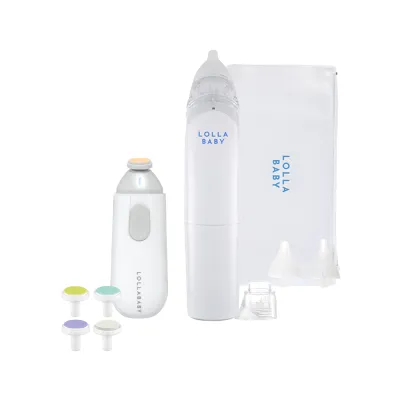
Prices are valid at publication and may change. Please refer to the product page for the latest price.
Understanding the Mechanisms: Electric File vs. Manual Clipper
The fundamental difference between these two grooming tools lies in how they remove nail material. The Lollababy electric nail trimmer operates on a rotary mechanism. It uses a small, battery-powered motor to spin a cushioned, abrasive filing disc at controlled speeds. Instead of cutting the nail, this tool uses friction to gradually wear down and smooth the nail edge. The filing pads come in various textures, ranging from very fine grit for newborns to coarser grit for older toddlers, allowing parents to customize the filing intensity.
In contrast, traditional manual baby nail clippers rely on a mechanical shearing force. These clippers typically feature two curved, stainless steel blades that meet when you press down on a lever. When positioned correctly, the blades snip through the nail in a single, swift motion. This classic design has no electronic parts, requires no batteries, and relies entirely on the parent’s manual pressure and visual alignment to complete the cut.
Before using either tool for the first time, parents should perform a thorough structural inspection. For the electric trimmer, check that the battery compartment is secure, the motor runs smoothly without unusual noises, and the filing pad is firmly attached to the rotating head. For manual clippers, inspect the blades to ensure they are perfectly aligned, clean, free of rust, and that the lever mechanism moves smoothly without catching. Understanding these physical mechanisms helps set realistic expectations for how much control you have during the grooming process.
Evaluating Safety and the Risk of Skin Nicks
Safety is almost always the primary concern for parents when it comes to baby nail care. The skin surrounding an infant’s nail bed is incredibly soft and sits very close to the nail edge. With traditional manual clippers, the most significant risk is accidentally catching the quick—the sensitive skin directly beneath the nail plate—or pinching the fingertip. Because babies are prone to sudden, jerky movements, a single flinch at the wrong moment can result in a painful nick, bleeding, and a very distressed child. To mitigate this risk, parents must learn to gently pull the baby’s finger pad away from the nail before making a cut, and work in a well-lit room.

Electric nail trimmers are widely favored for safety because they eliminate the risk of sharp metal blades coming into contact with the skin. If the rotating pad accidentally touches the surrounding skin, the cushioned backing and gentle grit generally prevent cuts. However, electric files are not entirely without risk. If you hold the spinning pad in one spot for too long, the continuous friction can generate heat, which may cause discomfort or mild skin irritation. To prevent this, you must keep the trimmer moving gently across the nail edge rather than pressing down hard on a single spot.
When shopping for an electric trimmer or preparing to use one, always verify the safety features listed on the product packaging or in the manufacturer’s manual. Look for models that feature an automatic stop mechanism, which halts the motor instantly if too much pressure is applied to the nail. Additionally, ensure you are using the correct pad grit recommended for your baby’s age, as using a toddler-grade pad on a newborn can be too abrasive for their delicate skin.
Ease of Use, Noise, and Baby's Comfort
A successful nail-trimming session often depends on how cooperative your baby is, which is heavily influenced by the sensory experience of the tool. Electric trimmers produce a low-frequency hum and a physical vibration. For some newborns and infants, this sensory input can be startling or overstimulating, causing them to pull their hands away. For other babies, the rhythmic vibration can actually be soothing, sometimes even lulling them to sleep during the process. Parents must observe their baby’s reaction and adjust their approach accordingly.
Manual clippers are completely silent, making them an excellent choice for parents who prefer to trim nails while their baby is asleep. However, using manual clippers requires extreme precision and a highly stable grip. If your baby is awake and squirming, trying to align the tiny blades with a moving target can be incredibly challenging. You must have excellent eyesight, steady hands, and a reliable light source to ensure you are only cutting the nail and not the skin.
Ergonomics also play a major role in how comfortable the process is for the caregiver. Electric trimmers typically feature a larger, contoured handle that fits comfortably in the palm of your hand, providing a secure grip. Many models also include a built-in LED light at the tip, which illuminates the baby’s nail bed and makes it much easier to see what you are doing, even in a dimly lit room. Manual clippers, being much smaller, require fine motor skills and precise finger placement, which can feel clumsy for parents with larger hands or those who feel anxious about the task.
Effectiveness Across Different Ages and Nail Types
As your baby grows, the structure and thickness of their nails change dramatically, which directly impacts which tool is most effective. Newborns have nails that are paper-thin, exceptionally soft, and grow at a rapid pace. Because these nails are so pliable, they often bend rather than cut when using manual clippers, making it easy to accidentally tear the nail or pinch the skin. An electric trimmer is highly effective for this stage, as the gentle filing action easily shapes and smooths these soft edges without any risk of tearing.
As your child transitions into toddlerhood, their nails gradually become thicker, harder, and more rigid. At this stage, the gentle filing action of an electric trimmer may feel too slow and inefficient. Trying to file down thick toddler nails can take a significant amount of time and may wear out the filing pads quickly. For older babies and toddlers, manual clippers offer the necessary cutting power to quickly and cleanly snip through the tougher nail material in a matter of seconds.
To ensure you are using the most effective method, always check the manufacturer’s age guidelines and specifications. For electric files, this means verifying the color-coded pad system; manufacturers typically offer different pads designed specifically for newborns, infants, and toddlers, each with a different level of coarseness. Additionally, check the motor speed settings, as a higher speed may be required to effectively file thicker nails, while a lower speed is safer for younger infants.
Decision Framework: Which Tool Should You Choose?
To decide which grooming tool is right for your family, consider your personal comfort level, your baby’s age, and how they react to sensory stimulation. There is no single correct choice, and many parents find that their preferences change as their child grows.
You should choose the Lollababy electric trimmer if:
- You feel highly anxious about using sharp blades near your baby's delicate skin.
- Your baby is relatively calm around mild noise and physical vibrations.
- You prefer a gradual, controlled grooming process where you can slowly shape the nail.
- You frequently need to trim nails in low-light conditions, such as during naptime, and want the assistance of a built-in LED light.
You should choose traditional manual clippers if:
- You want a quick, silent grooming session, especially while your baby is sound asleep.
- Your child has reached the toddler stage and has thicker, harder nails that take too long to file.
- You prefer a simple, low-maintenance tool that does not require batteries, charging, or ongoing pad replacements.
- You have a highly steady hand and feel confident in your ability to align the blades safely.
Before starting any grooming routine, always inspect your baby’s hands and feet. If your baby has any active skin conditions, open cuts, or signs of irritation around the nail bed, take extra care. If you ever notice signs of infection, such as redness, swelling, or pus, or if you suspect an ingrown nail, stop using both tools immediately and consult a pediatrician or a qualified healthcare professional for specialized advice.
Frequently Asked Questions (FAQ)
Can I use both an electric trimmer and manual clippers together?
Yes, combining both tools can create a highly efficient and safe grooming routine. Many parents use manual clippers to quickly snip off the bulk of the nail length, which saves time. Afterward, they use the electric trimmer with a fine-grit pad to smooth out any sharp corners, jagged edges, or rough points left behind by the clippers. This hybrid approach gives you the speed of clipping with the smooth, scratch-free finish of filing.
How often should I trim my baby's nails with either tool?
Infant fingernails grow incredibly fast and typically require trimming once or twice a week to prevent them from scratching their face or body. Toenails grow much more slowly and usually only need to be trimmed once or twice a month. Rather than sticking to a strict calendar schedule, it is best to regularly feel your baby’s nail edges. If they feel sharp, long, or jagged, it is time for a quick trim.
What should I do if the electric trimmer pads wear out?
Over time, the abrasive surface of the electric trimmer pads will naturally wear down and become smooth, making them less effective at filing. You should check the manufacturer’s guidelines to understand the expected lifespan of each pad. When you notice a decrease in filing performance, do not attempt to use worn-out pads, as this can lead to excessive friction heat. Instead, source compatible replacement pads directly from the official brand store or an authorized retailer to ensure they fit your specific device safely.

Community discussion
Share your experience or ask a question. Comments are reviewed before publication.