
There is no single “best” baby cleaner for every situation; the ideal choice depends on your bottle material, the physical properties of the cleaner format, and the manufacturer’s care instructions. Liquid cleaners offer easy rinsing and precise dosing, foam cleaners provide excellent surface coverage without heavy scrubbing, and tablets require soaking but minimize measuring. Matching these formats to your specific feeding gear ensures effective milk fat removal while preserving the integrity of the bottles.
By understanding how different cleaner formats interact with glass, plastic, and silicone, you can establish a safe, efficient cleaning routine. Always prioritize the bottle manufacturer’s official care guidelines to ensure the longevity and safety of your feeding equipment.
Understanding Cleaner Formats: Liquid, Foam, and Tablets
Liquid baby cleaners are highly concentrated and designed to be diluted in water or applied directly to a bottle brush. They are highly versatile, allowing caregivers to adjust the dosage based on the number of bottles being washed. Because they lather easily, they are excellent for dispersing milk fats, but they require thorough, active rinsing under running water to ensure no soapy residue remains on the inner walls of the bottle.
Products mentioned in this guide
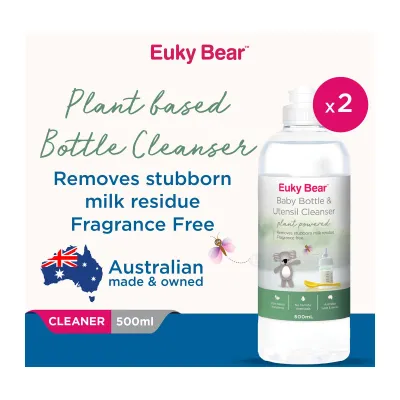
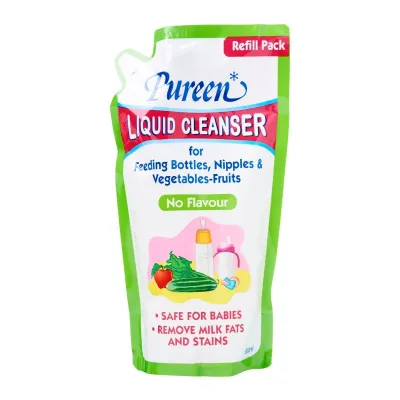
Prices are valid at publication and may change. Please refer to the product page for the latest price.
Foam cleaners dispense as a ready-to-use lather directly from a pump mechanism. This format is particularly useful for quick washes because the foam immediately adheres to the vertical surfaces of the bottle, breaking down milk residue without requiring heavy, vigorous scrubbing. The instant lather also provides immediate visual confirmation of coverage, making it easy to see if any spots inside a narrow-neck bottle have been missed.
Tablets and powder cleaners represent a hands-off, soaking-based approach. They require complete dissolution in warm water before the bottle parts are submerged. This format is highly effective for deep cleaning hard-to-reach areas, such as the threads of bottle collars or complex venting systems, without manual scrubbing. Because they are dry and compact, tablets are also highly convenient for travel or use outside the home, though they require sufficient soaking time to work effectively.
Matching the Cleaner to Your Bottle Material
Different bottle materials interact uniquely with cleaning agents due to variations in porosity, scratch resistance, and chemical stability. Selecting the right baby cleaner format requires understanding how glass, plastic, and silicone respond to washing, soaking, and rinsing.

Glass Bottles
Glass is a highly durable, non-porous material that does not absorb odors, food colors, or milk fats. Because of its high scratch resistance, glass is compatible with all three cleaner formats—liquid, foam, and tablets. Caregivers do not need to worry about micro-scratches harboring bacteria, which allows for more flexible cleaning routines.
However, the primary challenge with glass bottles is rinsing efficiency. Hard water spots, mineral deposits, and dried soap residue are highly visible on clear glass surfaces. When using liquid or tablet cleaners on glass, it is essential to rinse thoroughly with warm water to prevent a cloudy film from forming. Visual clarity is your best indicator of a successful wash, so choosing a cleaner that rinses away cleanly without leaving a dull residue is key.
Plastic Bottles
Plastic baby bottles, typically made from polypropylene or polyphenylsulfone (PPSU), are lightweight and shatterproof but require gentler handling than glass. Plastic is susceptible to micro-scratches from abrasive brushes or harsh cleaning agents. These tiny scratches can become breeding grounds for bacteria and make the bottle more difficult to sanitize over time.
For plastic bottles, foam and liquid cleaners are generally preferred because they lubricate the surface during washing, reducing friction from brushes. Caregivers should avoid harsh soaking agents or abrasive powder cleaners that are not fully dissolved, as these can degrade the plastic surface. If using tablets, ensure they are completely dissolved in water before introducing plastic parts, and avoid prolonged soaking times unless the bottle manufacturer explicitly permits it.
Silicone Bottles and Accessories
Silicone is a flexible, soft material widely used for nipples, collars, and modern squeezable bottles. While highly durable and heat-resistant, silicone is naturally lipophilic, meaning it easily attracts and retains milk fats, oils, and artificial fragrances. This can lead to a greasy film or a persistent soapy smell that is difficult to remove.
Cleaning silicone requires a baby cleaner with strong degreasing properties that does not rely on heavy synthetic fragrances, which can easily transfer to the milk and cause a baby to reject the bottle. Foam cleaners are highly effective for silicone because they can be worked directly into the flexible parts with minimal friction. Always check the manufacturer’s guidelines for silicone accessories, as some brands have specific temperature limits or chemical restrictions for soaking and washing.
Safety Checks and Manufacturer Guidelines
Before selecting any baby cleaner, caregivers must perform a series of safety and compatibility checks. The first step is ingredient verification. Read the product label carefully to identify and avoid unnecessary dyes, strong synthetic fragrances, or harsh industrial surfactants. These additives are not required for clean bottles and can leave residues that might irritate a baby’s sensitive digestive system. Opt for formulas that prioritize simple, plant-derived cleaning agents.
The second step is active rinsing observation. After washing, perform a physical and sensory check of the feeding gear. Run a clean finger along the inside of the bottle; it should feel squeaky clean, not slippery or slimy. Smell the bottle and nipple after they have dried. If you detect a strong perfume or chemical scent, the cleaner has not been fully rinsed away, or the material has absorbed the fragrance. In such cases, re-rinse the items thoroughly with warm, clean water.
Finally, establish a clear conflict resolution protocol. If the instructions on your baby cleaner contradict the care guidelines provided by your bottle manufacturer, always defer to the bottle manufacturer’s instructions. Using an incompatible cleaning method can compromise the structural integrity of the bottle, lead to premature degradation of silicone nipples, or void the product warranty. If confusion persists, stop using the combination and consult the manufacturer directly for clarification.
Decision Framework: Which Format Should You Choose?
To simplify your selection, use this condition-based framework to match your daily routine and bottle types to the most suitable baby cleaner format:
- Choose Liquid if: You prefer a traditional, hands-on washing routine, need to adjust your dosage for varying sink loads, and have a reliable, high-pressure water source for thorough rinsing. This format is highly economical and works well for households using a mix of glass and durable plastic bottles.
- Choose Foam if: You want to minimize manual scrubbing effort, require immediate visual confirmation that all inner surfaces are covered, or are washing bottles with narrow necks and complex shapes. Foam is also excellent for quick, single-bottle washes throughout the day.
- Choose Tablet if: You prefer a hands-off, soaking-based cleaning method, travel frequently and need a lightweight, spill-proof option, or regularly deal with stubborn, dried-on milk residue. Always verify that your bottle material is compatible with soaking before adopting this method.
- Verify first if: Your bottle manufacturer explicitly restricts soaking times, limits exposure to specific surfactant types, or warns against certain water temperatures. Always prioritize the bottle's official care manual to ensure safety and longevity.
Frequently Asked Questions (FAQ)
Can I use regular dish soap instead of a dedicated baby cleaner?
While regular household dish soap is effective at removing grease, it is often formulated with strong synthetic fragrances, artificial dyes, and harsh surfactants designed for heavy cookware. These ingredients can leave a persistent residue or scent on baby bottles, particularly on porous silicone nipples. Dedicated baby cleaners are typically formulated to rinse away more easily and avoid these heavy additives. If you must use standard dish soap, select a fragrance-free, dye-free formula, and ensure you rinse every component thoroughly with warm water until no scent or slippery feel remains.
How do I know if the cleaner is fully rinsed off?
You can verify that a bottle is completely free of cleaner residue through tactile and sensory checks. After rinsing the bottle thoroughly under running water, rub your finger against the inner surface. A fully clean bottle will feel squeaky and offer resistance, whereas a bottle with lingering soap residue will feel slippery or smooth. For silicone nipples and accessories, sniff the material after rinsing; if you detect any soapy or perfumed scent, rinse them again with warm water. Ensuring complete removal of soap residue helps protect your baby’s sensitive digestive system.

Community discussion
Share your experience or ask a question. Comments are reviewed before publication.