
Selecting a kids walker requires a careful balance between entertainment and physical safety. While these devices can offer a novel vantage point for an active infant, they also introduce unique mobility risks that require a parent’s close attention. Before bringing a walker into your home, you must evaluate its physical design, safety mechanisms, and compliance with established manufacturing standards. A safe purchase is one that matches your child’s developmental stage and fits securely within a supervised, hazard-free environment.
To make an informed decision, you should focus on structural stability, reliable braking systems, and proper ergonomic support. A kids walker is not a babysitter; rather, it is a piece of developmental equipment that demands continuous adult supervision and strict usage boundaries. By understanding what features to look for and how to verify them, you can significantly reduce the risks of tipping, falling, or accessing hazardous household areas.
Understanding the Risks of Kids Walkers
Before examining specific safety features, it is crucial to understand why kids walkers require such rigorous scrutiny. Traditional sit-in walkers allow infants to move at speeds and heights they cannot achieve on their own. This sudden mobility can lead to common injury mechanisms, such as tipping over on uneven surfaces, falling down stairs, or reaching dangerous objects like hot liquids, electrical cords, and heavy items on tables. Because a child in a walker can move surprisingly fast, hazards that were previously out of reach suddenly become immediate risks.
Products mentioned in this guide
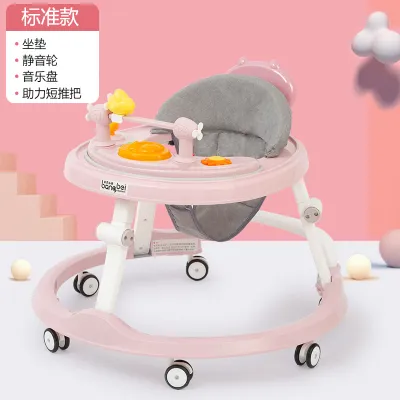
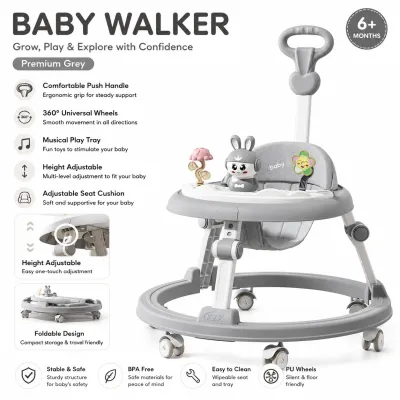
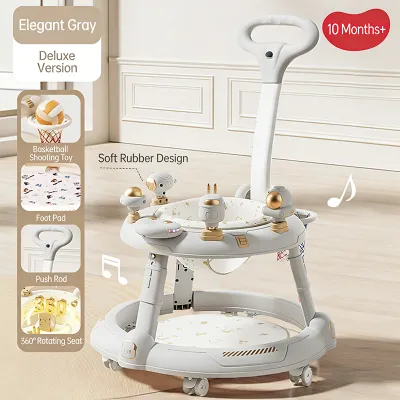
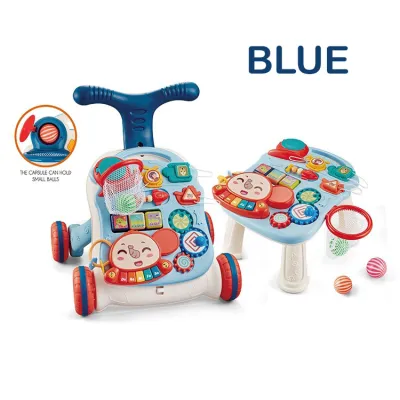
Prices are valid at publication and may change. Please refer to the product page for the latest price.
No mechanical safety feature can replace active, continuous adult supervision. Even the most advanced walker designs cannot prevent all accidents if a child is left unattended. Parents must remain within arm’s reach and keep a watchful eye on the child’s movements at all times. Additionally, preparing the environment by blocking off stairways, securing loose rugs, and removing fragile or hazardous items from low surfaces is an indispensable part of using any mobile baby product.
It is also important to distinguish between traditional sit-in walkers and push-along walkers, as their safety profiles and inspection points differ significantly. Sit-in walkers suspend the child in a fabric seat within a wheeled frame, allowing them to glide using their feet. Push-along walkers, on the other hand, are sturdy toys that a standing child pushes from behind to support their independent steps. While sit-in walkers carry a higher risk of stair falls and tipping, push-along walkers require careful evaluation of wheel resistance and weight distribution to ensure the toy does not flip backward when pushed.
Essential Structural Safety Features to Inspect
When evaluating a kids walker, the physical build and structural integrity are your first lines of defense against accidents. Begin by inspecting the base width and the overall wheelbase dimensions. A safe walker should feature a wide, stable base that is significantly larger than the upper frame. This wide footprint prevents the walker from tipping over when your child leans sideways, reaches for a toy, or bumps into furniture. A narrow base increases the center of gravity, making the device unstable during sudden movements.

Next, examine the frame sturdiness and the overall finish of the product. The frame should be constructed from rigid, high-quality materials that do not flex or bend under pressure. Carefully run your hands along the joints, edges, and folding mechanisms to check for sharp edges, rough plastic seams, or potential pinch points where tiny fingers could get caught. Ensure there are no small, detachable parts, decorative elements, or loose screws that could easily be pulled off and pose a choking hazard.
The seat design and support are equally critical for sit-in models. The fabric seat must be securely attached to the frame with heavy-duty snaps or buckles that cannot slip loose. Look for a seat with a high, padded backrest that provides adequate trunk support for a child who is still developing core strength. The leg openings must be sized appropriately; they should be snug enough to prevent the child from slipping through the bottom of the walker, yet wide enough to avoid pinching or restricting circulation in the thighs.
Finally, verify that the walker offers adjustable height settings. Children grow rapidly, and a walker that is too high or too low can negatively affect their physical development. The height should be adjustable so that your child’s feet can rest flat on the floor when they are in a standing position. If only their toes touch the ground, it can encourage toe-walking, which can tighten the calf muscles and affect their natural walking gait. Ensure the height-locking mechanism is robust and cannot be accidentally released by the child’s bouncing or stepping actions.
Braking, Stopping, and Hazard Prevention Mechanisms
A high-quality kids walker must include built-in mechanisms to control speed and prevent movement into dangerous areas. For sit-in walkers, stair-fall prevention features are among the most critical safety components. Inspect the underside of the walker’s base for friction pads, rubber grip strips, or specialized stopper blocks. These components are designed to automatically grab the floor or engage when a wheel drops over an edge, such as a step or a threshold, halting the walker’s momentum. While these pads are excellent backup safety measures, they should never replace physical safety gates at the top and bottom of staircases.
Many modern walkers also feature locking mechanisms that allow you to convert the mobile unit into a stationary activity center. This is an incredibly useful feature when you need to keep your child in one secure spot while they play with the built-in toys. Check how easily the wheels can be locked or if the walker has fold-down stabilizing legs that lift the wheels off the ground. The locking mechanism should be simple for an adult to engage but completely inaccessible or too stiff for a child to operate.
The quality of the wheels and their swivel control also play a major role in hazard prevention. Examine the wheel material; soft rubber or textured wheels provide much better traction on smooth indoor flooring, such as tile, vinyl, or polished wood, compared to slick, hard plastic wheels. Additionally, check if the rear wheels can be locked to roll only in a straight line. Restricting the swivel function to the front wheels helps early users maintain control and prevents the walker from sliding unpredictably sideways.
How to Verify Safety Certifications and Labels
Do not rely solely on marketing claims of safety; instead, look for physical proof of compliance with recognized safety standards. Legitimate manufacturers print certification marks and compliance labels directly on the physical product, its packaging, or within the user manual. Look for standards such as EN 1273 (the European standard specifically for baby walkers) or ASTM F977 (the American standard). These standards dictate strict requirements for stability, dynamic strength, and stair-fall prevention.
When shopping in Singapore, it is important to cross-reference these safety standards with official consumer safety guidelines. You can visit the official websites of local regulatory bodies, such as Enterprise Singapore, to understand the safety requirements for nursery furniture and children’s products. If you are purchasing a walker from an online marketplace or importing it, ensure the seller can provide documentation proving the product has passed these rigorous safety tests.
Before finalizing your purchase, always check for recent product recall notices or safety alerts. Government consumer protection portals and international safety databases regularly publish lists of products recalled due to design flaws, choking hazards, or chemical safety issues. Searching the brand and model name on these databases takes only a few minutes but can prevent you from bringing a compromised or dangerous product into your home.
Safe Usage Boundaries and When to Stop Using the Walker
Even the safest walker can become hazardous if used outside its intended physical and developmental boundaries. Always adhere strictly to the manufacturer’s specified maximum weight and height limits. These limits are calculated based on the structural safety threshold of the frame, joints, and seat fabric. Exceeding these limits increases the risk of structural failure, frame collapse, or tipping due to an altered center of gravity.
You must also monitor your child’s developmental milestones to determine when it is time to retire the walker. Discontinue use immediately if your child can walk independently, shows signs of attempting to climb out of the seat, or can pull themselves up over the edges of the frame. Once a child reaches these milestones, the walker no longer serves its purpose and instead becomes a climbing hazard that can lead to serious falls.
Pediatric experts generally recommend limiting daily usage time to short sessions, such as 15 to 20 minutes per day. Over-reliance on a kids walker can delay natural motor skill development, as it deprives children of the opportunity to practice crawling, pulling up to stand naturally, and cruising along furniture. Prioritizing floor play, tummy time, and unstructured movement on a play mat is essential for building the core strength, balance, and coordination needed for independent walking.
Frequently Asked Questions (FAQ)
Are kids walkers banned or restricted in any regions?
Yes, traditional sit-in baby walkers are heavily restricted or banned in several countries due to historical injury data. For example, Canada has banned the sale, import, and advertisement of sit-in baby walkers since 2004. In Singapore, while sit-in walkers are legally available for purchase, local pediatricians and consumer safety advocates advise extreme caution when using them. Many experts recommend choosing stationary activity centers or push-along walkers as safer alternatives that encourage natural motor development without the associated mobility risks.
At what age or weight should a child stop using a walker?
Parents must always follow the specific weight, height, and age limits printed on the product’s warning label, as these vary by manufacturer. Generally, sit-in walkers are designed for infants who can sit up unassisted (usually around six months of age) but cannot yet walk independently. You must stop using the walker immediately if your child reaches the maximum weight limit (typically around 11 to 13 kilograms), begins walking independently, or attempts to climb out of the seat.

Community discussion
Share your experience or ask a question. Comments are reviewed before publication.