
Yes, Joie ISOFIX booster seats are legally compliant for use in Singapore, provided the specific model you choose carries an approved international safety certification label and is appropriate for your child’s current height and weight. Under Singapore’s road safety regulations, brand names themselves are not legally approved or banned; instead, compliance is determined by whether the child restraint system meets recognized global safety standards and fits the child correctly. Ensuring your child is secured in a certified booster seat is both a legal obligation and a critical safety measure for navigating Singapore’s roads.
For parents in Singapore, selecting a child car seat involves navigating specific legal requirements, vehicle compatibility issues, and safety standards. Joie is a widely available brand in the local market, offering several booster seat models equipped with ISOFIX connectors. To ensure complete compliance and maximum protection, you must understand how Singapore’s traffic laws apply to booster seats, how to verify the safety labels on a Joie seat, and how to install and use the restraint system correctly within your vehicle.
Understanding Singapore's Child Car Seat Laws
Singapore’s Road Traffic Act mandates that anyone under the height of 1.35 meters, regardless of age, must be secured with an approved child restraint system or booster seat when traveling in a passenger vehicle. This law applies to all private cars, including private-hire vehicles such as Grab or Gojek, which do not share the legal exemptions sometimes granted to public buses or street-hail taxis. If a child under 1.35 meters is found riding in a vehicle without an appropriate restraint, the driver can face a composition fine and demerit points, while passengers can also be held legally responsible.
Products mentioned in this guide
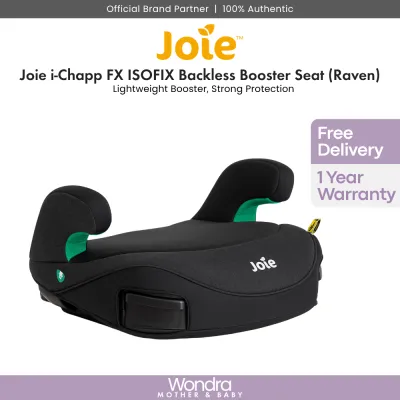
![[Joie] i-Chapp™ FX ISOFIX Backless Booster Seat - Raven](https://img.lazcdn.com/g/p/d7686fb6d1829787677d6a3535ff1e60.jpg_400x400q80.jpg_.webp)
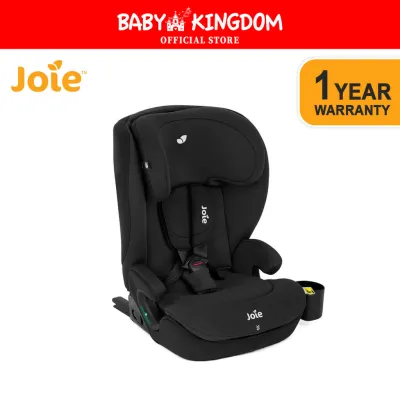
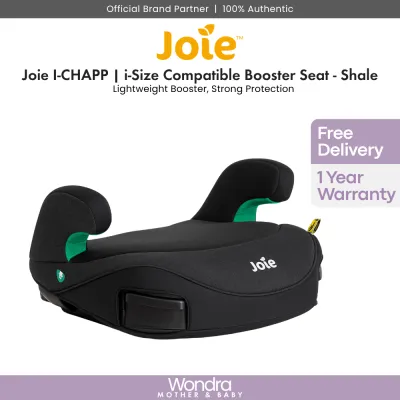
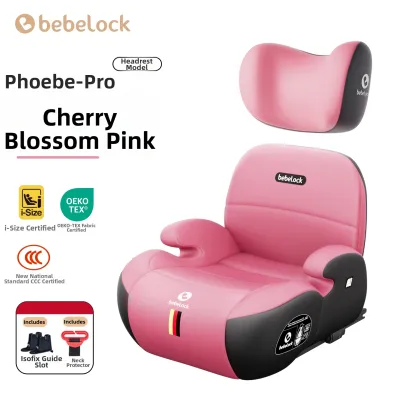
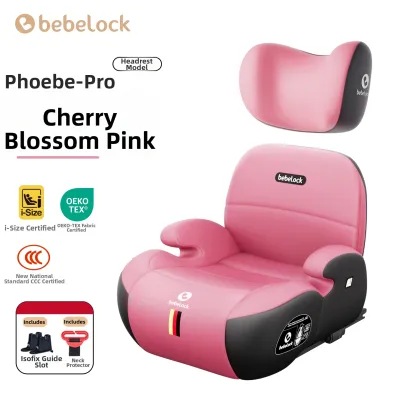
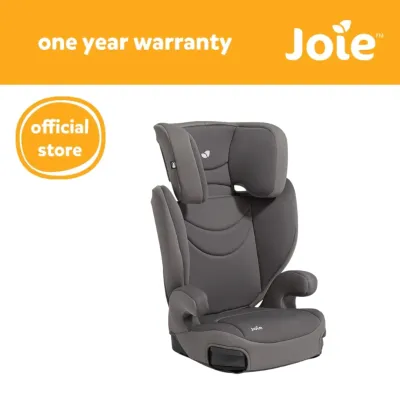
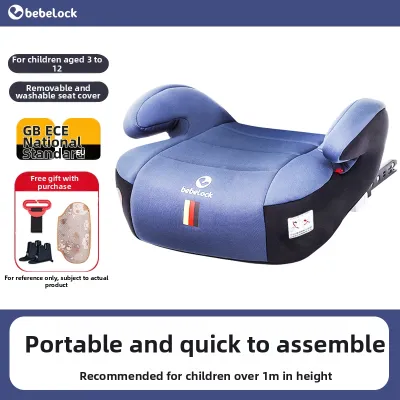
Prices are valid at publication and may change. Please refer to the product page for the latest price.
The legal framework in Singapore focuses strictly on the suitability and certification of the child restraint system rather than endorsing specific manufacturers. This means that a Joie ISOFIX booster seat is fully legal to use, but only if the child using it falls within the specific height and weight ranges designated by both the manufacturer and the safety standard under which the seat was certified. Simply purchasing a compliant brand is not enough; the seat must actively match the physical development of the child sitting in it.
To remain compliant with local regulations, parents must ensure that the booster seat is installed and used exactly as specified in the manufacturer’s instruction manual. Incorrect installation—such as routing a seatbelt through the wrong guides or failing to secure the ISOFIX connectors properly—can render the seat legally non-compliant during an inspection and, more importantly, compromise its safety performance in a collision. Compliance is an active process of matching the child, the seat, and the vehicle according to strict safety parameters.
It is also worth noting that while street-hail taxis are legally exempt from the child restraint requirement due to practical constraints, safety experts strongly advise against traveling with unrestrained children under any circumstances. For parents who frequently use ride-hailing services or switch between different family vehicles in Singapore, a portable or easily transferable Joie booster seat can provide a practical way to maintain continuous legal compliance and safety.
How to Verify Safety Certifications on Joie Booster Seats
To confirm that a specific Joie ISOFIX booster seat is legal for use in Singapore, you must locate and inspect the physical safety certification label permanently attached to the seat’s shell. Singapore’s Land Transport Authority (LTA) and traffic police recognize specific international safety standards, most notably the United Nations Economic Commission for Europe (UN ECE) regulations. Specifically, the older UN ECE R44/04 standard and the newer, more stringent UN ECE R129 (often referred to as i-Size) are the primary certifications you should look for on the orange approval label.

When examining the orange ECE label on a Joie booster seat, you should look for several key pieces of information that verify its legitimacy. The label will display an “E” inside a circle, followed by a number that indicates the country where the certification was granted (for example, E11 for the United Kingdom or E4 for the Netherlands). Below this symbol, you will find the specific regulation number—either R44/04 or R129—along with the approved weight or height range for that particular seat model.
Because Joie designs and manufactures a wide variety of booster seats, you cannot assume that every model has identical specifications or certifications. For instance, some models are certified under the R44/04 standard based on weight categories (typically Group 2/3, covering 15 to 36 kilograms), while newer models are certified under R129 based primarily on the child’s height (typically from 100 to 150 centimeters). You must check the physical label on the exact unit you plan to use to ensure it matches your child’s physical measurements.
In addition to the orange label, you should consult the product manual or the official documentation provided by Joie’s authorized distributor in Singapore to verify the seat’s compatibility and certification status. This is particularly important when purchasing a booster seat online or from overseas retailers, as car seat regulations and approved standards can vary significantly between regions. Verifying these details beforehand prevents the accidental purchase of a seat that does not align with Singapore’s legal safety frameworks.
Critical Installation and Usage Boundaries for ISOFIX
Before purchasing or installing an ISOFIX booster seat, you must check your vehicle’s owner manual to confirm the presence and exact location of the ISOFIX anchor points. ISOFIX is a standardized system of rigid metal anchorages built directly into the chassis of many modern cars, designed to make car seat installation simpler and more secure. However, some older vehicle models or specific seating positions in family cars may lack these anchor points, which would prevent you from utilizing the ISOFIX connectors on your Joie booster seat.
When installing a Joie ISOFIX booster seat, it is vital to understand that the ISOFIX connectors serve a different primary purpose on a booster seat than they do on an infant or toddler seat. In a Group 2/3 or i-Size booster seat, the vehicle’s three-point seatbelt is what actually restrains both the child and the seat during a collision. The ISOFIX connectors simply keep the booster seat securely anchored to the vehicle’s frame, preventing the seat from shifting during daily use or becoming a dangerous flying projectile when the child is not riding in the car.
Proper seatbelt routing is the most critical factor in ensuring the booster seat performs its safety function correctly. The vehicle’s lap belt must be positioned low across the child’s hips and pelvis, never riding up onto the soft tissue of the abdomen, where it could cause severe internal injuries in an accident. The shoulder belt must cross the center of the child’s collarbone and chest, away from the neck and face; most Joie booster seats feature integrated shoulder belt guides to help achieve this correct positioning.
Parents must establish clear boundaries for when to stop using a specific booster seat model. You must retire the seat immediately if your child exceeds the maximum weight or height limits specified on the certification label, or if the seat shows any signs of structural damage, wear, or missing components. Furthermore, if the booster seat has been involved in any vehicle collision—even a minor one—it must be replaced immediately, as invisible stress fractures can compromise its ability to protect your child in a future impact.
When to Transition from a Harness to a Booster Seat
Transitioning a child from a forward-facing car seat with an internal five-point harness to a belt-positioning booster seat is a major milestone, but it should never be rushed. A five-point harness distributes crash forces across the strongest parts of a young child’s body and keeps them securely positioned in their seat. You should keep your child in their harnessed car seat for as long as possible, until they reach the maximum height or weight limit specified by the manufacturer of that specific seat.
In addition to physical size, you must assess your child’s behavioral maturity before making the switch to a Joie booster seat. A booster seat relies entirely on the vehicle’s adult seatbelt, which allows for more freedom of movement than a five-point harness. Your child must be mature enough to sit properly for the entire duration of every car journey—meaning they will not slouch, lean sideways, pull the shoulder belt under their arm, or attempt to unbuckle themselves while the vehicle is in motion.
To determine if your child is ready to transition, you can perform a quick fit-check in your vehicle. If you place the child in the booster seat and find that the shoulder belt still cuts across their neck or face, or if the lap belt rests on their stomach rather than their pelvic bones, the child is not yet ready for that specific booster configuration. Conversely, if the seatbelt fits perfectly across the collarbone and hips when using the booster, and the child’s knees bend comfortably over the edge of the seat cushion, the transition is appropriate.
Rushing this transition can expose a child to significant risks, as their skeletal structure is still developing. The pelvic bones of a young child are not yet fully formed to hold a lap belt in place during a sudden stop, which is why the extra restraint of a five-point harness is beneficial for younger children. By waiting until your child fully outgrows their harnessed seat and exhibits the necessary behavioral readiness, you ensure that the Joie booster seat can provide the highest level of protection.
Frequently Asked Questions (FAQ)
Are backless Joie boosters legal in Singapore?
Yes, backless booster seats are legally permissible in Singapore, provided they meet recognized international safety standards (such as UN ECE R44/04 or R129) and are used by a child who meets the minimum weight and height requirements specified by the manufacturer. However, safety experts and pediatric organizations strongly recommend using a high-back booster seat for as long as possible. High-back boosters provide essential side-impact protection for the head, neck, and torso, and they feature integrated belt guides that ensure the vehicle’s shoulder belt is positioned correctly across the child’s collarbone, whereas backless boosters offer no side-impact shielding and can make proper belt routing more difficult for smaller children.
What should I do if my car does not have ISOFIX anchors?
If your vehicle does not have ISOFIX anchor points, you must check the specific user manual for your Joie booster seat to see if it is approved for installation using only the vehicle’s three-point seatbelt. Many Joie booster models are designed with retractable or stowable ISOFIX connectors, allowing them to be used as standard belt-positioning boosters in vehicles without ISOFIX anchors. If the manual confirms that seatbelt-only installation is approved, you can safely use the seat by securing both the child and the booster with the vehicle’s seatbelt. However, if you have a model that strictly requires ISOFIX anchors for safe use, you will need to select a different car seat model that is certified for vehicle seatbelt-only installation.
How can I check if my Joie booster seat is subject to a safety recall?
To verify if your Joie booster seat is subject to any safety recalls, you should locate the serial number, model number, and manufacture date on the tracking label, which is typically found on a white or metal-colored sticker on the underside or back of the car seat’s plastic shell. You can use this information to check the official Joie website’s recall page or contact the authorized local distributor in Singapore directly. It is highly recommended to register your product with the manufacturer immediately after purchase, as this ensures you will be contacted directly in the event of a safety recall or product update. Additionally, you can periodically monitor safety notices issued by Singapore’s consumer protection agencies and transport authorities.

Community discussion
Share your experience or ask a question. Comments are reviewed before publication.