
When choosing a car seat for your child in Singapore, navigating the intersection of international safety standards and local traffic laws can feel overwhelming. The Joie Every Stage car seat is a popular multi-stage option designed to accommodate children from birth up to older childhood, but parents must verify its specific certification status to ensure it meets local legal requirements. Compliance in Singapore is not merely about buying a reputable brand; it requires confirming that your specific seat carries the correct physical certification labels, fits your vehicle’s configuration, and matches your child’s current physical development. By understanding how to read these safety markings and align them with local mandates, you can travel with peace of mind knowing your child is both legally secure and physically protected.
Singapore's Legal Requirements for Child Car Seats
To ensure your child’s safety on the road, it is essential to understand the regulatory framework established by the Land Transport Authority (LTA) of Singapore. Under the Road Traffic Act, anyone under 1.35 metres in height, regardless of age, must be secured with an approved child restraint system or booster seat appropriate for their height and weight when travelling in a passenger vehicle. Failing to do so is a legal offence for drivers and can result in composition fines and demerit points, highlighting the strict stance the Singapore government takes on child passenger safety.
Singapore does not manufacture its own national car seat safety standards; instead, the LTA recognizes several prominent international safety certifications. The most widely accepted standards are the United Nations Economic Commission for Europe (UN ECE) regulations, specifically UN ECE R44/04 and the newer, more rigorous UN ECE R129 (commonly known as i-Size). Other standards from countries like the United States (FMVSS 213), the United Kingdom, Australia, and Japan are also recognized, but the vast majority of seats sold through authorized local distributors in Singapore conform to the European UN ECE framework.
Products mentioned in this guide
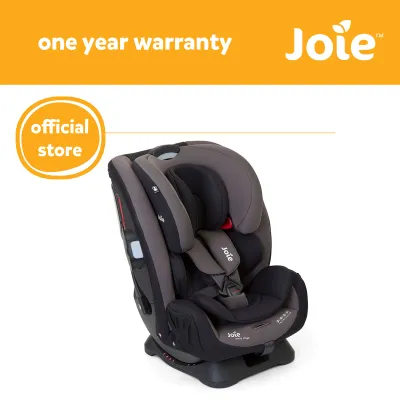
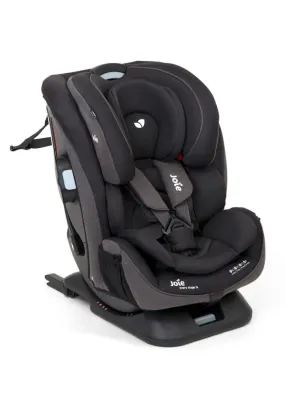
![[SG Seller] Joie Every Stage Fx Car Seat](https://img.lazcdn.com/g/ff/kf/Sfc8578a504dc438e859ec4a4ede1f63fj.jpg_400x400q80.jpg_.webp)
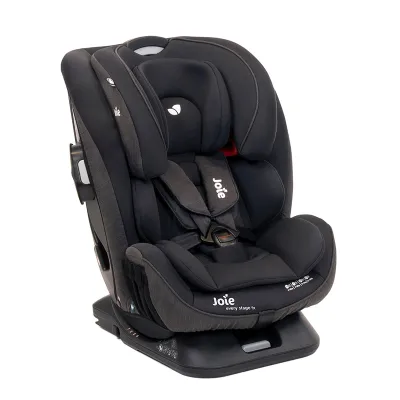
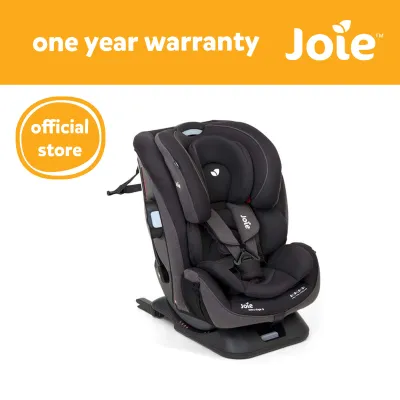
![[Joie] Every Stage fx - Group 0+/1/2/3 Car Seat with ISOFIX](https://img.lazcdn.com/g/p/77c9b7001e4d904a5d6d5351e4c8f7e8.jpg_400x400q80.jpg_.webp)
![[Joie] Every Stage™ Convertible Car Seat - From Newborn to 12 Years Group 0+/1/2/3 (0-36kg)](https://img.lazcdn.com/g/p/3d8dd12dc67e627d18f5e18cc1dd4de0.jpg_400x400q80.jpg_.webp)

Prices are valid at publication and may change. Please refer to the product page for the latest price.
For parents utilizing different modes of transport in Singapore, the legal requirements vary slightly depending on the vehicle type. Private hire vehicles, such as those booked via ride-hailing applications, are legally classified as private passenger cars, meaning children under 1.35 metres must use an approved child restraint. Public taxis, on the other hand, are legally exempt from this requirement due to their public service nature, allowing children to travel using the vehicle’s standard seat belt. However, safety experts strongly advise against relying on this exemption, as the physical forces of a collision remain identical regardless of whether you are in a private hire car or a public taxi.
Because regulations and recognized standards can be updated to reflect advancing safety technologies, caregivers must periodically verify current LTA guidelines. Legal thresholds dictate exactly when a child must transition from a rear-facing seat to a forward-facing seat, and eventually to a booster seat or a standard vehicle seat belt. Ensuring your Joie Every Stage car seat aligns with these legal thresholds requires a careful look at the physical labels on the seat itself.
How to Verify Safety Certifications on the Joie Every Stage
To confirm that your Joie Every Stage car seat is legally compliant in Singapore, you must physically inspect the unit to locate its safety certification label. This label is typically an orange sticker affixed directly to the plastic shell of the seat, usually found on the back or the underside of the base. This sticker serves as the official proof of testing and compliance, and without it, traffic authorities or vehicle inspectors cannot verify the seat’s safety status.

When examining the orange certification label, look for key indicators that prove compliance with international standards. The most critical marking is the “E” mark, which consists of the letter “E” followed by a number, enclosed within a circle. The number indicates the specific country where the seat was tested and certified (for example, E11 represents the United Kingdom, while E4 represents the Netherlands). Below or alongside this circle, you should see the regulation code, such as “ECE R44/04” or “ECE R129,” which tells you which generation of safety standards the seat was manufactured to meet.
The label also displays the approved weight or height limits for that specific model variant. For instance, an ECE R44/04 certified Joie Every Stage will list the weight groups it covers, typically spanning from Group 0+ (0 to 13 kg) up to Group 3 (22 to 36 kg). If you have a newer variant certified under the R129 standard, the label will instead specify the child’s height range in centimetres, as R129 uses height as the primary classification metric rather than weight.
If you inspect your car seat and find that the orange certification label is missing, torn, or completely illegible, you should take immediate steps to resolve the issue. A seat without a visible certification label may be deemed non-compliant during official vehicle checks or in the event of an insurance claim. In such cases, consult the product manual or contact the authorized local retailer in Singapore with your seat’s serial number and batch details—usually found on a separate white tracking sticker—to verify its authenticity and obtain guidance on compliance documentation.
Ensuring Proper Fit Across All Growth Stages
The Joie Every Stage is designed as a multi-stage car seat to grow with your child from infancy up to approximately 12 years of age. However, this multi-stage versatility is only safe and legally compliant if the seat is configured correctly for your child’s current physical measurements. A certified seat cannot perform its protective function if a child is placed in a configuration that does not match their actual weight, height, or developmental stage.
Caregivers must consult the product manual to identify the precise limits for each of the seat’s configurations. The seat typically operates in three primary modes: rear-facing for infants, forward-facing with a five-point harness for toddlers, and high-back booster mode using the vehicle’s three-point seat belt for older children. Under standard ECE R44/04 guidelines, children must remain rear-facing until they weigh at least 9 kg, but safety experts strongly recommend keeping children rear-facing for as long as possible—up to 18 kg on the Joie Every Stage—as this position provides superior protection for the child’s fragile head, neck, and spine.
Transitioning between these stages must never be done prematurely based on age alone. Instead, rely strictly on the physical milestones outlined by the manufacturer. For example, do not transition your child to the forward-facing harness mode until they have fully outgrown the rear-facing weight or height limits, and do not transition to the booster mode until they meet the minimum weight threshold (typically 15 kg) and can sit properly without slouching or pulling at the seat belt.
To maintain safety as your child grows, use this quick checklist to verify the harness and headrest positioning during every adjustment:
- For rear-facing mode, ensure the shoulder harness straps emerge from the seat shell at or just below the child's shoulders.
- For forward-facing mode, ensure the shoulder harness straps emerge at or just above the child's shoulders.
- Adjust the headrest so that the side wings fully cradle the child's head, with the lower edge of the headrest positioned just above the shoulders.
- Perform the "pinch test" on the harness straps: if you can pinch any excess webbing between your fingers at the child's collarbone, the harness is too loose and must be tightened.
Installation Checks and When to Stop Using the Seat
Even a certified car seat will fail to protect your child if installed incorrectly. The Joie Every Stage can be installed using different methods depending on the specific model variant. The standard Joie Every Stage is installed using the vehicle’s three-point seat belt, whereas the Joie Every Stage FX variant features ISOFIX connectors for specific forward-facing stages. You must refer to your specific product manual to determine the correct installation path for your seat’s version.
When installing the seat using the vehicle’s seat belt, pay close attention to the color-coded belt paths marked on the seat shell. Typically, blue paths indicate the routing for rear-facing installation, while red paths indicate the routing for forward-facing installation. Thread the seat belt carefully through these designated paths, ensuring there are no twists in the webbing, and buckle it securely. Once buckled, apply your body weight to the seat to compress the vehicle cushion while pulling the seat belt as tight as possible, then engage the seat’s built-in lock-off clips to secure the tension.
For variants that utilize ISOFIX connectors, verify that the connectors are securely latched onto your vehicle’s lower anchor points. Most ISOFIX systems feature visual indicators that turn from red to green when a secure connection is established. Remember that on multi-stage seats, ISOFIX compatibility is often limited to specific stages; for example, some models require seat belt installation during the infant stage and transition to ISOFIX only during the toddler or booster stages. Always cross-reference your vehicle’s manual to ensure compatibility with the seat’s approved vehicle list.
To verify that the installation is secure, perform the “one-inch test.” Grab the car seat firmly near the belt path or ISOFIX connection points and attempt to shake it. The seat should not move more than 2.5 centimetres (one inch) in any direction. If the seat moves more than this, loosen the installation and repeat the tightening process, or try installing the seat in a different seating position in your vehicle.
Beyond proper installation, caregivers must remain vigilant about the lifespan and physical condition of the car seat. Car seats do not have an indefinite lifespan; the plastic shell and energy-absorbing foam degrade over time, a process accelerated by Singapore’s intense tropical heat and high humidity. Locate the manufacture date stamp, which is usually molded into the plastic shell or printed on a white tracking label, and consult the manual to determine the manufacturer’s recommended lifespan (typically around 10 years from the date of manufacture).
Finally, there are strict conditions under which you must stop using the car seat immediately and replace it. If the seat is involved in any vehicle collision—even a minor one where no visible damage is apparent—it must be retired. The forces of a crash can cause microscopic fractures in the plastic and stretch the internal webbing, rendering the seat unsafe for future use. You must also stop using the seat immediately if you notice any visible structural damage, frayed harness straps, cracked foam, or if critical components like the buckle or harness adjusters fail to function smoothly.
Frequently Asked Questions (FAQ)
Can I use a second-hand Joie Every Stage car seat in Singapore?
Using a second-hand car seat is generally not recommended due to the significant safety risks involved. When you acquire a used seat, you cannot verify its complete history, meaning it may have been involved in a collision that caused unseen structural damage. Additionally, second-hand seats often lack original instruction manuals, may have missing parts, or might carry expired lifespans and outdated safety certifications that do not comply with current Singapore regulations. To guarantee your child’s safety and ensure full compliance, it is highly recommended to purchase a new seat from an authorized retailer.
Does the Joie Every Stage support ISOFIX installation in all vehicles?
ISOFIX support depends entirely on the specific variant of the Joie Every Stage you own and the configuration of your vehicle. The standard Joie Every Stage is designed for vehicle seat belt installation across all stages, making it highly compatible with almost all cars, including older models and public taxis. The Joie Every Stage FX variant, however, includes ISOFIX connectors, but these are typically approved for use only during specific forward-facing stages. Always consult both your car seat manual and your vehicle’s owner manual to verify compatibility before attempting an ISOFIX installation.
What should I do if the certification label on my car seat fades or falls off?
If the orange safety certification label on your Joie Every Stage becomes illegible or detaches, you may face difficulties proving compliance during official vehicle inspections or traffic checks in Singapore. To resolve this, locate the white tracking sticker on the seat shell, which contains the model number, serial number, and batch code. Contact the manufacturer or the authorized distributor in Singapore with these details to request verification of compliance or a replacement label. As a precautionary measure, keep a digital photo of the original orange label, your purchase receipt, and the product manual to serve as supplementary proof of compliance.

Community discussion
Share your experience or ask a question. Comments are reviewed before publication.