
When choosing a car seat for your child, safety is the single most important factor. Joie car seats are widely regarded as reliable options that meet rigorous international safety standards, but their ultimate safety depends on proper selection, verification, and installation. In Singapore, where road safety regulations are strictly enforced, ensuring your child’s car seat complies with local laws is both a legal requirement and a vital protective measure. To determine if a specific Joie model is safe for your family, you must understand how to verify its certifications, evaluate its physical features, and install it correctly in your vehicle.
Understanding Singapore's Car Seat Regulations
Singapore’s Road Traffic Act mandates that anyone under the height of 1.35 metres must be secured with an approved child restraint appropriate for their height and weight when traveling in a private motor vehicle. This legal baseline is designed to protect developing bodies from the severe forces of a collision, as standard adult seatbelts are positioned for taller individuals and can cause serious injury to children if used prematurely. Once a child surpasses the 1.35-metre threshold, they may transition to using the vehicle’s standard seatbelt, though many safety experts suggest continuing with a booster seat until they can sit comfortably with their back against the vehicle seat and their knees bending naturally over the edge.
When navigating the market, you will encounter different categories of child restraints, including infant carriers, convertible car seats, and booster seats. Infant carriers are rear-facing seats designed specifically for newborns and younger babies, offering optimal support for their fragile necks and spines. Convertible car seats can transition from rear-facing to forward-facing as your child grows, providing a longer-lasting solution. Booster seats, which can be high-backed or backless, elevate older children so that the vehicle’s lap and shoulder belts align correctly across their pelvis and chest.
Products mentioned in this guide
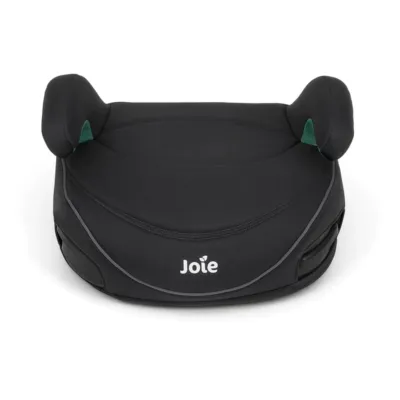
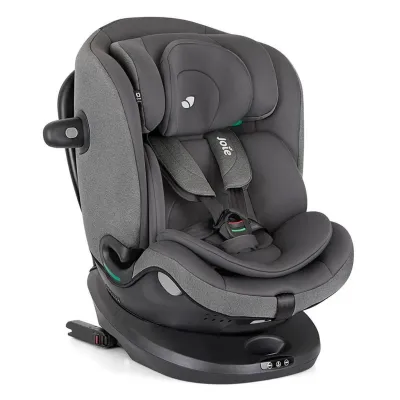
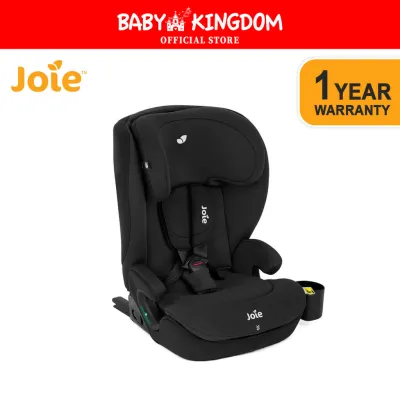
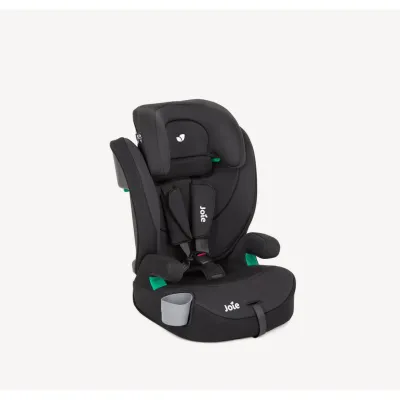
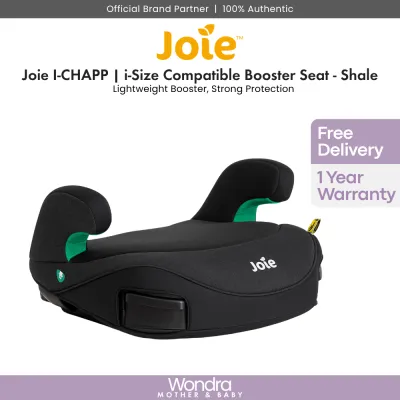
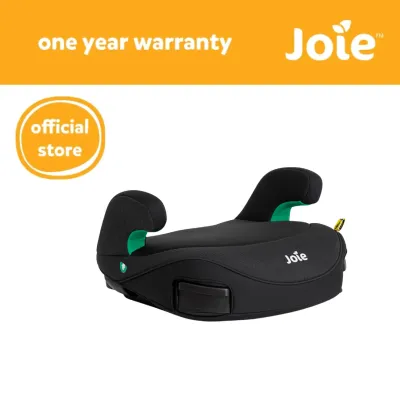
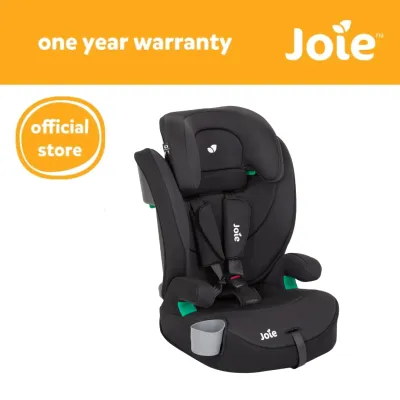
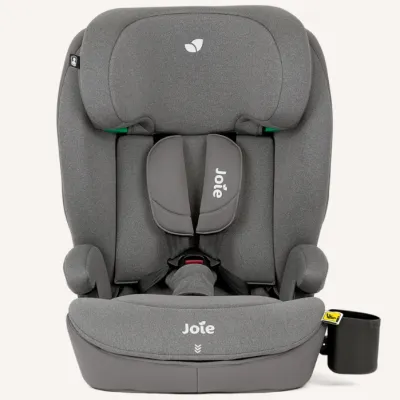
Prices are valid at publication and may change. Please refer to the product page for the latest price.
To ensure compliance with Singapore regulations, you must cross-reference the specific Joie model you plan to purchase with local traffic guidelines. The Traffic Police recognize specific international safety standards, such as those set by the United Nations Economic Commission for Europe (UN ECE). Before buying, you should confirm that the Joie model’s weight and height limits align with your child’s current physical measurements, rather than relying solely on age guidelines, as children grow at highly variable rates.
How to Verify Joie Safety Certifications
Verifying the safety certifications of a Joie car seat is a straightforward process once you know what to look for on the physical product. Every genuine, approved car seat features an official certification sticker, typically orange, affixed directly to the seat’s plastic shell, base, or underside. This label serves as proof that the specific model has undergone rigorous crash testing and meets international safety benchmarks. If a seat lacks this sticker, or if the label appears tampered with, you should not use it.

The most common international testing marks you will find on Joie car seats are the UN ECE R44/04 and the newer UN ECE R129 (commonly known as i-Size) standards. The R44/04 standard categorizes seats based on the child’s weight, whereas the R129 standard uses the child’s height as the primary classification metric and includes mandatory side-impact testing. When reading these labels, look for the circle containing the letter “E” followed by a number, which indicates the country where the certification was granted, along with the specific approval number and the category of vehicle fitment (such as “Universal” or “Semi-Universal”).
To protect your child from counterfeit or non-compliant products, always verify the authenticity of your Joie car seat. Purchasing from authorized local retailers in Singapore ensures that the product has been imported through official channels and complies with local safety standards. You can also cross-reference the model number and approval number found on the orange sticker with the official Joie manufacturer database or contact their customer support to confirm that the seat is a genuine, certified product.
Evaluating Physical Safety Features on Joie Models
Beyond checking certification labels, parents should evaluate the physical safety mechanisms integrated into different Joie car seat configurations. Modern Joie models often feature advanced side-impact protection systems, which are designed to absorb lateral crash forces and shield the child’s head, neck, and torso. Look for seats constructed with energy-absorbing materials, such as Expanded Polystyrene (EPS) or Expanded Polypropylene (EPP) foam, and reinforced steel shells that maintain structural integrity during an impact.
The harness system is another critical safety component that requires close inspection. Most Joie car seats utilize a five-point harness system, which secures the child at the shoulders, hips, and between the legs, distributing crash forces across the strongest parts of the body. When evaluating a model, check the ease of the harness adjustment mechanism; a good system allows you to tighten or loosen the straps smoothly and adjust the headrest and harness height simultaneously without needing to rethread the straps manually. The buckle should feel robust and secure, requiring a specific amount of force to release so that a curious toddler cannot unclick themselves during a journey.
Installation compatibility is fundamental to physical safety, so you must verify how the seat connects to your vehicle. Many Joie models support ISOFIX, an international standard anchoring system that secures the car seat directly to the vehicle’s chassis, reducing the risk of installation errors compared to traditional seatbelt routing. Depending on the model, the seat may also require a support leg that rests on the vehicle floor to prevent forward rotation during a crash, or a top tether anchor that secures the upper portion of the seat. Always consult the specific Joie model’s manual to understand these requirements and ensure your vehicle is equipped to accommodate them.
Ensuring Safe Installation and Daily Usage
Even the most highly certified car seat cannot protect your child if it is installed incorrectly or used improperly on a daily basis. To ensure maximum safety, you must rely exclusively on the official Joie instruction manual and your vehicle owner’s guide during the installation process. Avoid relying on generic online videos or third-party tutorials, as minor differences in model designs or vehicle configurations can lead to critical installation mistakes. Take the time to read both manuals thoroughly, paying close attention to the routing of seatbelts or the correct engagement of ISOFIX connectors.
Once the seat is installed, performing daily safety checks is essential before setting off on any journey. A simple yet effective method to verify harness tightness is the “pinch test”: after buckling your child in, try to pinch the harness strap vertically at their collarbone. If you can pinch any webbing between your fingers, the harness is too loose and must be tightened further. Additionally, ensure that the shoulder straps emerge from the seat back at the correct height—at or slightly below the shoulders for rear-facing seats, and at or slightly above the shoulders for forward-facing seats—and that the chest clip, if applicable, is positioned at armpit level.
To maintain the protective integrity of your Joie car seat, avoid using unapproved aftermarket accessories. Items such as extra infant inserts, thick seat covers, strap pads, or unauthorized head supports that did not come in the original box with your specific Joie model have not been crash-tested with that seat. These accessories can interfere with the proper function of the harness system or compress during a collision, leaving dangerous slack in the straps. Stick strictly to the components provided by the manufacturer to ensure the seat performs exactly as designed.
When to Replace or Stop Using the Car Seat
Car seats do not last indefinitely, and knowing when to retire your Joie car seat is crucial for maintaining your child’s safety. Over time, exposure to heat, sunlight, and fluctuating temperatures inside a vehicle can degrade the plastic shell and webbing, compromising the seat’s structural strength. To find the expiration date, look for a date stamp or clock-like dial molded directly into the plastic underside or back of the seat shell, or consult the product manual for the manufacturer’s specified lifespan, which typically ranges from six to ten years from the date of manufacture.
Another critical rule of car seat safety is the immediate replacement of any seat that has been involved in a vehicle collision. Even in a moderate or minor accident, the extreme forces can cause microscopic fractures in the plastic shell or stretch the internal webbing, rendering the seat unsafe for future use. Even if there is no visible damage, the structural integrity of the seat has been compromised. You should replace the seat immediately, and you can often check with your motor insurance provider to see if car seat replacement is covered under your policy.
Finally, you must monitor your child’s physical growth to recognize when they have outgrown their current Joie car seat. Every model has strict maximum height, weight, and developmental limits specified by the manufacturer. If your child’s weight reaches the maximum limit, or if the top of their head comes within an inch of the top of the seat shell (for rear-facing seats), it is time to transition to the next stage of child restraint. Never attempt to stretch the use of a seat beyond its stated limits, as doing so puts your child at significant risk.
Frequently Asked Questions (FAQ)
Can I use a second-hand Joie car seat in Singapore?
Using a second-hand Joie car seat is generally not recommended due to the significant safety risks involved. When you obtain a pre-owned seat, it is virtually impossible to verify its complete history, including whether it has been involved in a collision, subjected to improper cleaning chemicals, or stored in conditions that degraded its materials. Furthermore, second-hand seats may have missing parts, damaged internal components, or outdated safety certifications. If you must use a pre-owned seat, ensure it comes from a trusted source who can guarantee its history, verify that the original manufacturer manual and all certification labels are intact, and inspect the plastic shell thoroughly for any signs of stress or wear.
Do Joie car seats fit all vehicle models?
Joie car seats do not fit universally in every vehicle model, making compatibility checks essential before making a purchase. You must verify whether your vehicle has the necessary ISOFIX anchor points, compatible seatbelt configurations, and adequate physical space to accommodate the seat, especially in compact cars or when installing multiple seats side-by-side. Joie provides a comprehensive vehicle compatibility list on their official website, which allows you to check if a specific car seat model has been tested and approved for your vehicle make and model. Additionally, consulting your vehicle’s owner manual will help you identify the approved seating positions and any limitations regarding support legs or top tethers.

Community discussion
Share your experience or ask a question. Comments are reviewed before publication.