
Joie car seats are compliant with Singapore regulations, provided they carry the recognized United Nations Economic Commission for Europe (UN ECE) certification labels, specifically UN ECE R44/04 or UN ECE R129 (i-Size). In Singapore, the Land Transport Authority (LTA) mandates that all child restraints used in motor vehicles must meet approved international safety standards. Parents must verify the specific certification label on their individual Joie model to ensure it complies with local traffic laws and fits their child’s current height or weight.
Choosing the right car seat involves understanding how these international standards translate to local legal requirements. By verifying the physical labels on your car seat and matching them to your vehicle’s specifications, you can ensure both legal compliance and optimal protection for your child during every journey. Taking the time to understand these regulations helps prevent costly compliance mistakes and ensures peace of mind on the road.
Understanding Singapore's Child Restraint Regulations
Under Singapore’s Road Traffic Act, anyone under the height of 1.35 metres must be secured with an approved child restraint, booster seat, or adjustable seat belt appropriate for their height and weight when travelling in a passenger vehicle. This law applies to all private passenger vehicles on Singapore roads, making child safety seats a legal necessity for families. It is important to note that while public buses and taxis are currently exempt from this requirement due to practical constraints, private hire vehicles (such as ride-hailing services) are not exempt. This means parents using ride-hailing services must provide their own compliant child restraint.
Products mentioned in this guide
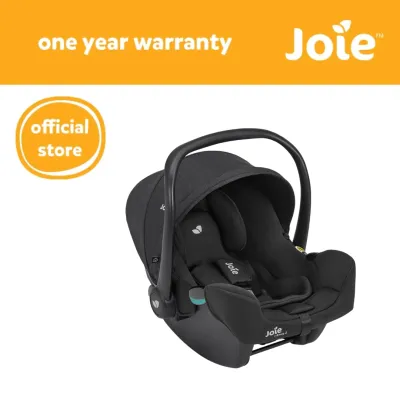
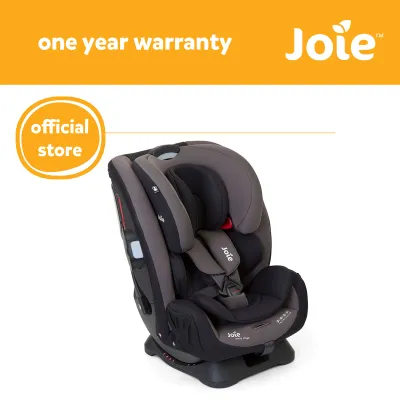
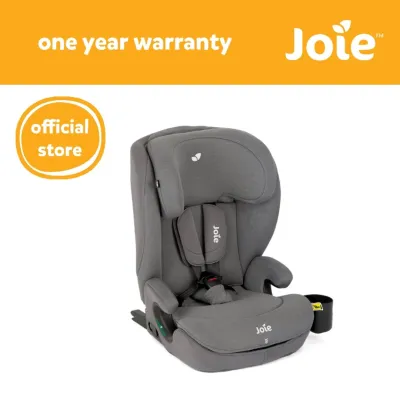
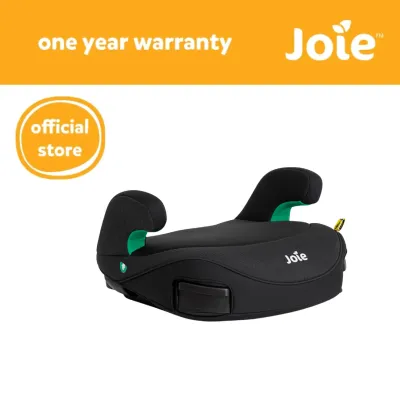
Prices are valid at publication and may change. Please refer to the product page for the latest price.
The Land Transport Authority (LTA) recognizes specific international safety standards to ensure that child restraints sold and used in Singapore offer adequate protection. The most common standards accepted on Singapore roads are the United Nations Economic Commission for Europe (UN ECE) regulations, specifically UN ECE R44/04 and the newer UN ECE R129 (often referred to as i-Size). Other standards from countries like the United States (FMVSS 213), Australia, and Japan are also recognized, but the European UN ECE standards remain the most prevalent for brands like Joie.
Using a non-compliant, uncertified, or improperly rated car seat is not only a traffic offense in Singapore but also compromises the child’s safety in the event of a collision. Parents must ensure that any car seat they install is legally compliant and correctly matched to their child’s physical development. Failing to use an approved restraint can result in fines, demerit points, and, most importantly, an increased risk of severe injury to the child during a sudden stop or accident.
How to Verify Safety Certifications on Joie Car Seats
To confirm that a Joie car seat is compliant with Singapore regulations, parents must locate the official orange approval label. This label is typically a sticker affixed directly to the plastic shell of the seat, often found on the base, the backrest, or the side panels. It serves as the official proof of testing and compliance under international regulatory frameworks. If this label is missing, defaced, or painted over, the seat cannot be verified as compliant.

The orange label contains critical regulatory information that parents must learn to read. Look for the specific standard number, which must read either “ECE R44/04” or “ECE R129” (or “i-Size”). If the label does not display one of these recognized standards, the seat may not be legally compliant for use on Singapore roads, and you should verify its origin before installation. Additionally, for R44/04 labels, the approval number below the standard should start with “04,” indicating it complies with the latest revision of that standard.
The label will also feature a circle containing the letter “E” followed by a number (such as E1 for Germany, E4 for the Netherlands, or E11 for the United Kingdom). This “E” mark indicates the country where the seat was tested and certified under the UN ECE regulations. Additionally, the label specifies the approved weight range (for R44/04) or height range (for R129) for which the seat is certified. Parents must verify that their child falls within these exact parameters before use, as using a seat outside its certified limits compromises its protective capabilities.
Comparing UN ECE R44/04 and R129 (i-Size) Standards
The older UN ECE R44/04 standard classifies car seats into groups based on the child’s weight (e.g., Group 0+ for up to 13 kg, Group 1 for 9 to 18 kg). In contrast, the newer UN ECE R129 (i-Size) standard uses the child’s height as the primary classification metric. This shift helps parents choose a seat that better fits their child’s physical proportions, reducing the risk of premature transitions to larger seats. Height-based classification is generally considered more accurate because children of the same weight can have vastly different torso lengths and head heights.
A major advancement of the R129 standard is the mandatory inclusion of side-impact testing. While R44/04 testing primarily focuses on frontal and rear collisions, R129-certified Joie seats must pass rigorous side-impact criteria, offering enhanced protection for the child’s head and neck in lateral collisions. This is particularly important as side-impact collisions account for a significant portion of severe injuries in vehicle accidents, where there is very little crumple zone between the door and the child.
Under the R44/04 standard, children can legally transition to a forward-facing position once they reach 9 kg (approximately 9 months). However, the R129 standard mandates that children must remain rear-facing until they are at least 15 months old and 76 cm tall. Rear-facing placement provides significantly better support for a baby’s fragile neck and spine during a sudden stop or impact, distributing the crash forces more evenly across the back of the seat rather than pulling the head forward.
Essential Safety and Installation Checks for Joie Seats
Even a fully certified Joie car seat cannot protect a child if it is incompatible with the vehicle. Parents must verify whether their car has ISOFIX anchor points or if the seat must be secured using the vehicle’s three-point seat belt. Refer to the vehicle’s owner manual and the Joie compatibility list to ensure a secure fit. Some Joie models are semi-universal, meaning they are only approved for use in specific vehicle models, so checking the compatibility list is a crucial step.
Car seats do not last indefinitely. Over time, exposure to heat and UV rays—especially in Singapore’s tropical climate—can degrade the plastic shell and internal components. Parents should locate the manufacturing date stamp on the seat’s plastic body and check the user manual for the manufacturer’s recommended lifespan, which typically ranges from five to ten years depending on the model. If you are using a second-hand seat, always verify its history and ensure it has not exceeded this recommended lifespan.
Before installing any Joie car seat, perform a thorough physical inspection. Check for any hairline cracks in the plastic shell, frayed or twisted harness straps, and ensure that all buckles and adjusters click securely into place. If any component appears damaged or missing, do not use the seat and contact the manufacturer or a qualified professional. Never use a car seat that has been stored in damp conditions or shows signs of mold, as this can affect the integrity of the harness webbing.
Always follow the specific Joie user manual for installation instructions. Ensure the seat is installed at the correct angle, the harness straps are adjusted to the correct height (at or below shoulder level for rear-facing, and at or above shoulder level for forward-facing), and the harness is snug enough that you cannot pinch the webbing at the child’s collarbone. A loose harness or incorrect installation angle can drastically reduce the seat’s effectiveness in a crash.
Frequently Asked Questions (FAQ)
Can I use a Joie car seat purchased overseas in Singapore?
Yes, you can use an overseas-purchased Joie car seat in Singapore, provided it carries a valid UN ECE R44/04 or UN ECE R129 orange certification label. Singapore’s LTA accepts these international standards regardless of where the seat was purchased. However, parents must avoid using seats certified solely to standards not recognized by local regulations, such as the United States FMVSS 213 standard, unless they also carry the approved UN ECE mark. Additionally, verify that the overseas model’s installation mechanisms are fully compatible with your vehicle’s seat belt and anchor configurations, as some overseas models may use different tethering systems.
When should I replace my child's Joie car seat?
A Joie car seat must be replaced immediately if it has been involved in a moderate to severe vehicle collision, even if there is no visible damage, as internal structural integrity may be compromised. You must also replace or upgrade the seat once your child exceeds the maximum weight or height limits specified on the orange certification label. Finally, replace the seat if it has reached its manufacturer-recommended expiration date, which can be verified by checking the manufacturing date stamp on the seat shell and consulting the user manual. Regular checks of your child’s growth against the seat’s limits will help you plan for the next stage in a timely manner.

Community discussion
Share your experience or ask a question. Comments are reviewed before publication.