
Choosing a baby crib is one of the most critical decisions you will make when preparing your nursery. As a prominent distributor and brand of nursery furniture in Singapore, Jarrons and Co offers a variety of baby cots and convertible cribs designed to accompany your child from infancy through the toddler years. However, safety is never a feature you should take for granted based on brand reputation alone. Ensuring your baby has a secure sleeping environment requires understanding how to verify safety certifications, inspect physical build quality, and maintain the crib over time. This guide provides a practical framework to help you evaluate Jarrons and Co cribs so you can make an informed, safety-first decision for your family.
Understanding Recognized Baby Crib Safety Standards
To determine if a Jarrons and Co crib is safe for your infant, you must first understand the specific safety standards that govern nursery furniture. Reputable manufacturers design their products to comply with rigorous international benchmarks. When reviewing product specifications on the official brand website or packaging, look for compliance with European safety standards, specifically EN 716. This standard dictates strict requirements for crib dimensions, structural strength, and the distance between slats to prevent accidental entrapment.
In addition to European guidelines, some models may reference United States standards, such as ASTM F1169. This standard outlines rigorous testing protocols for mattress support integrity, folding mechanisms, and side-rail strength. Locally, products sold in Singapore should align with safety guidelines monitored by Enterprise Singapore. These regulations ensure that consumer products do not pose choking, cutting, or entrapment hazards to young children.
Products mentioned in this guide
![[Jarrons & Co] Happy Dream 4-in-1 Convertible Baby Cot (Free Delivery Installation Teething Rail Side Guard & Mosquito Net)](https://img.lazcdn.com/g/p/1fa2fe8c6ca9054589090bd9450eb2ac.png_400x400q80.png_.webp)
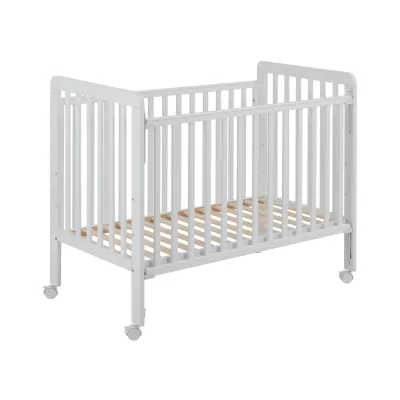
Prices are valid at publication and may change. Please refer to the product page for the latest price.
Slat spacing is one of the most critical physical dimensions regulated by these standards. The gap between each slat must be between 50mm and 60mm. If the spacing is too wide, a baby’s body could slip through, risking head entrapment; if it is too narrow, limbs can easily get wedged. You can verify this measurement yourself using a standard measuring tape before finalizing your purchase.
Another vital dimension is the distance from the top of the mattress to the top of the crib rail. When the mattress base is at its lowest position, this distance must be at least 600mm to prevent an active older baby from climbing or falling out. When the base is at its highest newborn setting, the depth must still be at least 300mm to keep a rolling infant secure.
To confirm these safety claims, do not rely solely on marketing descriptions. Always check the product manual, look for official certification stamps on the physical frame or packaging, or contact customer support directly to request the official compliance certificates. A transparent manufacturer will readily provide documentation proving their products have passed independent laboratory testing.
How to Physically Inspect Jarrons and Co Cribs
Whether you are viewing a display model in a showroom or unboxing a newly delivered crib at home, a hands-on physical inspection is essential. Begin by evaluating the overall finish of the wood or composite materials. Run your hands along the rails, slats, and corners to check for smooth surfaces. There should be no splinters, rough patches, or peeling paint that could injure your baby’s sensitive skin or pose an ingestion hazard.

Verify that the coatings used on the crib are non-toxic and lead-free. Look for labels indicating compliance with chemical safety standards, such as EN 71-3, which limits the migration of certain heavy elements in toy and nursery furniture materials. Since babies frequently chew on crib rails when teething, ensuring the paint or lacquer is completely safe is a non-negotiable step.
Next, assess the structural stability of the frame by performing a gentle shake test. Assemble the crib fully, or locate the display model, and grasp the top rails firmly. Give the crib a moderate shake; it should feel solid and grounded, with no significant wobbling, swaying, or creaking at the joints. Loose joints or flexible frames can degrade quickly under the weight of an active toddler, leading to structural failure.
Pay close attention to the adjustable mattress base. Most Jarrons and Co cribs feature multiple height positions to accommodate your growing child. Inspect the brackets, bolts, and support bars that hold the mattress base in place. The locking mechanisms must be robust and secure, requiring deliberate effort to adjust so they cannot be accidentally dislodged by your baby’s movements or weight.
Finally, examine the hardware and design details. Ensure there are no protruding bolts, screws, or wooden pegs that could catch on your baby’s clothing, sleep sack, or pacifier ribbon, which poses a severe strangulation risk. The headboards and footboards should be solid or have simple vertical slats; avoid any decorative cut-outs or scrollwork, as these can easily trap a baby’s fingers, arms, or head.
Safe Assembly and Nursery Setup Practices
Even the most highly certified crib can become hazardous if it is assembled incorrectly or placed in an unsafe location. When your Jarrons and Co crib arrives, locate the official instruction manual before starting assembly. Follow every step precisely, using only the hardware provided in the box. Never substitute missing screws, bolts, or wooden dowels with generic hardware from a local store, as even minor differences in thread pitch or length can compromise the structural integrity of the crib.
If you find that any parts are missing, damaged, or unclear, stop assembly immediately. Do not attempt to “make do” or modify the design. Contact the manufacturer or authorized distributor to obtain genuine replacement parts. It is also wise to re-tighten all connection points a few weeks after assembly, as the wood may settle slightly once the crib is placed in the room.
Selecting the correct mattress is just as important as choosing the crib itself. The mattress must fit snugly within the frame with virtually no gaps. You can test this using the “two-finger rule”: if you can fit more than two fingers between the edge of the mattress and the inner frame of the crib, the mattress is too small. A gap larger than this poses a dangerous entrapment hazard where a baby’s head or limbs could become wedged.
The mattress must also be firm. Soft mattresses or memory foam toppers can conform to a baby’s face, creating a suffocation risk. Ensure the mattress is designed specifically for the dimensions of your Jarrons and Co model, and avoid using thick mattress protectors or heavy blankets that could reduce the effective height of the safety rails.
Where you position the crib in your nursery plays a major role in your baby’s safety. Place the crib far away from windows, where dangling cords from blinds or curtains present an immediate strangulation hazard. Ensure there are no baby monitor cables, electrical cords, or decorative wall hangings within reach of the crib. Additionally, avoid placing the crib directly beneath heavy wall shelves, framed pictures, or air conditioning units that could fall during an unexpected tremor or due to structural wear.
Maintenance and When to Stop Using the Crib
Crib safety is an ongoing responsibility that continues long after the initial assembly. Establish a routine inspection schedule—ideally once a month—to check the physical condition of the crib. Check all bolts, screws, and brackets to ensure they remain tightly fastened. Daily use, rocking, and your baby’s movements can gradually loosen hardware over time, which can cause the frame to wobble or separate.
If your crib features plastic teething rails, inspect them regularly for cracks, chips, or sharp edges. Damaged teething guards should be replaced promptly to prevent your baby from ingesting plastic fragments or scratching their mouth. Similarly, check the wooden slats for any signs of bowing, cracking, or splitting, especially as your child grows heavier and more active.
Knowing when to transition your child out of the crib is crucial for preventing fall-related injuries. Keep a close eye on your child’s physical development and height. As a general rule, you should stop using the crib when your child reaches a height of 89 cm, or when the height of the side rail is less than three-quarters of their height (typically when the top rail is below their nipple line when standing). At this stage, the risk of them climbing over the rail and falling to the floor increases significantly.
You must also transition your child if they show the ability to climb out of the crib independently, regardless of their height or age. Many Jarrons and Co models are convertible, allowing you to transition the crib into a toddler bed or daybed by removing the front rail and installing a toddler guardrail. Always consult your specific model’s manual to verify the exact weight and height limits for each configuration.
If you ever observe significant structural damage, such as a cracked frame, broken slats, or malfunctioning drop-side mechanisms (if applicable to older models), discontinue use immediately. Do not attempt temporary DIY repairs with tape, glue, or non-standard brackets. Contact customer support for guidance on replacement parts or to determine if the crib is still safe to use.
Frequently Asked Questions (FAQ)
Are second-hand Jarrons and Co cribs safe to use?
Using a pre-owned crib carries inherent risks that require careful evaluation. Older models may not comply with current safety standards, or they may have suffered hidden structural damage, wood fatigue, or micro-cracks from previous assembly and disassembly cycles. Furthermore, second-hand cribs often lack the original assembly manual and may be missing critical hardware, tempting parents to use incorrect substitute screws. If you plan to use a second-hand Jarrons and Co crib, you must verify that you have the complete, original hardware set and the official instruction manual. Inspect the crib thoroughly for any signs of wear, cracks, or modifications, and check online recall databases to ensure the specific model has not been recalled for safety defects.
Do Jarrons and Co cribs come with a warranty for safety defects?
Warranty terms can vary depending on the specific model, retailer, and purchase date. Generally, Jarrons and Co products purchased through authorized distributors come with a limited manufacturer’s warranty that covers structural and manufacturing defects. This typically includes issues like warped wood, faulty joints, or defective hardware that compromises the safety of the crib. However, warranties do not cover normal wear and tear, damage caused by incorrect assembly, or unauthorized modifications. To find the exact warranty terms for your crib, check the product documentation included in the packaging or visit the official brand website. Keep your original purchase receipt in a safe place, as you will need to present it to customer support if you ever need to file a claim for a structural defect.

Community discussion
Share your experience or ask a question. Comments are reviewed before publication.