
Selecting a Japanese baby laundry detergent in Singapore requires balancing gentle skin care with effective stain removal. To find a formula that is truly worth trying for your household, you must evaluate whether a soap-based or synthetic surfactant-based formulation fits your washing machine, learn to decode Japanese packaging claims, and verify the authenticity of products sourced through local or online channels. Because baby skin is significantly thinner and more permeable than adult skin, choosing a detergent that rinses away completely without leaving irritating residues is the most critical step in preventing contact dermatitis and flare-ups.
Understanding Japanese Baby Detergent Formulations
When exploring Japanese baby detergents, the first step is distinguishing between soap-based formulations, often referred to as sekken, and synthetic surfactant-based formulations. Soap-based detergents are crafted from saponified natural fats and vegetable oils. They are highly biodegradable and gentle on skin, but they behave differently in water compared to synthetic alternatives.
When mixed with water, soap molecules bind to oils and dirt, allowing them to be washed away. However, in areas with harder water, these molecules can react with dissolved minerals like calcium and magnesium, creating insoluble soap scum. While Singapore’s tap water is generally soft, repeated use of pure soap detergents can still lead to minor buildup in washing machine drums and fabric fibers if not accompanied by a thorough rinse cycle.
Products mentioned in this guide
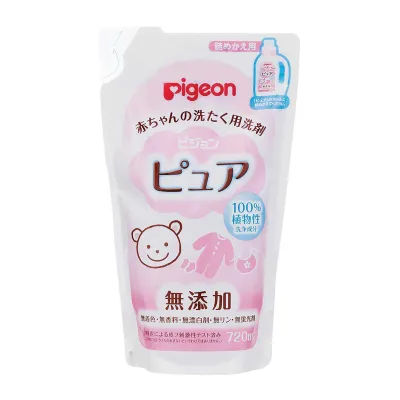
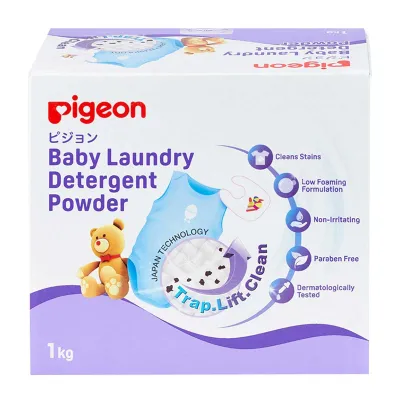
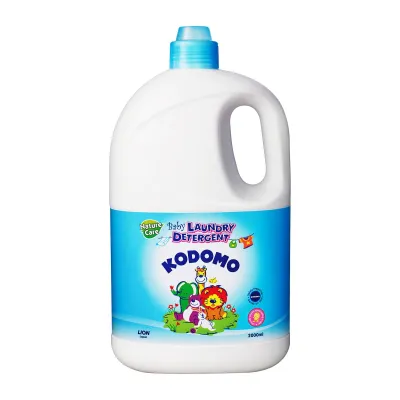
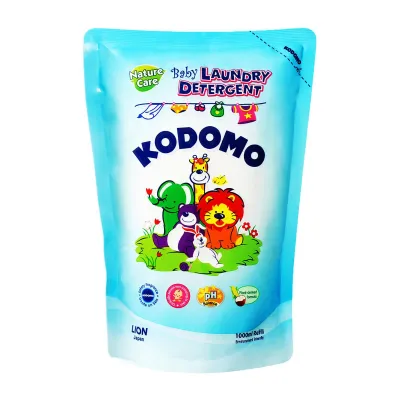
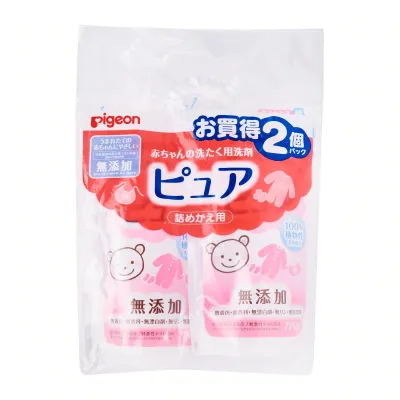
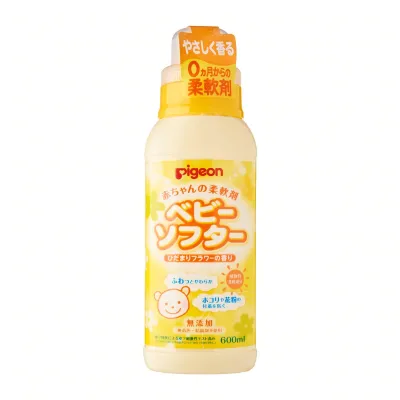
Prices are valid at publication and may change. Please refer to the product page for the latest price.
Synthetic surfactant-based formulations utilize engineered cleaning agents, often derived from plant sources like coconut or palm oil. These surfactants are designed to remain highly soluble in all water temperatures and hardness levels, preventing the formation of residues. They are highly efficient at lifting dirt but require careful formulation to ensure they do not strip the natural lipid barrier of a baby’s skin.
Baby laundry is unique because it is dominated by organic, protein-rich stains such as breast milk, formula, spit-up, and eventually, solid food purees. To break down these tough bonds, some detergents include enzymes like proteases and lipases. While highly effective at stain removal, enzymes can occasionally trigger sensitivity in newborns with compromised skin barriers. Many Japanese formulations offer enzyme-free options specifically for the first few months of life.
Liquid detergents are the dominant choice for baby laundry in Singapore due to their immediate solubility in cold water. They disperse evenly and rinse out easily, minimizing the risk of undissolved particles trapping themselves in the weave of baby clothes. Powder detergents, while often more cost-effective and powerful for heavy organic stains, require warm water or extended wash cycles to dissolve completely, making them less convenient for quick, daily baby laundry loads.
Key Criteria for Evaluating Brand Trustworthiness
Because many premium baby detergents are imported directly from Japan, the primary labels are written in Japanese characters. Understanding how to identify key safety claims and ingredient exclusions is essential for making an informed choice. Parents should familiarize themselves with common packaging terms to verify what is actually inside the bottle.

The Japanese term for “additive-free” is written as 無添加. However, this claim is not standardized, meaning a product labeled this way might be free of silicones but still contain synthetic fragrances or preservatives. Parents must look closer to verify that the formula specifically excludes optical brighteners, synthetic dyes, and synthetic fragrances. Optical brighteners are chemical compounds designed to remain on fabrics to make them appear whiter, but they can cause significant irritation when they come into contact with sensitive infant skin.
Many Japanese brands feature labels indicating they are “allergy tested” or “patch tested.” While these labels provide a layer of reassurance, they are not absolute guarantees of safety. These tests mean the formulation underwent controlled clinical trials on human subjects to monitor for adverse skin reactions. Because every infant’s skin microbiome and sensitivity levels are unique, these claims should be viewed as a baseline standard of care rather than a promise of universal compatibility.
The ability of a detergent to wash away completely during a standard rinse cycle is paramount. Residual surfactants left on clothing fibers can be reactivated by the baby’s sweat, leading to localized skin irritation, redness, or contact dermatitis. Trustworthy Japanese brands often design their formulas for high rinsability, sometimes labeling them as compatible with a single rinse cycle. When evaluating a brand, look for formulations that prioritize clean rinsing without leaving a soapy film on the fabric.
Navigating Availability and Authenticity in Singapore
Japanese baby products are widely available in Singapore, but the distribution channels vary significantly. Parents can choose between authorized local distributors, specialty baby boutiques, Japanese supermarkets, and various online marketplaces. Sourcing from reputable channels is crucial to ensure you are receiving genuine, properly stored products.
The popularity of Japanese baby care has led to an influx of parallel imports and, in some cases, counterfeit goods on online platforms. To verify authenticity, examine the physical packaging closely. Genuine products feature high-quality, crisp printing, secure caps, and clear batch codes stamped on the bottom or back of the container. If the printing appears blurry, the plastic feels unusually flimsy, or the safety seal is broken, avoid using the product.
Unlike food products, Japanese cosmetics and household detergents are not always required to print an explicit expiration date on the packaging if they are stable for at least three years under normal storage conditions. Instead, they use batch codes. If you are concerned about the freshness of a product, you can contact the brand’s official distributor to verify the manufacturing date. Avoid buying bulk quantities of older stock, as active ingredients and natural preservatives can degrade over time.
Buying from a local Singapore supermarket or authorized online storefront provides immediate access and the assurance of local consumer protection. However, direct cross-border shipping from Japan via online marketplaces can sometimes offer lower base prices. When choosing this route, factor in the shipping costs, potential GST, and delivery lead times, which can range from one to two weeks. Additionally, consider that long transit times in hot cargo holds can expose natural, preservative-free detergents to extreme heat, potentially causing separation or spoilage before they arrive. Calculate the true cost per liter in S$ to determine if the savings are worth the wait and potential transit risks.
Building Your Shortlist: A Decision Framework
Selecting the right detergent is not about finding a single universal winner, but rather matching a formulation to your baby’s specific skin profile, your laundry habits, and your washing equipment. By systematically evaluating these factors, you can narrow down the options to a safe, effective shortlist.
For newborns and infants with highly sensitive skin, eczema, or a family history of allergies, start with an ultra-mild, fragrance-free, soap-based detergent. These formulas minimize chemical exposure during the crucial early months. As your baby grows, becomes more active, and begins eating solid foods, you will encounter tougher stains like fruit purees, vegetable oils, and mud. At this stage, transitioning to a mild synthetic surfactant-based detergent with gentle, plant-derived enzymes can provide the necessary cleaning power without compromising skin health.
The type of washing machine in your Singapore home plays a major role in detergent selection. High-efficiency front-loading machines use significantly less water than traditional top-loaders. Consequently, they require low-sudsing detergents to prevent excess foam from overwhelming the machine or leaving residue on the clothes. Soap-based detergents tend to produce more suds and can leave a buildup of soap scum in front-loader drums over time. If you use a front-loader, verify that the Japanese detergent is labeled as low-sudsing or explicitly approved for front-loading machines.
Before committing to a large bulk purchase of any new Japanese detergent, conduct a controlled trial. Purchase a small travel-sized bottle or refill pack. Wash a small batch of your baby’s clothes, focusing on items that have direct, prolonged contact with their skin, such as onesies or fitted sheets. Have your baby wear these items for a full day while closely observing their skin for any signs of redness, dryness, or irritation. If no reaction occurs after 48 hours, you can safely integrate the detergent into your regular laundry routine and proceed with larger purchases.
Frequently Asked Questions (FAQ)
Do I need a separate fabric softener for baby clothes?
In most cases, a separate fabric softener is neither necessary nor recommended for baby laundry. Traditional fabric softeners work by depositing a thin, chemical film over fabric fibers to make them feel smoother. While this reduces static and adds softness, it also significantly reduces the absorbency of cotton fibers. This is particularly problematic for baby items like cloth diapers, bath towels, and muslin swaddles, which need to remain highly absorbent to function effectively.
Many Japanese baby detergents are specifically formulated to leave clothes naturally soft without the need for additional additives. They utilize gentle, plant-derived cleaning agents that preserve the natural texture of cotton and linen. If you find that clothes feel stiff after washing, it is often a sign of detergent residue rather than a need for softener. Try reducing the amount of detergent used or adding an extra rinse cycle to ensure all soap is completely cleared from the fabric.
How should I store liquid soap-based detergents in a humid climate?
Singapore’s tropical climate, characterized by high humidity and consistent warmth, presents unique storage challenges for natural and soap-based baby detergents. Because many of these products are formulated with minimal synthetic preservatives to protect sensitive skin, they are more susceptible to environmental degradation. Store your detergent bottles in a cool, dry pantry or cupboard, away from direct sunlight, laundry appliances that generate heat, and areas of high humidity like the bathroom.
Always ensure the bottle cap is tightly sealed immediately after use to prevent airborne moisture and mold spores from entering the container. Regularly inspect the liquid for any signs of spoilage. Visual indicators of degradation include distinct separation of the liquid into layers that do not recombine when shaken, unusual clumping, or significant discoloration. A sour, rancid, or off-putting odor is also a clear sign that the natural oils in the soap have oxidized or that bacterial growth has occurred. If you notice any of these signs, discard the product immediately to protect your baby’s skin.

Community discussion
Share your experience or ask a question. Comments are reviewed before publication.