
Finding a child car seat that complies with local regulations is a critical step for parents in Singapore. Under the Road Traffic Act, anyone under the height of 1.35 metres must be secured in an approved child restraint appropriate for their height and weight. While many international brands offer ISOFIX booster seats, parents must verify that the specific model they choose carries the necessary safety certifications recognized by Singapore authorities.
Rather than relying on brand names alone, the most reliable way to ensure compliance is to inspect the physical approval labels on the seat itself. These labels indicate that the seat has undergone rigorous crash testing and meets stringent international standards. This guide outlines how to identify compliant seats, verify manufacturer claims, and select a booster seat that fits both your child and your vehicle.
Understanding Car Seat Safety Standards in Singapore
Singapore’s Traffic Police and Land Transport Authority recognize several international safety standards for child restraints. The most common standards you will encounter on compliant seats are the European Union standards, specifically UN ECE R44/04 and UN ECE R129. Other recognized standards include those from the United States (FMVSS 213), Canada (CMVSS 213), Australia (AS/NZS 1754), and Japan (JIS).
Products mentioned in this guide
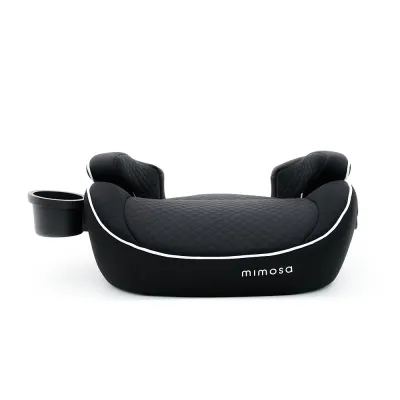
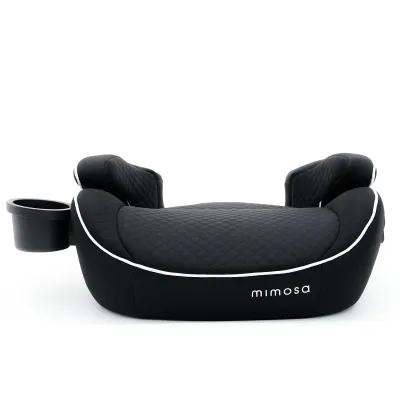
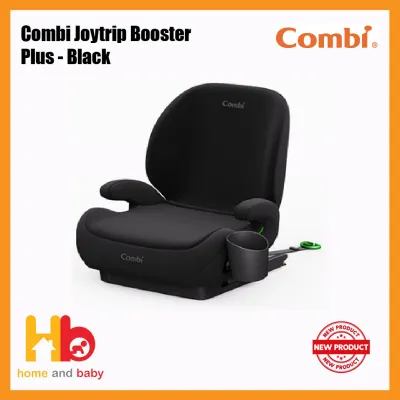
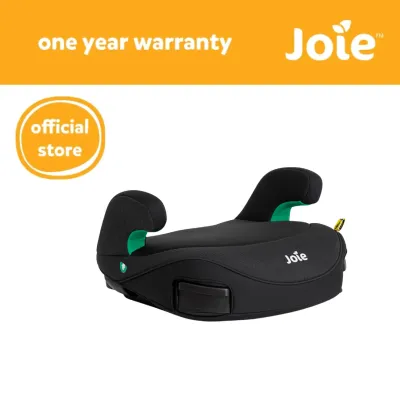
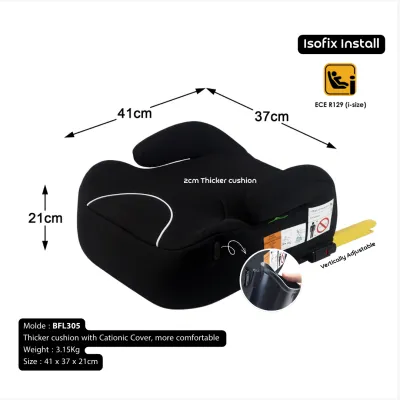
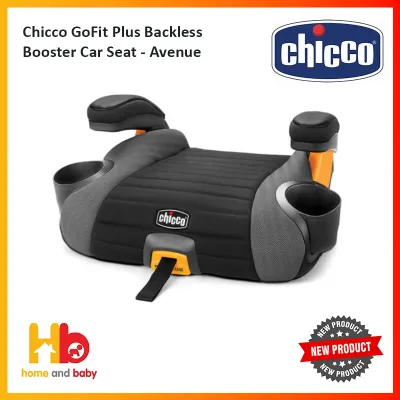
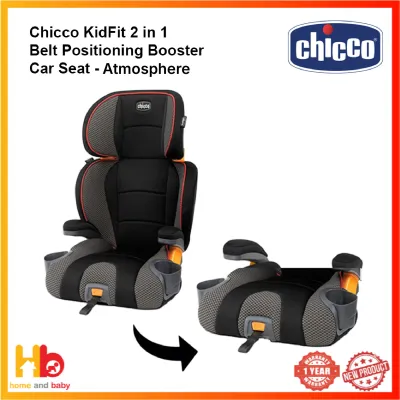
Prices are valid at publication and may change. Please refer to the product page for the latest price.
The UN ECE R44/04 standard is a well-established framework that categorizes booster seats based on the child’s weight. Under this system, booster seats typically fall into Group 2 (15 to 25 kg) and Group 3 (22 to 36 kg). While still legally compliant and widely available, R44/04 is gradually being phased out in some jurisdictions in favor of newer, more comprehensive testing protocols.
The UN ECE R129 standard, often referred to as i-Size, represents the latest advancement in child car seat safety. Unlike the weight-based R44/04 standard, R129 classifies booster seats based on the child’s height. This shift ensures a more accurate fit, as children of the same weight can vary significantly in height and torso length, affecting how the vehicle’s seat belt sits across their body.
In addition to height-based classification, the R129 standard introduces mandatory side-impact testing. Older standards primarily focused on frontal and rear collisions, but R129 requires seats to feature advanced energy-absorbing materials and structural designs to protect the child’s head and neck during a side collision. This standard also promotes better compatibility with vehicle seats through standardized ISOFIX anchor points.
To stay informed about potential regulatory changes, parents should regularly consult official updates from the Singapore Traffic Police and the Ministry of Home Affairs. While the core recognized standards remain stable, local enforcement guidelines and import regulations can evolve, making it essential to purchase seats that align with the most current legal requirements.
How to Verify ISOFIX Booster Seat Compliance Before Buying
The most definitive proof of compliance is the orange United Nations ECE approval label, which is permanently affixed to the body of the booster seat. This label features a circle containing the letter “E” followed by a number, which indicates the country where the certification was granted (for example, “E1” for Germany or “E4” for the Netherlands). Below this mark, you will find the specific regulation number, such as “043011” for R44/04 or “R129” for the newer standard.

When inspecting the label, pay close attention to the approval number and the weight or height limits printed on it. The approval number for an R44/04 seat must begin with “04,” indicating it complies with the latest revision of that standard; older versions starting with “03” are outdated and should be avoided. For R129 seats, the label will clearly state the compatible height range, such as “100cm – 150cm.”
Before finalizing a purchase, cross-reference the model number found on the seat’s packaging or instruction manual with the manufacturer’s official website. Reputable brands publish detailed compliance certificates and user manuals online, allowing you to verify that the specific model sold in Singapore matches the certified design. Be cautious of minor variations in model names, as some brands produce different versions of the same seat for different global markets.
To minimize the risk of purchasing counterfeit or uncertified booster seats, buy exclusively from authorized physical retailers, official brand boutiques, or verified online flagship stores. Unofficial sellers on online marketplaces may offer parallel imports that lack the necessary certification labels or may not comply with the specific standards recognized in Singapore. Purchasing from authorized channels also ensures you receive a valid local warranty and access to manufacturer recalls.
If you are considering a pre-owned booster seat, exercise extreme caution. It is virtually impossible to verify the structural integrity of a used seat, as internal micro-fractures in the plastic or energy-absorbing foam may not be visible to the naked eye. If you must use a secondhand seat, ensure it comes from a trusted source, has never been involved in any collision, possesses all original labels and manuals, and has not exceeded its manufacturer-specified lifespan.
Essential Safety and Fit Features for ISOFIX Booster Seats
The ISOFIX system utilizes rigid metal connectors built into the base of the booster seat that click directly into anchor points welded to the vehicle’s chassis. In a high-back booster seat, the primary purpose of the ISOFIX connection is to keep the seat securely anchored to the vehicle when it is unoccupied, preventing it from becoming a dangerous projectile during a sudden stop. It also stabilizes the seat during daily entry and exit, making it easier for the child to buckle up.
While the ISOFIX connectors secure the booster seat itself, the vehicle’s three-point seat belt remains the primary restraint system protecting your child. The seat belt must absorb the forces of an impact, meaning the booster seat’s design must facilitate perfect belt routing. Parents must ensure that the booster seat does not interfere with the vehicle’s seat belt buckle or prevent the belt from retracting smoothly.
An adjustable headrest is a critical safety feature that allows the booster seat to grow alongside your child. The headrest should be positioned so that the integrated shoulder belt guide sits slightly above the child’s shoulder, ensuring the belt is routed correctly. Deep, energy-absorbing headrest wings also provide essential lateral support, keeping the child’s head contained within the protective shell during a side-impact collision.
Side-impact protection structures, often featuring deployable pods or specialized foam layers on the outer shell, help absorb and redirect crash forces away from the child’s fragile torso and head. When selecting a booster seat, check if these features are built-in or require manual activation on the side closest to the vehicle door. These safety elements are particularly important in smaller vehicles where the distance between the seat and the door is minimal.
Proper seat belt routing is the single most important factor in preventing severe abdominal and neck injuries. The booster seat must feature clearly marked, color-coded belt guides (usually red for R44/04 and green for R129) that direct the lap belt low across the child’s pelvis, resting on the strong hip bones rather than the soft abdomen. The shoulder belt guide must position the diagonal strap flat across the middle of the collarbone, away from both the neck and the edge of the shoulder.
Evaluating Car Seat Brands: How to Verify Compliance Claims
When researching car seat brands, it is important to understand that a brand’s overall reputation does not guarantee that every model they produce is suitable for your specific vehicle or compliant with Singapore standards. Major global brands like Cybex, Joie, Britax, Maxi-Cosi, and Graco design seats for various international markets, each with distinct regulatory requirements. You must verify the certification of the exact model number you intend to buy.
Before purchasing, consult the vehicle compatibility list provided in the booster seat’s user manual or on the manufacturer’s website. Because vehicle seat designs and ISOFIX anchor locations vary, some booster seats may be classified as “semi-universal,” meaning they are only approved for use in specific car models. Ensuring your vehicle is on the approved list guarantees that the ISOFIX connectors will align correctly and the seat will rest flat against the vehicle’s seat back.
Reputable manufacturers make their compliance documentation and crash-test summaries easily accessible to the public. Visit the brand’s official regional website to look for downloadable compliance certificates, instruction manuals, and vehicle fit finders. If a brand or retailer cannot provide clear, verifiable documentation regarding the seat’s compliance with UN ECE R44/04 or R129 standards, it is best to choose a different product.
Be skeptical of vague marketing claims such as “meets all safety standards” or “approved worldwide” without specific reference to recognized regulatory bodies. Legitimate manufacturers will always state the exact standard their product meets on both the packaging and the physical seat label. If you encounter a brand that is unfamiliar or lacks a dedicated customer support channel in Singapore, verify its credentials thoroughly before trusting it with your child’s safety.
Remember that safety certifications represent the minimum legal requirements for sale and use. Many premium brands subject their booster seats to independent consumer testing organizations, such as ADAC in Germany or ÖAMTC in Austria, which apply more stringent criteria than standard regulatory tests. While these independent ratings are highly informative, they should complement, not replace, your verification of the official UN ECE approval label.
Installation and Daily Use Checks for Maximum Safety
To install an ISOFIX booster seat correctly, align the seat’s connectors with the vehicle’s ISOFIX anchor points and push firmly until you hear an audible click. Most modern booster seats feature visual indicators on the ISOFIX arms that turn from red to green when the connectors are securely locked in place. Once connected, push the booster seat firmly against the vehicle’s seat back to eliminate any gaps that could compromise safety.
After securing the ISOFIX connectors, perform a physical shake test to ensure the seat is stable. While a small amount of lateral movement is normal, the seat should feel firmly anchored to the vehicle chassis. If your booster seat features a top tether strap or a support leg (though rare for Group 2/3 boosters), ensure these components are also installed and tensioned according to the manufacturer’s instructions.
As your child grows, their seating position will change, requiring regular adjustments to the booster seat’s headrest and belt guides. Check the fit of the seat belt at the start of every journey, ensuring the straps are flat, untwisted, and positioned correctly across the pelvis and collarbone. Never allow your child to place the shoulder belt under their arm or behind their back, as this leaves the upper body completely unrestrained in a crash.
Regularly inspect the booster seat for signs of wear, structural damage, or material degradation. Singapore’s hot and humid climate can accelerate the aging of plastics and EPS foam, especially if the vehicle is frequently parked in direct sunlight. Look for cracks in the plastic shell, crumbling foam, frayed harness straps, or malfunctioning ISOFIX release mechanisms, and replace the seat immediately if any defects are found.
Finally, always adhere to the manufacturer’s specified expiration date for the booster seat, which is typically found in the user manual or stamped on the underside of the plastic shell. Most car seats have a lifespan of six to ten years from the date of manufacture due to the natural degradation of materials over time. If the seat is involved in a collision—even a minor one—it must be replaced immediately, as invisible structural damage may prevent it from protecting your child in a subsequent accident.
Frequently Asked Questions (FAQ)
At what age or height should a child transition to a booster seat in Singapore?
Under Singapore law, any passenger under 1.35 metres in height must be secured in an approved child restraint. Children typically transition from a toddler seat with an integrated harness to a booster seat when they exceed the maximum weight or height limit of their current seat, which usually occurs around 18 kg or when their shoulders rise above the highest harness slot. It is safest to keep your child in a harnessed seat for as long as possible before moving to a booster seat, as the harness distributes crash forces more evenly across their developing body.
Can I use an ISOFIX booster seat in the front passenger seat?
While it is legally permissible in Singapore to install a forward-facing booster seat in the front passenger seat, safety experts strongly recommend placing children in the rear seat, which is statistically the safest location in a vehicle. If you must use the front seat, you must ensure the vehicle’s passenger airbag is fully deactivated if the seat is rear-facing (though booster seats are forward-facing). For a forward-facing booster seat, slide the vehicle’s passenger seat as far back as possible on its tracks to maximize the distance between the child and the deploying airbag, and ensure the seat belt routes perfectly.

Community discussion
Share your experience or ask a question. Comments are reviewed before publication.