
When shopping for a booster seat for kids in Singapore, navigating the sea of brands, models, and safety claims can feel overwhelming. Singapore’s road safety laws are strict, requiring all motor vehicle passengers under 1.35 metres in height to be secured with an approved child restraint. Rather than relying on a brand name alone, parents must look for specific model-level certifications, primarily the United Nations Economic Commission for Europe (UNECE) regulations R44/04 or R129.
While many reputable global brands manufacture high-quality seats, not every model sold online or imported from overseas is certified or suitable for use on Singapore roads. Ensuring your child’s safety requires verifying the physical certification label on the specific booster seat model you intend to purchase. This guide will help you understand the regulatory landscape, verify safety labels, and choose a compliant booster seat that fits both your child and your vehicle.
Understanding Singapore's Safety Standards for Booster Seats
Singapore’s Road Traffic Act mandates that child restraints used in vehicles must meet recognized international safety standards. The Land Transport Authority (LTA) and the Traffic Police recognize specific standards, with the UNECE regulations being the most common and widely available in the local market. These standards ensure that the booster seat has undergone rigorous crash testing, including frontal and rear impact simulations, to verify its structural integrity and protective capabilities.
Products mentioned in this guide
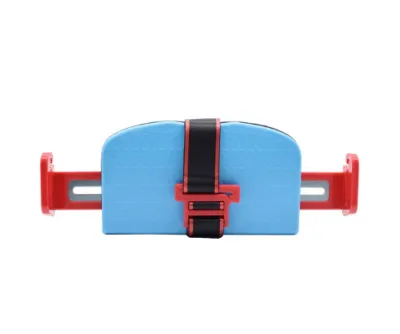
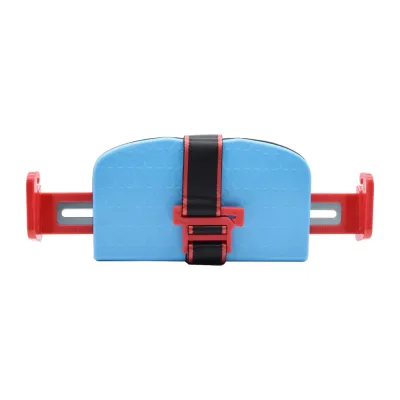
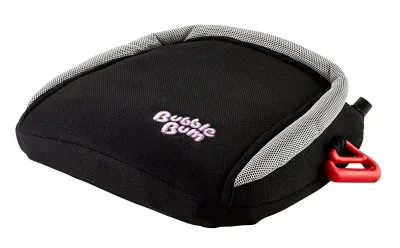
Prices are valid at publication and may change. Please refer to the product page for the latest price.
The older but still widely accepted standard is UNECE R44/04. This regulation categorizes booster seats based on the child’s weight. For booster seats, this typically falls under Group 2 (15 to 25 kg) and Group 3 (22 to 36 kg). Under R44/04, seats are tested primarily for frontal and rear impacts, and the child is secured using the vehicle’s three-point seatbelt, which is guided across the child’s body by the booster seat’s design.
The newer, more advanced standard is UNECE R129, often referred to as i-Size. This standard represents a significant shift in safety philosophy, categorizing booster seats by the child’s height rather than weight. This height-based classification makes it much easier for parents to determine when a seat is outgrown, as children’s skeletal development aligns more closely with height than weight. Furthermore, R129 mandates side-impact testing, which was not a mandatory requirement under the older R44/04 standard.
It is crucial to understand that safety certification applies to specific seat models and their tested configurations, not to a brand as a whole. A manufacturer might produce several booster seat models, some of which are certified under R129, others under R44/04, and some that may not carry European certification at all if they were designed for other markets. Therefore, you must verify the certification of the exact model you are considering, rather than assuming compliance based on brand reputation.
While both R44/04 and R129 seats are currently legal and safe to use in Singapore, R129 is the modern benchmark. It features stricter testing protocols, better head and neck support, and a design philosophy that reduces the risk of incorrect installation. If you are purchasing a new booster seat, prioritizing R129-certified models is a forward-thinking choice that offers the latest advancements in child passenger safety.
How to Verify Safety Certifications When Shopping
To ensure a booster seat for kids is legally compliant and safe for use in Singapore, you must know how to locate and read the orange approval label. This label, often referred to as the E-mark, is typically a sticker affixed to the back or underside of the booster seat shell. It serves as the official proof that the specific model has been tested and approved according to UNECE standards.

When examining the orange label, look for several key pieces of information. At the top, you will see the standard number, such as “ECE R44/04” or “ECE R129”. Below this, there will be a circle containing the letter “E” followed by a number. This number represents the country where the certification was granted (for example, “E1” for Germany, “E2” for France, or “E4” for the Netherlands). The label will also specify the weight or height range for which the seat is approved, along with the word “Universal” or “Semi-Universal,” indicating its compatibility with different vehicle types.
With the rise of online marketplaces and global e-commerce platforms, parents must exercise caution when purchasing baby gear. Many unbranded, counterfeit, or non-compliant booster seats are sold online at deceptively low prices. These seats often lack the internal reinforcement, energy-absorbing foam, and robust belt guides required to protect a child during an accident. To avoid these risks, purchase your booster seat from authorized local distributors, reputable physical baby specialty stores, or official brand flagship stores.
Before finalizing your purchase, cross-reference the physical model number and manufacturing date of the booster seat. This information is usually found on a separate white tracking label on the seat shell. Compare these details with the manufacturer’s official specifications and check for any active product recalls. Reputable manufacturers maintain up-to-date recall databases on their websites, allowing you to verify that your specific batch is safe and approved for use.
Key Features to Evaluate Beyond Basic Certification
While basic certification is a non-negotiable starting point, evaluating additional design features will help you choose a booster seat that offers optimal real-world safety, comfort, and ease of use. One of the primary decisions you will face is choosing between ISOFIX-connected boosters and non-ISOFIX (seatbelt-only) models. ISOFIX connectors secure the booster seat directly to the vehicle’s chassis anchor points, keeping the seat stable and preventing it from sliding around when unoccupied.
However, it is important to note that in a high-back booster seat, the ISOFIX system does not bear the load of restraining the child during a crash; that remains the job of the vehicle’s three-point seatbelt. Seatbelt-only booster seats rely entirely on the car’s seatbelt to secure both the child and the seat. These models are highly portable, lightweight, and compatible with older vehicles or taxis that may not have ISOFIX anchors, making them a popular choice for families who rely on ride-hailing services in Singapore.
Side-impact protection is another critical feature to evaluate, especially if you are looking at older R44/04 models where side-impact testing was not mandatory. Look for booster seats with deep, padded side wings lined with energy-absorbing materials like expanded polystyrene (EPS) or expanded polypropylene (EPP) foam. Some premium models feature additional external side-impact cushions that deploy on the side of the seat closest to the car door, absorbing a significant portion of the crash forces before they reach the child.
An adjustable headrest is essential for ensuring the booster seat grows with your child. The headrest should feature integrated shoulder belt guides that adjust vertically, keeping the vehicle’s diagonal seatbelt positioned flat across the center of your child’s collarbone. If the belt guide is too low, the belt can slip off the shoulder; if it is too high, the belt may rub against the child’s neck, causing discomfort and tempting them to place the belt behind their back, which is highly dangerous.
Finally, physical compatibility with your vehicle is paramount. Even a certified, high-end booster seat cannot protect your child if it does not fit properly in your car. Consult your vehicle’s owner manual to identify approved seating positions for child restraints, and check the booster seat manufacturer’s official “fitting list” or “compatibility list.” Some car seats have contoured cushions or fixed headrests that can prevent a high-back booster from sitting flush against the vehicle seatback, compromising its stability.
Building Your Shortlist: Reputable Brands to Research
When compiling a shortlist of booster seats to research, focusing on established manufacturer categories known for rigorous safety engineering is a wise approach. Dedicated child safety specialists—such as Britax, Maxi-Cosi, Cybex, Joie, and Graco—are excellent starting points. These brands have long histories of crash-testing, research, and development, and they frequently design seats that exceed minimum regulatory requirements.
To begin your research, visit the official regional websites of these brands to identify which of their booster seat models are explicitly certified to UNECE R44/04 or R129 standards. Keep in mind that product names can vary by region, and a model sold in North America (which meets US FMVSS standards) may not carry the European certification required in Singapore. Always verify that the specific model available through local authorized channels carries the correct orange E-mark label.
Purchasing through authorized local distributors or official brand stores in Singapore offers several distinct advantages. It ensures that you receive a genuine product designed for the local market, complete with local warranty support and access to customer service. If a manufacturer issues a safety recall or product update, registered local buyers are typically notified directly, allowing you to take immediate action to keep your child safe.
Avoid assuming that a booster seat is compliant simply because it is a popular global model or has positive reviews on international websites. Different countries have different safety standards, and a seat that is legal in one region may not meet the legal definitions or vehicle compatibility requirements in Singapore. By focusing your research on certified models sold through authorized local channels, you can build a shortlist of high-quality, compliant options.
Installation and Usage Checks for Maximum Protection
A certified booster seat can only provide its intended level of protection if it is correctly matched to your child’s physical development and properly installed in your vehicle. The transition to a booster seat should never be rushed. Children should remain in a forward-facing car seat with an internal five-point harness until they have fully outgrown the height or weight limits specified by the manufacturer of that seat.
When your child is ready to transition to a belt-positioning booster seat, correct seatbelt routing is critical. The lap belt must sit low across your child’s hips and pelvis, anchoring against the strong pelvic bones rather than riding up onto the soft abdomen. In a collision, a lap belt positioned over the abdomen can cause severe internal organ damage. The shoulder belt must cross the center of the chest and collarbone, resting comfortably away from the neck and face.
Regularly inspect the booster seat for signs of wear, damage, or degradation. Over time, exposure to high temperatures and ultraviolet (UV) light—common in Singapore’s tropical climate—can cause the plastic shell of the seat to become brittle. Check the manufacturer’s expiration date, which is often molded into the plastic shell or stated in the user manual. Most manufacturers recommend replacing a booster seat after six to ten years of use, depending on the materials.
If a booster seat is involved in a moderate-to-severe vehicle collision, it must be replaced immediately, even if there is no visible damage. The forces of a crash can cause hairline fractures in the plastic shell or compress the internal energy-absorbing foam, rendering the seat incapable of protecting your child in a subsequent impact. Never purchase a secondhand booster seat unless you are absolutely certain of its complete history and can verify that it has never been involved in an accident.
Frequently Asked Questions (FAQ)
Can I use a booster seat bought overseas in Singapore?
You can legally and safely use an overseas-purchased booster seat in Singapore only if it bears a recognized UNECE R44/04 or R129 certification label. If you purchase a seat from a region that uses different standards, such as the United States (FMVSS 213) or Australia (AS/NZS 1754), it may not be legally recognized under Singapore’s road traffic laws unless it also carries the European E-mark. Additionally, importing a seat independently carries practical risks, including the lack of local warranty coverage, difficulty receiving safety recall notifications, and potential compatibility issues with local vehicle models.
When should my child transition from a harness car seat to a booster seat?
Your child should transition from a harness car seat to a booster seat only when they have fully outgrown the maximum height or weight limits of their forward-facing harness seat. It is safest to keep your child in a five-point harness for as long as possible, as the harness distributes crash forces more evenly across the strongest parts of the body. Typically, children are physically and developmentally ready for a belt-positioning booster seat when they weigh at least 15 kg (for R44/04 seats) or reach the minimum height specified by an R129 booster (usually around 100 cm), and can sit correctly without slouching or playing with the seatbelt for the entire journey.
Community discussion
Share your experience or ask a question. Comments are reviewed before publication.