
Ensuring your child’s safety on the road is a top priority for every parent, and navigating the legal landscape of child restraint systems is a crucial part of that responsibility. If you are considering or currently own a Mimosa booster seat, verifying its legal compliance is essential before installing it in your vehicle. In Singapore, all child car seats and booster seats must meet strict international safety standards recognized by the Land Transport Authority (LTA) to be legally used on public roads.
To determine if your specific Mimosa booster seat is legal, you must inspect the physical product for approved certification labels, confirm it matches your child’s current height and weight, and ensure it is installed correctly. This guide outlines the exact legal requirements in Singapore, the recognized international safety standards, and the step-by-step verification process to keep your child safe and ensure you remain compliant with local traffic laws.
Singapore's Legal Requirements for Child Restraint Systems
Under the Singapore Road Traffic Act, anyone under 1.35 meters in height must be secured using an approved child restraint system or booster seat appropriate for their height and weight when traveling in a passenger vehicle. This law applies to all private passenger cars, including private hire vehicles. Taxis are currently exempt from this requirement due to practical constraints, though parents are still strongly encouraged to use portable restraints.
Products mentioned in this guide
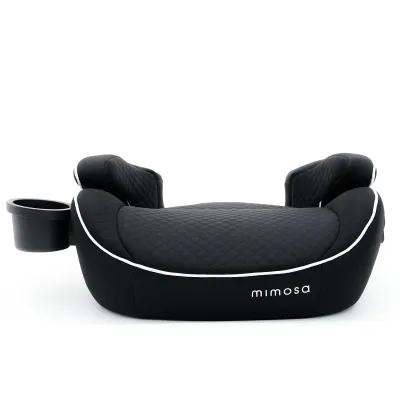
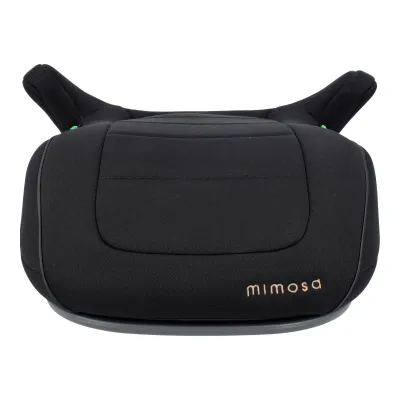
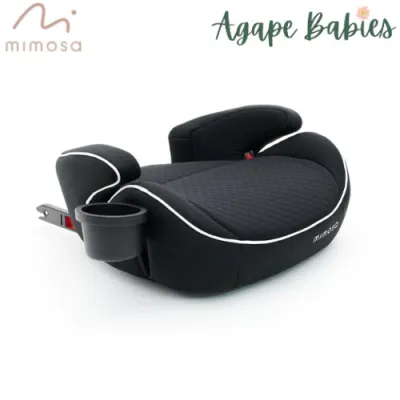
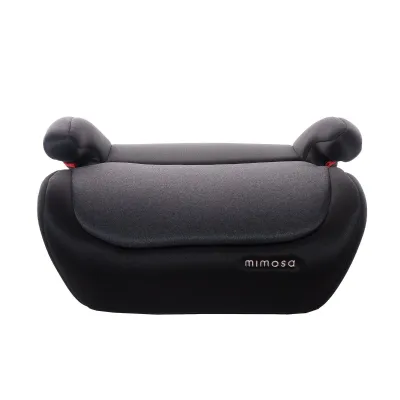
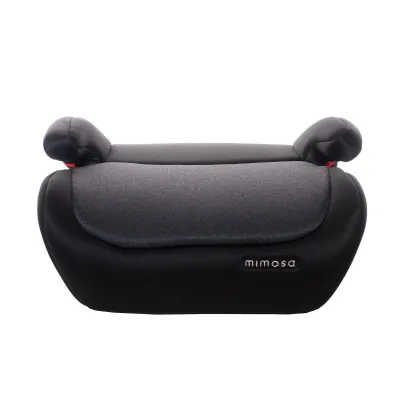
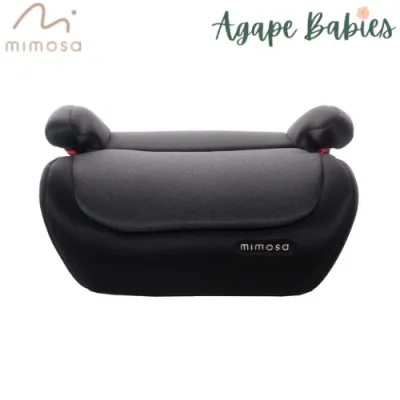
Prices are valid at publication and may change. Please refer to the product page for the latest price.
The legal definitions of child restraints vary based on the child’s developmental stage. A full car seat features an integrated five-point harness and is designed for infants and younger toddlers who require maximum body support. As children grow, they transition to booster seats, which elevate the child so that the vehicle’s standard three-point adult seatbelt fits safely across their stronger skeletal structures.
Booster seats generally fall into two categories: high-back boosters and backless booster cushions. A high-back booster provides additional side-impact protection and features built-in shoulder belt guides to keep the diagonal strap positioned correctly across the collarbone. A backless booster cushion simply raises the child’s seating position so the lap belt rests low across the hips and the shoulder belt crosses the chest rather than the neck. Both types are legally recognized in Singapore, provided they carry the necessary safety certifications and are suitable for the child’s physical dimensions.
Failing to comply with these regulations carries serious legal consequences. If caught transporting a child under 1.35 meters without an approved and properly secured restraint, the driver can face composition fines and demerit points. For more severe or repeated offenses, drivers may be prosecuted in court, where first-time offenders can face fines of up to S$1,000, imprisonment for up to three months, or both. Ensuring your booster seat meets local legal standards is not just a matter of avoiding penalties; it is a critical measure to protect your child from severe injury.
Recognized Safety Standards and Certification Labels
Singapore does not establish its own independent manufacturing standards for child car seats. Instead, the LTA recognizes several prominent international safety standards. For a Mimosa booster seat to be legally compliant on Singapore roads, it must be certified under one of these approved frameworks.

The most widely recognized standards in Singapore are the United Nations Economic Commission for Europe (UN ECE) regulations. Specifically, the older ECE R44/04 standard and the newer ECE R129 standard (often referred to as i-Size) are the benchmarks for child restraint safety. ECE R44/04 categorizes seats based on the child’s weight, while ECE R129 uses the child’s height as the primary classification metric and includes more rigorous side-impact testing requirements.
In addition to the UN ECE standards, Singapore authorities also recognize other major regional safety certifications. These include the United States Federal Motor Vehicle Safety Standard (FMVSS 213), the Australian/New Zealand Standard (AS/NZS 1754), the British Standards (BS), and the Japanese Industrial Standards (JIS). If you have purchased an imported Mimosa booster seat or are looking at models online, verifying that the product conforms to at least one of these standards is the first step in ensuring its legality.
It is important to note that generic marketing claims printed on a retail box, such as “safety tested” or “crash approved,” carry no legal weight on their own. Manufacturers must submit their products to independent, authorized testing facilities to receive formal homologation. Only when a booster seat successfully passes these standardized tests is it granted an official certification label. As a consumer, you must look past promotional language and locate the physical certification sticker on the seat itself to confirm its legal status.
Inspecting Your Mimosa Booster for Compliance Markers
Before installing your Mimosa booster seat, you should perform a thorough physical inspection to locate and verify its compliance markers. This hands-on check ensures that the seat is genuine, certified, and safe for your child’s current developmental stage.
Start by turning the booster seat over or examining the back of the plastic shell. Manufacturers typically place the mandatory compliance sticker in these less visible areas to protect it from wear and tear. This sticker is usually bright orange or white and contains critical regulatory information that you must verify.
When reviewing the compliance label, use the following checklist to confirm its validity:
- Standard Number: Look for the specific regulation code, such as "ECE R44/04" or "ECE R129." This confirms which testing framework the seat was certified under.
- Approval Category: The label should state "Universal," "Semi-Universal," or "Vehicle-Specific." A "Universal" approval means the booster seat is designed to fit safely in almost all passenger vehicles using standard three-point seatbelts.
- Weight or Height Limits: Ensure the printed weight range (e.g., 15-36 kg for Group 2/3 seats) or height range (e.g., 100-150 cm) matches your child's current physical measurements. Never use a booster seat if your child falls below the minimum threshold or exceeds the maximum limit.
- The "E" Mark: For European-certified seats, look for a circle containing the letter "E" followed by a number (such as E1, E2, or E4). The number indicates the specific European country that issued the safety approval. Below this mark, you should also see a unique multi-digit approval number.
Beyond the certification details, you must also check the manufacturing date and inspect the overall condition of the seat. Over time, the plastic shell and energy-absorbing foam inside the booster seat can degrade. This degradation is accelerated by Singapore’s hot, humid climate and prolonged exposure to sunlight inside a parked vehicle. Look for a clock-like dial stamped into the plastic or a printed date of manufacture. Most manufacturers recommend retiring a child restraint six to ten years after its production date, as degraded materials may fail to absorb impact forces correctly, rendering the seat unsafe and legally non-compliant.
Installation and Usage Rules That Affect Legal Validity
Even if your Mimosa booster seat carries the correct certification labels, improper installation or incorrect usage can invalidate its legal compliance and compromise your child’s safety. Under Singapore’s traffic laws, a child restraint must be used in accordance with the manufacturer’s instructions to be considered legally compliant.
One of the primary considerations is the placement of the booster seat within the vehicle. The rear passenger seats are the safest location for children and are strongly recommended by safety experts. If you must place the booster seat in the front passenger seat, you must ensure that the vehicle’s front airbag is managed correctly. For forward-facing booster seats, the front passenger seat should be slid back as far as possible along its tracks to maximize the distance between the child and the airbag deployment zone.
Correct seatbelt routing is another critical factor. A booster seat does not have its own harness; instead, it relies on the vehicle’s three-point seatbelt to secure both the child and the seat. For high-back boosters, the diagonal shoulder belt must pass through the designated red or green guide slots near the headrest, ensuring the belt rests flat across the center of the child’s shoulder rather than rubbing against their neck. The lap belt must be routed through the lower guides, keeping it positioned low across the pelvis and upper thighs, never across the soft abdomen. For backless boosters, ensure the lap belt is similarly positioned, and use any included shoulder belt positioning straps to keep the diagonal belt away from the neck.
Finally, you must understand when a booster seat must be retired. Any child restraint that has been involved in a moderate-to-severe vehicle collision must be replaced immediately, even if there is no visible damage. The forces of an impact can cause microscopic fractures in the plastic frame or stretch the internal structure, preventing the seat from providing adequate protection in a future accident. Using a compromised seat is highly dangerous and fails to meet safety standards.
Frequently Asked Questions (FAQ)
Can I legally use a second-hand Mimosa booster seat in Singapore?
While it is not explicitly illegal to use a second-hand Mimosa booster seat in Singapore, doing so carries significant safety risks. If you choose to use a pre-owned seat, you must verify its complete history. Ensure the seat has never been involved in a vehicle collision, has all its original labels and instruction manuals intact, and shows no signs of structural wear or deep cracks in the plastic shell. Additionally, check the manufacturing date to ensure the seat has not exceeded its recommended lifespan. If you cannot verify these details with absolute certainty, it is safer to purchase a new, certified booster seat.
Does a Mimosa booster seat need a specific local safety mark to be legal?
No, Singapore does not require a unique domestic safety mark or localized certification sticker for child restraint systems. The Land Transport Authority (LTA) relies entirely on recognized international homologation standards. As long as your Mimosa booster seat has a valid, legible international certification label (such as the UN ECE R44/04 or R129 orange sticker) physically attached to the product, it is fully legal for use on Singapore roads. You do not need to apply for or obtain any additional local permits or stickers.

Community discussion
Share your experience or ask a question. Comments are reviewed before publication.