
Britax booster seats are generally compliant with Singapore’s car seat laws, provided the specific model you own carries an approved international safety certification label and is appropriate for your child’s current height and weight. Under Singapore’s Road Traffic Act, any passenger under the height of 1.35 meters must be secured with an approved child restraint system, which includes belt-positioning booster seats for older children. Because Britax designs booster seats for various global markets, verifying compliance requires checking the physical orange or white certification sticker on your specific seat to ensure it matches one of the standards recognized by Singapore’s Traffic Police.
Using a booster seat is a critical intermediate step between a forward-facing harnessed car seat and a standard adult seat belt. While many parents are eager to transition their children to a regular seat belt as soon as they reach the legal height limit, physical development and proper belt fit are the true indicators of safety. Ensuring your Britax booster seat is legally compliant and correctly installed is essential for protecting your child on Singapore’s roads.
Understanding Singapore's Child Restraint System Requirements
Singapore’s Road Traffic Act establishes clear legal baselines to protect young passengers in motor vehicles. The law mandates that any passenger, regardless of age, who is under 1.35 meters in height must be secured with an approved child restraint appropriate for their height and weight. This requirement applies to all private cars and private hire vehicles, though public taxis are currently exempt from this rule. For parents navigating these regulations, understanding how height, rather than age alone, dictates legal compliance is the first step in choosing the right travel gear.
Products mentioned in this guide
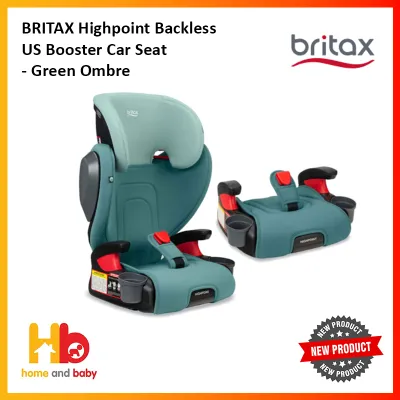
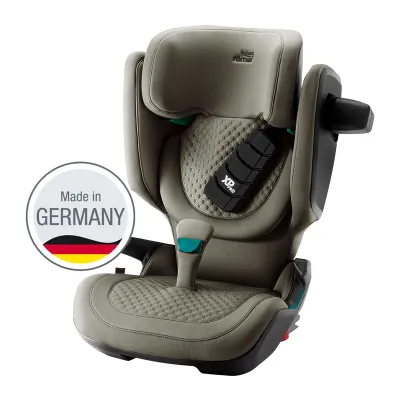
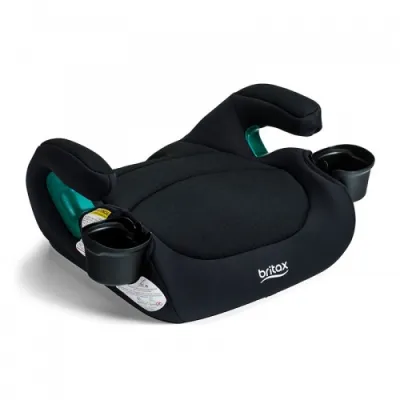
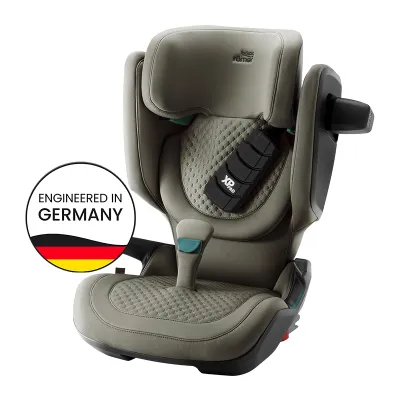
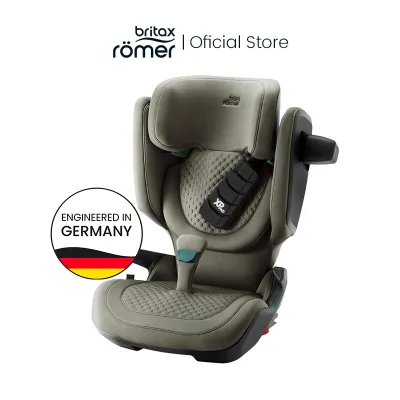
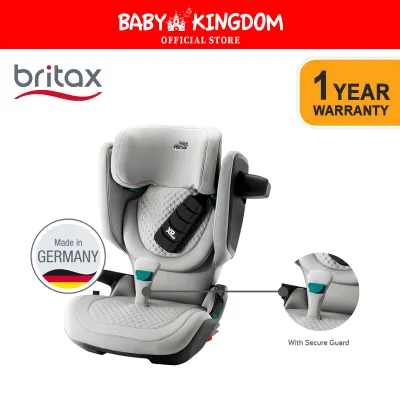
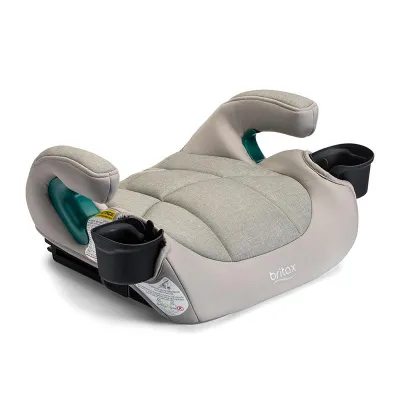
Prices are valid at publication and may change. Please refer to the product page for the latest price.
While age is often used as a general guideline by manufacturers, Singapore law relies strictly on the 1.35-meter height threshold. A child who has reached this height is legally permitted to use a standard adult seat belt without a booster seat, though safety experts often recommend continued booster use until the child fits the vehicle seat naturally. For children who are under 1.35 meters but have outgrown their infant or toddler car seats, a belt-positioning booster seat is the legally required and safest option.
There is a distinct legal and functional difference between forward-facing harnessed car seats and belt-positioning booster seats. Harness seats use an integrated five-point harness to secure a younger child, distributing crash forces across their shoulders and hips. In contrast, a booster seat raises the child so that the vehicle’s own lap-and-shoulder seat belt fits correctly across their skeletal structure. Using a booster seat before a child is physically mature enough to sit properly without slouching can compromise their safety.
To ensure the booster seat you choose is legally recognized, it must comply with specific international safety standards approved by Singapore’s Land Transport Authority and Traffic Police. These accepted standards include the European Union’s UN ECE R44/04 and UN ECE R129 (i-Size), the United States’ FMVSS 213, the Australian standard AS/NZS 1754, and the Japanese standard JIS D0401. Parents should regularly consult official Traffic Police or Land Transport Authority channels to verify the most current regulatory updates and accepted safety certifications.
How to Check Your Britax Booster Seat for Legal Compliance
Verifying that your Britax booster seat is legally compliant in Singapore requires a physical inspection of the seat itself. Every approved child restraint must feature a permanent manufacturer’s label or sticker indicating the safety standard to which it was tested. For European-certified Britax models, look for an orange “ECE” sticker (such as ECE R44/04 or R129) which is typically located on the back or underside of the plastic shell. US-certified models will feature a white or black label referencing compliance with Federal Motor Vehicle Safety Standard (FMVSS) 213.

Once you locate the compliance label, you must cross-reference the specific weight and height limits printed on it with your child’s current physical measurements. Britax booster seats are engineered to perform safely only within these designated ranges. For example, a high-back booster might be rated for children weighing between 15 and 36 kilograms, or heights between 100 and 150 centimeters. Operating outside these limits, even if the seat is legally certified, means the restraint may not function as intended during a collision.
It is highly recommended to keep the original instruction manual and purchase receipts in a safe place. The manual contains vital information regarding correct installation, routing guides, and maintenance procedures specific to your Britax model. Furthermore, retaining your purchase receipt is essential for validating the warranty and registering your product. Registering your booster seat with Britax ensures you will receive direct notifications in the event of a safety recall.
When purchasing a Britax booster seat, parents should verify the seat’s expiration date, typically stamped into the plastic shell or printed on a sticker. Over time, exposure to high temperatures and humidity—common environmental factors in Singapore—can degrade the plastic and foam materials. Using an expired booster seat, even if it appears to be in perfect physical condition, is not recommended as its structural integrity may be compromised.
Safety Boundaries and Correct Installation Conditions
Achieving legal compliance is only the first step; the booster seat must also be installed and used correctly to provide effective protection. A critical safety boundary is matching your child’s physical dimensions and developmental stage to the booster seat’s specified limits. Children must be developmentally mature enough to sit relatively still for the entire journey, without slouching, leaning over, or pulling the shoulder belt under their arm or behind their back. If a child cannot maintain this posture, they are not yet ready for a booster seat and should remain in a harnessed car seat.
The primary function of a Britax booster seat is to guide the vehicle’s adult seat belt over the strongest parts of the child’s body. The lap belt must be routed low across the child’s hips and upper thighs, touching the pelvic bone rather than the soft abdomen. If the lap belt rests on the stomach, a sudden stop can cause severe internal organ damage. The shoulder belt must pass through the booster’s designated shoulder guide, crossing the center of the child’s chest and shoulder, away from their neck and face.
Vehicle compatibility is another crucial factor when installing a booster seat. Booster seats must only be used in seating positions equipped with a three-point lap-and-shoulder seat belt. They are entirely incompatible with lap-only seat belts, which cannot secure the upper body and can lead to severe injuries in a crash. Additionally, you must never place a booster seat in a front passenger seat that has an active frontal airbag, as deployment can cause catastrophic injury.
For optimal safety, the rear seat of the vehicle is the recommended location for installing a child restraint. When positioning the Britax booster seat, ensure the base sits flat against the seat cushion and the backrest aligns with the vehicle’s seat back. Some vehicle headrests may push the booster seat forward, creating an unsafe gap; in such cases, adjusting or temporarily removing the vehicle headrest, if permitted by the manufacturer, can help achieve a secure fit.
When to Transition or Stop Using the Booster Seat
Knowing when to transition your child out of a Britax booster seat requires observing specific physical and developmental milestones. One clear physical sign that a child has outgrown their high-back booster is when their ears reach the top of the booster’s headrest at its highest adjustment setting. Additionally, if your child exceeds the maximum weight or height limit specified on the manufacturer’s compliance label, it is time to transition to the next stage, which may be a backless booster or a standard adult seat belt.
While Singapore law permits children who reach 1.35 meters in height to travel without a child restraint, physical readiness should dictate the transition to an adult seat belt. Many children reach this height before their skeletal structure is mature enough to withstand the forces of a seat belt alone. Transitioning a child too early increases the risk of sliding under the lap belt during a collision, leading to severe abdominal and spinal injuries.
To determine if your child is ready to ride safely using only the vehicle’s seat belt, you can perform the standard five-step seat belt fit test. First, have your child sit all the way back against the vehicle seat back. Second, check if their knees bend comfortably over the front edge of the vehicle seat cushion without slouching. If their legs are too short, they will slide forward, causing the lap belt to ride up onto their stomach.
Third, verify that the shoulder belt crosses the middle of their shoulder and chest, resting flat without rubbing against their neck or slipping off the shoulder. Fourth, ensure the lap belt sits low and snug across their hips and upper thighs, touching the pelvic bone. Finally, assess whether your child can comfortably maintain this correct seating position for the entire duration of the ride. If the child fails any of these five steps, they still require the assistance of a booster seat to travel safely.
Frequently Asked Questions (FAQ)
Can I use a Britax booster seat purchased overseas in Singapore?
Yes, you can use an overseas-purchased Britax booster seat in Singapore, provided it bears a recognized international safety standard marking accepted by local authorities, such as the European UN ECE R44/04 or R129, or the US FMVSS 213. However, parents should be aware of the potential trade-offs. Overseas models may lack local warranty support, making it difficult to obtain replacement parts or assistance. Additionally, tracking safety recalls can be more challenging, and the instruction manuals may not be provided in your preferred language, which can lead to installation errors.
Are backless boosters legal and safe under Singapore regulations?
Backless booster seats are legal in Singapore, provided they carry an approved safety certification label and are used within the manufacturer’s specified weight and height limits. Typically, backless boosters are rated for older, taller children who have outgrown high-back models. While they meet the minimum legal requirements, high-back boosters are generally recommended for younger children because they provide crucial side-impact protection, head and neck support, and more reliable seat belt positioning. Backless boosters only raise the child, offering no torso or head protection in a side collision.
What should I do if my Britax booster seat was involved in a minor collision?
The general safety consensus among manufacturers and safety organizations is to replace any child restraint system that has been involved in a vehicle collision, as moderate to severe impacts can cause unseen structural damage to the plastic and webbing. However, some Britax manuals outline specific, strict criteria under which a seat may continue to be used after a very minor fender bender. You must consult your specific Britax model’s instruction manual to review these criteria, which typically require that the vehicle was able to be driven away, no airbags deployed, and there is no visible damage to the seat. If in doubt, replacing the seat is the safest course of action.

Community discussion
Share your experience or ask a question. Comments are reviewed before publication.