
When managing a household with infants, maintaining a clean environment is a top priority. However, choosing sanitizing products requires balancing germ elimination with the safety of developing bodies. If you are considering Wode disinfectant for your home, determining whether it is safe to use around babies and toddlers involves looking closely at its active ingredients, understanding how young children interact with their environment, and strictly following the manufacturer’s application instructions.
While many modern sanitizers are marketed as gentle, no disinfectant is universally risk-free. Safety depends heavily on the specific product line, the concentration of the active ingredients, and how carefully you apply, dry, and store the solution. By learning how to evaluate these products and establish safe cleaning habits, you can protect your child from both harmful pathogens and unnecessary chemical exposure.
Why Babies and Toddlers Need Stricter Disinfectant Safety Standards
Infants and toddlers are not just small adults; their physiological systems are still developing, making them far more vulnerable to household chemicals. A baby’s skin is significantly thinner and more permeable than adult skin, meaning any chemical residues left on surfaces they crawl on or touch can be absorbed more easily. When babies crawl on the floor, grip the edges of playpens, or rest their faces on play mats, their skin is in constant contact with whatever cleaning agents have been applied.
Products mentioned in this guide
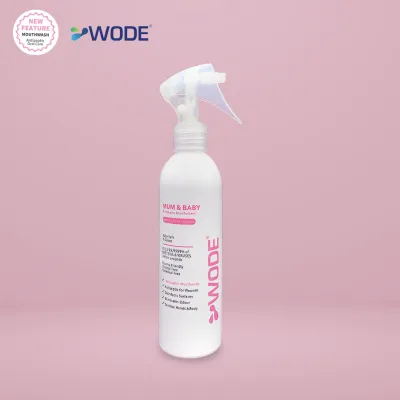
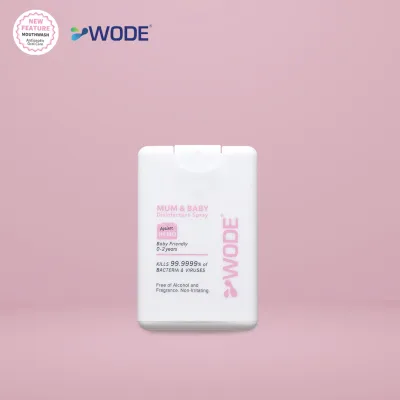
![[OFFICIAL WODE] WODE Mum & Baby Disinfectant 80ml Spray (ALCOHOL FREE CHEMICAL FREE) (Suitable for age 2 and below)](https://img.lazcdn.com/g/p/461452633fe99f9ca89fc5dae48db101.png_400x400q80.png_.webp)

![[OFFICIAL WODE] WODE Mum & Baby 500ml Refill Pack (ALCOHOL FREE CHEMICAL FREE) (Suitable for age 2 and below)](https://img.lazcdn.com/g/p/5cfe362f38c353e3f62a435c0136d6dc.png_400x400q80.png_.webp)
Prices are valid at publication and may change. Please refer to the product page for the latest price.
Furthermore, young children have developing respiratory systems. Their airways are narrower, and they breathe at a faster rate than adults relative to their body weight. This means that if a disinfectant releases airborne particles, mist, or volatile organic compounds, a baby will inhale a proportionally larger amount of these substances. In enclosed living spaces, such as typical high-rise apartments or HDB flats in Singapore where air circulation can sometimes be limited, these airborne residues can easily irritate sensitive nasal passages and lungs.
Another critical factor is the natural hand-to-mouth behavior of infants and toddlers. This means any chemical residue on toys, high chair trays, or pacifiers is highly likely to be ingested during their natural hand-to-mouth exploration. Even a seemingly minor amount of chemical residue can accumulate if a child repeatedly mouths treated objects throughout the day.
Because of these unique vulnerabilities, the baseline safety standard for any disinfectant used in nurseries, play areas, or eating spaces must be exceptionally high. Parents cannot rely solely on broad marketing claims like “baby-safe” or “natural.” These terms are often used loosely in the consumer market and do not carry standardized medical definitions. Instead, safeguarding your child requires a systematic approach to verifying ingredients, understanding proper application methods, and ensuring that no active chemical residues remain in areas where your baby plays, sleeps, or eats.
How to Read Wode Disinfectant Labels for Child Safety
Before introducing any Wode disinfectant product into your baby’s environment, you must perform a diligent label check. Start by locating the active ingredients list, which is typically printed on the back or side of the packaging. Many sanitizers in this category utilize hypochlorous acid (HOCl) or other chlorine-based compounds as their active sanitizing agents. While hypochlorous acid is often noted for being milder than traditional chlorine bleach, you must still verify the exact concentration of the active ingredient on the specific bottle you hold, as different product lines may have different strengths intended for different uses.

Next, look closely for any precautionary statements or hazard symbols. Even products designed for general hygiene often carry mandatory warnings such as “keep out of reach of children” or instructions to avoid eye contact, which you must take seriously. Note whether the label specifies any age restrictions or if it advises against use on specific materials that babies frequently interact with.
A crucial detail to verify on the label is the instruction for food-contact or mouthable surfaces. Check whether the manufacturer mandates a thorough rinse with potable water after the disinfectant has completed its required contact time. If the label does not explicitly state that the product is safe for food-contact surfaces without rinsing, always rinse the surface thoroughly with clean water after the disinfection process is complete to prevent ingestion of chemical residues.
Finally, remember that every child’s biological makeup is unique. If your baby has a history of sensitive skin, eczema, or respiratory conditions like infant asthma, their tolerance for any sanitizing agent may be lower than average. Before using a new disinfectant in their immediate environment, take a photo of the ingredient list and consult your pediatrician. A qualified healthcare professional can provide personalized guidance based on your child’s specific medical history, helping you decide if the active ingredients are appropriate for your household.
Safe Application and Storage Rules for Homes with Young Children
If you decide to use Wode disinfectant in your home, implementing strict application and storage protocols is essential to minimize any potential exposure risks. First and foremost, prioritize proper ventilation during and immediately after using any spray or mist disinfectant. In Singapore’s warm and humid climate, homes are often closed up for air conditioning, which can trap airborne particles. When disinfecting, open windows or use exhaust fans to ensure a steady flow of fresh air to disperse aerosolized droplets quickly.
If the Wode product you are using comes as a concentrate rather than a ready-to-use spray, you must exercise extreme care during the dilution process. Never estimate or “eyeball” the measurements. Always use precise measuring tools, such as a graduated syringe or measuring cup, to mix the concentrate with water according to the manufacturer’s exact ratios. Over-concentrating the solution does not increase efficacy; instead, it raises the risk of leaving harsh residues and releasing irritating fumes.
To keep your child completely safe during cleaning, establish a strict routine of keeping babies and toddlers out of the room while you are applying the disinfectant. Keep the child in a separate, well-ventilated area under the supervision of another caregiver until the treated surfaces are completely dry to the touch and any mist in the air has fully cleared. This prevents skin irritation or accidental transfer of wet chemicals to their hands and face.
Storage is another area where there is no room for compromise. All disinfectants, including those marketed as gentle, must be stored securely out of reach of children. Place the bottles in high cabinets that are fitted with child-proof safety locks. Never store cleaning products or sanitizers on the floor, under the sink without a lock, or on low countertops where an inquisitive toddler could reach them. Additionally, keep these products entirely separate from food, baby formula, feeding bottles, toys, and daily care items to prevent any risk of cross-contamination or accidental mix-ups during busy daily routines.
When to Stop Use and Handle Accidental Exposure
Even when you take every precaution, accidental exposure or unexpected sensitivities can occur. As a parent, you must be able to recognize the early signs of irritation and know how to respond calmly and effectively. If you notice your baby coughing, sneezing, rubbing their eyes, or showing signs of watery eyes and nasal congestion during or after you use the disinfectant, stop using the product immediately. Similarly, if you observe localized redness, dry patches, or a rash on your child’s skin where they touched a treated surface, cease application of that specific sanitizer. Move the child to a well-ventilated area with fresh air and open windows to clear the room.
In the event of direct accidental contact, quick and gentle first aid is vital. If the disinfectant splashes into your child’s eyes or makes direct contact with sensitive skin, immediately flush the affected area with plain, lukewarm water. For skin contact, wash the area under a slow-running tap for several minutes without scrubbing. For eye splashes, gently flush the eye with clean water from the inner corner outward.
Accidental ingestion requires immediate, decisive action. If your child swallows any amount of disinfectant, do not attempt to induce vomiting, as this can cause further damage to the esophagus or lead to aspiration into the lungs. Instead, immediately contact your local emergency medical services or a poison control center for professional guidance. Keep the product bottle close at hand so you can read the active ingredients and concentrations to the medical professionals.
Always monitor your child closely after any suspected exposure. If any respiratory symptoms, skin redness, or eye irritation persist, worsen, or fail to clear up quickly after flushing with water, stop using the product entirely and consult your pediatrician or visit the nearest medical clinic. Your pediatrician can evaluate the symptoms, provide appropriate treatment, and help you identify safer cleaning alternatives that align with your child’s specific sensitivities.
Frequently Asked Questions (FAQ)
Can I Use Wode Disinfectant on Baby Toys and Pacifiers?
As a general safety rule, you should avoid using standard surface disinfectants on items that children frequently place in their mouths, such as pacifiers, teething rings, and baby toys, unless the product label explicitly states it is safe for this specific purpose. If the manufacturer’s instructions do permit use on mouthable items, you must strictly follow the directed contact time and then perform a thorough rinse with potable water to wash away any chemical residues before returning the item to your child. For a safer, chemical-free approach to daily toy hygiene, consider washing plastic toys with mild baby-safe soap and warm water, or utilizing specialized steam sterilizers that rely solely on heat to eliminate pathogens.
Is It Safe to Spray Disinfectant While the Baby Is Sleeping?
No, you should never spray or apply any disinfectant, including Wode, in a room while an infant or toddler is actively sleeping or resting. When a child is asleep, their breathing is deep and regular, and they cannot move away if the air becomes irritated by aerosolized droplets or chemical vapors. Spraying sanitizers in an enclosed sleeping area can easily lead to inhalation of fine mists, which may irritate their sensitive respiratory tract. To sanitize a nursery safely, wait until your child is awake and in a completely different part of the home. Apply the disinfectant, allow the required contact time to pass, ensure the surfaces are completely dry, and ventilate the room thoroughly by opening windows or using fans before bringing your baby back in for their next nap.

Community discussion
Share your experience or ask a question. Comments are reviewed before publication.