
Keeping your home clean and sanitized is a top priority when you have a baby or toddler exploring every corner. When evaluating whether Wode disinfectant products are safe to use around infants and young children, the short answer is that safety is not absolute; it depends entirely on the specific product variant, its active ingredients, and your strict adherence to the manufacturer’s usage instructions.
No chemical disinfectant is universally safe for babies without proper application, adequate ventilation, and post-cleaning rinsing. Delicate respiratory systems and sensitive skin make infants far more vulnerable to household chemicals than adults.
Before using any Wode product in a home with young children, you must carefully read the specific product label. Check for age-related warnings, required dilution ratios, and surface compatibility to ensure you are using the product correctly.
Products mentioned in this guide
![[OFFICIAL WODE] WODE Mum & Baby Disinfectant 80ml Spray (ALCOHOL FREE CHEMICAL FREE) (Suitable for age 2 and below)](https://img.lazcdn.com/g/p/461452633fe99f9ca89fc5dae48db101.png_400x400q80.png_.webp)
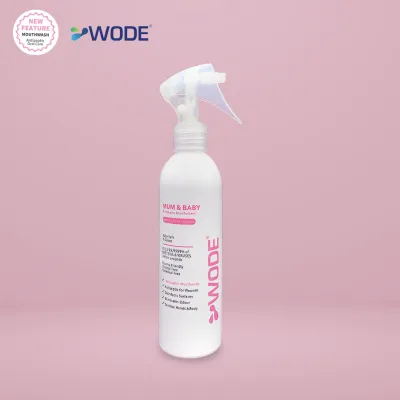
![[OFFICIAL WODE] WODE Mum & Baby 500ml Refill Pack (ALCOHOL FREE CHEMICAL FREE) (Suitable for age 2 and below)](https://img.lazcdn.com/g/p/5cfe362f38c353e3f62a435c0136d6dc.png_400x400q80.png_.webp)
![[OFFICIAL WODE] WODE Mum & Baby/Hand & Body 20ml Spray Bundle (ALCOHOL FREE CHEMICAL FREE)](https://img.lazcdn.com/g/p/405f1728fad3277693397535f153ae89.png_400x400q80.png_.webp)
Prices are valid at publication and may change. Please refer to the product page for the latest price.
This guide provides a practical framework for evaluating safety and managing risks in your home. However, the manufacturer’s label and your pediatrician’s professional advice must always take precedence over general guidelines.
Decoding the Label: How to Check Wode Ingredients for Child Safety
Understanding what goes into your household cleaning products is the first step toward creating a secure environment for your child. To determine the safety profile of any Wode disinfectant, look closely at the active ingredient list on the packaging and cross-reference it with standard pediatric safety guidelines.
Different formulations carry distinct risks and require specific handling methods to protect young children.
Alcohol-Based Formulas
Many quick-drying sanitizers rely on isopropyl alcohol or ethanol to eliminate germs rapidly. While alcohol-based sprays or wipes evaporate quickly—reducing the risk of long-term chemical residue—they present other significant hazards in a nursery.
Alcohol is highly flammable and must be kept far away from heat sources, open flames, or electrical outlets. Additionally, direct contact with alcohol can cause severe dryness, irritation, and peeling on a baby’s delicate skin barrier.
Never spray alcohol-based products near an infant’s face or hands, as accidental inhalation or eye contact can cause immediate distress.
Chlorine and Hypochlorous Acid
Some disinfectant solutions utilize chlorine compounds or hypochlorous acid (HOCl) to sanitize surfaces. It is vital to differentiate between harsh traditional household bleach (sodium hypochlorite) and milder solutions like hypochlorous acid.
Hypochlorous acid is often marketed as a gentler alternative because it is naturally produced by human white blood cells to fight infection. However, even mild solutions require careful handling and the correct dilution ratios specified by the manufacturer.
Inhaling concentrated mists or fumes in poorly ventilated nurseries can still irritate a baby’s sensitive airways, leading to coughing or respiratory discomfort.
Quaternary Ammonium Compounds (Quats)
Quaternary ammonium compounds, commonly known as Quats, are highly effective at killing a wide range of pathogens but require extreme caution around infants. Unlike alcohol, Quats do not evaporate quickly and are designed to leave an active sanitizing residue on surfaces.
This lingering residue can easily transfer to a baby’s skin or find its way into their mouth when they touch treated surfaces and then put their hands in their mouths. Exposure to Quats has been linked to skin sensitivities, contact dermatitis, and respiratory irritation in sensitive individuals.
If a product contains Quats, you must thoroughly rinse any surface your baby might touch or mouth with clean water after the required contact time has elapsed.
Verifying Certifications on the Packaging
- Look for relevant safety, environmental, or health certifications printed on the packaging.
- These may include marks indicating dermatological testing, biodegradable formulations, or approvals from recognized environmental agencies.
- Always verify these claims by checking the official databases of the certifying bodies, as labels can sometimes be misleading or outdated.
Essential Precautions for Using Disinfectants Around Young Children
Using disinfectants around young children requires a disciplined approach to minimize chemical exposure. By incorporating simple, low-risk operational steps into your cleaning routine, you can effectively sanitize your home while keeping your baby safe.

Ventilation Is Key Before you begin spraying or wiping down any surface, ensure the room is well-ventilated. Open all windows and turn on exhaust fans or ceiling fans to facilitate rapid air exchange. This helps clear airborne mists, chemical fumes, and volatile organic compounds (VOCs) during and after the application process. In typical Singapore apartments, creating a cross-draft by opening opposite windows is highly effective at clearing out lingering airborne particles.
Plan Your Application Timing Never apply disinfectants in the immediate presence of babies or toddlers. Secure your child safely in a separate room, take them outdoors for a walk, or perform your deep cleaning while they are under another caregiver’s supervision in a different part of the home. This prevents them from inhaling airborne mists or accidentally touching wet, chemically treated surfaces before they are dry.
Understand Contact Time and Rinsing Every disinfectant requires a specific “wet contact time”—the duration the surface must remain visibly wet with the solution to effectively kill germs. Once this contact time has elapsed, do not simply let the chemical air-dry on items your baby interacts with. For high-contact baby items such as high chairs, changing tables, crib rails, and hard plastic toys, always perform a secondary rinse. Wipe the surface thoroughly with a clean cloth dampened with plain water to remove any chemical residue.
Practice Safe Storage Protocols Accidental ingestion is a major hazard for curious toddlers who are learning to explore their environment. Always store Wode disinfectants and other household chemicals in their original containers with the labels intact. Keep them locked securely in high cabinets that are completely out of the reach and sight of children. Never transfer disinfectants into unmarked spray bottles, food containers, or beverage bottles, as this can easily lead to dangerous mix-ups.
Recognizing Side Effects: When to Stop Using the Disinfectant
Even when you take every precaution, a child may still experience an adverse reaction to a particular disinfectant. Caregivers must remain vigilant and know how to recognize the early signs of chemical sensitivity or irritation.
Respiratory Symptoms Pay close attention to your child’s breathing during or after cleaning. Unexplained coughing, wheezing, sneezing, or rapid breathing can indicate that the child is inhaling airborne particles or strong chemical fumes. If your baby shows any signs of respiratory distress, immediately move them to an area with fresh, clean air.
Dermatological Reactions Examine your baby’s skin regularly for signs of irritation. Contact with disinfectant residues can cause redness, localized rashes, excessive dryness, or contact dermatitis. These reactions are particularly common on the hands, knees, and face—areas that frequently come into contact with floors, play mats, and toys.
Eye Irritation Accidental exposure to spraying mists or rubbing eyes with residue-coated hands can cause ocular irritation. Watch for watery eyes, redness, frequent blinking, or your baby rubbing their eyes in discomfort.
When to Seek Medical Advice If your child exhibits any of these physical symptoms, stop using the specific Wode product immediately. Remove the child from the treated environment and wash any contact areas with fresh water. If respiratory symptoms, skin rashes, or eye irritation persist after removing the child from the area, consult a pediatrician or qualified medical professional promptly.
First Aid Steps for Accidental Exposure or Ingestion
Accidents can happen in the blink of an eye, especially with active toddlers. Knowing how to react calmly and correctly during a household chemical exposure can prevent minor incidents from becoming serious emergencies.
Immediate Action for Skin Contact If a disinfectant accidentally splashes onto your child’s skin or saturates their clothing, act quickly. Gently remove the contaminated clothing while avoiding spreading the chemical. Wash the affected skin thoroughly with mild, baby-safe soap and lukewarm running water for several minutes. Pat the skin dry with a clean towel and monitor for redness or irritation.
Immediate Action for Eye Contact If the product gets into your child’s eyes, rinse them gently but continuously with lukewarm water. Hold the eyelid open slightly and pour a gentle stream of water from a clean cup or pitcher across the eye, directing the flow away from the unaffected eye. Continue rinsing for at least 15 minutes, and strictly prevent the child from rubbing their eyes, which can worsen corneal irritation.
Crucial Warning Regarding Ingestion If your child swallows any amount of disinfectant, do not induce vomiting. Inducing vomiting can cause the chemical to pass back through the esophagus, potentially causing secondary burns or irritation, or worse, causing the child to inhale the chemical into their lungs. Instead, wipe the child’s mouth with a damp cloth and offer a small sip of water if they are conscious and able to swallow.
Accessing Professional Help in Singapore For any accidental ingestion or severe exposure, seek professional medical help immediately. In Singapore, you can contact the Singapore Poison Control Centre or proceed directly to the nearest emergency department. Always bring the original Wode product bottle or packaging with you to the clinic or hospital. This allows medical personnel to identify the exact chemical formulation, active ingredients, and concentration, enabling them to provide the most accurate and effective treatment.
Safer Everyday Cleaning Alternatives for Baby Environments
While targeted disinfection is necessary in certain situations, you do not need to use strong chemical disinfectants for everyday cleaning. Reducing the overall chemical load in your nursery helps protect your baby’s developing systems while maintaining a hygienic living space.
Harness the Power of Soap and Water For routine daily maintenance of high chairs, play mats, and non-porous toys, plain warm water and a mild, baby-safe liquid soap are highly effective. The mechanical action of scrubbing with a clean microfiber cloth physically removes dirt, grease, and the vast majority of surface microbes. This approach is completely non-toxic and leaves no harmful chemical residues behind.
Utilize Steam Cleaning Steam cleaning is an excellent, chemical-free sanitizing method for heat-tolerant surfaces. High-temperature steam can effectively sanitize fabrics, upholstery, mattresses, and hard floors without the need for chemical additives. Ensure that the materials you are cleaning can withstand heat, and allow the surfaces to dry completely to prevent mold growth.
Use Water-Based Baby Wipes for Quick Clean-ups For on-the-go sanitizing of hands, faces, and small toys, rely on dedicated water-based baby wipes. These wipes are specifically formulated for delicate skin, are free from harsh chemical disinfectants, and provide a safe way to clean up messes when you are away from home.
Reserve Disinfectants for High-Risk Scenarios Reserve stronger disinfectants like Wode for specific, high-risk situations rather than routine daily cleaning. These scenarios include sanitizing surfaces after a household member has been sick with a contagious virus, cleaning up bodily fluids, or disinfecting high-touch areas during local outbreaks of hand, foot, and mouth disease (HFMD) or influenza. By targeting your disinfectant use, you maintain a highly hygienic home without overexposing your family to chemicals.
Frequently Asked Questions (FAQ)
Can I spray Wode disinfectant directly onto my baby's toys?
You should avoid spraying any disinfectant directly onto your baby’s toys. Direct spraying can lead to the inhalation of airborne mists by nearby children and often results in chemical pooling in the crevices of the toys. Instead, spray the disinfectant onto a clean microfiber cloth first, wipe the toy thoroughly, and allow it to sit for the manufacturer’s recommended contact time. Afterward, rinse the toy by wiping it down with a separate cloth dampened with clean water before returning it to your child.
Is it safe to use disinfectant sprays while my baby is sleeping in the same room?
No, you should never use disinfectant sprays in a room where a baby is sleeping. Sleeping infants breathe deeply and can easily inhale airborne chemical particles and fumes, which can settle in their lungs or on their bedding. Always move your baby to a well-ventilated, separate room before applying any spray. Allow the nursery to air out completely, ensuring all fumes have cleared and surfaces are dry, before bringing your baby back into the room.
How long should I wait before letting my toddler crawl on a disinfected floor?
You must wait until the floor is completely dry to the touch and the manufacturer’s specified contact time has passed before letting your toddler crawl on it. Crawling babies have extensive skin contact with the floor and frequently put their hands in their mouths, making them highly susceptible to chemical residues. Ensuring excellent ventilation by opening windows and turning on fans will speed up the drying process and help disperse any lingering fumes that could irritate your toddler’s respiratory system.
Community discussion
Share your experience or ask a question. Comments are reviewed before publication.