
Selecting the right sleeping arrangement for your newborn is one of the most critical decisions you will make as a parent. In Singapore, where space-saving and multi-functional nursery furniture is highly valued, convertible cribs like the Tutti Bambini Cozee XL have gained significant popularity. However, before integrating any crib into your home, verifying its compliance with established safety standards is paramount to protecting your infant from sleep-related hazards.
While modern manufacturers design nursery furniture with safety in mind, parents must take an active role in confirming these claims. The Tutti Bambini Cozee XL is designed to transition from a bedside crib to a cot, and eventually into a junior bed or sofa. Because each configuration alters the structural dynamics of the furniture, understanding how to verify safety certifications and perform physical inspections is essential for your peace of mind.
Understanding Recognized Baby Crib Safety Standards
To evaluate the safety of any baby crib, you must first understand the international and local benchmarks that govern nursery furniture. These standards are not arbitrary guidelines; they are rigorous, science-backed specifications designed to eliminate known risks such as entrapment, suffocation, falls, and chemical exposure.
Products mentioned in this guide
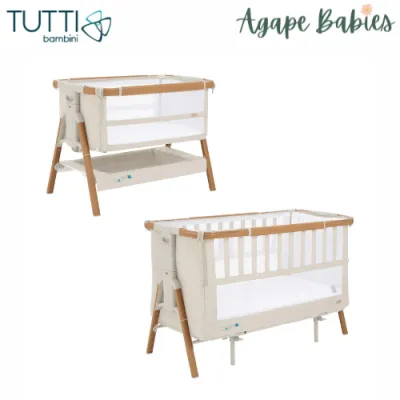
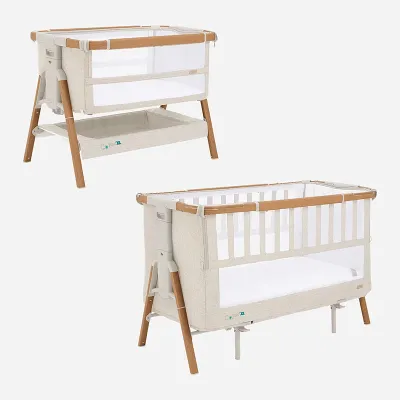
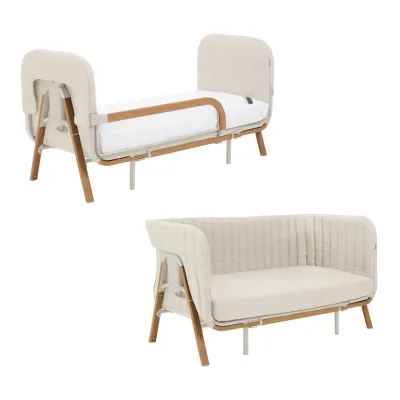
Prices are valid at publication and may change. Please refer to the product page for the latest price.
In the global market, the primary benchmark for children’s cots and folding cots is the European standard BS EN 716. This standard outlines strict requirements for structural integrity, durability, and design. For bedside sleepers and bassinets, EN 1130 is the relevant standard, focusing on the unique stability and attachment mechanisms required when a crib is secured next to an adult bed.
In Singapore, consumer goods safety is overseen by Enterprise Singapore. While local regulations align closely with international standards, nursery furniture sold in the market should ideally carry clear indications of compliance with these recognized European or equivalent international benchmarks.
Physical dimensions are a core focus of these safety standards. For instance, the distance between crib slats must be strictly controlled—typically between 45 mm and 65 mm. This range is wide enough to prevent a baby’s limbs from becoming wedged, yet narrow enough to ensure their head cannot pass through. Additionally, the height of the crib sides must be sufficient to prevent an active infant from climbing or falling out as they grow.
Material safety is another critical pillar of these standards. Nursery furniture must be constructed from non-toxic materials, utilizing lead-free paints, varnishes, and finishes. Because infants frequently chew on crib rails during teething, verifying that the materials are free from harmful chemicals, heavy metals, and volatile organic compounds (VOCs) is a vital step in your safety assessment.
How to Verify Tutti Bambini Cozee XL Compliance
Confirming that your specific Tutti Bambini Cozee XL unit complies with these safety standards requires a systematic approach. Rather than relying solely on marketing materials or third-party retail descriptions, you should perform direct verifications before and after your purchase.

Start by inspecting the physical product packaging and the crib frame itself. Compliant nursery furniture must feature permanent safety labels. These labels are typically located on the underside of the crib base, on the inner legs, or on the fabric lining. Look for printed text referencing BS EN 716, EN 1130, or equivalent international safety codes. If these labels are missing, altered, or illegible, treat it as a significant warning sign.
Next, carefully review the manufacturer’s instruction manual included with the Cozee XL. A reputable manufacturer will clearly state the safety standards the product has been tested against within the first few pages of the documentation. The manual will also outline critical safety warnings, such as the maximum weight capacity for each configuration and the specific age or developmental milestones at which you must transition the crib to its next stage.
If you are purchasing the crib online or want to verify compliance before the product arrives at your home in Singapore, contact the manufacturer’s customer support team directly. You can request a copy of the official Declaration of Conformity or the safety test certificates for the Cozee XL. A transparent manufacturer will readily provide these documents to verify their safety claims.
Be cautious when browsing third-party listings on online marketplaces or community forums. Retailers may sometimes use generic templates or copy-paste safety claims from other products. Always cross-reference any safety assertions made by a local seller with the official Tutti Bambini documentation to ensure the information is accurate and applicable to the specific model and batch you are purchasing.
Essential Physical Safety Checks for Your Crib
Even when a crib is certified to meet international standards, improper assembly or wear and tear can compromise its safety. Performing a hands-on physical inspection during assembly and maintaining a regular checkup routine is essential to keep the sleep environment secure.
Begin by measuring the gaps between the slats and the frame components. Ensure that no gap exceeds 6.5 cm, which is the standard limit to prevent infant head entrapment. If you are using the Cozee XL in its bedside sleeper configuration, pay close attention to the gap between the adult mattress and the crib. There should be no space whatsoever; the crib must be securely strapped to the adult bed frame according to the manufacturer’s instructions to prevent the baby from slipping into a void.
The mattress is one of the most critical components of a safe sleep environment. It must fit the crib frame perfectly, leaving no gaps wider than 3 cm along the edges. You can test this using the “two-finger rule”: if you can easily slide more than two fingers between the mattress and the inner walls of the crib, the mattress is too small and poses an entrapment hazard. Furthermore, the mattress must be exceptionally firm; it should not conform to your baby’s head or face, as soft surfaces increase the risk of suffocation.
During assembly, inspect every piece of hardware, including screws, bolts, brackets, and locking joints. Ensure all fasteners are tightened securely but not overtightened to the point of stripping the threads. Check the locking mechanisms on the wheels, folding joints, and drop-side rails. These mechanisms must engage fully and require a deliberate, multi-step action to release, preventing accidental collapse or opening.
Finally, maintain a minimalist sleep surface. The mattress should be covered only by a tight-fitting sheet designed specifically for that mattress size. Keep the crib entirely free of loose blankets, pillows, bumper pads, quilts, sheepskins, and soft toys. While these items may look appealing in a nursery, they represent significant suffocation and strangulation hazards for infants.
Warning Signs and Conditions for Stopping Use
A crib’s safety is not permanent; it changes as the product ages and as your child develops. Knowing when to modify the crib’s setup, perform maintenance, or stop using it altogether is crucial for preventing accidents.
Regularly inspect the Cozee XL for signs of structural wear. Look for splintered wood, bent metal tubes, torn fabric mesh, or cracked plastic joints. Pay close attention to the fabric panels and zippers if you are using the bedside sleeper mode. If any zipper is broken, or if the mesh is torn, the structural integrity of the barrier is compromised. If you find any damaged or missing parts, stop using the crib immediately and contact the manufacturer for official replacement components.
Your child’s physical development is the ultimate guide for when to transition or stop using specific crib configurations. For the bassinet and bedside sleeper modes, you must stop use as soon as your baby shows signs of rolling over, pushing up on their hands and knees, or sitting up independently. Additionally, monitor your baby’s weight and height closely; once they reach the manufacturer’s specified limits for a particular configuration, you must transition the crib to the next stage or move them to a larger, deeper cot.
Stay informed about product safety recalls. Even highly regarded brands can occasionally experience manufacturing defects that lead to recalls. Check the Enterprise Singapore product safety portal and the manufacturer’s official website periodically for any safety alerts related to your specific model or production batch.
Never attempt DIY repairs or make unauthorized modifications to the crib. Using non-original screws, gluing broken joints, or adding aftermarket accessories—such as unapproved mattress toppers or custom support straps—can alter the crib’s structural dynamics and void all safety certifications. If a component cannot be repaired using official parts and instructions from the manufacturer, the crib must be decommissioned and replaced.
Frequently Asked Questions (FAQ)
Does a higher price guarantee better safety standards for baby cribs?
No, a higher price tag does not automatically guarantee superior safety standards. In Singapore and international markets, all baby cribs offered for sale must meet the same baseline safety regulations to be considered legal and safe. Premium pricing often reflects aesthetic choices, high-end materials, brand positioning, or multi-functional designs (such as the ability to convert into multiple furniture pieces). While premium cribs may offer convenient features, a budget-friendly crib that carries verified BS EN 716 or EN 1130 certifications is just as safe for your baby as an expensive model.
Can I use a second-hand Tutti Bambini Cozee XL safely?
Using a second-hand crib carries inherent risks and requires meticulous verification. If you are considering a pre-owned Tutti Bambini Cozee XL, you must ensure that the previous owner has provided the original instruction manual and all original hardware. Inspect the frame thoroughly for hidden structural damage, hairline cracks in plastic joints, or worn-out fabric components. You must also verify that the specific batch has not been subject to any safety recalls. For hygiene and safety reasons, it is highly recommended to purchase a brand-new mattress that is specifically designed to fit the Cozee XL, rather than reusing a second-hand mattress.

Community discussion
Share your experience or ask a question. Comments are reviewed before publication.