
Ensuring your child’s safety in a moving vehicle is one of the most critical responsibilities of parenting, yet navigating the intersection of portability and local traffic regulations in Singapore can be challenging. For families who rely on ride-hailing services, taxis, or frequent travel, bulky traditional car seats are often highly impractical to carry around. This has led many parents to consider the RideSafer travel vest as a lightweight, packable alternative. However, before replacing your traditional child restraint, it is essential to understand how Singapore’s Land Transport Authority (LTA) views these wearable devices and how to verify their safety profile for your child.
Understanding Singapore's Child Restraint Laws
Singapore maintains strict regulations regarding child passenger safety to minimize the risk of injury during transit. According to the Land Transport Authority (LTA), anyone under the height of 1.35 meters must be secured with an approved child restraint appropriate for their height and weight, or use a booster seat to raise them to a height where the adult seat belt can be worn safely. This rule applies to all passengers traveling in private motor vehicles, and failure to comply can result in fines and demerit points for the driver.
To meet legal requirements, a child restraint system must comply with recognized international safety standards. The LTA generally recognizes several rigorous global standards, which typically include:
Products mentioned in this guide
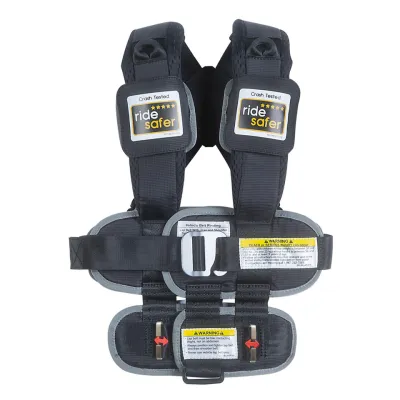
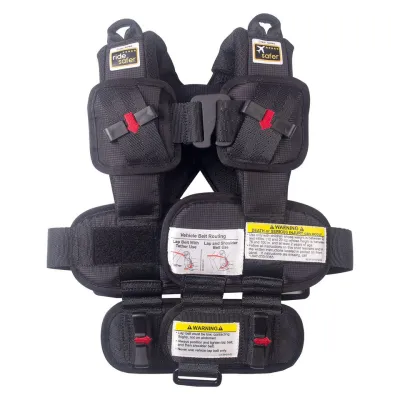
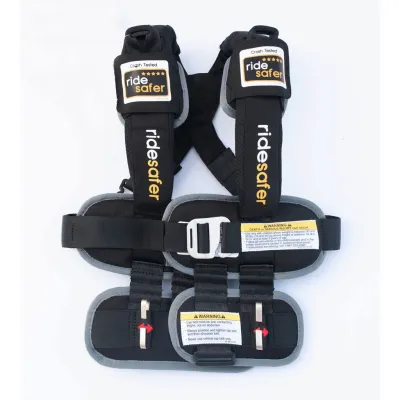
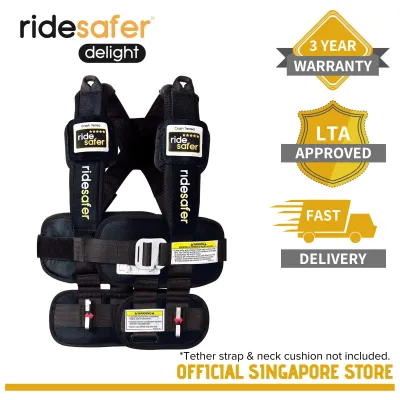
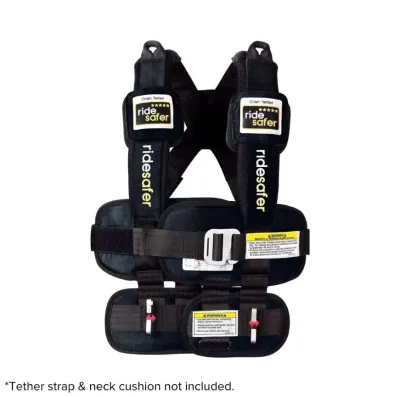
Prices are valid at publication and may change. Please refer to the product page for the latest price.
- UN ECE R44/04 or ECE R129 (i-Size): The European safety standards widely adopted across many international markets.
- FMVSS 213: The United States Federal Motor Vehicle Safety Standard governing child restraint systems.
- AS/NZS 1754: The Australian and New Zealand standard for child car seats.
- JIS: The Japanese industrial safety standards.
While a product may be certified under a foreign standard like FMVSS 213 in the United States, parents must understand the distinction between a manufacturer’s foreign certification and explicit legal acceptance by authorities in Singapore. Traffic regulations can be highly specific, and local authorities may differentiate between traditional rigid booster seats and flexible, wearable fabric harnesses or travel vests. Because safety standards and local enforcement guidelines are subject to change, you must check the latest official LTA guidelines or contact the Land Transport Authority directly to confirm if wearable “travel vests” are explicitly approved under current Singapore traffic laws.
Evaluating the Safety and Design of the RideSafer Vest
To evaluate whether a wearable vest is a safe option for your child, it helps to understand the engineering principles behind its design. Traditional booster seats function by lifting the child upward so that the vehicle’s adult seat belt aligns correctly with their smaller frame. In contrast, the RideSafer vest takes the opposite approach: it brings the vehicle’s seat belt down to the child. The vest features specialized metal guides that route the lap belt low across the child’s pelvic bones and position the shoulder belt across the center of the chest, keeping it safely away from the delicate soft tissues of the abdomen and neck.

By keeping the seat belt positioned over the strong skeletal structures of the shoulders and hips, the vest is engineered to distribute crash forces more safely during an impact. The manufacturer typically designs and crash-tests these vests to meet the performance criteria of FMVSS 213 in the United States. These crash tests evaluate how well the restraint manages forward head excursion, limits chest acceleration, and maintains structural integrity under high-velocity impact simulations.
However, because certifications and safety standards are dynamic, you must physically inspect the product label on any vest you purchase. Check for genuine compliance marks, official certification labels, and the manufacturer’s production date. Like traditional car seats, wearable restraints are subject to material degradation over time from heat, humidity, and wear. Checking the manufacturing date ensures you are not using an expired or degraded product that could fail under stress.
Additionally, a travel vest is only as safe as the vehicle seat belt system it relies upon. Parents must verify that the vehicle’s seat belt retracts smoothly, locks securely, and is fully compatible with the vest’s routing guides. If a vehicle has an outdated lap-only belt without a shoulder strap, or if the seat belt mechanism is worn out, the vest cannot perform its protective function. Always check the vehicle’s seat belt condition before securing your child.
When to Choose a Travel Vest Over a Traditional Car Seat
Deciding between a travel vest and a traditional car seat depends heavily on your lifestyle, transport habits, and the specific age of your child. A wearable travel vest is highly advantageous in scenarios where portability is the primary concern. If your family frequently uses ride-hailing services, takes public taxis, travels abroad, or switches between multiple cars, carrying a heavy, rigid plastic car seat is incredibly difficult. The vest can be folded easily into a backpack, making it an excellent solution for urban mobility in Singapore.
Conversely, for daily commutes in a primary family vehicle, traditional car seats or high-back booster seats offer distinct safety and comfort advantages that a travel vest cannot match. Traditional high-back boosters provide robust side-impact protection through energy-absorbing foam headrests and deep side wings. These physical barriers help shield a child’s head, neck, and torso from lateral forces during a side-angle collision. Furthermore, traditional seats offer a rigid, consistent structure that makes daily belt routing more intuitive and repeatable for busy school runs.
It is also critical to recognize that a travel vest is strictly a forward-facing solution. It must never be used as a replacement for a rear-facing infant car seat or convertible seat. Pediatric safety experts and manufacturers emphasize that infants and young toddlers must remain in rear-facing seats for as long as possible—typically until they reach the maximum height or weight limit of their rear-facing seat. A young child’s neck muscles and spine are not sufficiently developed to withstand the forward whip of a crash while facing forward, making rear-facing protection non-negotiable for early developmental stages.
Ultimately, parents should weigh the convenience of a highly portable vest against the comprehensive safety features of a dedicated car seat. While the vest serves as a valuable tool for occasional trips, ride-hailing, and travel, a properly installed traditional car seat remains the gold standard for daily, long-term vehicle use.
Essential Safety Checks and Usage Boundaries
To ensure a travel vest provides the intended level of protection, you must adhere strictly to the manufacturer’s usage boundaries and installation protocols. Never assume a vest is suitable for your child based on age alone; children grow at vastly different rates, and physical dimensions dictate safety performance.
- Verify Height and Weight Limits: Carefully check the manufacturer's official size chart printed on the product label. Ensure your child falls squarely within the specified weight and height ranges for that exact model size.
- Inspect Belt Routing: When securing the child, the lap belt must sit low across the upper thighs or hips, never riding up onto the soft belly. The shoulder belt must cross the center of the chest and shoulder; if it touches the neck or slips off the shoulder, stop use and adjust the fit.
- Check Top Tether Requirements: Some vest models require or highly recommend using a top tether strap, especially for younger children or when using specific seat belt configurations. Verify if your model requires a tether and ensure your vehicle is equipped with a reinforced, designated top tether anchor point rather than a simple cargo hook.
- Monitor Caregiver Supervision: Always double-check the belt routing yourself. Do not allow young children to buckle themselves in unsupervised, as incorrect routing can lead to severe injury in an accident.
Knowing when to stop using or replace the vest is just as vital as knowing how to install it. You must decommission and replace the vest immediately under any of the following conditions:
- The child outgrows the maximum height or weight limits specified on the product label.
- The fabric webbing shows signs of fraying, tearing, or severe wear.
- The metal routing guides or plastic buckles become bent, cracked, or fail to latch securely.
- The vest has been worn during a moderate to severe vehicle collision, as unseen structural damage to the internal fibers can compromise future performance.
Frequently Asked Questions (FAQ)
Can I use the RideSafer vest in Grab or taxi rides in Singapore?
Under Singapore’s Road Traffic Act, public taxis are legally exempt from the mandatory child restraint requirement, meaning passengers under 1.35 meters may travel without a car seat (though doing so carries inherent safety risks). However, private hire vehicles, such as Grab, Gojek, and other ride-hailing services, do not share this exemption. Legally, any child under 1.35 meters traveling in a private hire car must use an approved child restraint or booster seat. The RideSafer vest is an exceptionally convenient, portable option for these private hire rides, provided you verify that the specific model complies with recognized safety standards and is accepted under current LTA guidelines.
Does the RideSafer vest require a top tether to be safe?
Whether a top tether is required depends entirely on the specific model generation of the vest, the child’s weight, and the type of seat belt available in the vehicle. For example, if you are securing a child in a vehicle that only has a lap belt (without a shoulder strap), a top tether is typically mandatory to prevent the child’s upper body from being thrown forward during a stop. If you are using a standard three-point lap-and-shoulder belt, the tether may be optional but is often recommended by the manufacturer to provide additional stability. Always consult your specific product manual to determine the exact requirements for your child’s weight and your vehicle’s configuration.
What should I do if my child falls asleep in the vest?
Because a travel vest lacks the rigid side walls and head support of a traditional high-back booster seat, sleeping children may experience head slumping or lean to the side, which can cause the vehicle’s seat belt to slip out of its optimal position. To manage this safely, you can use a supportive, lightweight travel neck pillow that does not interfere with the vest’s harness or the seat belt path. If your vehicle’s rear seats have a recline function, you may slightly recline the seat back to help keep the child’s head positioned backward, provided the recline does not cause the seat belt to slacken or fit poorly. Never add unapproved aftermarket padding, cushions, or straps to the vest, as these have not been crash-tested and could compromise the vest’s performance.

Community discussion
Share your experience or ask a question. Comments are reviewed before publication.