
When navigating the busy streets of Singapore with young children, safety and convenience are often in direct tension. Parents frequently ask whether the ultra-compact mifold car seat is both legally compliant under local traffic laws and safe enough to protect their child in a collision.
The short answer is yes: the mifold booster seat is legal in Singapore, provided the specific unit you use carries an internationally recognized safety certification approved by the Land Transport Authority (LTA), such as the UN ECE R44/04 standard. However, while it meets the legal baseline, determining whether it is the safest choice for your child requires understanding how its unique “hold-down” design compares to traditional high-back booster seats, alongside evaluating your child’s physical development and your typical travel habits.
Singapore’s Child Car Seat Laws: What the LTA Requires
Under the Singapore Road Traffic Act, safety regulations mandate that any passenger under the height of 1.35 meters, regardless of age, must be properly secured using an approved child restraint system or a booster seat appropriate for their height and weight. This law is strictly enforced by the Land Transport Authority (LTA) and the Traffic Police to mitigate the risk of severe injury during sudden stops or collisions. If a driver fails to secure a young passenger properly, they face a fine of up to S$120, three demerit points, and potential court prosecution for subsequent offenses.
Products mentioned in this guide
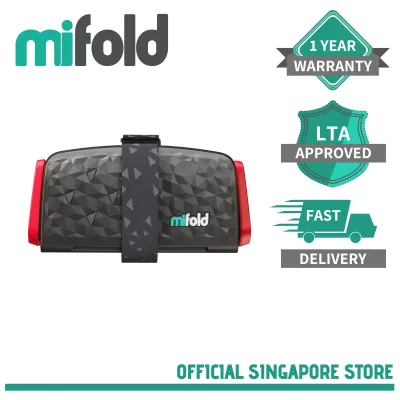
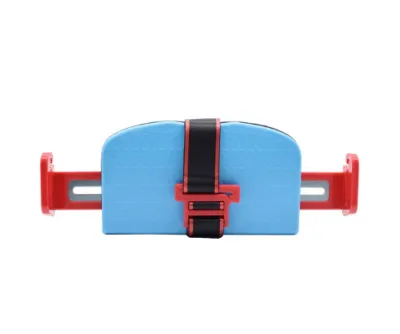
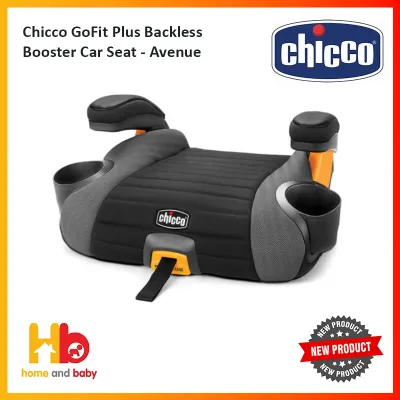
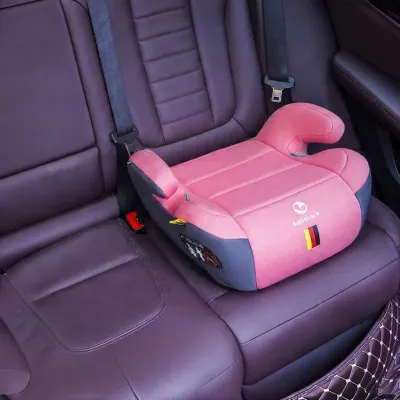
Prices are valid at publication and may change. Please refer to the product page for the latest price.
The height threshold of 1.35 meters is not arbitrary; it represents the minimum height at which a standard adult three-point seatbelt can safely route across a person’s skeletal frame. Adult seatbelts are engineered to distribute crash forces across the strongest parts of the body: the pelvis and the collarbone. When a child under 1.35 meters sits directly on a vehicle seat without a booster, the lap belt naturally rides up over their soft abdomen, and the shoulder belt crosses their neck or face. In a collision, this misalignment can cause catastrophic internal bleeding, spinal damage, or severe neck trauma—a phenomenon known as seatbelt syndrome.
To prevent this, child restraint regulations distinguish between full child car seats and booster seats. Full car seats feature an integrated five-point harness that secures infants and toddlers directly to the seat shell, which is anchored to the vehicle via ISOFIX points or the seatbelt. Booster seats, on the other hand, are designed for older children who have outgrown their harnessed seats. They do not have integrated harnesses; instead, they assist in positioning the vehicle’s adult seatbelt correctly over the child’s body. Under Singapore law, both types of restraints are acceptable, provided they match the child’s physical specifications and carry authorized safety certifications.
While the law applies universally to private cars, Singapore regulations do provide specific exemptions for public service vehicles. Taxis are legally exempt from the child restraint requirement, allowing families to board a standard cab without carrying a car seat. This exemption exists to balance public transport accessibility with practical urban logistics. However, this legal loophole does not alter physical laws; a crash in a taxi carries the same kinetic risks as a crash in a private car.
Furthermore, private hire vehicles operated through ride-hailing platforms such as Grab, Gojek, Tada, and Ryde are not legally exempt. Because these vehicles are classified differently from traditional street-hail taxis, drivers are legally required to ensure any passenger under 1.35 meters is secured in an appropriate restraint. If you attempt to board a ride-hailing vehicle with a child and no booster seat, the driver is legally obligated to refuse the ride, often resulting in cancellation fees and significant transit delays.
Does the mifold Car Seat Meet Singapore’s Legal Standards?
To be legally used on Singapore roads, a child restraint system must comply with standards recognized by the LTA. Singapore does not establish its own independent testing laboratories for car seats; instead, the government recognizes several rigorous international safety standards. These include the United Nations Economic Commission for Europe (UN ECE) standards R44/04 and R129 (commonly known as i-Size), the United States Federal Motor Vehicle Safety Standard (FMVSS) 213, the British Standard (BS) 3254, the Australian Standard (AS) 1754, and the Japanese Industrial Standard (JIS) D0401.

The mifold grab-and-go booster seat is designed to meet these major global standards, but its legality in Singapore hinges on the specific certification label attached to the physical unit you purchase. Most genuine mifold units sold through authorized distributors in Singapore are certified under the UN ECE R44/04 standard. To verify this, you must inspect the underside of the booster seat for a physical, orange ECE approval label. This label contains critical regulatory information, including the standard version (such as ECE R44/04), the category of use (typically “Universal”), the weight range for which the seat is approved, and an approval country code. If this orange label is present and intact, the seat is fully legal for use in Singapore.
Some mifold models imported from North America may carry the US FMVSS 213 certification instead of the European ECE label. While FMVSS 213 is technically recognized under Singapore’s regulatory framework, parents should exercise caution. Different countries have distinct rules regarding seatbelt locking mechanisms, chest clips, and installation steps. Always verify that the specific model’s certification matches the local vehicle configurations and that you can present the physical certification label if requested during a routine traffic check or vehicle inspection.
The high demand for compact travel boosters has unfortunately led to an influx of unbranded, uncertified, or counterfeit copycats on online marketplaces. These lookalike products often mimic the folding design of the mifold but are constructed from cheap, brittle plastics and weak webbing that fail catastrophically under crash loads. Using an uncertified booster seat is not only illegal under the Road Traffic Act—carrying the same penalties as using no restraint at all—but it also poses an extreme safety hazard to your child. Before purchasing a mifold, always inspect the physical unit for genuine, tamper-evident safety labels, and purchase exclusively from reputable retailers or authorized distributors to ensure the product is authentic and legally compliant.
How Safe Is the mifold Booster Seat? Weighing the Pros and Cons
Understanding how the mifold operates is essential to evaluating its safety. Traditional booster seats are designed to lift the child upward so that the vehicle’s adult seatbelt aligns correctly with their smaller frame. The mifold takes the exact opposite approach: it is a “belt-positioning” device that remains flat on the vehicle seat, using adjustable side guides and a shoulder strap to pull the vehicle’s lap and shoulder belts downward to fit the child’s body. Instead of raising the child, it lowers the belt.
This design offers distinct safety and practical advantages. Because it is incredibly compact—roughly ten times smaller than a standard booster seat—it is highly portable and fits easily into a child’s school bag, a handbag, or a vehicle’s glove compartment. This portability ensures that parents always have a safety solution on hand, eliminating the temptation to ride unrestrained during unexpected trips. Additionally, because the mifold sits flat and does not add width to the seating area, it easily facilitates “three-across” seating configurations in the rear of compact and mid-sized cars, a setup that is often physically impossible with bulky traditional booster seats. When installed and adjusted correctly, the mifold successfully prevents the lap belt from riding up onto the vulnerable abdominal cavity, routing it securely across the pelvic bones.
However, the mifold’s compact design introduces significant safety trade-offs that parents must carefully weigh. The most notable limitation is the complete lack of side-impact protection. Unlike high-back booster seats, which feature deep, energy-absorbing foam wings around the child’s torso and head, the mifold offers zero lateral containment. In a side-impact collision, the child’s upper body and head are subjected to lateral movement, relying solely on the vehicle’s side curtain airbags (if equipped) and seatbelt tension for restraint. Furthermore, because the mifold does not elevate the child, there is no built-in head or neck support. The child must rely entirely on the vehicle’s own headrest, which must be adjusted correctly to support the back of the child’s head and prevent whiplash.
Another critical safety consideration is the child’s behavior and physical maturity. Because the mifold does not physically cradle or confine the child like a traditional car seat, the child must have the developmental maturity to sit upright, with their back flat against the vehicle seatback, for the entire duration of the journey. If a child slumps, wiggles, leans sideways, or falls asleep and slips out of the correct posture, the seatbelt will immediately become misaligned, significantly increasing the risk of injury. Therefore, safety is highly dependent on the child meeting not only the physical height and weight minimums specified by the manufacturer but also possessing the behavioral readiness to remain seated correctly without constant parental intervention.
Best Use Cases: Travel, Taxis, and Everyday Driving
Given its unique balance of convenience and safety trade-offs, the mifold is best viewed as a specialized tool for specific transit scenarios rather than a direct replacement for a primary daily car seat. The ideal use cases for the mifold in Singapore revolve around short-distance urban travel, ride-hailing trips, and multi-car households.
For families who do not own a personal car and rely on Grab, Gojek, or taxis, the mifold is an invaluable asset. Carrying a bulky, 7-kilogram high-back booster seat while walking through a crowded shopping mall in Orchard Road or riding the MRT is highly impractical. The mifold’s lightweight, pocket-sized design allows parents to slip it into a diaper bag or backpack, ensuring that every private hire vehicle ride is legally compliant and vastly safer than riding unrestrained. It is also an excellent solution for school carpools, playdates, or emergency backup situations where your child needs to ride in a relative’s or friend’s vehicle on short notice. For international travel out of Changi Airport, the mifold is an ideal travel companion, taking up minimal luggage space while ensuring safety compliance in rental cars or overseas taxis.
Conversely, there are several scenarios where using a mifold is highly discouraged. For daily commutes, long-distance driving (such as road trips up the North-South Highway into Malaysia), or high-speed highway travel on the PIE, KPE, or ECP, a traditional high-back booster seat is a much safer option. High-speed collisions involve significantly greater kinetic energy, making the side-impact protection and energy-absorbing shell of a high-back booster critical for reducing injury severity. Additionally, if your child is prone to falling asleep during car rides, a high-back booster is essential; its side wings and headrest support the child’s head and torso, keeping them in an upright, safe alignment even when unconscious. In contrast, a sleeping child on a mifold will almost certainly slump sideways, rendering the seatbelt alignment unsafe.
Understanding the specific regulations of Singapore’s transport network helps clarify when to deploy the mifold. While taxis are legally exempt from the child restraint law, choosing to use a portable booster like the mifold is a proactive safety decision that protects your child from sudden braking incidents. For ride-hailing services, where no legal exemption exists, carrying a mifold is a practical necessity that prevents you from being turned away by drivers who must comply with LTA regulations to protect their licenses.
Step-by-Step Guide to Fitting the mifold Seat Safely
To ensure the mifold booster seat provides the intended level of protection, it must be installed and adjusted with absolute precision. Incorrect routing of the seatbelt can negate the booster’s safety benefits and lead to severe injury in a crash. Before installing any child restraint, always check the applied product’s label and the treated item’s manufacturer instructions. If instructions conflict, the item is unidentified, or the use is not covered, stop and consult the manufacturer or a certified child passenger safety technician.
First, place the mifold flat on the vehicle seat, pushed firmly against the seatback. Have your child sit on the mifold, ensuring their bottom is pushed all the way back against the vehicle’s seat cushion.
Second, adjust the width of the mifold’s side guides. The mifold features adjustable side arms with three width settings. Slide the guides so that they sit snugly against the outer edges of your child’s thighs. There should be minimal gap, but the guides should not pinch or cause discomfort.
Third, pull the vehicle’s seatbelt across the child’s lap and thread it through both of the mifold’s red side guides. It is absolutely critical that the lap belt sits low across the pelvic bones and upper thighs, never resting on the soft abdomen. Once threaded, buckle the seatbelt into the vehicle’s buckle receptacle. Ensure that the belt is flat, untwisted, and pulled taut to remove any slack.
Fourth, attach the mifold’s shoulder belt guide strap. This strap is permanently attached to the rear of the mifold and must be routed behind the child’s back. Clip the red shoulder guide onto the vehicle’s shoulder belt. Adjust the length of the strap so that the guide sits approximately one inch (about 2.5 centimeters) above the child’s shoulder. This ensures that the vehicle’s shoulder belt is routed smoothly across the middle of the child’s collarbone and chest, keeping it safely away from their neck and face.
Fifth, perform a final physical check. Verify that the child is sitting completely upright, that all sections of the seatbelt are flat and tensioned, and that the belt guides are securely holding the seatbelt in place.
You must stop using the mifold booster seat immediately under any of the following conditions:
- The child outgrows the manufacturer's specified maximum weight or height limits (which you must verify on the product's physical safety label).
- The child is physically unable to sit upright without slouching, wiggling, or leaning out of the correct position.
- The child reaches a height of 1.35 meters, at which point they can transition to using the vehicle's standard three-point seatbelt directly, provided the lap belt sits low on the hips and the shoulder belt crosses the middle of the shoulder without a booster.
- The mifold has been involved in any vehicle collision, even a minor one, as invisible structural damage may compromise its safety in a future incident.
Frequently Asked Questions (FAQ)
Can I use a mifold car seat in a Grab or taxi in Singapore?
Yes, you can use a mifold car seat in both Grab vehicles and traditional taxis in Singapore. In traditional street-hail or booked taxis, child passengers are legally exempt from the child restraint requirement due to public transport classifications. However, using a portable booster like the mifold is highly recommended to protect your child from crash forces. In private hire vehicles (such as Grab, Gojek, Tada, and Ryde), there is no legal exemption; children under 1.35 meters must use an approved restraint. The mifold is an ideal, highly portable solution that allows you to comply with LTA regulations and avoid being refused service by ride-hailing drivers.
What is the minimum age and weight to use the mifold booster seat?
The minimum age, weight, and height requirements for the mifold booster seat depend on the specific model and the international safety standard to which it is certified. For models certified under the UN ECE R44/04 standard, the seat is typically approved for Group 2/3, which covers children weighing from 15 to 36 kilograms (approximately 4 to 12 years of age). However, you must always check the specific user manual and physical labels attached to your exact mifold unit, as specifications vary by region. Beyond numerical limits, your child must also possess the physical maturity to sit upright with their back against the seatback and maintain proper posture throughout the entire ride without slouching or playing with the seatbelt.

Community discussion
Share your experience or ask a question. Comments are reviewed before publication.