
Parents navigating the bustling streets of Singapore frequently face the challenge of keeping their children safe while traveling in various vehicles. If you are considering the Mifold portable booster seat, the short answer is yes: the Mifold booster seat is legal to use in Singapore, provided the specific model you purchase carries a recognized international safety certification label and your child meets the manufacturer’s height, weight, and age criteria. However, determining whether this ultra-compact restraint is the safest and most practical choice for your daily commute requires a closer look at local traffic laws, the physics of its unique design, and the specific scenarios in which you plan to use it.
While the convenience of a pocket-sized booster is undeniable, safety in a vehicle is never a one-size-fits-all matter. Singaporean road regulations are strict, and the penalties for non-compliance are significant. To make an informed decision, you must understand how the law views portable booster seats, how to verify the authenticity of your gear, and when to opt for a traditional high-back booster seat instead.
Understanding Singapore's Child Car Seat Regulations
Singapore’s Road Traffic Act establishes a clear, height-based legal framework to protect young passengers. Under local traffic laws, any passenger under the height of 1.35 meters must be properly secured using an approved child restraint system or a booster seat appropriate for their height and weight. This rule applies regardless of the child’s age, meaning that even older children who have not yet reached the 1.35-meter threshold must legally use a booster seat when traveling in private vehicles.
Products mentioned in this guide
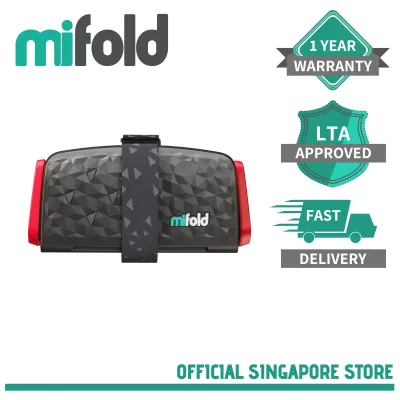
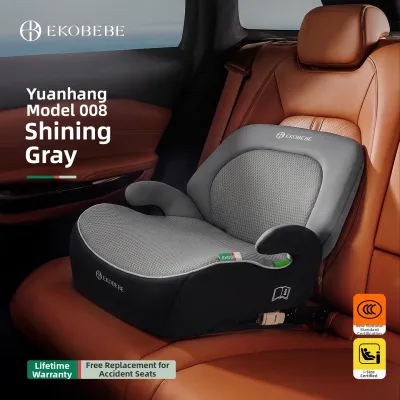
Prices are valid at publication and may change. Please refer to the product page for the latest price.
To understand where a portable booster fits, caregivers must distinguish between the different categories of child passenger safety equipment. Infant carriers are designed for babies and must be installed in a rear-facing position to protect their developing neck and spine. Convertible car seats serve toddlers and young children, utilizing an internal five-point harness to distribute crash forces. Booster seats, including backless and portable models, are designed for older children who have outgrown their harnessed seats but are still too small for the vehicle’s built-in seatbelts to fit them safely.
It is important to note that Singapore’s traffic regulations do not mandate or endorse any single brand, design, or proprietary technology. Instead, the law focuses entirely on proper restraint fit and compliance with internationally recognized safety standards. A seat is only considered legally compliant if it is certified by an approved international body and is used in strict accordance with the manufacturer’s instructions.
Ultimately, the legal responsibility for passenger safety rests squarely on the driver and caregivers. Failing to secure a child under 1.35 meters in an approved restraint is a traffic offense that can result in composition fines and demerit points for the driver. Therefore, verifying the legal status and physical fit of any travel booster is a critical step before hit the road.
Is the Mifold Booster Seat Legally Approved?
Under Singapore’s child restraint regulations, backless booster seats like the Mifold are legally permitted, provided they carry valid certification from recognized international testing standards. The Land Transport Authority (LTA) and the Traffic Police recognize several major international standards, including the United Nations standard (ECE R44/04 or ECE R129), the American Federal Motor Vehicle Safety Standard (FMVSS 213), and equivalent standards from Great Britain, Australia, Japan, or Canada.

To ensure your Mifold booster seat is legally compliant, you must physically locate and inspect the certification label on the product. For European-certified models, this is typically an orange sticker displaying an “E” mark followed by a number, along with the specific regulation version (such as ECE R44/04) and the approved weight range. Legal approval is highly model-specific; simply purchasing a product bearing the brand name is not enough, as unauthorized imports or counterfeit versions lacking these physical certification marks do not meet local legal requirements.
Furthermore, local authorities require that any child restraint be used strictly within the limits specified by the manufacturer. For most Mifold models, the manufacturer specifies a minimum age of 4 years, a weight range of 15 to 36 kilograms, and a height limit of up to 150 centimeters. Using the seat for a child who falls below these minimum thresholds is not only highly unsafe but also constitutes a violation of local traffic laws because the restraint cannot function as intended.
To safeguard your family and ensure hassle-free safety checks, parents are strongly advised to purchase their booster seats from reputable local distributors and retain both the physical user manual and the purchase receipt. These documents serve as valuable proof of compliance and provide clear instructions on the specific limits and installation steps required for your exact model.
How Safe Is the Mifold Design for Daily Use?
The Mifold booster seat operates on a fundamentally different design philosophy than traditional booster seats. While standard boosters are designed to lift the child up to meet the vehicle’s adult seatbelt, the Mifold does the exact opposite: it holds the vehicle’s seatbelt down to fit the child’s smaller frame. This “collapse and fit” mechanism uses adjustable side guides and a shoulder strap clip to position the vehicle’s three-point seatbelt securely across the child’s body.
For a booster seat to protect a child during a sudden stop or collision, proper belt positioning is absolutely critical. The Mifold’s side guides are engineered to route the lap belt low across the child’s pelvic bones and upper thighs, preventing the belt from riding up onto the soft abdomen where it could cause severe internal organ damage in a crash. Simultaneously, the integrated shoulder strap guide pulls the diagonal seatbelt down so that it rests flat across the collarbone, keeping it safely away from the child’s neck and face.
Despite these clever engineering features, caregivers must understand the inherent safety limitations of any backless or ultra-portable booster compared to a high-back booster seat. The Mifold provides no side-impact protection, no lateral torso support, and no headrest to protect against whiplash. In a side-impact collision, a high-back booster with energy-absorbing side wings offers a significantly higher level of protection for a child’s head, neck, and upper body.
Because of these design trade-offs, the safety of the Mifold is highly contingent on the child’s physical development and behavioral maturity. A child using this seat must be able to sit relatively still and upright for the entire duration of the journey. If a child slumps, leans sideways to look out the window, or falls asleep and slides out of the correct seating position, the seatbelt will immediately shift out of its safe alignment, leaving the child vulnerable to severe injury.
Ideal Scenarios and When to Avoid Portable Boosters
Given its unique design, the Mifold booster seat is highly specialized, making it exceptionally well-suited for specific travel scenarios while being less ideal for others. Understanding these boundaries allows parents to use the seat as a highly effective tool without compromising their child’s safety during daily transits.
When the Mifold Excels
- Ride-Hailing and Taxis: Carrying a bulky, traditional car seat while hopping in and out of Grab, Gojek, or local taxis is incredibly difficult. The Mifold's compact, foldable design fits easily into a backpack or handbag, making it an outstanding solution for on-the-go families.
- Travel and Holidays: When renting cars abroad or taking shuttle buses, packing a lightweight portable booster ensures your child remains legally protected without the burden of heavy luggage.
- Carpooling and Multi-Child Vehicles: Fitting three traditional car seats across the back row of a compact sedan is often physically impossible. The slim profile of the Mifold allows it to fit easily between other seats, solving tight spacing issues.
When to Avoid the Mifold
- Long Daily Commutes: For daily school runs or long highway journeys, a high-back booster seat is strongly recommended to provide superior comfort and side-impact protection.
- Children Prone to Sleeping: If your child frequently falls asleep in the car, a backless booster is highly unsuitable. Without lateral support, a sleeping child's head and torso will slump, causing the seatbelt to ride up dangerously onto their neck and stomach.
- Incompatible Vehicle Configurations: The Mifold must never be used on vehicle seats that lack headrests, seats equipped only with two-point lap belts, or heavily contoured sports seats where the booster base cannot sit completely flat.
Caregivers must establish clear “stop use” conditions to prevent accidents. You must immediately discontinue using the seat if the child outgrows the manufacturer’s maximum weight or height limits, if you detect any structural cracks in the plastic base, or if the fabric straps show signs of fraying or tearing. If the vehicle’s seatbelt mechanism is faulty or fails to lock securely into the guide clips, do not use the booster and seek an alternative transport option.
How to Ensure a Proper and Safe Fit Every Time
Installing and using a portable booster seat correctly requires consistent attention to detail. Because the Mifold relies entirely on the vehicle’s seatbelt system to secure both the seat and the child, even a minor installation error can significantly reduce its effectiveness in a crash.
First, place the Mifold base flat against the crease where the vehicle seat cushion meets the seat back. Ensure that the booster does not overhang the front edge of the vehicle seat and is not resting on a slippery aftermarket seat cover that could cause it to slide. Adjust the adjustable side arms of the Mifold to match the width of your child’s hips, ensuring a snug but comfortable fit.
Next, have your child sit fully upright with their lower back pressed firmly against the vehicle seat back. Pull the vehicle’s three-point seatbelt across the child and thread the lap belt portion through both of the red side guides on the Mifold. The lap belt must sit low and tight across the upper thighs and pelvis, never across the stomach. Pull the belt tight to remove any excess slack.
Finally, attach the Mifold’s shoulder strap clip to the vehicle’s diagonal shoulder belt. Adjust the length of the strap so that the red clip sits approximately one inch (about 2.5 centimeters) above your child’s shoulder. This ensures the diagonal belt is routed across the middle of the collarbone, safely away from the neck. Before starting the vehicle, perform a quick physical pull-test on the seatbelt to confirm that all guides are securely engaged and there is no loose webbing.
Throughout the journey, caregivers must actively supervise the child to ensure they maintain this correct posture. Remind your child never to tuck the shoulder belt under their arm or behind their back, and to avoid slouching. If your child cannot maintain this position, you should transition them back to a high-back booster seat that offers more structural support.
Frequently Asked Questions (FAQ)
Can I use the Mifold booster seat in a taxi or private hire car in Singapore?
Yes, you can use the Mifold booster seat in both taxis and private hire cars in Singapore, but the legal requirements for these two types of vehicles differ. Under Singapore law, public taxis are legally exempt from child restraint requirements due to their public transport status, meaning children under 1.35 meters can ride in the rear seat of a taxi using only the vehicle’s seatbelt (though this is highly discouraged for safety reasons).
Conversely, private hire vehicles (such as Grab, Gojek, Tada, and Ryde) are not exempt from these laws. Children under 1.35 meters traveling in private hire cars must legally use an approved child restraint or booster seat. Because the Mifold is highly portable and meets international safety standards, it is an ideal, legally compliant solution that parents can easily carry and install in any private hire vehicle.
Does the Mifold seat have an expiration date?
Yes, like almost all car seats and booster seats, Mifold seats have a specific expiration date. Over time, the plastic polymers, nylon straps, and metal components of a booster seat naturally degrade due to exposure to UV rays, extreme cabin temperatures, and general wear and tear. This degradation is accelerated in Singapore’s hot, humid tropical climate, where parked cars can reach exceptionally high internal temperatures.
To find the lifespan of your specific seat, check the manufacturer’s label on the underside of the Mifold chassis for the date of manufacture. The manufacturer typically specifies a useful lifespan of 7 years from the date of manufacture. Parents should regularly inspect the seat for signs of material degradation and must never purchase or use a second-hand Mifold seat with an unknown history, missing labels, or a passed expiration date.

Community discussion
Share your experience or ask a question. Comments are reviewed before publication.