
Whether a mifold booster seat is legally compliant for use on Singapore roads depends on the specific model’s certification labels and your child’s exact height and weight, rather than the brand name alone. While the brand is widely known for its ultra-compact, portable designs, parents must verify that their individual unit carries an approved safety standard recognized by local authorities. This guide will help you understand Singapore’s child passenger safety regulations, locate the necessary compliance markers on your seat, evaluate the physical fit for your child, and implement safe travel practices during daily commutes or rideshare trips.
Understanding Singapore's Child Passenger Safety Laws
Singapore’s road safety regulations are designed to protect vulnerable young passengers from the severe forces experienced during a collision. Under the Road Traffic Act, administered by the Land Transport Authority (LTA), any passenger under 1.35 meters in height must be properly secured using an approved child restraint system, a booster seat, or an adjustable seatbelt. This height threshold is critical because standard vehicle seatbelts are engineered to protect adult bodies, and placing a child directly into an adult seatbelt without a restraint can lead to severe abdominal or neck injuries during sudden braking.
The law distinguishes between different types of child restraints based on the child’s developmental stage. Full child car seats, which feature built-in five-point harnesses and high backs, are generally required for infants and toddlers who need comprehensive body support and side-impact protection. Booster seats, including backless and portable models, are intended for older children who have outgrown their harness seats but are still too short for the vehicle’s built-in seatbelt system to fit them safely.
Products mentioned in this guide
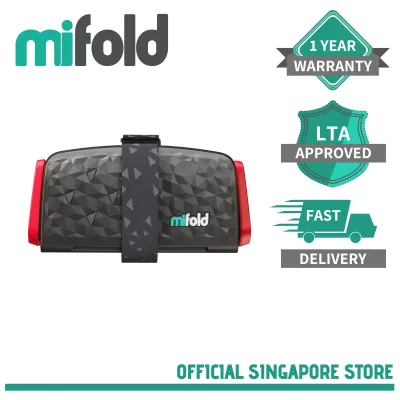
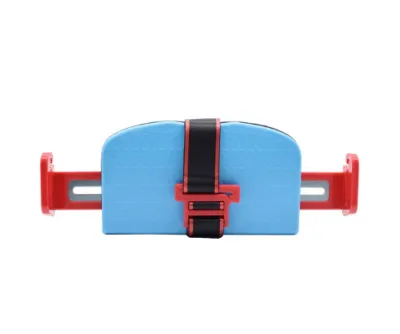
Prices are valid at publication and may change. Please refer to the product page for the latest price.
Failing to secure a child under 1.35 meters in an appropriate restraint is a serious traffic offense in Singapore. Drivers who do not comply with these regulations face legal penalties, including composition fines and demerit points. If the case goes to court, penalties can be significantly higher, especially for repeat offenses. Beyond the legal consequences, the primary risk remains the physical safety of the child, making it essential for parents to understand how to choose and use compliant gear.
How to Verify if Your mifold Booster Seat is Compliant
To determine if your specific mifold booster seat is legal for use in Singapore, you must inspect the physical product for an official safety certification label. Singapore authorities recognize specific international safety standards for child restraints. The most common standards you should look for are the United Nations standard (ECE R44/04 or UN R129, also known as i-Size) and the American Federal Motor Vehicle Safety Standard (FMVSS 213). These certifications indicate that the product design has undergone rigorous crash testing and meets strict safety criteria.

The certification label is typically an orange or white sticker permanently affixed to the underside or rear of the booster seat. On this label, you will find the name of the standard, the approval number, and the specific weight or height limits for which the seat is approved. For example, an ECE R44/04 label will clearly state the weight range, such as 15 to 36 kilograms, while a UN R129 label will specify a height range.
Compliance is only valid if your child falls strictly within the height and weight limits printed on that specific unit’s label. If your child is below the minimum weight or height threshold, the booster seat cannot legally or safely be used, even if the seat itself is certified. Conversely, if your child exceeds the maximum limits, they have outgrown the seat and require a different restraint solution.
If the certification label on your booster seat is missing, torn, faded, or completely unreadable, the seat should not be used. Traffic police and enforcement officers cannot verify the product’s legality without a visible label, and you cannot guarantee that the seat is a genuine, tested unit. In such cases, you should contact the manufacturer’s official support channels with your product’s serial number to verify its certification status, or replace the seat entirely.
Assessing Safety and Seatbelt Fit for Your Child
Even if a portable booster seat carries the correct certification labels, you must assess how the seat actually fits your child in your specific vehicle. Traditional booster seats work by lifting the child up so that the vehicle’s adult seatbelt aligns correctly with their body. In contrast, the mifold design works by holding the vehicle’s seatbelt down to fit the child’s smaller frame. This unique mechanism requires careful adjustment to ensure the belt is routed correctly.
When securing your child, the lap belt must sit low across the hips and pelvis, touching the upper thighs, rather than riding up onto the soft abdomen. In a collision, the strong bones of the pelvis must absorb the impact forces; a belt positioned over the stomach can cause severe internal organ damage. The shoulder belt must cross the center of the child’s chest and the collarbone, resting midway between the neck and the shoulder. It should never rub against the child’s neck, slip off the shoulder, or be tucked behind the child’s back or under their arm.
Parents should also consider the structural differences between portable backless boosters and traditional high-back boosters. Portable, backless designs offer excellent convenience for travel and rideshares, but they do not provide side-impact protection or head and neck support. If your vehicle lacks side-curtain airbags or has deep, contoured seats, a high-back booster may offer a more robust safety profile for daily use. Portable backless boosters are often best utilized as secondary seats for travel, carpooling, or taxi rides.
Your child will eventually outgrow the need for any booster seat, but this transition should not be rushed. A child is ready to use the vehicle’s seatbelt alone when they can pass the “five-step test” on the vehicle seat. They must be able to sit all the way back against the vehicle seatback, their knees must bend comfortably over the edge of the seat cushion, the lap belt must rest low on their hips, the shoulder belt must cross the center of their chest, and they must be mature enough to remain in this position for the entire journey without slouching.
Best Practices for Using a Portable Booster Seat
Proper installation and positioning are critical to ensuring a portable booster seat performs as intended during a journey. Always place the booster flat against the vehicle’s seat cushion, ensuring it does not slide, tilt, or sit unevenly on contoured upholstery. The seat must only be used in vehicle seats equipped with a standard three-point seatbelt (lap and shoulder belt). It is highly dangerous and illegal to use any booster seat with a two-point lap-only belt, as this provides no upper-body restraint.
Active adult supervision is essential when using ultra-compact booster seats. Because these seats are low-profile, children may find it easier to wiggle out of position, slouch, or play with the shoulder belt guide. Before starting the vehicle, double-check that the belt guides are securely locked and that the seatbelt is pulled taut without any twists. Instruct your child on the importance of sitting upright and keeping the seatbelt properly positioned throughout the ride.
For optimal safety, always install the booster seat in the rear passenger seats of the vehicle. The front passenger seat is generally the most dangerous location for a child due to the proximity of active front airbags, which deploy with immense force and can cause severe injuries to small children. Additionally, regularly inspect the booster seat for any signs of wear and tear, such as cracked plastic, frayed straps, or loose adjustment clips. If the seat shows any structural damage or has been involved in a vehicle collision, discontinue use immediately and replace it.
Frequently Asked Questions (FAQ)
Can I use a mifold booster seat in taxis or private hire cars in Singapore?
In Singapore, public taxis are legally exempt from the child restraint requirement, meaning passengers under 1.35 meters are technically allowed to travel in the rear seat using only the vehicle’s seatbelt. However, this exemption does not apply to private hire cars, such as those booked through ride-hailing apps, which are legally treated as private passenger vehicles. Children under 1.35 meters must use an approved restraint in private hire cars. Carrying a portable, lightweight booster seat is a highly practical way to ensure legal compliance and physical safety when using ride-hailing services.
What should I do if my mifold booster seat lacks a visible certification label?
If your booster seat does not have a visible, legible certification label, you should stop using it immediately. Without this label, you cannot prove to traffic enforcement officers that the seat meets Singapore’s legal safety standards, and you cannot verify the weight and height limits for your child. Check the original packaging or user manual for a matching serial number, and contact the manufacturer’s customer service to request verification. If compliance cannot be officially confirmed, you must replace the unit with a certified seat to ensure your child’s safety and avoid legal penalties.

Community discussion
Share your experience or ask a question. Comments are reviewed before publication.