
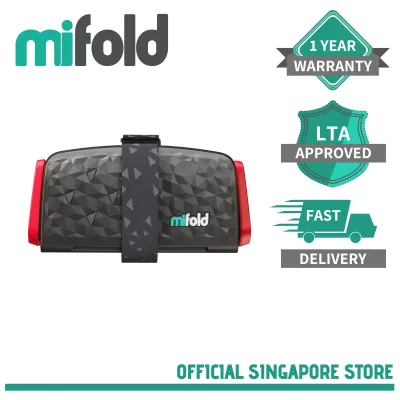
Compact booster seats like the Mifold offer a highly portable solution for families on the go, especially in busy urban environments where ride-sharing, taxis, and public transport are part of daily life. However, because these seats are significantly smaller than traditional high-backed boosters, parents often wonder how they are certified to protect a child during a collision. Understanding the specific safety certifications your booster seat holds is essential to ensuring it is both legally compliant and physically capable of protecting your child.
Safety certifications are not universal; they vary depending on where the seat was manufactured and the region for which it was packaged. To determine what standards your specific unit meets, you must know how to locate and interpret its physical certification labels. Relying on the product name alone is never enough to guarantee suitability or compliance with local traffic laws.
How to Find and Read Your Mifold Certification Label
Every approved child restraint system must carry a physical certification label or sticker directly on the unit. On compact booster seats, this label is typically located on the underside of the plastic chassis, on the back panel, or near the belt guides. Before installing or using the seat, turn it over to locate this sticker, which is often color-coded or clearly marked with regulatory text.
Products mentioned in this guide
Prices are valid at publication and may change. Please refer to the product page for the latest price.
When reading the label, look for several critical pieces of information. First, identify the specific standard code, such as ECE R44.04 or FMVSS 213. Second, check the approved weight or height limits, which dictate the physical development stage your child must reach before using the seat. Finally, locate the manufacturing date and batch number, which are vital for tracking potential product recalls or determining if the seat has exceeded its recommended lifespan.
Once you have located these details, cross-reference them with the official user manual and the manufacturer’s regional website. This step ensures the seat is authentic and matches the safety specifications required for your specific model. If the label is missing, defaced, or illegible, the seat should not be used.
Decoding Common Booster Seat Safety Standards
Child safety seats are subjected to rigorous laboratory testing to meet regional safety standards. The most common standards you will encounter on booster seat labels include European and American regulations, each using different testing methodologies.

The ECE R44.04 standard is a widely recognized European regulation that classifies booster seats based on the child’s weight. Under this standard, seats undergo strict frontal and rear impact testing using crash test dummies to measure how well the restraint limits forward movement and absorbs impact forces.
The ECE R129 standard, also known as i-Size, represents a newer European regulatory framework. Unlike the weight-based ECE R44.04, ECE R129 classifies seats based on the child’s height, introduces mandatory side-impact testing, and utilizes highly advanced dummy technology equipped with sophisticated sensors to measure potential forces on a child’s body.
The FMVSS 213 standard is the federal safety standard established in the United States. This regulation uses its own specific crash test sled speeds, deceleration curves, and dummy configurations to evaluate how well a booster seat performs during a simulated collision.
It is important to understand that passing any of these standards simply means the booster seat has met the minimum required test conditions under controlled laboratory environments. A certification does not mean a seat is indestructible, nor does it guarantee absolute safety in every real-world crash scenario.
Singapore Car Seat Laws and Accepted Standards
In Singapore, road safety regulations are strict regarding the transport of children. Under local traffic laws, anyone under 1.35 metres in height must be properly secured in an approved child restraint or booster seat appropriate for their height and weight when travelling in a private vehicle. Failing to do so is a legal offense and poses a severe safety risk to the child.
The Land Transport Authority and local traffic police generally recognize major international safety standards for child restraints used on local roads. These accepted standards include the European ECE R44.04 and ECE R129 certifications, as well as the United States FMVSS 213 standard. If your compact booster seat carries one of these recognized labels, it is legally compliant for use in private cars.
Using an uncertified, counterfeit, or expired booster seat carries significant legal and physical risks. Uncertified seats may fail structurally during a collision, leading to catastrophic injuries. While taxis in Singapore have certain legal exemptions regarding child restraints due to their public service nature, ride-hailing vehicles do not share these exemptions, making a certified, portable booster seat an essential tool for daily travel.
Daily Safety Checks for Compact Booster Seats
Even the most highly certified booster seat cannot protect a child if it is installed or used incorrectly. Because compact booster seats work by pulling the vehicle’s seat belt down to fit the child—rather than lifting the child up like a traditional booster—proper belt routing is absolutely critical for safety.
Before every journey, perform a quick pre-trip checklist to ensure the seat is configured correctly:
- Verify that the vehicle's lap belt routes through the lower guides and sits low across the child's hips or upper thighs, never across the soft abdomen.
- Ensure the shoulder belt guide is adjusted so the diagonal strap passes flat across the center of the child's collarbone, away from their neck and face.
- Confirm the booster seat is placed on a vehicle seat equipped with a proper 3-point safety belt (lap and shoulder) and an active, appropriately adjusted headrest. Never use a compact booster with a 2-point lap-only belt.
- Inspect the seat physically for any signs of wear, such as cracked plastic, torn webbing, or loose adjustment clips. If you observe any structural damage, stop using the seat immediately and consult the manufacturer.
Frequently Asked Questions (FAQ)
Can I use a US-certified booster seat in Singapore?
Yes, Singapore’s traffic regulations generally accept major international safety standards, including the United States FMVSS 213 standard, for child restraints in private vehicles. However, because safety standards and local enforcement guidelines can be updated, it is always wise to verify compliance with local transport authorities or authorized local retailers if you are unsure about a specific label.
Does a safety certification guarantee my child will not be injured in a crash?
No safety certification can guarantee absolute safety or eliminate the risk of injury in a real-world collision. Certifications prove that a booster seat has met specific, standardized performance thresholds under controlled laboratory conditions. Real-world protection depends entirely on correct installation, matching the seat to your child’s current height and weight, and following all manufacturer instructions and warnings.
Community discussion
Share your experience or ask a question. Comments are reviewed before publication.