
Caring for a newborn’s tiny, paper-thin nails can be one of the most nerve-wracking tasks for new parents. In Singapore’s warm and humid climate, babies often sweat, and any accidental scratch on their delicate face can quickly become red, irritated, or prone to minor skin issues. Traditional baby nail clippers or scissors, while effective, carry the constant worry of accidentally nicking the sensitive skin of a squirming infant. This anxiety has led many families to consider electric nail files, with the Haakaa nail trimmer being a highly popular choice on local parenting forums and online marketplaces.
The short answer is that the Haakaa nail trimmer is generally safe for newborns, provided it is used with the correct age-appropriate attachments and proper technique. Unlike traditional clippers that cut through the nail with sharp metal blades, an electric trimmer uses a rotating cushioned pad to gently file down the nail edge. This design significantly reduces the risk of cutting the skin, making it a reassuring option for anxious caregivers. However, safety is not entirely automatic; it requires understanding how the device works, selecting the right settings, and observing your baby’s reactions during the process.
To ensure a completely safe experience, parents must familiarize themselves with the specific components of the trimmer. The device relies on color-coded grinding pads designed for different developmental stages, starting from birth. Using an incorrect, coarser pad meant for older babies or toddlers can easily abrade a newborn’s soft skin. By taking a cautious approach, verifying the manufacturer’s guidelines, and practicing gentle handling, you can safely keep your baby’s nails short and smooth without the fear of painful nicks.
Products mentioned in this guide
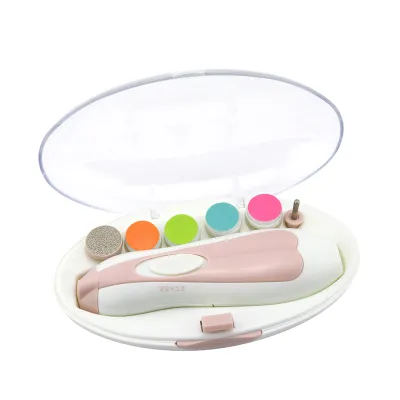
![[6M Local Warranty] Haakaa Happii Bear Nail Care Set](https://img.lazcdn.com/g/p/f6eb296264adfce431e3c736c7ef6295.png_400x400q80.png_.webp)
![[6M Local Warranty] Haakaa Electric Nail Care Set - Pink](https://img.lazcdn.com/g/p/efe30565e0629436b02f4cc7604bd9a1.png_400x400q80.png_.webp)
Prices are valid at publication and may change. Please refer to the product page for the latest price.
Understanding Electric Nail Trimmer Safety for Newborns
Electric baby nail trimmers operate on a simple mechanical principle designed to prioritize safety. Instead of a shearing action that clips the nail, these devices utilize a battery-powered motor to spin a cushioned, abrasive disc. When this disc contacts the nail, it gradually files down the excess length, smoothing out sharp corners that could otherwise cause scratches. The cushioning behind the abrasive surface is a key safety feature, as it absorbs excess pressure and conforms slightly to the natural curve of the tiny fingernail.
For a newborn, whose nails are incredibly soft, flexible, and closely attached to the underlying nail bed, filing is often much safer than clipping. Traditional clippers require the caregiver to slide a metal blade beneath the nail, where it is incredibly easy to accidentally pinch the delicate skin of the fingertip. An electric trimmer eliminates this shearing hazard entirely. If the rotating pad accidentally brushes against the surrounding skin, the gentle friction is usually not enough to cause a cut, though prolonged contact must still be avoided to prevent friction burns.
Before using any electric trimmer on your infant, it is critical to verify the manufacturer’s official age and weight recommendations. While many models are marketed as suitable from birth, you should always consult the product manual to confirm which specific attachments are certified for newborns. Manufacturers design these starter pads with an extremely fine grit that is exceptionally gentle on soft nails. Using a device without verifying these specifications can lead to using an overly aggressive file, which can quickly wear down the thin nail plate and irritate the sensitive nail bed underneath.
Key Safety Features to Check on Your Haakaa Trimmer
Before you turn on the device near your baby, a thorough physical inspection of the trimmer is essential. The first step is to examine the grinding heads included in the kit. These attachments are typically color-coded to represent different age ranges and grit levels. For a newborn, you must locate the specific pad designated for ages zero to three months, which features the finest and softest texture. Ensure this pad is clean, free of any residual nail dust, and securely clicked onto the rotating axle of the device so it does not wobble during operation.

Next, familiarize yourself with the motor speed and rotation settings. Most quality electric trimmers offer multiple speed modes, usually categorized into low and high speeds, along with dual rotation directions. For newborns, always select the lowest speed setting. The lower speed provides maximum control and minimizes the heat generated by friction. Adjusting the rotation direction is also highly useful; setting the spin direction away from the fingertip ensures that the nail edge is filed smoothly without pulling the skin or causing the finger to vibrate excessively.
Another critical safety feature to verify is the built-in pressure-activation or safety buffer mechanism. Many modern electric files are engineered to stop spinning automatically if too much pressure is applied to the baby’s nail. Test this feature yourself before applying the tool to your infant’s hand by gently pressing the spinning pad against your own palm to confirm that the motor slows down or halts. Additionally, inspect the overall physical condition of the trimmer body, ensuring the battery cover is securely locked in place to prevent any choking hazards, and verify that the built-in LED light functions correctly to illuminate the tiny nail area in dimly lit rooms.
Safe Trimming Practices for Newborns
Operating an electric nail trimmer safely requires a calm environment and a methodical approach. Timing is everything when it comes to baby grooming. Attempting to file the nails of an active, squirming newborn increases the risk of accidental slips and skin irritation. The ideal time to trim is when your baby is deeply asleep, feeding, or in a highly relaxed state. In Singapore, many parents find that a quiet session in an air-conditioned room after a bath works best, as the cool environment keeps the baby comfortable and the bathwater temporarily softens the nails even further.
To begin the trimming process, hold your baby’s hand securely but gently. Use your thumb to press the baby’s finger pad slightly downward and away from the nail edge. This simple technique exposes the entire nail plate and pulls the sensitive skin of the fingertip out of the path of the rotating file. Hold the trimmer firmly in your other hand, keeping it at a slight angle to the nail. Rather than holding the spinning pad in one spot, use gentle, sweeping motions across the nail curve to file the edge evenly.
Applying the correct amount of pressure is vital for safety. You should let the rotating pad do the work, applying almost no downward force. Keep each contact brief, lifting the file frequently to check your progress and prevent localized heat buildup from friction. Additionally, keep nail care sessions short and focused, addressing only a few nails at a time if your baby begins to stir. Never leave the electric trimmer unattended around infants, and always store the device out of reach when not in use to maintain a completely safe environment.
When to Stop and Consider Alternatives
While electric nail trimmers are highly convenient, caregivers must remain vigilant and know when to halt use. You should stop using the trimmer immediately if your baby shows signs of distress, pulls their hand away repeatedly, or if you notice any redness, swelling, or irritation on the skin surrounding the nail. Even with a soft filing pad, sensitive newborn skin can occasionally react to the friction. If a minor abrasion occurs, keep the area clean and dry, and avoid applying any further styling or filing tools to that finger until it has fully healed.
Device wear and tear is another clear signal to pause and re-evaluate. Over time, the abrasive surface of the grinding pads will wear down, lose its effectiveness, or become clogged with fine nail dust. Using a worn-out pad requires you to apply more pressure to achieve the same results, which increases the risk of friction heat and skin contact. Inspect the pads regularly and replace them according to the manufacturer’s instructions. If the device begins to make unusual noises, vibrates excessively, or feels warm to the touch, discontinue use immediately to prevent mechanical failure.
It is also helpful to remember that electric files are not the only safe option for newborn nail care. If your baby is highly sensitive to the sound or vibration of the motor, traditional manual tools may be a better fit. Specially designed baby nail scissors with rounded safety tips allow for precise, quiet trimming without any mechanical vibration. Alternatively, simple manual emery boards made specifically for infants offer complete control over the filing speed and pressure, making them an excellent, low-risk alternative for touch-ups between sleep cycles. If you find yourself feeling anxious or if your baby consistently resists the electric trimmer, there is no harm in switching to manual filing or seeking guidance from a pediatrician or family nurse.
Frequently Asked Questions (FAQ)
Can I use the Haakaa nail trimmer on a baby's toenails?
Yes, you can generally use the electric nail trimmer on a baby’s toenails, but it requires extra caution. Newborn toenails are often even softer and more deeply embedded in the surrounding skin than fingernails, and they grow at a much slower rate. When filing toenails, ensure you use the same ultra-fine newborn attachment and the lowest speed setting. Carefully press the toe pad down to expose the nail edge, and file straight across rather than rounding the corners deeply, which helps prevent the development of painful ingrown toenails as the baby grows.
How often should I trim a newborn's nails with an electric file?
Newborn fingernails grow surprisingly fast and may need to be filed once or twice a week to prevent accidental scratching. However, instead of sticking to a rigid calendar schedule, it is best to inspect your baby’s hands daily and file only when you feel sharp edges or notice the nails extending past the fingertips. Toenails grow much slower and typically only require attention once or twice a month. Always prioritize visual and tactile checks over a set routine to avoid over-filing, which can thin the nail plate and irritate the delicate nail bed.

Community discussion
Share your experience or ask a question. Comments are reviewed before publication.