
Compliance of the Chicco Fit 360 with Singapore’s car seat safety regulations depends entirely on the specific regional variant of the seat you purchase and the certification labels affixed to that individual unit. Singapore’s Land Transport Authority (LTA) and the Traffic Police mandate that all child restraints used in motor vehicles must conform to recognized international safety standards. Because the Chicco Fit 360 is manufactured in different versions for various global markets, a unit imported from one region may carry different certifications and installation requirements than one intended for another. Parents must physically inspect the seat’s labels to verify compliance before installation, as third-party parallel imports or online marketplace purchases might bring in variants that do not align with local legal frameworks.
Singapore's Legal Requirements for Child Restraint Systems
Under the Road Traffic Act in Singapore, anyone under 1.35 metres in height must be secured with an approved child restraint appropriate for their height and weight, or a booster seat/adjustable seatbelt. The driver of the vehicle is legally responsible for ensuring that all passengers under this height limit are properly restrained. Failure to comply with these regulations can result in composition fines and demerit points for the driver. The law applies to all private motor vehicles, meaning parents must ensure their chosen car seat is legally recognized before taking to the roads.
To be considered legally compliant in Singapore, a child restraint system must conform to specific international safety standards recognized by the Land Transport Authority. These recognized standards include the European standards (ECE R44/04 and the newer ECE R129, also known as i-Size), the American standard (Federal Motor Vehicle Safety Standard or FMVSS 213), the British standard (BS 3254), the Australian standard (AS 1754), and the Japanese standard (JIS D0401). If a car seat does not bear a physical label indicating compliance with at least one of these approved standards, it cannot be legally used on Singapore’s public roads.
Products mentioned in this guide
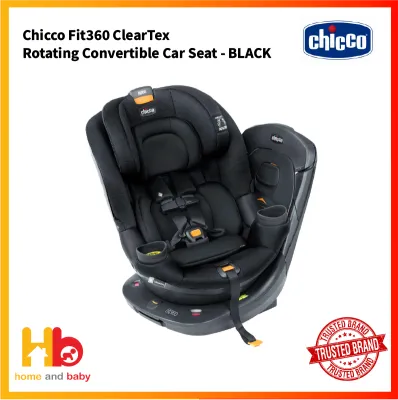
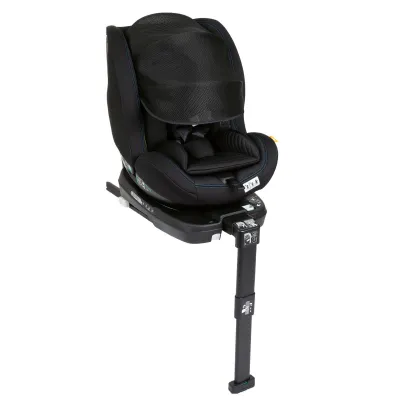
Prices are valid at publication and may change. Please refer to the product page for the latest price.
The distinction between these international standards is crucial for parents to understand. For instance, the European ECE R129 standard categorizes car seats primarily by the child’s height and mandates rigorous side-impact testing. In contrast, older standards or those from other regions, such as the American FMVSS 213, may rely more heavily on weight categories and utilize different testing protocols. Because the Chicco Fit 360 is designed to accommodate growing children, understanding which standard your specific unit complies with will dictate how you measure your child’s readiness for the seat and how you configure it over time.
Furthermore, the legal framework in Singapore does not permit the use of uncertified or modified restraints. Even if a car seat is highly rated in another country, it must carry the physical mark of one of the approved regulatory bodies to be legal here. This makes the verification process a vital first step for any parent considering the Chicco Fit 360, especially when purchasing the seat from online platforms or parallel importers who may source their inventory from various global distributors.
How to Verify the Chicco Fit 360 Certifications
To verify if your Chicco Fit 360 is compliant with Singapore’s regulations, you must perform a physical inspection of the seat shell. Manufacturers place tracking and certification labels directly on the plastic body of the seat, usually on the underside, the back, or beneath the fabric cover. You must look for a dedicated sticker that explicitly states the safety standards the seat meets. For a US-market variant, this will be a label confirming compliance with FMVSS 213, often accompanied by a warning statement regarding motor vehicle safety. For a European-market variant, you will find an orange ECE approval label indicating compliance with R44 or R129.

In addition to the physical labels on the seat, you should carefully review the manufacturer’s official user manual and specification sheet that came with your specific unit. The manual will detail the exact model number and the regulatory standards under which that specific model was tested and approved. Do not rely on general online product descriptions or reviews, as these often conflate different regional versions of the Chicco Fit 360. The documentation provided with your purchase is the definitive source of truth for your seat’s legal status and operational limits.
Purchasing your car seat from authorized local retailers in Singapore is the most reliable way to ensure compliance. Authorized distributors are legally required to import variants that meet the recognized standards and are suitable for the local market. When you buy from unauthorized sellers or parallel importers on online marketplaces, you run the risk of acquiring a variant designed for a market with different vehicle specifications or regulatory requirements. This can lead to compatibility issues with your vehicle’s seatbelt or ISOFIX systems, as well as potential legal non-compliance.
If you have already purchased a Chicco Fit 360 and cannot locate the certification labels, or if the labels are damaged or illegible, you should contact the manufacturer’s customer service or a certified child passenger safety technician in Singapore. They can help you identify the exact variant using the serial number and date of manufacture, which are typically printed on a separate tracking label. Never use a car seat if you cannot verify its certification status, as you cannot be certain of its performance in a collision or its compliance with local laws.
Observable Safety Mechanisms and Physical Checks
Once you have verified the certifications, you must ensure the Chicco Fit 360 is installed and functioning correctly through regular physical checks. If your variant utilizes ISOFIX connectors, inspect the physical connection points where the seat base attaches to your vehicle’s anchorages. Most compliant bases feature color-coded safety indicators that turn from red to green when the connectors are securely locked in place. You must also check the support leg or top tether, depending on the installation method of your specific variant. Ensure the support leg is firmly extended and resting flat on the vehicle floor, with its indicator showing green, or that the top tether is routed to the correct anchor point and tensioned according to the manual.
The 5-point harness is the primary mechanism holding your child secure, and its adjustment must be checked before every single journey. Inspect the harness straps to ensure they are completely flat and free of twists, which can concentrate force on a small area of the child’s body during an impact. The harness must be adjusted so that the shoulder straps emerge from the seat back at the correct height relative to your child’s shoulders—at or below the shoulders for rear-facing, and at or above for forward-facing. Perform the “pinch test” at the child’s collarbone: if you can pinch any slack in the webbing between your fingers, the harness is too loose and must be tightened.
The defining feature of the Chicco Fit 360 is its rotational mechanism, which allows the seat to spin on its base for easier loading and unloading. You must physically test this mechanism to ensure it locks securely before you begin driving. Rotate the seat into the desired travel position—either fully rear-facing or fully forward-facing—and listen for a distinct, audible click. Visually inspect the lock indicators on the base to confirm they show the seat is securely locked in the travel position. Never drive the vehicle with the seat rotated to the side or in any unlocked position, as the seat cannot provide protection in this state.
Regularly clean the buckle and harness mechanism to ensure they operate smoothly. Dust, crumbs, and spilled liquids can accumulate in the buckle housing, preventing it from latching securely or causing it to stick. If you notice the buckle does not click clearly into place or feels gritty, consult the user manual for instructions on how to clean it. Do not use harsh chemicals, lubricants, or solvents on the buckle or harness straps, as these can degrade the materials and compromise their strength.
Usage Limits, Installation Rules, and When to Stop Using
Maintaining safety throughout the lifecycle of your Chicco Fit 360 requires strict adherence to the manufacturer’s specified usage limits. You must consult your specific unit’s manual to find the exact height and weight thresholds for both rear-facing and forward-facing configurations. Do not transition your child to forward-facing prematurely; keeping your child rear-facing for as long as possible, up to the maximum limits allowed by your specific seat variant, provides the best protection for their developing head, neck, and spine.
Proper installation also depends on maintaining the correct recline angle, which is critical for preventing a young infant’s head from flopping forward and restricting their airway. The Chicco Fit 360 base features integrated recline angle indicators, such as bubble levels or color-coded lines. You must check these indicators after installation to ensure the seat is reclined within the permitted zone for your child’s weight or age. If your vehicle’s seats are highly sloped, you may need to adjust the base’s recline foot or consult the manual for approved adjustment methods to achieve a safe angle.
There are several mandatory conditions under which you must stop using the car seat immediately. The most critical of these is involvement in a vehicle collision. Any moderate to severe crash requires the immediate replacement of the car seat, regardless of whether there is visible damage. The forces involved in a collision can cause microscopic fractures in the plastic shell or stretch the internal webbing of the harness, rendering the seat unsafe for future use. Many insurance policies in Singapore cover the cost of replacing a car seat after an accident, so be sure to document the incident and check your coverage.
You must also retire the seat if it reaches its expiration date, which is determined by the manufacturer to account for the natural degradation of materials over time. This degradation is accelerated in Singapore’s hot and humid climate, where constant exposure to high temperatures and UV radiation inside a parked car can weaken the plastic shell and harness fibers. Locate the manufacture date on the tracking label and consult the manual to calculate the expiration date. Additionally, stop using the seat immediately if you observe any structural damage, such as cracks in the plastic, deep scratches, or fraying of the harness straps.
Frequently Asked Questions (FAQ)
Is the Chicco Fit 360 approved for use on airplanes?
To determine if your Chicco Fit 360 is approved for aircraft use, you must check the physical certification labels on the seat shell for a specific statement indicating aviation approval. For US-market variants, this is typically a line of red text stating that the restraint is certified for use in motor vehicles and aircraft. If this statement is not present on your physical label, the seat cannot be legally used on an airplane.
Even if your specific unit carries the necessary aviation certification, you must consider the physical dimensions of the seat. The Chicco Fit 360 is a robust, rotational car seat with a wide base, which may make it difficult or impossible to fit within the narrow confines of a standard economy-class airplane seat. You must measure the widest point of the seat and contact your airline well in advance of your flight to confirm their specific policies regarding car seat dimensions and installation on their aircraft models.
What happens if the car seat is involved in a minor vehicle accident?
If your Chicco Fit 360 is involved in a minor vehicle accident, you must consult the manufacturer’s specific guidelines to determine if it needs to be replaced. Some manufacturers adhere strictly to a zero-tolerance policy, requiring replacement after any crash of any severity. Others may align with guidelines that allow continued use if the crash was extremely minor—meaning the vehicle was able to be driven away, no airbags deployed, no passengers sustained injuries, and there is no visible damage to the car seat itself.
Because hidden structural damage to the plastic shell or internal components cannot be detected by a visual inspection, continuing to use a seat after any collision carries inherent risks. If your manual does not provide clear criteria for minor accidents, or if you are in any doubt about the integrity of the seat, the safest course of action is to replace it. You can also contact the manufacturer’s customer service or a certified child passenger safety professional in Singapore for guidance on assessing the seat’s condition.

Community discussion
Share your experience or ask a question. Comments are reviewed before publication.