
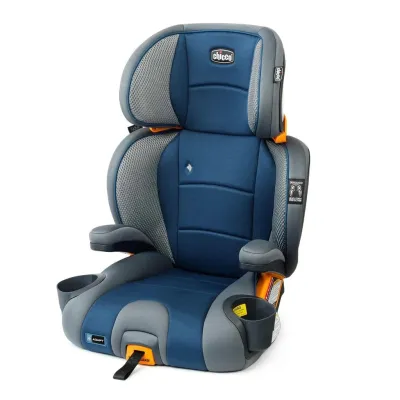
Parents navigating Singapore’s roads often ask if the chicco boost seat is fully compliant with local traffic laws and safety standards. The short answer is yes, but with a critical caveat: legal compliance and safety depend entirely on the specific model of your Chicco booster seat and the physical certification labels it carries, rather than the brand name alone.
Under Singapore’s Land Transport Authority (LTA) regulations, any passenger under 1.35 meters in height must be secured using an approved child restraint system (CRS) or booster seat appropriate for their height and weight. Genuine Chicco booster seats sold through authorized local distributors in Singapore are designed to meet rigorous international standards, such as the United Nations Economic Commission for Europe (UN ECE) regulations. However, because parents sometimes purchase gear online or import it from overseas, you must physically verify the safety label on your specific unit to ensure it is legally compliant before hit the road.
Understanding Singapore's Car Seat Laws and Safety Standards
To understand why a certified child restraint is mandatory, one must look at Singapore’s strict road safety framework. The Land Transport Authority (LTA) mandates that all passengers in a motor vehicle who are under 1.35 meters in height must be properly secured in an approved child restraint system or booster seat. This rule applies regardless of the child’s age. For example, a tall seven-year-old who has already crossed the 1.35-meter mark may legally use the standard vehicle seat belt, whereas a shorter nine-year-old who is still under 1.35 meters must continue using a booster seat.
Products mentioned in this guide
![[SG] Foldable Child Safety Car Booster Seat Compact Travel Portable Baby Seat Blue Pink For 3-13 yrs](https://img.lazcdn.com/g/p/64b57362b4b2ceb65045c329016802cd.jpg_400x400q80.jpg_.webp)
Prices are valid at publication and may change. Please refer to the product page for the latest price.
Singapore does not establish its own unique manufacturing standards for car seats; instead, the LTA recognizes several major international safety certifications. The most common standards you will encounter on a compliant chicco boost seat are the European UN ECE R44/04 and the newer, more stringent UN ECE R129 (commonly known as i-Size). Additionally, the United States Federal Motor Vehicle Safety Standard 213 (FMVSS 213) is legally accepted. These standards guarantee that the seat has undergone rigorous crash-testing, including frontal and, in the case of R129, side-impact testing.
Using a non-compliant, uncertified, or expired booster seat carries severe legal and physical consequences. Under the Road Traffic Act, drivers who fail to secure young passengers properly face a fine of up to S$1,000, imprisonment for up to three months, or both, alongside demerit points. Beyond the legal penalties, the physical risks are catastrophic. Adult seat belts are designed for mature adult skeletons; on a small child, an improperly positioned belt can cause severe internal organ damage, neck injuries, or seat belt syndrome during a sudden stop or collision.
Transitioning your child from a harnessed forward-facing car seat to a belt-positioning booster seat must be handled with care. Many parents rush this transition as soon as their child reaches a certain age, but physical development is the only safe metric. A child is ready for a booster seat only when they have outgrown the maximum height or weight limit of their forward-facing harnessed seat, can sit properly without slouching or playing with the seat belt for the entire journey, and meet the minimum weight and height thresholds specified by the booster seat manufacturer.
How to Check Your Chicco Boost Seat for Legal Certification
Verifying the compliance of your chicco boost seat requires a hands-on inspection of the physical product. Every legally compliant booster seat must have an official safety certification label permanently affixed to its body. This is typically a bright orange or white sticker located on the underside, side, or back of the plastic shell. If this label is missing, defaced, or entirely in a language you cannot verify, the seat cannot be guaranteed as legally compliant or safe for use on Singapore’s roads.

When inspecting the orange UN ECE label, look for several key pieces of information that confirm its legitimacy. First, check for the standard number, which should read either “ECE R44/04” or “R129”. Second, look for the word “Universal,” “Semi-Universal,” or “Specific Vehicle,” which indicates compatibility with different car models. Third, identify the weight or height range for which the seat is approved (for example, 15–36 kg for older R44 booster seats, or a specific height range like 100–150 cm for R129 seats). Finally, look for the “E” mark inside a circle, accompanied by a number (such as E1 for Germany or E4 for the Netherlands), which represents the country that granted the safety approval.
To guarantee that your booster seat meets these criteria, it is highly recommended to purchase directly from authorized local retailers or official brand stores in Singapore. While online marketplaces and third-party sellers may offer lower prices, they frequently source products from grey markets or regions with different safety standards. Worse, unauthorized channels increase the risk of purchasing counterfeit goods that look identical to genuine Chicco products but lack the internal structural reinforcement needed to survive a crash. Official distributors also ensure that you receive a product that has not been subject to active safety recalls.
If you are considering a second-hand or handed-down Chicco booster seat, you must execute a strict safety audit before allowing your child to sit in it. First, verify that the certification label is fully legible and intact. Second, locate the manufacturing date stamp, which is often molded directly into the plastic shell as a clock-like dial or printed on a white tracking label. Most manufacturers, including Chicco, recommend retiring car seats after six to ten years from the date of manufacture due to the natural degradation of plastic and foam over time under heat. Finally, you must have absolute, verifiable certainty that the seat has never been involved in a vehicle collision. Even a minor fender bender can cause microscopic stress fractures in the plastic frame that compromise its ability to protect a child in a future accident.
Safety Boundaries and Correct Installation Practices
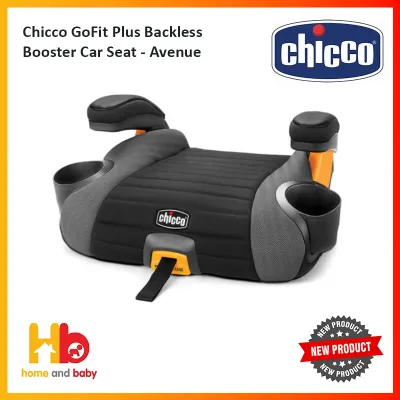
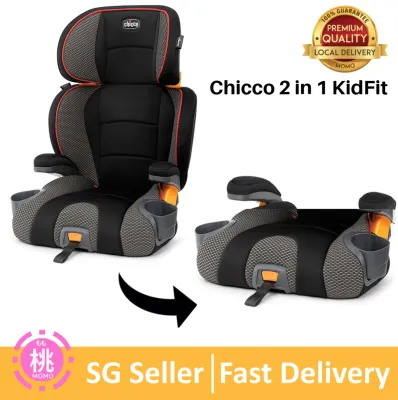
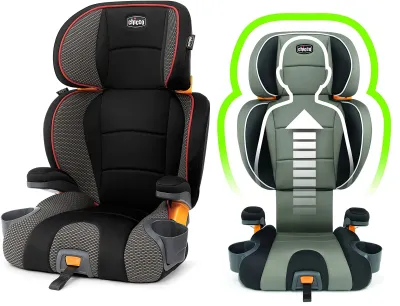
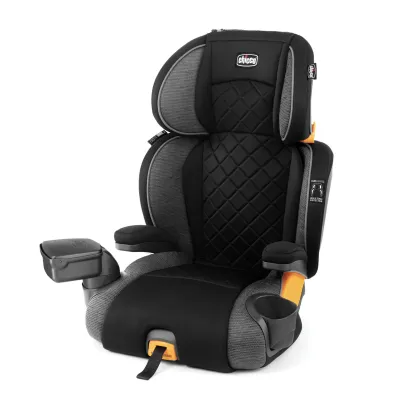
Choosing between a backless booster and a high-back booster is a critical safety decision that goes beyond simple convenience. High-back booster seats are highly recommended because they provide essential side-impact protection, keep the vehicle’s shoulder belt positioned correctly across the collarbone, and offer lateral head support if the child falls asleep. Backless booster seats, while more compact and easier to transfer between vehicles, offer no side-impact protection and rely entirely on the vehicle’s built-in side curtain airbags and headrests. For younger or smaller children transitioning into the booster stage, a high-back model is always the safer choice.
Correct installation is paramount; even the most expensive, certified booster seat will fail to protect your child if it is installed incorrectly. When setting up your booster seat, always consult both the booster seat’s manual and your vehicle’s owner manual. The vehicle’s three-point seat belt must be routed precisely through the designated color-coded guides—usually marked in red or green. The lap belt must sit low across the child’s strong pelvic bones, never riding up onto the soft abdomen, while the shoulder belt must cross the middle of the shoulder and chest, never resting against the neck or slipping off the shoulder. If your Chicco model features ISOFIX connectors, use them to anchor the booster seat to the vehicle chassis, which prevents the seat from shifting when unoccupied.
Parents must also recognize the natural boundaries and stopping conditions for booster seat use. A child should only stop using a booster seat when they can pass the “five-step test” without it: their back sits flat against the vehicle seat back, their knees bend comfortably over the edge of the seat cushion, the lap belt rests low across the hips, the shoulder belt rests across the center of the shoulder, and they can maintain this position for the entire ride. In Singapore, once a child reaches 1.35 meters in height, they are legally permitted to use the vehicle’s standard seat belt, but continuing to use a booster until they reach 1.50 meters often provides a much safer belt fit.
Avoid common, dangerous mistakes that can compromise your child’s safety during daily travel. Never route the shoulder belt under the child’s arm or behind their back, as this leaves the upper body completely unrestrained during a crash. Additionally, never place a booster seat in the front passenger seat of a vehicle unless the front airbag is fully deactivated. If an airbag deploys against a child in a booster seat, the force of the inflation can cause severe head and neck trauma. The rear seat remains the safest location for any child under the age of twelve.
Frequently Asked Questions (FAQ)
Can I use a Chicco booster seat purchased overseas in Singapore?
Yes, overseas purchases are legally permissible in Singapore provided the seat carries an LTA-recognized international safety standard label, such as ECE R44/04, ECE R129, or FMVSS 213. However, you must carefully check for international safety recalls that might affect specific batches sold in other regions. Additionally, ensure the original English instruction manual is available so you can verify correct installation and usage guidelines.
Does my child need a high-back or backless Chicco booster?
High-back booster seats are generally recommended for younger or smaller children transitioning into the booster stage because they offer crucial side-impact protection and head support. Backless models are more compact and may be suitable for older, taller children who meet the weight and height requirements of the seat, can sit properly without slouching, and whose heads are already supported by the vehicle’s built-in headrests.

Community discussion
Share your experience or ask a question. Comments are reviewed before publication.