
Determining whether a Bebelock booster seat is compliant with Singapore car seat regulations requires verifying its specific certification labels and ensuring it matches your child’s physical measurements. In Singapore, child passenger safety is strictly regulated based on height rather than age alone. For any booster seat to be legally used on public roads, it must carry a recognized international safety certification mark and be appropriate for the child’s current height and weight. Parents must physically inspect their specific Bebelock model to confirm it meets these legal baselines before installation.
While Bebelock is a recognized brand producing various children’s products, compliance is never universal across an entire brand name. Different product lines, import batches, or specific models may target different global markets with varying safety standards. To ensure your child is riding legally and safely, you must cross-reference the physical labels on your booster seat with the approved standards recognized by Singapore’s Land Transport Authority (LTA).
Understanding Singapore's Child Car Seat Laws
Singapore’s Road Traffic Act mandates strict guidelines for child passengers to minimize the risk of injury during travel. Under current Land Transport Authority (LTA) regulations, any passenger under 1.35 meters in height must be secured using an approved child restraint system appropriate for their height and weight. This rule applies to all private vehicles on Singapore roads. Failing to secure a child properly is a legal offense that carries composition fines and demerit points for the driver, highlighting the legal responsibility placed on caregivers.
Products mentioned in this guide
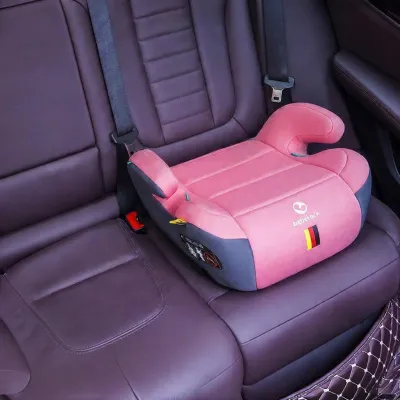
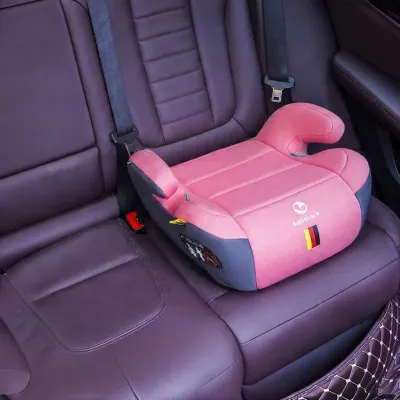
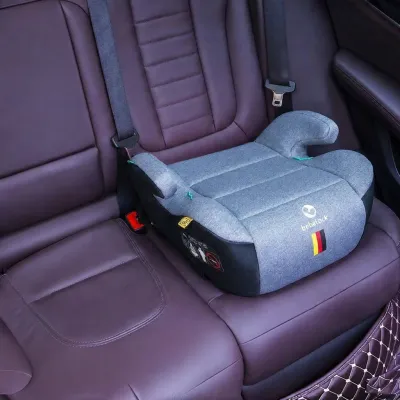
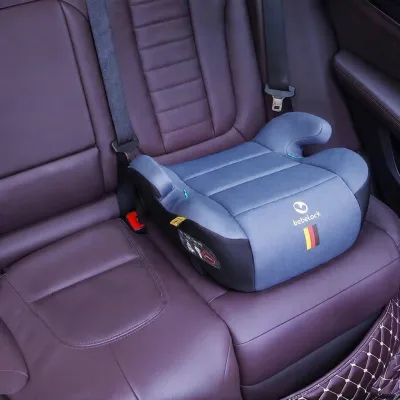
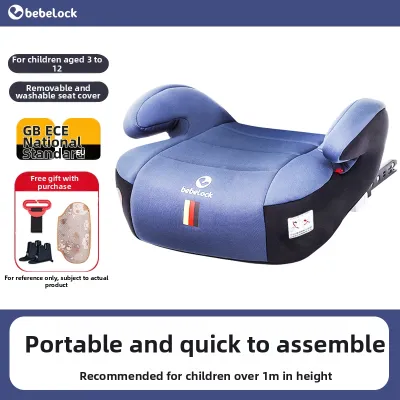
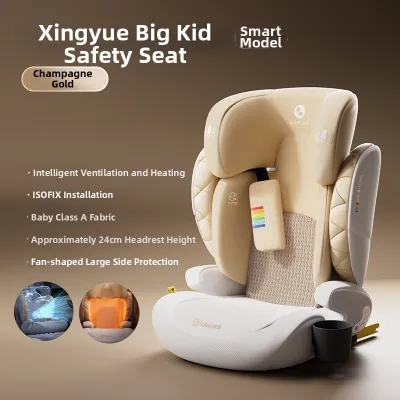
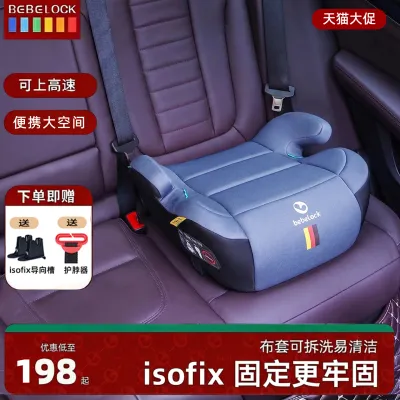
Prices are valid at publication and may change. Please refer to the product page for the latest price.
The height threshold of 1.35 meters is chosen because standard adult seatbelts are designed to secure bodies of at least this height. When a shorter child uses an adult seatbelt without a booster, the belt typically rides up across the neck and abdomen, which can cause severe internal injuries in a collision. A booster seat raises the child so that the vehicle’s lap and shoulder belts align correctly over the strong bones of the pelvis and collarbone.
To be considered “approved” under Singapore law, a child restraint must meet recognized international safety standards. The LTA typically recognizes standards such as the European Union’s ECE R44/04 and ECE R129 (commonly known as i-Size), the American Federal Motor Vehicle Safety Standard (FMVSS 213), British Standards (BS), or Japanese Standards (JIS). Because Singapore does not have its own separate manufacturing standard for car seats, it relies entirely on these rigorous international frameworks to guarantee crashworthiness.
Drivers must also note that taxis are exempt from this rule under specific conditions, allowing children to travel without a booster in the rear seat of a licensed taxi. However, this exemption does not extend to private hire vehicles, such as those booked via ride-hailing mobile applications. When traveling in private hire cars, children under 1.35 meters must use a compliant booster seat or restraint, making a portable and compliant booster seat an essential tool for families navigating Singapore without a personal car.
How to Verify Bebelock Booster Compliance
To verify if your specific Bebelock booster seat is compliant with Singapore regulations, your first step is to locate the physical certification label on the product. This label is typically a high-visibility sticker affixed to the back, bottom, or side of the booster shell. For European-certified seats, which are the most common in Singapore, look for an orange label containing an “E” mark (an uppercase ‘E’ inside a circle) followed by a number that indicates the country that granted approval. The label must also display the standard version, such as ECE R44/04 or ECE R129.

If you are inspecting a Bebelock booster and cannot find this orange sticker or an equivalent international certification mark, the seat cannot be verified as legally compliant on Singapore roads. Some products sold online through global ecommerce platforms may be designed as simple cushions or comfort aids rather than crash-tested safety restraints. Without a certified label, a booster seat is legally considered an unapproved restraint, and using it could result in penalties during traffic checks.
In addition to the physical label, you should thoroughly review the manufacturer’s manual and official packaging. The documentation should explicitly state the height and weight limits for which the booster has been tested and approved. For instance, a booster certified under ECE R44/04 will specify a weight group, such as Group 2/3 (typically 15 to 36 kilograms). Ensure that your child’s current weight and height fall squarely within these specified ranges, as using a seat outside its tested limits invalidates its safety performance.
If the certification label on your Bebelock booster is missing, faded, or partially torn, you must take proactive steps to verify its status before using it. Do not assume compliance based on online product descriptions, as specifications can change between production batches. Contact the authorized retailer in Singapore or reach out directly to the manufacturer’s customer support. Provide them with the model number, batch number, and date of manufacture—usually stamped into the plastic shell of the seat—to request a copy of the compliance certificate.
Essential Safety Checks Before Every Journey
Even a fully certified Bebelock booster seat cannot protect a child if it is installed or used incorrectly. Before every journey, caregivers must perform a quick physical check of the seat’s positioning. The booster must sit completely flat and flush against the vehicle’s seat back. If the vehicle’s headrest pushes the booster forward or creates a gap behind it, adjust or temporarily remove the vehicle headrest (storing it safely) so the booster can make full contact with the seat back.
Correct seatbelt routing is the most critical factor in booster seat safety. The vehicle’s three-point seatbelt must be threaded precisely through the booster’s designated belt guides. The lap belt portion must sit low across the child’s hips and upper thighs, never riding up onto the soft tissue of the abdomen. The shoulder belt must pass through the shoulder guide (if present on a high-back model) and rest comfortably across the center of the child’s shoulder and chest, away from the neck and face.
Singapore’s hot and humid tropical climate can accelerate the aging of plastics and fabrics, especially if the vehicle is frequently parked in direct sunlight. Regularly inspect the booster seat for signs of material degradation. Look for hairline cracks in the plastic shell, crumbling foam padding, or frayed webbing on any integrated straps. If the booster has been stored in a hot car trunk or exposed to intense UV rays for extended periods, the structural integrity of the plastic may be compromised, requiring replacement.
Finally, ensure that the booster is secured even when your child is not riding in the car. An unsecured booster seat can become a dangerous projectile inside the cabin during a sudden brake or collision, potentially injuring the driver or other passengers. Secure the empty booster using the vehicle’s seatbelt or its integrated ISOFIX connectors, if equipped, before starting your drive.
When to Stop Using the Booster Seat
Transitioning your child out of a booster seat is a milestone governed by both Singapore law and physical development. Legally, a child in Singapore is permitted to use a standard adult seatbelt without any booster once they reach a height of 1.35 meters. However, height is not the sole indicator of safety. Children develop at different rates, and their skeletal maturity and sitting posture also dictate when it is truly safe to transition.
Before removing the booster, check the manufacturer-specific limits printed on your Bebelock booster’s label. Some high-back boosters have maximum height limits that are lower than 1.35 meters, while others may accommodate children up to a certain weight. If your child exceeds the maximum weight or height limit specified by the manufacturer, you must stop using that specific booster immediately, even if they have not yet reached the legal 1.35-meter threshold. In such cases, you must transition them to a larger booster seat that accommodates their size.
To determine if your child can safely ride using only the vehicle’s adult seatbelt, perform the five-step seatbelt fit test. First, have the child sit all the way back against the vehicle seat. Their knees must bend comfortably over the edge of the seat cushion without slouching. Second, the lap belt must rest low across the hips, touching the upper thighs. Third, the shoulder belt must cross the middle of the shoulder and chest, not the neck. Fourth, the child must be mature enough to maintain this correct sitting position for the entire duration of the journey. If they fail any of these steps, they still require a booster seat.
Frequently Asked Questions (FAQ)
Can I use a second-hand Bebelock booster seat?
Using a second-hand Bebelock booster seat is generally not recommended unless you can verify its complete history. A booster seat that has been involved in a collision, even a minor one at low speeds, may have sustained internal structural damage that is invisible to the naked eye. This hidden damage can cause the seat to fail in a subsequent accident. Additionally, older second-hand seats may have degraded materials due to Singapore’s humid climate, missing instruction manuals, or outdated safety certifications that no longer comply with current LTA regulations.
If you must use a pre-owned booster, ensure it comes from a trusted source, such as a close family member, who can guarantee it has never been in an accident. Check that all original labels, including the safety certification sticker, are fully intact and legible. Inspect the plastic shell thoroughly for stress marks or hairline cracks, and verify that the model has not been subject to any manufacturer recalls. If the seat is older than the manufacturer’s recommended lifespan (typically five to ten years from the date of manufacture), it should be safely discarded.
Are backless boosters legal in Singapore?
Yes, backless booster seats are legal in Singapore, provided they carry an approved international safety certification label, such as ECE R44/04. Backless boosters are popular among local parents due to their lightweight design and portability, making them convenient for use in taxis and private hire vehicles. However, they must only be used for children who meet the minimum weight and height requirements specified by the manufacturer, which typically start around 15 kilograms or 22 kilograms depending on the specific certification group.
While legally compliant, backless boosters offer less protection than high-back boosters. High-back models provide crucial side-impact protection, shielding the child’s head, neck, and torso in a lateral collision. They also feature built-in shoulder belt guides that position the vehicle’s seatbelt more accurately across the child’s chest. For daily travel in a personal vehicle, a high-back booster is highly recommended, while a certified backless booster remains a practical, legally compliant option for occasional travel, carpooling, or ride-hailing trips.

Community discussion
Share your experience or ask a question. Comments are reviewed before publication.