
Preparing a newborn’s nursery and washing their tiny garments is a milestone many parents cherish. During this preparation, the question of how to keep those miniature outfits soft and comfortable against delicate skin inevitably arises. While standard household fabric softeners are generally discouraged for infant clothing, baby-specific brands like Pigeon offer formulations designed with younger skin in mind. Determining whether Pigeon fabric softener is safe for your newborn requires looking beyond the brand name to evaluate specific ingredients, understand your baby’s unique skin barrier, and follow careful usage protocols.
Understanding Newborn Skin Sensitivity and Laundry Residue
A newborn baby’s skin is structurally different from adult skin. During the first few months of life, the outer layer of the skin, known as the stratum corneum, is up to thirty percent thinner than that of an adult. This developmental stage means the skin barrier is highly permeable, making it far more susceptible to absorbing external substances and reacting to environmental triggers. Because a newborn’s skin is still adapting to life outside the womb, it lacks the robust protective lipids and moisture-retaining capabilities that develop later in childhood.
When clothes are washed, standard laundry detergents and fabric softeners often leave behind a microscopic layer of chemical residue on the fabric fibers. This residue is designed to coat the threads, making them feel smooth to the touch and imparting a lingering fragrance. While adults rarely notice this thin chemical film, a newborn’s highly sensitive skin can experience friction and irritation from constant contact with these coated fibers. In warm or humid climates, sweat can dissolve these residues, allowing them to penetrate the delicate skin barrier more easily and potentially trigger contact dermatitis.
Products mentioned in this guide
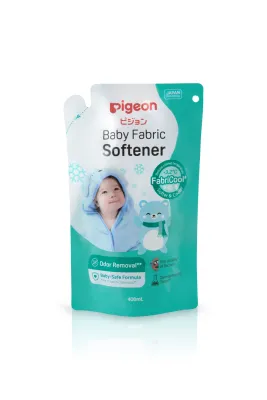
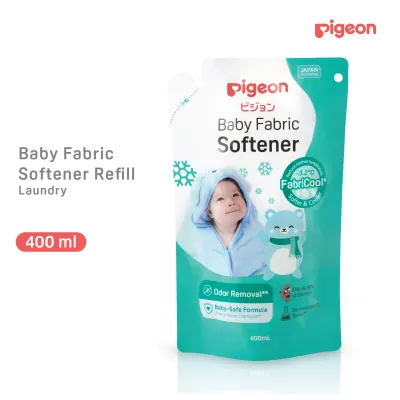
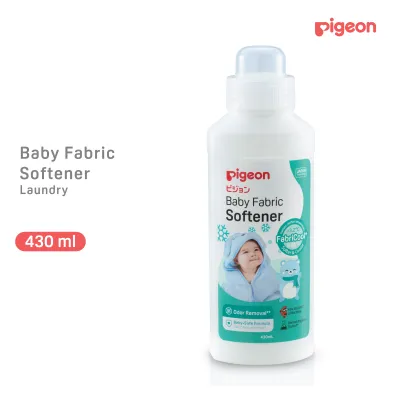
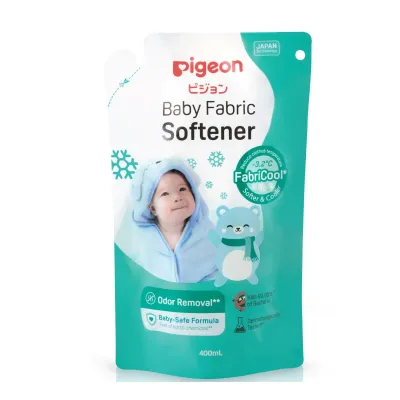
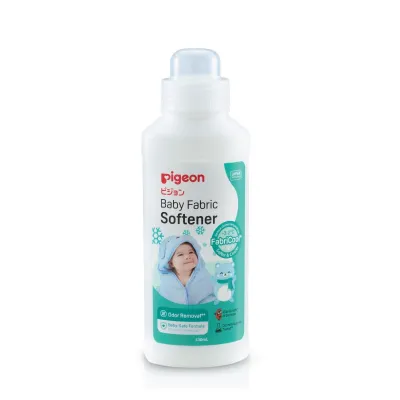
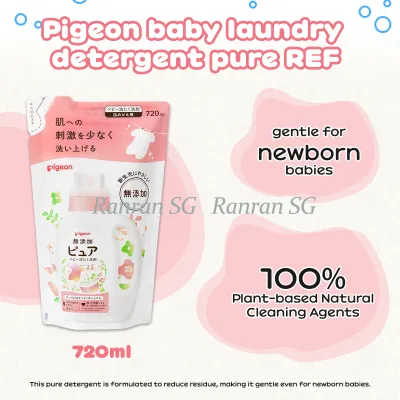
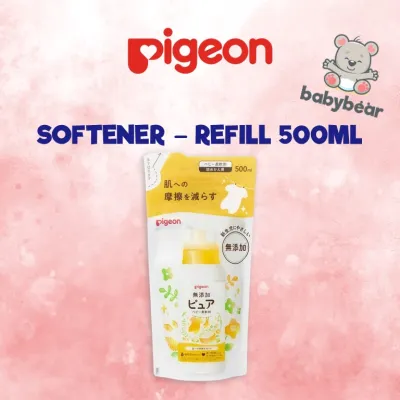
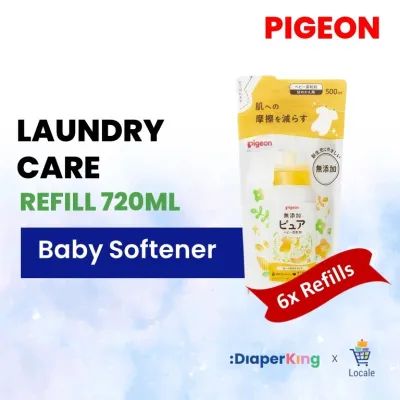
Prices are valid at publication and may change. Please refer to the product page for the latest price.
Standard adult laundry products frequently contain heavy synthetic perfumes, optical brighteners, and strong surfactants that are far too harsh for an infant. Baby-specific laundry products are formulated to minimize these aggressive chemicals, but they are not entirely free of active ingredients. Understanding how these formulations interact with your baby’s skin is the first step in establishing a safe, comfortable laundry routine that protects your little one from unnecessary skin flare-ups.
How to Evaluate Pigeon Fabric Softener Labels and Ingredients
Before introducing any new laundry additive to your newborn’s wash cycle, it is essential to carefully inspect the product packaging. When examining a bottle of Pigeon fabric softener, look for specific safety designations such as “hypoallergenic” or “dermatologically tested.” While these terms indicate that the manufacturer has formulated the product to reduce the likelihood of allergic reactions, parents should remember that these labels are not absolute guarantees of safety. Every baby’s skin is unique, and a product that is perfectly gentle for one infant may still cause mild irritation for another.

Always check the manufacturer’s stated age recommendations and intended use cases printed on the back of the bottle. Some baby fabric softeners are formulated specifically for infants from birth, while others may be intended for older babies whose skin barriers are slightly more mature. If the packaging does not explicitly state that the product is suitable for newborns, it is safest to delay its use until your baby is older, or consult the manufacturer’s official guidelines for clarification.
Next, turn your attention to the ingredient list to identify potential irritants. Parents should look for formulations that are free from synthetic dyes, optical brighteners, and parabens. If the product contains fragrance, check whether it is derived from mild, food-grade ingredients or if it uses strong synthetic perfumes. If the full ingredient list is not printed on the physical bottle, you can typically find detailed product specifications on the manufacturer’s official website or by contacting their local customer support team. Taking the time to verify these details ensures you are making an informed decision based on the specific bottle in your hands.
Safe Usage Steps and Precautions for Baby Laundry
If you decide to use Pigeon fabric softener, establishing a careful and controlled laundry routine is vital to minimizing any potential risks. The most important rule is to strictly adhere to the manufacturer’s recommended dosage instructions. Using more softener than recommended does not make clothes safer or softer; instead, it leads to a heavy chemical buildup within the fabric fibers that is incredibly difficult to rinse out. Always use the provided measuring cap to ensure you are dispensing the correct amount for your specific load size.
Your washing machine’s rinse cycle plays a crucial role in removing excess product from your baby’s clothes. When washing newborn garments, consider selecting an “extra rinse” or “deep rinse” setting on your washing machine. This additional cycle helps flush out any lingering detergent and softener residues, ensuring that only the cleanest, most neutral fabric comes into contact with your baby’s skin. If you notice a slimy or overly coated feel on the wet clothes when transferring them to the dryer or clothesline, it is a clear sign that the dosage was too high or the rinse cycle was insufficient.
Before washing an entire wardrobe with a new fabric softener, perform a localized patch test. Choose a single, non-essential item of clothing, such as a small baby blanket or a basic bodysuit, and wash it using your standard baby detergent and a small amount of the fabric softener. Once dry, dress your baby in the garment or wrap them in the blanket for a few hours. Closely monitor the skin areas in direct contact with the fabric for any signs of redness, warmth, or irritation before deciding to use the product on all of their laundry.
Additionally, never use fabric softener on children’s sleepwear that has been treated with flame-resistant chemicals. Fabric softeners coat the fibers of these garments with a thin, waxy layer that can significantly reduce their flame-resistant properties, compromising a vital safety feature. Always read the care labels on your baby’s pajamas and sleep sacks to verify if fabric softeners are explicitly prohibited by the garment manufacturer.
Spotting Skin Irritation and When to Stop Using Softener
Even when using products formulated specifically for infants, parents must remain vigilant for signs of skin irritation. Contact dermatitis or mild allergic reactions can manifest in several ways on a newborn’s delicate skin. Look for localized redness, small raised bumps, dry or flaky patches, or mild swelling, particularly in areas where clothing fits snugly or rubs against the skin, such as the neck, wrists, thighs, and diaper line. Behavioral changes, such as unexplained fussiness, restlessness, or a baby attempting to rub their skin against blankets, can also indicate discomfort caused by irritated skin.
If you suspect your baby is reacting to a laundry additive, take immediate action to eliminate the source of irritation. Stop using the fabric softener immediately and isolate the affected clothing. You should rewash all of your baby’s recently laundered clothes, bedding, and blankets in plain, warm water or with a fragrance-free, sensitive-skin detergent to strip away any residual softener. Avoid applying heavy lotions or creams over the irritated areas unless specifically advised by a medical professional, as some topical products can trap residues and worsen the reaction.
While many mild skin reactions resolve quickly once the offending product is removed, some situations require professional medical guidance. You should pause home care and consult a pediatrician or qualified healthcare professional if the redness spreads, if the skin develops blisters, oozing, or crusting, or if your baby develops a fever. Additionally, if the skin irritation does not show noticeable improvement within two to three days of stopping the softener, a professional evaluation is necessary to rule out other underlying skin conditions or allergies.
Gentle Alternatives to Keep Baby Clothes Soft
For parents who prefer to avoid commercial fabric softeners entirely during the newborn stage, several gentle, chemical-free alternatives can help keep baby clothes soft and comfortable. One of the most effective physical tools is the use of 100% wool dryer balls in your clothes dryer. As these balls tumble alongside the laundry, they gently separate the garments, allowing warm air to circulate more efficiently. This physical action naturally softens the fabric fibers and reduces static cling without leaving any chemical residue behind.
Another popular household alternative is adding a small amount of distilled white vinegar to your washing machine’s fabric softener compartment during the final rinse cycle. Vinegar acts as a natural fabric softener by breaking down mineral deposits from hard water and stripping away stubborn detergent residues that make clothes feel stiff. Because vinegar is highly acidic, always consult your washing machine’s user manual first to ensure that using vinegar is compatible with your specific appliance’s seals and components. The mild vinegar scent dissipates completely as the clothes dry, leaving them fresh and soft.
Finally, the choice of fabric itself plays a significant role in how soft garments remain over time. When shopping for your newborn, prioritize naturally soft, breathable, and high-quality fabrics such as organic cotton, bamboo, or modal. These natural fibers are inherently gentler on sensitive skin and tend to maintain their softness through multiple wash cycles without requiring chemical softening agents. Investing in high-quality, natural fabrics can reduce the need for laundry additives altogether, simplifying your routine and protecting your baby’s skin.
Frequently Asked Questions (FAQ)
Can I use Pigeon fabric softener on cloth diapers?
Fabric softeners should generally be avoided when washing cloth diapers and reusable inserts. The active ingredients in softeners work by coating fabric fibers with a thin, water-repellent layer to make them feel smooth. When applied to cloth diapers, this coating severely compromises the fabric’s moisture-wicking and absorbent properties, causing liquids to run off rather than be absorbed. This can lead to frequent leaks and trap moisture against your baby’s skin, increasing the risk of diaper rash. Always follow the specific care instructions provided by your cloth diaper manufacturer.
At what age can I transition to regular family fabric softener?
A child’s skin barrier typically matures and becomes more resilient around twelve months of age. However, because every child’s skin sensitivity varies, there is no universal age for transitioning to standard family laundry products. When you decide to make the switch, do so gradually. Wash a few non-essential items of clothing with the family detergent and softener first, and have your child wear them for a few days while you monitor their skin for any signs of redness or irritation. If no reaction occurs, you can slowly transition the rest of their wardrobe.
Does Pigeon softener leave a strong scent on baby clothes?
Pigeon offers both scented and fragrance-free laundry products to accommodate different parental preferences and infant sensitivities. The intensity of any lingering scent depends on several factors, including the specific product variant you choose, your local water hardness, and the dosage used. If you find the scent of a particular variant too strong, you can reduce the amount of product used, select an extra rinse cycle on your washing machine, or switch to a completely fragrance-free version to minimize the risk of respiratory or skin irritation.

Community discussion
Share your experience or ask a question. Comments are reviewed before publication.