
Determining whether Kodomo Nature Care baby detergent is safe for your newborn with eczema or sensitive skin requires looking beyond the front label. While this formula is widely recognized for its plant-derived ingredients and gentle marketing, no single laundry product is universally safe for every infant. This is especially true for newborns, whose skin barriers are still developing, and for babies diagnosed with atopic dermatitis.
In warm, humid climates, sweat and friction can quickly exacerbate newborn skin issues like heat rash and eczema. Because clothing sits directly against your baby’s skin all day and night, any residual detergent trapped within the fabric fibers can act as a continuous trigger for contact irritation. To make an informed decision, caregivers must evaluate the specific ingredient profile of the detergent, understand the limits of packaging claims, and implement meticulous washing and rinsing routines.
Evaluating the suitability of any baby detergent involves a careful balance of stain-removing efficacy and skin safety. By learning what to look for on the ingredient list and how to monitor your baby’s skin, you can minimize the risk of painful flare-ups and keep your little one comfortable.
Products mentioned in this guide
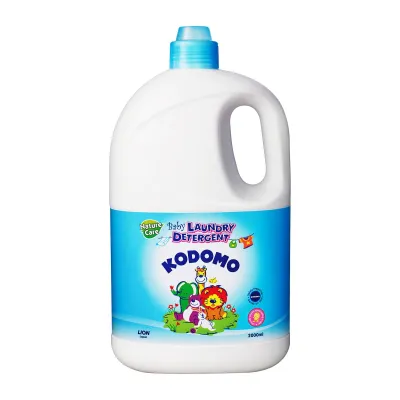
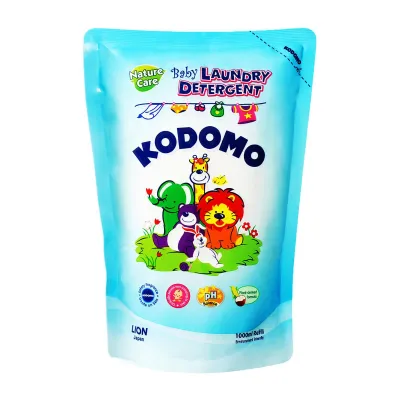
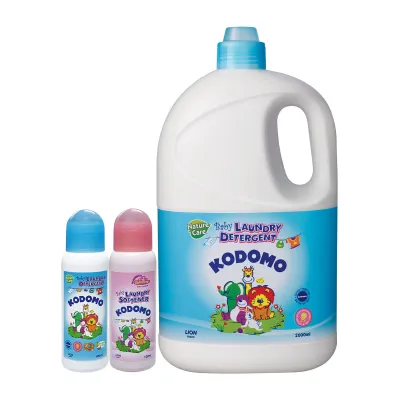
Prices are valid at publication and may change. Please refer to the product page for the latest price.
Evaluating the Ingredient Profile for Sensitive Skin
To assess whether Kodomo Nature Care is appropriate for your baby, you must first examine its active cleaning agents. This formula utilizes plant-derived surfactants, which are generally sourced from coconut or palm oils. While these plant-based surfactants are typically milder than petroleum-derived alternatives, it is a common misconception that “natural” equates to completely allergen-free. Some infants can still develop localized sensitivities to plant derivatives, making initial caution necessary.
Caregivers should carefully inspect the packaging to confirm the absence of artificial dyes and optical brighteners. Optical brighteners are chemical compounds designed to remain in the fabric fibers after washing to reflect light and make clothes appear brighter. While visually appealing, these lingering chemicals can cause physical friction and chemical irritation when they rub against a newborn’s delicate, thin skin barrier.
Fragrance is another critical factor to analyze on the ingredient label. Even mild, pleasant scents can contain complex mixtures of synthetic chemicals or essential oils that trigger eczema flare-ups. If the specific bottle of Kodomo Nature Care you are evaluating lists “parfum” or “fragrance,” you must proceed with caution, as fragrance is one of the most common culprits behind contact dermatitis in infants.
Finally, consider the role of preservatives and enzymes in the liquid. Preservatives are essential in liquid detergents to prevent the growth of harmful bacteria and mold in the bottle. However, certain preservative systems are highly sensitizing to compromised skin. Enzymes, which are highly effective at breaking down stubborn milk, spit-up, and diaper stains, can also remain active in fabric fibers if not rinsed thoroughly, potentially irritating sensitive skin.
Understanding Safety Labels and Dermatological Claims
When shopping for baby laundry products, caregivers are often confronted with prominent marketing terms such as “Dermatologically Tested” and “Hypoallergenic.” It is important to understand that these terms are not tightly regulated medical classifications. “Dermatologically Tested” simply means the product was tested on human skin under the supervision of a dermatologist, but it does not guarantee that the test subjects had eczema or that the product is entirely reaction-free.

Similarly, “Hypoallergenic” indicates that the formula has been designed to minimize the likelihood of an allergic reaction by excluding common irritants. However, because every baby’s skin microbiome and genetic makeup are unique, a product labeled hypoallergenic can still cause a reaction in a highly sensitive child. These labels should be viewed as a helpful starting point rather than an absolute guarantee of safety.
When evaluating these claims, look for specific details on the packaging regarding whether the formula was tested on sensitive skin or newborn skin specifically. Tests conducted on healthy adult skin do not accurately reflect how a product will behave on a newborn’s skin, which is up to 30% thinner and absorbs topical substances much more rapidly.
For babies with active eczema, the skin barrier is structurally compromised, allowing external irritants to penetrate deeply and trigger inflammatory responses. Because of this, clinical or dermatological claims on a bottle cannot replace personal observation. Caregivers must remain vigilant and rely on systematic home testing and careful monitoring rather than relying solely on packaging badges.
Best Practices for Washing Newborn and Eczema-Prone Clothes
How you wash your baby’s clothes is just as important as the detergent you choose. Even the gentlest formula can cause skin irritation if it is not used correctly or if soap residue is allowed to build up in the fabric. To prevent this, always measure the detergent strictly according to the manufacturer’s dosage instructions, taking care never to overpour.
In high-rise apartments or homes where indoor drying is common due to humid weather, overusing detergent can lead to a double hazard. Excess detergent is difficult to rinse out, and when clothes are dried slowly indoors, the trapped moisture and soap residue can create a breeding ground for musty odors and skin-irritating bacteria. Using the minimum effective dose of detergent helps ensure a clean rinse.
Always select an extra rinse cycle on your washing machine when laundering newborn clothing, bedding, and washcloths. This additional cycle helps flush out any lingering surfactant molecules that may have clung to the fabric fibers during the main wash. If your washing machine has a dedicated “baby care” or sensitive skin cycle, utilize it, as these programs typically feature extended rinsing phases.
Pay close attention to water temperature guidelines on your baby’s garment care labels. Whenever permissible, wash heavily soiled items in warm water (around 30°C to 40°C). Warm water is highly effective at fully dissolving liquid detergents and breaking down oils, reducing the likelihood of soapy patches remaining on the fabric after the cycle completes.
Avoid overloading your washing machine. When the drum is packed too tightly, clothes cannot move freely, which severely limits the machine’s ability to rinse away dissolved dirt and detergent. Ensuring your laundry loads are moderately sized allows water to circulate thoroughly through every garment, leaving fabrics clean, soft, and free of chemical residues.
Monitoring for Skin Reactions and When to Stop
When introducing Kodomo Nature Care or any new laundry detergent to your household, it is crucial to establish a systematic monitoring routine. Allergic contact dermatitis and eczema flare-ups do not always appear immediately. They can develop gradually over several days of repeated contact with washed fabrics, making daily skin checks essential.
Look for early signs of skin irritation, which typically present as localized redness, dry or rough patches, small raised bumps, or dry scaling. Pay close attention to areas where clothing fits tightly or rubs against the body, such as the collar line, cuffs, waistband, and the folds of the elbows, knees, and thighs. If your baby begins scratching or showing signs of unexplained restlessness, inspect these areas immediately.
To minimize risk, implement a transition period before washing your baby’s entire wardrobe with the new detergent. Select a few non-essential items, such as a couple of sleepsuits or cotton swaddles, and wash them separately with the new formula. Have your baby wear these items for a few days while keeping a close eye on their skin. If no reaction occurs, you can gradually transition the rest of their laundry.
If you notice any signs of redness, rash, or worsening eczema, stop using the detergent immediately. Re-wash all affected clothing and bedding in plain, warm water or a previously tolerated, safe detergent to strip away any remaining residue. Revert to your baseline laundry routine and monitor the skin closely. If the irritation does not improve within a few days, or if the skin appears cracked, weeping, or infected, consult a qualified pediatrician or pediatric dermatologist right away.
Criteria for Choosing Alternative Baby Detergents
If your baby’s skin reacts poorly to the detergent, or if you prefer to take an ultra-cautious approach from the start, you will need to evaluate alternative formulas. In cases of severe eczema, prioritize completely fragrance-free and dye-free formulations. Avoid any products that list “parfum,” “fragrance,” or essential oils, as these are primary triggers for compromised skin barriers.
Consider choosing a “non-bio” detergent, which means the formula is entirely free of enzymes. While enzymes are highly effective at removing organic stains, they can sometimes remain active in fabric fibers and cause micro-irritations on highly sensitive skin. Eliminating enzymes simplifies the chemical profile of the detergent, reducing the number of potential triggers.
Look for products with shorter, simpler ingredient lists. A detergent with fewer chemical components naturally carries a lower statistical risk of causing an adverse reaction. Avoid formulas that contain optical brighteners, chlorine bleach, or harsh synthetic preservatives like methylisothiazolinone (MIT), which are known contact allergens.
Finally, seek professional guidance if you are struggling to find a suitable option. A pediatric dermatologist or your family pediatrician can provide medically sound recommendations tailored to your baby’s specific skin condition. They can also advise you on therapeutic skincare routines, such as appropriate bathing frequencies and barrier creams, to complement your safe laundry practices.
Frequently Asked Questions (FAQ)
Can I use fabric softener with baby detergent for eczema-prone clothes?
No, you should avoid using commercial fabric softeners on clothes for babies with eczema or sensitive skin. Fabric softeners work by leaving a thin chemical film over the fabric fibers to make them feel softer. This lingering chemical coating can trap heat, sweat, and moisture against your baby’s skin, which is a major trigger for eczema flare-ups. Additionally, most fabric softeners are heavily scented with synthetic fragrances that can cause direct contact dermatitis. To keep clothes soft safely, consider using wool dryer balls in the dryer, or add a small amount of distilled white vinegar to your washing machine’s softener compartment to naturally soften fabrics and help neutralize detergent residues.
How long should I monitor my baby's skin after switching to a new detergent?
You should monitor your baby’s skin for at least one to two weeks after introducing a new laundry detergent. Allergic contact dermatitis is a delayed hypersensitivity reaction, meaning it rarely manifests immediately after the first wear. It typically takes repeated exposure over several days for the immune system to recognize a potential irritant and trigger a visible skin reaction. Keep a close eye on areas of high friction, such as the neck, wrists, and ankles, and perform daily skin checks during this transition period to catch any early signs of dryness or redness before they develop into a severe eczema flare-up.

Community discussion
Share your experience or ask a question. Comments are reviewed before publication.