
Bzu Bzu cotton buds can be safe for cleaning your baby’s ears and nose, but their safety depends entirely on choosing the correct infant-specific variant and using them strictly on the outermost surfaces. Pediatricians and medical experts strongly advise against inserting any object, including cotton swabs, into a baby’s ear canal or deep nasal passages. To protect your infant from accidental injury, you must verify the physical design of the swab, read the manufacturer’s age guidelines, and master gentle, surface-only cleaning techniques.
For parents in Singapore, managing baby hygiene in a warm, humid climate is a daily priority. Sweat, dust, and natural secretions can quickly accumulate in the delicate folds of a baby’s skin. However, because an infant’s ear canals and nasal passages are incredibly narrow and fragile, standard grooming habits do not apply. Understanding the boundaries of safe grooming is the first step in protecting your child from mucosal damage or eardrum injuries.
General Safety Rules for Infant Ear and Nose Cleaning
Medical guidelines from pediatric associations emphasize that the ear canal is a self-cleaning mechanism. Earwax, or cerumen, is naturally produced to trap dust and debris, and it gradually migrates outward to the external ear through normal jaw movements like sucking and crying. Inserting a cotton swab into the ear canal disrupts this natural process, often pushing the wax deeper and causing painful impactions. Therefore, cotton buds should only ever be used to wipe the outer ear, known as the pinna, and the skin directly behind the ear.
Products mentioned in this guide
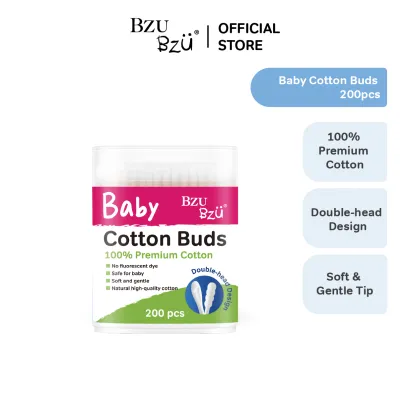
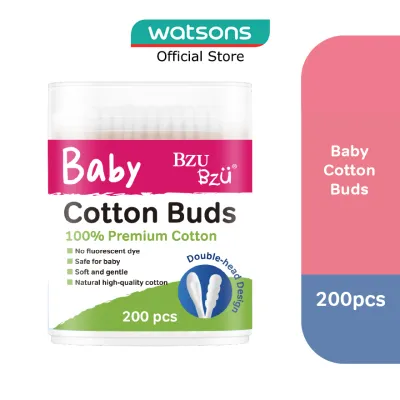
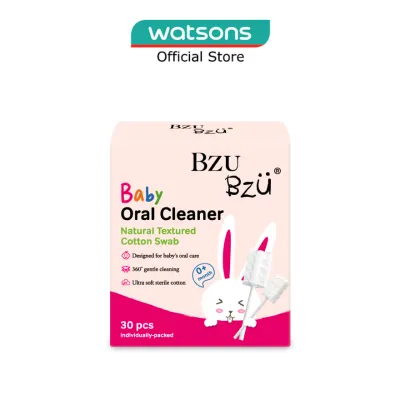


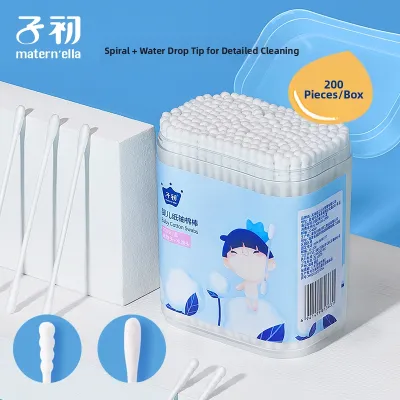
Prices are valid at publication and may change. Please refer to the product page for the latest price.
Nasal cleaning follows similarly strict safety boundaries to protect delicate tissues. The lining of a baby’s nose is highly vascularized and sensitive, meaning even slight friction can cause bleeding or swelling. Swabs must never be pushed upward into the nasal cavity to retrieve mucus. Instead, their use must be restricted entirely to the outer entrance of the nostrils, clearing only the visible discharge that has already migrated to the surface.
To minimize the risks of accidental deep insertion, specialized infant grooming tools feature distinct design elements. Many baby-safe cotton buds are engineered with a safety bulb or stopper design, which features a widened cotton barrier that physically prevents the tip from entering narrow openings. Additionally, high-quality baby swabs utilize flexible paper stems rather than rigid plastic. If a baby makes a sudden, unexpected movement during grooming, a flexible stem will bend under pressure, significantly reducing the risk of internal puncture or trauma.
How to Check If Your Bzu Bzu Cotton Buds Are Suitable
Before using any Bzu Bzu cotton buds on your infant, you must carefully inspect the product packaging for specific safety indicators. Look for clear labels that designate the product for “Baby,” “Infant,” or “Newborn” use. The packaging should explicitly state the intended use cases and list any manufacturer warnings regarding insertion depths. Avoid using any product that lacks clear age-suitability labeling or safety instructions.

Next, perform a physical inspection of the swab’s construction to evaluate its safety profile. Gently bend one of the swab sticks to test its flexibility; a safe baby swab should yield easily without snapping or remaining rigidly stiff. Examine the cotton tips to ensure they are tightly wound and securely bonded to the stem. Loose cotton fibers pose a shedding hazard, as tiny stray threads can easily become lodged in your baby’s nasal passages or ear canals, leading to irritation or localized inflammation.
Finally, verify whether the specific Bzu Bzu variant you have purchased features a safety stopper design. If the cotton tips are standard, uniform cylinders without a bulbous safety barrier, they are not suitable for cleaning near the openings of the ears or nose. Standard cylindrical swabs should be reserved strictly for external skin applications, such as applying prescribed ointments to outer skin folds, cleaning the umbilical cord area, or wiping the outer crevices of the body.
Step-by-Step Guide to Safe Ear and Nose Cleaning
To clean your baby’s ears and nose safely, you must establish a calm environment and use a controlled, gentle technique. Begin by choosing a well-lit room so you have clear visibility of the areas you are cleaning. Secure your baby’s head gently but firmly with one hand to prevent sudden jerks or turns. It is highly recommended to perform this routine after a bath, as the warm moisture naturally softens earwax and nasal secretions, making them much easier to wipe away.
To clean the outer ear, hold the cotton bud close to the tip to maintain maximum control over your movements. Gently trace the folds of the outer ear shell, wiping away any accumulated sweat, dirt, or migrated wax. Move the swab behind the ear lobe to clean the crease where moisture often traps bacteria. Under no circumstances should you direct the swab toward or into the dark opening of the ear canal.
For the nose, ensure the cotton tip is slightly damp, using a drop of sterile water or saline solution to prevent dry friction. Gently sweep the swab around the very edge of the nostril opening to collect loose, visible mucus. Keep the swab parallel to the face rather than pointing it upward into the nasal passage. If the baby begins to squirm, fuss, or resist, stop the process immediately to avoid accidental injury.
If you encounter dry, hardened mucus or deep congestion, do not attempt to scrape or pry it out with a cotton bud. Instead, utilize safer alternatives designed for deep clearance. Administering one or two drops of sterile saline solution into the nostrils can safely loosen stubborn mucus. Once the secretions are softened, a gentle manual nasal aspirator can draw the congestion out without making direct contact with the sensitive internal nasal lining.
Warning Signs and When to See a Doctor
While routine external grooming is normal, certain symptoms indicate that home cleaning is no longer safe and professional medical care is required. You should monitor your baby for signs of localized infection or blockage in the ears and nose. These red flags include any foul-smelling discharge, yellow or green fluid draining from the ear canal, visible swelling, or persistent redness around the ear or nostril openings.
Behavioral changes in your baby can also signal underlying discomfort that requires a pediatrician’s evaluation. If your infant frequently tugs or rubs at their ears, cries persistently when lying down, or shows unusual irritability during feeding, they may be experiencing ear pain or an middle ear infection. Attempting to clear deep earwax impactions or suspected foreign objects at home can push the obstruction further against the eardrum, potentially causing permanent damage.
If you suspect that a cotton swab has been inserted too deeply, or if you observe any bleeding from the nose or ear canal, seek immediate medical attention. A pediatrician has the specialized lighting, otoscopes, and gentle suction tools necessary to safely clear blockages and examine the delicate internal structures of your baby’s ears and nose without risking further injury.
Frequently Asked Questions (FAQ)
Can I use regular adult cotton buds for my baby?
No, you should never use regular adult cotton buds to clean any part of a baby’s ears or nose. Adult swabs are physically larger, lack safety stoppers to prevent deep insertion, and often feature rigid plastic stems that do not bend when a baby moves suddenly. Using adult-sized swabs significantly increases the risk of puncturing the eardrum, scratching the delicate nasal lining, or packing earwax tightly into the ear canal.
How often should I clean my baby's ears and nose?
Your baby’s ears and nose do not require daily cleaning with cotton buds. Because these organs are naturally self-cleaning, a daily bath followed by a gentle wipe with a soft, damp washcloth over the outer ear and nose is usually sufficient. Cotton buds should only be used occasionally when you observe visible buildup on the outermost surfaces, as over-cleaning can strip away protective natural oils and cause localized skin irritation.

Community discussion
Share your experience or ask a question. Comments are reviewed before publication.