
Evaluating whether a Beblum baby crib is safe requires looking beyond brand reputation to examine specific model certifications, structural design, and daily usage habits. While Beblum is a widely recognized brand among parents in Singapore, safety is not a static quality inherent to a brand name. Instead, it is a dynamic state achieved through three critical pillars: rigorous manufacturing standards, precise assembly, and strict adherence to safe sleep practices.
When you choose a crib for your nursery, you are selecting the only piece of furniture where your baby will regularly be left unsupervised for hours at a time. For this reason, safety cannot be assumed based on marketing claims or aesthetic appeal. A crib’s safety depends entirely on how well its design prevents physical hazards—such as entrapment, falls, and structural collapse—and whether its materials are free from harmful chemical substances.
This guide will walk you through the essential steps to verify safety certifications, inspect critical design features, and establish safe daily usage boundaries. By understanding what to look for and how to maintain the structural integrity of your baby’s bed, you can make an informed, safety-first decision for your family.
Products mentioned in this guide
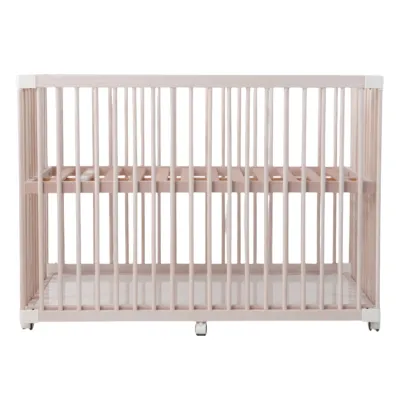
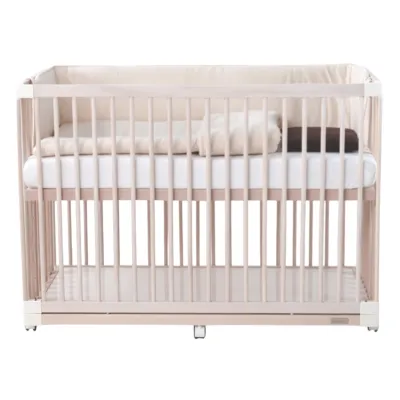
Prices are valid at publication and may change. Please refer to the product page for the latest price.
Safety Standards and Certifications You Must Verify
Infant cribs are subject to strict international safety regulations because newborns lack the motor skills to extricate themselves from hazardous positions. In Singapore, nursery furniture safety is monitored under consumer protection frameworks, but the responsibility ultimately lies with the parent to verify that a specific model meets recognized global standards. When researching Beblum cribs, you must look for clear, documented compliance with established safety benchmarks rather than relying on broad brand assurances.
The primary standard to look for is the European safety standard, specifically EN 716-1 and EN 716-2. These standards govern domestic cribs and folding cots, laying down stringent requirements for structural stability, impact resistance, and the distance between components. A crib certified under EN 716 has undergone rigorous mechanical testing to ensure it can withstand the physical forces of an active infant without collapsing, tipping, or breaking.
In addition to structural integrity, chemical safety is a paramount concern for teething infants who frequently chew on crib rails. You must verify that the paints, lacquers, and finishes used on the wooden frame comply with EN 71-3 (safety of toys – migration of certain elements). This standard ensures that the materials are free from harmful concentrations of heavy metals, lead, and volatile organic compounds (VOCs).
To verify these certifications, do not rely solely on online product descriptions, which can sometimes be outdated or overly generalized. Instead, perform the following verification checks:
- Locate the physical safety label or stamp directly on the crib's frame, usually found on the underside of the mattress base or the inner side of the headboard.
- Cross-reference the exact model number and production batch listed on the label with the manufacturer’s official specification sheets.
- Request the official test reports or conformity certificates from the authorized distributor or retailer before finalizing your purchase.
- Check for clear certification marks, such as the CE mark or compliance statements referencing EN 716, on the product packaging and instruction manual.
If a retailer cannot provide clear, verifiable documentation linking the specific model to these safety standards, you should treat this as a significant warning sign. A lack of transparent certification data means the product’s safety has not been independently validated, making it an unsuitable choice for your nursery.
Critical Design Features for Crib Safety
A safe crib design is engineered down to the millimeter to eliminate physical hazards that could lead to injury or suffocation. When inspecting a Beblum crib—or any infant bed—you must evaluate several critical design dimensions before allowing your baby to sleep in it. These physical parameters are established by safety experts to prevent common nursery accidents.

Slat spacing is one of the most critical structural features to inspect. The gap between individual slats must be wide enough to prevent limbs from getting stuck, yet narrow enough to prevent a baby’s head from slipping through. Safe standards dictate that the distance between slats must be between 45 mm and 65 mm. You can easily verify this at home by attempting to pass a standard object of known width through the slats; a gap wider than 65 mm poses an immediate entrapment hazard and must be avoided.
The mattress fit is equally vital for preventing suffocation and entrapment. A mattress that is too small for the crib frame leaves dangerous gaps along the sides and corners. If a baby rolls into these gaps, they can become trapped and suffocate. When the mattress is centered in the crib, the gap between the edge of the mattress and the inner frame of the crib must not exceed 30 mm at any point. Additionally, the mattress must be firm and flat; soft mattresses can conform to an infant’s face, blocking their airways if they roll onto their stomach.
If your chosen Beblum model features an adjustable mattress base or a drop-side mechanism, you must carefully inspect the locking systems. Modern safety standards require that any adjustable mechanism must feature a double-action locking system or require a tool to adjust. This prevents the mechanism from being accidentally disengaged by an older sibling, a caregiver’s foot, or the baby’s own movements.
Finally, perform a physical tactile inspection of the entire crib frame. Run your hands along every wooden surface, corner, and joint to check for:
- Splinters, rough patches, or cracks in the wood that could scratch delicate skin.
- Protruding bolts, screws, or hardware that could catch on your baby's clothing or sleep sack, posing a strangulation risk.
- Decorative cutouts in the headboard or footboard, which are highly dangerous as they can trap a baby's head or limbs.
Every fastener must sit flush with or be recessed below the surface of the wood. If you identify any protruding hardware or rough edges during your inspection, do not use the crib until the issue is fully resolved with manufacturer-approved parts.
Safe Assembly and Daily Usage Boundaries
Even the most highly certified crib can become hazardous if it is assembled incorrectly or used outside its engineered boundaries. Safe assembly begins with a clean, organized workspace and a careful reading of the official instruction manual. Before you begin putting the crib together, lay out all components and verify them against the parts list.
Always use the exact hardware provided by the manufacturer. Never substitute missing screws or bolts with hardware from a local store, as these may not have the correct thread pitch, length, or tensile strength required to maintain the crib’s structural integrity. Additionally, avoid using power drills or impact drivers during assembly. The high torque of power tools can easily strip the wooden threads or crack the timber, permanently weakening the joints. Instead, use hand tools to tighten all connections securely.
After assembling the crib, establish strict boundaries for daily usage to ensure a safe sleep environment. The golden rule of safe infant sleep is to keep the crib completely bare. Do not place pillows, quilts, comforters, bumper pads, sheepskins, or loose toys inside the crib. While these items are often marketed as decorative nursery accessories, they pose severe suffocation, strangulation, and entrapment risks. In Singapore’s warm and humid climate, loose bedding is not only unnecessary but also increases the risk of overheating. If you are concerned about temperature control in an air-conditioned room, dress your baby in a fitted infant sleep sack instead of using loose blankets.
You must also adjust the mattress height dynamically according to your baby’s physical development:
- Highest Position: Use this setting only for newborns who cannot yet roll over or sit up. This position allows caregivers to lay the baby down easily without straining their back.
- Middle Position: Lower the mattress base to this level as soon as your baby shows signs of rolling over, pushing up on their hands and knees, or sitting up independently.
- Lowest Position: Move the mattress to the lowest setting before your baby can pull themselves up to a standing position. This prevents them from climbing or falling over the top rail.
Never add aftermarket accessories, such as third-party canopy poles, toy bars, or non-standard mattress extensions, unless they are explicitly approved and sold by the manufacturer for your specific model. Unapproved modifications can alter the weight distribution of the crib, create new entrapment zones, or compromise the stability of the frame. If you lose the instruction manual or find that any component is damaged, stop using the crib immediately and contact the manufacturer for assistance.
Warning Signs and When to Stop Using the Crib
As your baby grows and the crib experiences daily wear and tear, you must remain vigilant for signs of structural degradation. Singapore’s high relative humidity can cause wooden furniture to expand, contract, or warp over time, which can gradually loosen joints and compromise safety. Performing regular structural checks is a vital habit for preventing accidents.
Conduct a weekly “shake test” to evaluate the stability of the crib. Grasp the top rails firmly and shake the unit; if you notice any wobbling, squeaking, or shifting in the joints, it indicates that the structural connections have loosened. Immediately remove your baby from the crib and tighten all bolts by hand. If the wobbling persists even after tightening, the wooden threads may be stripped, or the joints may be structurally compromised, requiring you to discontinue use.
Look out for these specific warning signs during your regular inspections:
- Cracked, splintered, or warped wooden slats or frame panels.
- Peeling, chipping, or bubbling paint or lacquer on the rails.
- Loose, missing, or stripped screws, bolts, or metal brackets.
- Malfunctioning locking mechanisms on the adjustable base or drop-side gates.
- Gaps opening up between structural joints that could trap small fingers.
If you observe any of these defects, you must immediately transition your child to a safe, alternative sleep space, such as a certified playpen or a floor mattress. Do not attempt to repair structural damage with DIY methods like wood glue, duct tape, or non-approved hardware.
If a safety incident occurs—such as a component breaking, a joint failing, or a child getting caught—secure your child first and seek medical attention if necessary. Once your child is safe, document the failure thoroughly by taking clear photographs and videos of the affected area. Contact the manufacturer or the authorized distributor in Singapore immediately to report the issue, check for active product recalls, and determine if the unit is covered under warranty.
Finally, understand the developmental milestones that signal it is time to stop using the crib entirely. When your child reaches a height of 89 cm, or when they are able to climb out of the crib independently, the risk of serious fall injuries increases dramatically. At this stage, the crib has served its purpose, and you must transition your child to a toddler bed or a low-profile floor mattress to ensure their safety.
Frequently Asked Questions (FAQ)
How can I verify the safety certification for a specific Beblum crib model?
To verify safety certifications, locate the model number and production batch code on the physical label attached to the crib frame. Cross-reference these details with the official product manual or request a certificate of conformity from the authorized retailer in Singapore. Ensure the documentation explicitly references recognized international safety standards such as EN 716.
What are the age and weight limits for using a Beblum crib?
Age, weight, and height limits are model-specific and determined by structural engineering tests. You must check the warning label on the crib frame or the instruction manual for the exact thresholds of your specific model. Exceeding these limits, or when your child reaches 89 cm in height, requires an immediate transition to a toddler bed.
Is it safe to buy a second-hand Beblum crib?
Buying second-hand carries inherent safety risks. You must inspect the pre-owned crib to ensure all original hardware and instructions are present, the wood is free from cracks or warping, and no recalled parts are involved. Avoid purchasing if the safety labels are missing, parts have been substituted, or the mattress does not fit snugly without gaps.

Community discussion
Share your experience or ask a question. Comments are reviewed before publication.