
When preparing a nursery, choosing a crib is one of the most significant decisions you will make. Beblum is a popular baby crib brand in Singapore, widely known for its multi-functional, convertible wooden crib designs. However, when it comes to your baby’s sleep environment, safety must always take precedence over aesthetic appeal or functional versatility.
Determining whether a Beblum crib is safe for your child requires looking beyond marketing descriptions and brand reputation. Because safety standards are model-specific and subject to manufacturing updates, parents must actively inspect physical design details, verify official test certifications, and follow strict assembly and maintenance guidelines. This guide outlines the exact safety standards, physical checkpoints, and local environmental factors you must check to ensure your baby’s sleeping environment remains completely secure.
Recognized Safety Standards for Baby Cribs in Singapore
Singapore’s consumer product landscape relies heavily on international benchmarks to ensure children’s furniture is structurally sound and chemically safe. While the Enterprise Singapore Consumer Product Safety Office (CPSO) monitors product safety and issues local alerts, there is no single localized manufacturing standard for baby cribs. Instead, parents must verify that a crib complies with established global safety standards before making a purchase.
Products mentioned in this guide
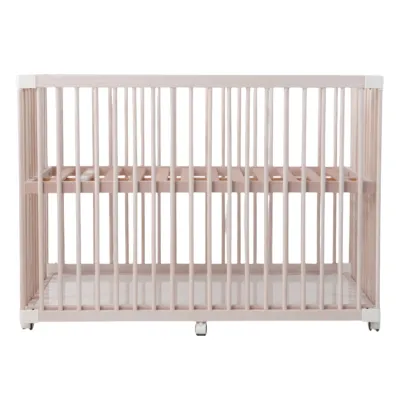
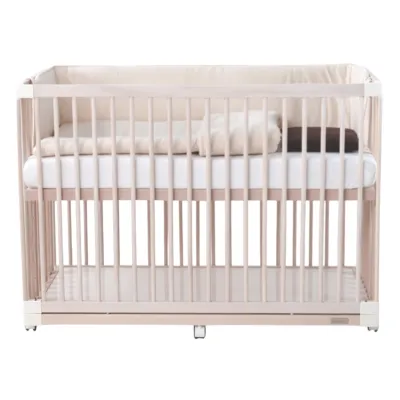
Prices are valid at publication and may change. Please refer to the product page for the latest price.
When evaluating any Beblum crib model, look for documented compliance with at least one of the following internationally recognized standards:
- EN 716 (European Standard): This standard specifies safety requirements and testing methods for children's cots and folding cots for domestic use. It is highly comprehensive, covering structural stability, impact resistance, and material safety.
- ASTM F1169 (United States Standard): This standard establishes rigorous testing requirements for full-size baby cribs, focusing on the structural integrity of the frame, mattress support, and fastening hardware.
- AS/NZS 2172 (Australian/New Zealand Standard): Widely regarded as one of the strictest standards globally, this specification outlines design, construction, and labeling requirements to prevent entrapment and fall hazards.
These safety standards are designed to subject cribs to physical stress tests that simulate years of use, including mattress support impact tests, frame twist tests, and side-barrier strength tests. They also dictate precise dimensional limits to eliminate entrapment risks.
Do not assume that all models under a single brand name automatically carry these certifications. Manufacturing processes, materials, and regional distributions can vary. You must verify that the specific Beblum model you are considering explicitly states adherence to one or more of these recognized standards on its physical packaging, user manual, or official manufacturer documentation.
How to Inspect Beblum Cribs for Physical Safety Features
Even when a crib is certified, performing a physical inspection is a critical step for peace of mind. Inspecting the physical construction of a Beblum crib allows you to verify that the design minimizes common nursery risks and matches the safety specifications outlined by global standards.

Structural Design and Entrapment Risks
Entrapment is one of the most severe hazards associated with poorly designed or improperly assembled baby cribs. When inspecting a Beblum crib, pay close attention to the spacing and design of the structural components.
- Slat Spacing: Measure the distance between the vertical slats of the crib. The gap between slats must be no more than 6 cm (approximately 2 3/8 inches). If the spacing is wider, a baby's body can slip through, creating a severe head entrapment or strangulation hazard. Conversely, the spacing should not be so narrow that a child's limbs can easily become wedged.
- Corner Posts: Inspect the corner posts of the crib frame. They should be virtually flush with the end panels, extending no more than 1.5 mm above the adjacent panels. Elevated corner posts can easily snag loose clothing, sleepwear, or pacifier ribbons, presenting a high risk of strangulation.
- Drop-Side Mechanisms: Avoid any crib design that features a drop-side mechanism. Drop-side cribs are widely banned in several international jurisdictions due to mechanical failures where the moving side detaches, creating a dangerous gap where a baby can become trapped and suffocate. Many Beblum models are designed as convertible fixed-side cribs; ensure that any conversion configurations you use rely on permanent, bolted connections rather than sliding tracks.
- Decorative Cut-outs: Examine the headboard and footboard panels. They must be completely solid or made of standard vertical slats. Avoid any models with decorative cut-outs or scrollwork, as these openings can trap a baby's hands, feet, or head.
Always cross-reference these physical observations with the specific Beblum model’s user manual and official specification sheet to confirm the design has not been altered or modified from its certified state.
Materials, Finishes, and Mattress Fit
Chemical safety and bedding configurations are just as vital as structural integrity when evaluating a crib’s overall safety profile.
- Non-Toxic Finishes: Babies naturally explore their environment with their mouths, especially when teething. It is essential to verify that the wood, paint, lacquers, or varnishes used on the Beblum crib are certified non-toxic, lead-free, and phthalate-free. Look for documentation confirming compliance with chemical safety standards, such as the European EN 71-3 standard, which limits the migration of heavy metals in children's products.
- The Two-Finger Rule for Mattress Fit: A poorly fitting mattress creates a dangerous gap where a baby can roll over, become trapped, and suffocate. When the mattress is placed inside the Beblum crib, there should be no more than two fingers' width of space (approximately 3 cm) between the outer edge of the mattress and the inner wood frame of the crib. If you can fit more than two fingers into this gap, the mattress is too small for the crib frame and must not be used.
- Mattress Firmness: The mattress itself must be exceptionally firm. Soft bedding, memory foam, or mattresses that sag under the baby's weight pose severe suffocation risks. Ensure the mattress support base of the crib is rigid and does not bow under pressure.
To ensure material safety, verify these claims through physical product labels or official test reports provided by the authorized distributor, rather than relying solely on online product descriptions.
Certifications and Proof of Compliance to Verify
Before finalizing your purchase of a Beblum crib, you should actively verify the manufacturer’s safety claims. Relying on promotional text is not sufficient; you must look for concrete, verifiable proof of compliance.
First, inspect the physical crib frame or its packaging for recognized certification marks. These include the CE mark (indicating compliance with European health, safety, and environmental protection standards) or the logos of accredited independent testing laboratories such as SGS, TÜV Rheinland, or Intertek. These third-party organizations conduct rigorous physical and chemical testing to validate safety claims.
If these certification marks or compliance statements are not clearly visible on the retail display or the product packaging, contact the retailer or Beblum’s official distributor in Singapore. Request a copy of the product’s official test reports or the manufacturer’s Declaration of Conformity. A reputable brand or distributor should be able to provide these documents to verify that the specific model has undergone independent safety testing.
Additionally, check for historical safety issues before introducing any crib into your home. Visit the Singapore Consumer Product Safety Office (CPSO) website to review local product safety alerts and recalls. You should also search international safety databases, such as the United States Consumer Product Safety Commission (CPSC) or the Australian Competition and Consumer Commission (ACCC) recall portals.
When searching these databases, use the exact model number, model name, and manufacturing date. This information is typically found on a permanent warning label or tracking sticker adhered to the inner frame or mattress support base of the crib. If the model has ever been subject to a safety recall or product alert, do not purchase or use it.
Safe Assembly and Maintenance in a Humid Climate
A baby crib is only as safe as its assembly and ongoing maintenance. Even the highest-quality certified crib can become dangerous if it is put together incorrectly or allowed to degrade over time, particularly under local environmental conditions.
- Follow Assembly Instructions Exactly: Always use the official manufacturer's assembly manual step-by-step. Never guess the placement of structural elements, and never substitute missing screws, bolts, or dowels with generic hardware from a local hardware store. If you discover missing or damaged parts during unboxing, contact the authorized Beblum distributor immediately to obtain official, model-specific replacement hardware.
- Account for Singapore's Humid Climate: Singapore's high relative humidity can cause wooden furniture components to expand, contract, or warp slightly over time. This natural movement of wood fibers can gradually loosen joints, screws, and structural bolts. Establish a routine to inspect the crib hardware every few months. Gently tighten all connecting bolts to ensure the frame remains rigid and free of any wobble.
- Position the Crib Safely: Place the crib in a safe location within the nursery. Keep it well away from windows, direct sunlight, and air conditioning units. Ensure the crib is completely out of reach of window blind cords, curtain pull-strings, electrical cords, baby monitor wires, and wall-mounted shelves or frames. These objects present severe strangulation and impact hazards.
- Maintain a Safe Sleep Environment: Keep the interior of the crib minimalist. Remove all soft toys, pillows, heavy blankets, bumper pads, and positioning devices. As soon as your baby shows signs of being able to push up on their hands and knees (typically around 3 to 5 months of age), remove any overhead mobiles or hanging toys to prevent them from being pulled down into the sleeping area.
Clear Signs It Is Time to Stop Using the Crib
As your child grows and develops, their safety needs will change. A crib that was perfectly secure for a newborn can become hazardous as your baby gains mobility and strength. You must monitor both your child’s development and the physical condition of the crib to determine when it is time to transition to a different sleeping arrangement.
- Developmental and Physical Limits: Stop using the Beblum model as a standard crib once your child reaches the manufacturer's specified maximum weight or height limit. For most standard cribs, this limit is approximately 89 cm (35 inches) in height, or when the child begins showing signs of attempting to climb out of the crib, whichever occurs first. Continuing to use the crib past these limits presents a high risk of falls.
- Structural Damage: Discontinue use of the crib immediately if you notice any physical damage that compromises its structural integrity. This includes cracked or splintered wooden slats, warped frame panels, stripped screw threads, or loose joints that can no longer be tightened securely.
- Recall Notifications: If the specific model of your Beblum crib is ever named in an official safety recall by the CPSO or international safety authorities, stop using it immediately. Do not attempt to repair a recalled crib with makeshift solutions; follow the official manufacturer or distributor instructions for a certified repair kit, replacement, or refund.
If you have any doubts about the structural safety, material composition, or developmental suitability of your baby’s crib, stop using the product immediately and consult a qualified pediatric safety professional or contact the manufacturer’s official customer support channel for guidance.
Frequently Asked Questions (FAQ)
Are drop-side cribs safe to use?
No, drop-side cribs are widely considered unsafe and have been banned by major safety authorities in several countries. The moving hardware on drop-side cribs can break, warp, or wear down over time, causing the drop-side panel to detach slightly from the frame. This creates a dangerous V-shaped gap where a baby can slip through, leading to severe entrapment, strangulation, or suffocation. It is highly recommended to use fixed-side cribs or convertible crib models that rely entirely on secure, bolted hardware configurations.
How can I check if my specific Beblum crib model has been recalled?
To check for active recalls, locate the permanent tracking label or warning sticker on your crib’s frame, which is typically found on the inside of the headboard or underneath the mattress support base. Note down the exact model name, model number, and manufacturing date. Search these details on the Singapore Consumer Product Safety Office (CPSO) website, and cross-reference them with international databases such as the US Consumer Product Safety Commission (CPSC) or the Australian Competition and Consumer Commission (ACCC). You can also contact the authorized local distributor in Singapore directly to verify the safety status of your specific model.

Community discussion
Share your experience or ask a question. Comments are reviewed before publication.