
Protecting curious toddlers from electrical hazards is a top priority for parents, but finding the right child safety plug cover requires looking closely at how your household uses electricity daily. The ideal choice balances robust toddler resistance with seamless adult convenience, all while fitting securely onto your specific wall sockets. In Singapore, where standard 13-amp Type G switched sockets are the norm, the physical design of your outlets plays a major role in which safety mechanism will actually work.
While insert-type, rotating, and sliding mechanisms all block access to live electrical contacts, they differ significantly in how they operate, how easily a child can remove them, and which outlet styles they fit. Understanding these differences allows you to tailor your babyproofing strategy to your child’s developmental stage and your home’s layout.
Understanding the Three Main Plug Cover Mechanisms
Insert-type plug covers, often called socket caps, are the most traditional and widely available option. They consist of a simple plastic piece with prongs that mimic an electrical plug, fitting directly into the socket holes. By filling the physical voids of the outlet, they prevent children from inserting small objects like hairpins, keys, or toys. Removing them typically requires a strong grip, long fingernails, or a specialized removal key that comes with the set.
Products mentioned in this guide
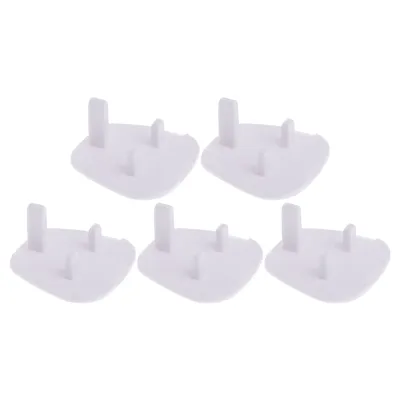
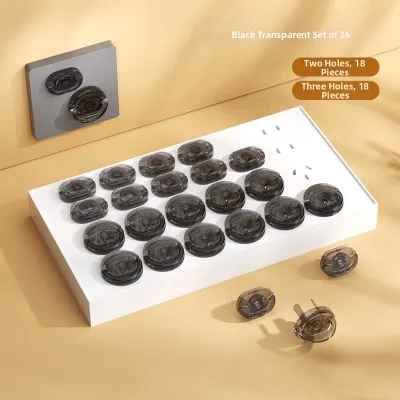
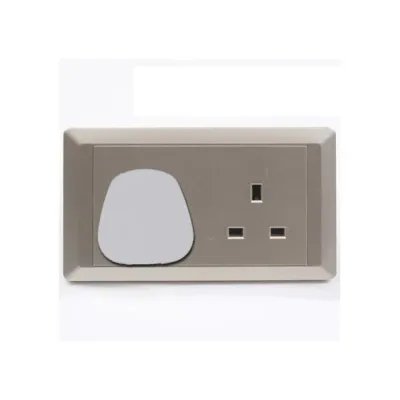
![[Local Seller!] Baby Safety Electrical UK 3pin Power Outlets Socket Cover Plug Caps Japan Brand KM1037 - 5pcs](https://img.lazcdn.com/g/p/ea9601dbec0eaea46fd1122e080ef0b2.jpg_400x400q80.jpg_.webp)
![[SG Locall Seller] Bundle in 5 Baby Safety Cover for UK type Power sockets outlets plugs](https://img.lazcdn.com/g/p/e0dc60cb1ed215db4c89b702d75ae1ee.jpg_400x400q80.jpg_.webp)

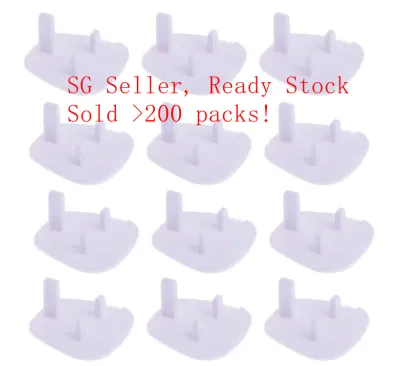
Prices are valid at publication and may change. Please refer to the product page for the latest price.
Rotating covers, also known as twist-and-lock covers, adhere to the face of the outlet using a semi-permanent adhesive backing. The faceplate of the cover has entry holes that sit slightly offset from the actual socket holes. To plug in an appliance, you must insert the plug prongs into the cover, apply pressure, and twist the plug clockwise to align the holes with the live contacts. Once aligned, the plug pushes all the way in. When you unplug the appliance, an internal spring mechanism twists the cover back to its original offset, closed position.
Sliding covers feature a spring-loaded shutter panel that slides horizontally or vertically, usually adhered or screwed onto the existing outlet faceplate. To use the outlet, you place the plug prongs against the shutter, slide it to the side to expose the socket holes, and push the plug home. When the plug is removed, the internal spring immediately slides the shutter back into place, blocking the live terminals instantly without manual intervention.
Comparing Safety, Usability, and Outlet Compatibility
Children develop fine motor skills rapidly, and their ability to bypass safety measures changes with age. Around 12 to 18 months, toddlers master the pincer grasp, which can make basic insert-type caps vulnerable if they are not perfectly flush or if they have slight ridges. If a toddler manages to pry an insert cap loose, it can quickly become a choking hazard. Rotating and sliding covers are generally much more toddler-resistant because they require a coordinated, two-step physical action combined with the insertion of an actual plug, which is highly difficult for a young child to replicate.

Daily usability is where these mechanisms diverge significantly. Insert-type caps introduce the most friction for frequently used outlets; you must pry them out, find a safe place to store them while using an appliance, and remember to plug them back in afterward. If you lose the removal key, accessing your power point becomes a frustrating chore. Rotating covers offer moderate convenience but can sometimes be stiff, requiring two hands to align and insert a plug. Sliding covers generally offer the smoothest experience, allowing you to slide and plug in an appliance with one hand, with the peace of mind that the outlet seals itself the moment you unplug.
In Singaporean households, wall outlets are almost exclusively standard 13A Type G sockets, which feature a distinctive three-pin rectangular configuration and often include an individual on/off rocker switch. This layout presents unique compatibility challenges. Many adhesive rotating or sliding covers are designed for universal flat surfaces and may not sit flush on sockets with raised borders, decorative faceplates, or individual switches. If a cover overlaps the rocker switch, it can prevent you from turning the outlet off, or worse, hold the switch in a half-on position, creating an electrical hazard.
| Mechanism Type | Toddler Removal Risk | Adult Convenience | Outlet Compatibility Checks |
|---|---|---|---|
| Insert-Type Caps | Moderate (can be pried out; choking hazard if loose) | Low (must be manually removed and stored) | Fits standard Type G; check for flush fit and tight friction hold |
| Rotating Covers | Low (requires coordinated two-step twist action) | Moderate (requires alignment and twisting pressure) | Check if adhesive backing blocks individual rocker switches |
| Sliding Covers | Low (spring-loaded shutter closes automatically) | High (one-handed operation; automatic self-closing) | Verify depth and clearance around switches and multi-gang panels |
How to Choose the Right Child Safety Plug Cover for Your Home
Choose sliding covers if you are securing high-traffic outlets that power daily-use appliances, such as kitchen counter sockets, living room phone chargers, or vacuum points. If you have an active, highly observant toddler who watches how you interact with wall outlets, the automatic self-closing action of a sliding cover ensures the socket is never accidentally left exposed. This eliminates the human error of forgetting to reinsert a loose cap.
Choose rotating covers if the outlet is located in a semi-concealed area, such as behind a sofa, next to a bedside table, or near a television console. These outlets require occasional access but are still within a crawling child’s reach. The twist-and-lock mechanism provides an excellent secondary layer of defense, ensuring that even if a child reaches behind the furniture, they cannot easily manipulate the socket face.
Choose insert-type caps if you have completely unused spare sockets, outlets positioned high up on walls (out of reach but secured for peace of mind), or if you need a portable safety solution while traveling. Because they are compact and lightweight, a handful of insert caps can easily fit into a diaper bag to babyproof hotel rooms or relatives’ homes. However, you must verify that the caps fit tightly into the specific sockets and cannot be easily pried out by a child’s fingernails or small toys.
Verify first if your home features older socket models, multi-gang outlet panels (where multiple sockets sit side-by-side in a single frame), or sockets with integrated USB ports. The physical footprint of adhesive rotating and sliding covers can overlap adjacent sockets in a multi-gang panel, rendering the neighboring outlets unusable. Always measure the clearance around your socket switches and the outer frame before purchasing any adhesive-backed safety accessories.
Installation, Maintenance, and Safety Checks
Before applying or inserting any safety cover, inspect the physical condition of your wall socket. Ensure the faceplate is firmly mounted to the wall with no visible gaps, cracks, or loose screws. Clean the surface of the socket thoroughly with a dry microfiber cloth to remove dust and oils, which can prevent adhesive-backed covers from bonding securely. If using an insert-type cap, test the insertion force; it should slide in snugly and require a deliberate, firm pull to remove. If it wobbles or falls out easily, discontinue use immediately.
Childproofing is not a set-and-forget task. Establish a monthly routine to inspect all plug covers throughout your home. Look closely for signs of wear and tear, such as hairline cracks in the plastic, warping from environmental heat, or weakened adhesive backing on rotating and sliding models. If an adhesive cover begins to peel away from the wall, a toddler can easily pull the entire unit off, exposing the live socket. Replace any compromised covers immediately.
Your child’s safety accessories must never compromise the electrical safety of your home. Discontinue the use of any plug cover and consult a qualified electrician immediately if you notice any warning signs of electrical distress. These include a cover that prevents an appliance plug from seating fully into the socket, unusual warmth or heat radiating from the outlet faceplate, buzzing or crackling sounds when an appliance is turned on, or any obstruction that prevents the socket’s manual rocker switch from turning fully off.
Frequently Asked Questions (FAQ)
Are child safety plug covers a fire hazard?
Compliant child safety plug covers made from high-quality, flame-retardant plastics are not inherently a fire hazard when installed and used correctly. However, risks can arise if a cover is poorly designed or incompatible with your specific outlet. For instance, if a bulky cover prevents an appliance plug from inserting completely, it can create a loose electrical connection. This loose contact can lead to arcing, localized overheating, and potential damage to the socket. Always verify that your chosen covers allow plugs to seat fully and securely, and never force a plug into a cover that feels misaligned or tight.
Do I still need plug covers if my outlets have built-in safety shutters?
Modern electrical outlets in Singapore are equipped with built-in safety shutters designed to block access to the live and neutral terminals unless the earth pin is inserted first. While these built-in shutters offer excellent baseline protection, they are not entirely foolproof. Determined toddlers have been known to attempt to insert objects into multiple holes simultaneously or use slim toys to bypass the earth-pin trigger. Additionally, in older homes, these internal shutter mechanisms can wear down, become sticky, or fail completely over time. Assessing your child’s curiosity level and regularly checking the physical condition of your outlets will help you decide if adding external covers is necessary for an extra layer of protection.

Community discussion
Share your experience or ask a question. Comments are reviewed before publication.