
In Singapore, ensuring the safety of young passengers is both a parental priority and a strict legal obligation. Under the Road Traffic Act, anyone under the height of 1.35 metres must be secured with an approved child restraint system appropriate for their height and weight when riding in a motor vehicle. For infants, this mandate requires the use of a certified infant car seat or convertible car seat from their very first journey home from the hospital. Failing to secure a child properly is a serious traffic offence that carries immediate penalties for the driver, making it essential for parents to understand the specific legal frameworks, safety standards, and transport exemptions that apply on Singapore’s roads.
Understanding the Core Legal Mandates for Child Restraints
The cornerstone of Singapore’s child passenger safety law is the 1.35-metre height threshold. Under the Road Traffic Act, any passenger, regardless of age, who is below this height must be secured using an approved child restraint system or a booster seat paired with an adjustable seat belt. The law prioritizes height over age because standard vehicle seat belts are designed to protect adults who are at least 1.35 metres tall. On shorter individuals, an adult seat belt can rest dangerously across the neck and abdomen, risking severe internal injuries during a sudden stop or collision.
To comply with these regulations, parents must select a restraint that matches their child’s specific developmental stage. Infant carriers are designed specifically for newborns and young babies, offering a reclined position and specialized support for their delicate heads and necks. Convertible car seats serve as a versatile alternative, starting as rear-facing seats for infants and later transitioning to forward-facing seats as the child grows. Booster seats represent the final stage of restraint, elevating older children so that the vehicle’s adult seat belt aligns safely across their shoulder and pelvis.
Products mentioned in this guide
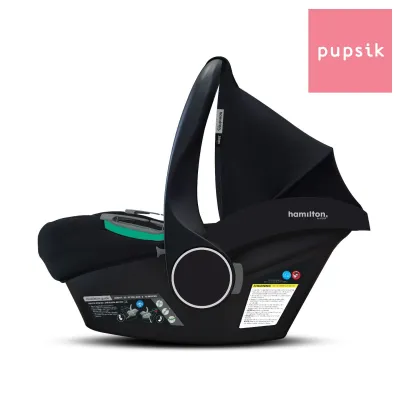
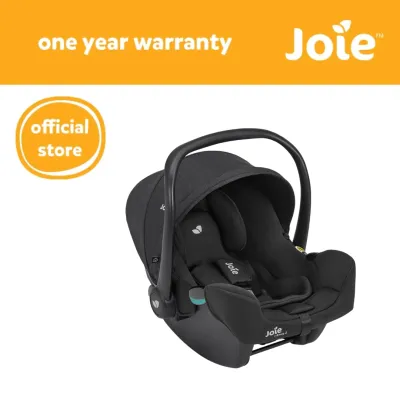
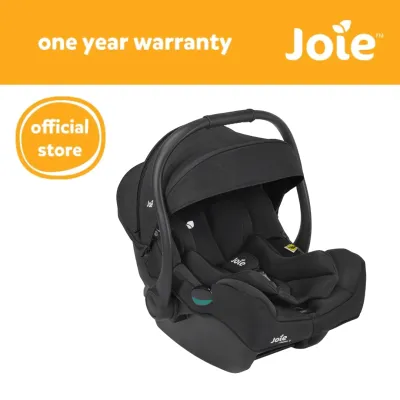
Prices are valid at publication and may change. Please refer to the product page for the latest price.
The legal definition of a “suitable” restraint hinges entirely on the child’s physical dimensions. It is not enough to simply have a car seat in the vehicle; the restraint must be appropriate for the child’s weight and height as specified by the manufacturer. Using a seat that is too large or too small for the infant does not satisfy the legal requirement and can be treated as non-compliance during an inspection. Parents must regularly monitor their child’s growth and consult the manufacturer’s labels to ensure the seat remains legally and physically suitable.
Safety Standards and Certification Requirements
Singapore does not manufacture its own child car seats, nor does it have a unique domestic testing standard. Instead, the Land Transport Authority and the Traffic Police recognize several rigorous international safety standards. To be legally used on Singapore’s roads, an infant car seat must comply with at least one of these approved standards: the European Union standard (UN ECE R44/04 or UN ECE R129, also known as i-Size), the American standard (FMVSS 213), the British standards (BS 3254 or BS AU 202), the Australian standard (AS 1754), or the Japanese standard (JIS D0401).

Verifying compliance requires a careful inspection of the physical car seat before purchase or installation. Approved seats feature a certification label or sticker permanently affixed to the shell, such as the orange ECE approval label indicating compliance with European regulations. Additionally, parents must locate the manufacturer’s expiration date, which is typically stamped into the plastic casing of the seat. In Singapore’s hot and highly humid tropical climate, the plastic and foam components of a car seat can degrade faster than in cooler regions, making it critical to adhere strictly to the manufacturer’s lifespan guidelines, which usually range from six to ten years.
Using an uncertified, expired, or structurally compromised car seat carries significant legal and physical risks. If a car seat lacks a recognized certification label, it is legally considered an unapproved restraint, leaving the driver open to traffic penalties. More importantly, expired or damaged seats may fail to perform as intended during a collision, as hairline fractures in the plastic or weakened harness webbing can give way under the extreme forces of an impact.
Enforcement, Penalties, and Insurance Implications
The Traffic Police actively enforce child restraint laws to protect vulnerable passengers on Singapore’s roads. If a driver is found operating a vehicle with an unrestrained passenger under the height of 1.35 metres, they face immediate legal consequences. Typically, first-time offenders are issued a composition fine of S$150 and receive 3 demerit points on their driving record. If the offence is prosecuted in court, the penalties can escalate to a fine of up to S$1,000, imprisonment for up to three months, or both, with penalties doubling for subsequent convictions.
Enforcement checks are conducted regularly through routine traffic stops, roadblocks, and targeted safety campaigns across the island. During these checks, officers do not merely look for the presence of a car seat; they verify that the child is actively buckled in and that the restraint is installed correctly. Officers are trained to identify whether a restraint is appropriate for the child’s size, meaning that an obviously ill-fitting seat or an unrestrained infant in the back seat will quickly attract legal penalties.
Beyond immediate traffic fines, non-compliance carries serious motor insurance implications. Most motor insurance policies in Singapore require the driver to operate the vehicle in compliance with all prevailing traffic laws. If an accident occurs and an unrestrained infant is injured, the insurance provider may investigate the circumstances of the crash. If it is determined that the driver failed to secure the child in a legally compliant restraint, the insurer may deny personal accident claims or significantly reduce the payout, leaving the family to bear the financial burden of medical expenses and vehicle repairs.
Practical Steps for Legal and Safe Installation
Achieving legal compliance and maximum safety requires proper installation, beginning with the direction of the seat. For infants, both safety experts and manufacturers strongly recommend keeping the car seat in a rear-facing position for as long as possible, and at least until the child reaches the maximum weight or height limit specified for rear-facing use. Rear-facing seats distribute the force of a frontal collision across the child’s entire back and head, protecting their fragile neck and spinal cord from catastrophic injury.
When installing the seat, parents must choose between using the vehicle’s ISOFIX anchor points or the adult seat belt, depending on the car seat’s design and the vehicle’s compatibility. Both methods are legally acceptable and equally safe when executed correctly. If using ISOFIX, parents must ensure the connectors are securely clicked into the vehicle’s anchor points and that the indicator windows turn green. If installing with a seat belt, the belt must be routed precisely through the designated paths and pulled tight to eliminate slack, ensuring the seat moves no more than 2.5 centimetres when pulled at the belt path.
Parents must also establish a clear plan for transitioning to the next stage of child restraint as their child grows. An infant carrier must be replaced once the baby’s head is within 2.5 centimetres of the top of the seat shell, or when they exceed the manufacturer’s weight limit. Transitioning to a larger convertible seat or a toddler seat ensures that the child remains secured in a restraint that is legally suitable for their size, maintaining continuous compliance with Singapore’s traffic laws.
Navigating Exemptions: Taxis and Private Hire Vehicles
Navigating transport options in Singapore requires an understanding of the distinct legal rules governing different types of commercial vehicles. Public taxis enjoy a specific legal exemption under the Road Traffic Act, meaning that passengers under 1.35 metres are not legally required to be secured in a child restraint when traveling in a taxi. This exemption is a practical concession for public transport, though the law still requires children under 1.35 metres to ride in the rear seat. Parents must recognize that while legally exempt, riding in a taxi without a car seat carries the same physical risks as riding in a private car.
In contrast, private hire vehicles booked through ride-hailing applications are not exempt from the child restraint law. Because private hire vehicles are pre-booked private passenger vehicles, drivers are legally required to ensure that all passengers under 1.35 metres are properly secured in an approved restraint. If a parent attempts to board a standard private hire vehicle with an infant and no car seat, the driver is legally obligated to refuse the ride. Attempting to bypass this rule puts both the driver’s license and the child’s safety at risk.
To manage these regulations practically, parents have several viable options. They can carry a lightweight, portable infant carrier that can be quickly installed using the vehicle’s seat belt when traveling by private hire vehicle. Alternatively, most major ride-hailing platforms in Singapore offer specialized family-friendly booking tiers. Selecting these options ensures that the vehicle arrives equipped with an appropriate child restraint or booster seat, allowing parents to travel legally and safely without needing to carry their own heavy gear.
Frequently Asked Questions (FAQ)
Can I hold my infant in my arms instead of using a car seat in a private car?
No, holding an infant in your arms is strictly illegal in a private car and does not satisfy Singapore’s legal requirements for child restraints. In a collision, even at low speeds, the physical forces generated make it impossible for an adult to retain their grip on a child. The infant can be thrown against the vehicle’s interior or ejected, and there is a severe risk of the adult’s body weight crushing the child against the dashboard or front seat.
Are second-hand infant car seats legal to use in Singapore?
There is no specific law in Singapore that bans the purchase or use of second-hand infant car seats, provided they meet recognized international safety standards and are suitable for your child. However, using a second-hand seat is highly discouraged unless you can verify its complete history. You must ensure the seat has never been involved in a crash, possesses all original labels and instruction manuals, is well within its manufacturer expiration date, and shows no signs of structural damage or wear.
What should I do if my child outgrows the infant car seat but is still under the legal height limit?
When your child outgrows their infant car seat but remains under the 1.35-metre legal height limit, you must transition them to a larger, compliant child restraint system. This typically involves moving to a convertible car seat or a forward-facing toddler seat equipped with a five-point harness. The new seat must be certified under one of Singapore’s recognized international safety standards and must be rated for your child’s current weight and height to ensure continuous legal compliance.

Community discussion
Share your experience or ask a question. Comments are reviewed before publication.