
Finding the right XXL diaper pants for an active toddler in Singapore’s warm, humid climate requires balancing physical comfort, reliable containment, and overall household budget. While Huggies XXL pants are a popular staple on local supermarket shelves, deciding whether they are the best fit for your child involves comparing them directly with other premium diaper brands. Sizing structures and cut dimensions vary significantly across manufacturers, meaning a toddler who fits comfortably in one brand’s XXL might experience gaps or red marks in another. The ideal choice ultimately depends on your toddler’s specific body shape, skin sensitivity, and overnight sleep habits. By evaluating key design elements such as waistband elasticity, leg cuff structures, and moisture-distribution features, you can identify the diaper that keeps your child dry and comfortable throughout the day and night.
What to Look for in Premium XXL Diaper Pants
When toddlers transition into XXL sizes, their physical activity levels and body proportions change rapidly, making the structural design of the diaper pants far more critical than simple weight recommendations. While packaging labels provide a general weight range, these numbers are only a starting point. Parents must look closely at the physical dimensions of the diaper, particularly the thigh circumference and rise, to ensure a secure fit. A diaper that matches your child’s weight on paper may still cause leaks if their thighs are slender or cause deep red marks if they have a sturdier build.
The design of the waistband and leg cuffs serves as the primary defense against leaks, especially when toddlers are running, climbing, or sleeping. High-quality diaper pants feature multi-strand elastic waistbands that stretch smoothly without applying excessive pressure to the abdomen. Leg cuffs should ideally feature a double-barrier system—an inner leak guard that stands upright against the skin and an outer ruffle that lies flat against the thigh. These components must work together to contain both liquid and solid waste during sudden movements without restricting circulation.
Products mentioned in this guide
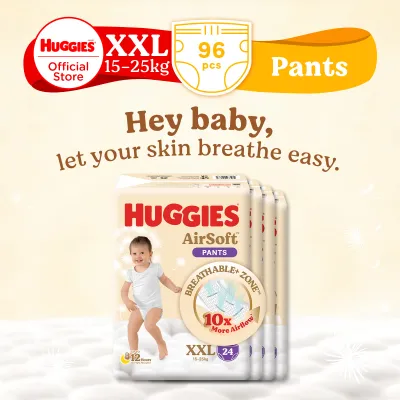
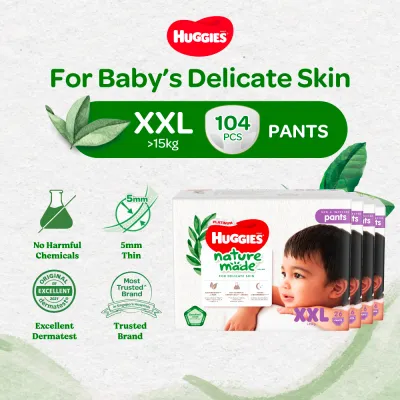
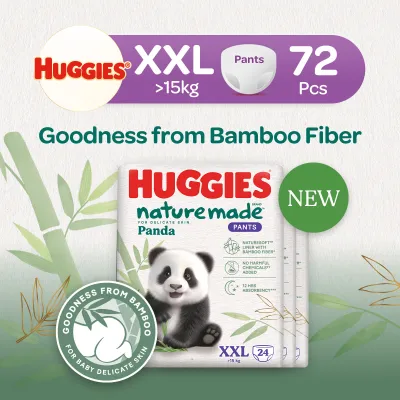
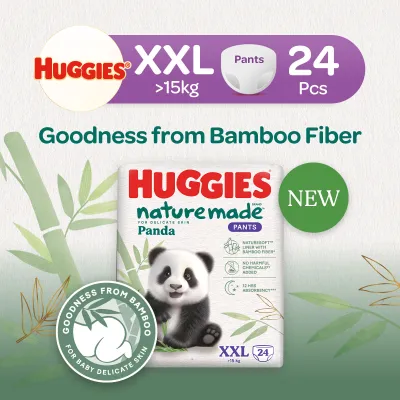
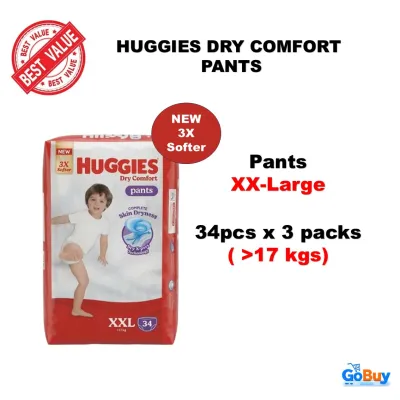
![[1 Carton] Huggies Dry Comfort Silver Pants XX-Large 34 Pcs x 3 Packs (>17 KG)](https://img.lazcdn.com/g/p/0109271fd5a2036ff3630125febbe2bb.jpg_400x400q80.jpg_.webp)
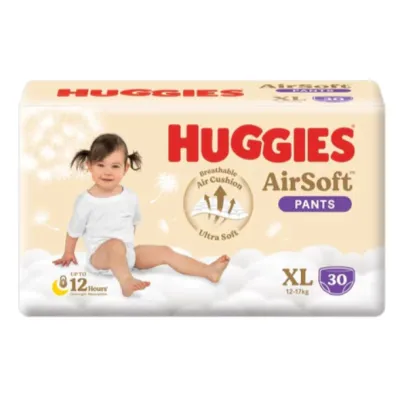
![HUGGIES DRY COMFORT BABY DIAPERS PANTS - SIZE M / L / XL / XXL [CARTON DEAL]](https://img.lazcdn.com/g/p/4cac326159704a11bf243b1fc69a5cc1.jpg_400x400q80.jpg_.webp)
Prices are valid at publication and may change. Please refer to the product page for the latest price.
Given the high humidity levels in Singapore, breathability is another essential factor to consider when evaluating premium diaper pants. Look for products that explicitly list breathable outer covers or micro-perforated materials on their packaging, which help heat and moisture escape to reduce the risk of diaper rash. Additionally, a clear wetness indicator on the exterior of the diaper is highly useful for active toddlers, allowing caregivers to perform quick visual checks without disrupting play or pulling at the waistband.
Evaluating Huggies XXL Pants for Toddlers
Huggies XXL pants are engineered with specific structural features designed to accommodate the high-energy movements of older toddlers. When examining the packaging and the diaper itself, one of the first elements to inspect is the waistband construction. Huggies typically utilizes a wide, highly stretchable waistband designed to sit comfortably above the hips, reducing the likelihood of the diaper sliding down as the toddler moves. Some variants also feature refastenable sides or highly flexible tear-away seams, which allow caregivers to customize the waist snugness or quickly remove the diaper during changes.

The internal absorbency core of Huggies XXL pants is structured to distribute moisture evenly across the length of the diaper rather than allowing it to pool in a single spot. This design is particularly relevant for active toddlers who may sit, crawl, or run immediately after wetting. By checking the product specifications on the packaging, you can verify if the specific line utilizes channel-based distribution technology, which helps keep the core flat and prevents sagging between changes.
For parents concerned about skin health, it is important to review the packaging for specific dermatological claims and material certifications. Huggies products often list hypoallergenic properties, the absence of added fragrances, or clinical testing certifications on their outer wrapping. Because individual skin sensitivities vary, caregivers should verify these claims directly on the pack and monitor their toddler’s skin for any signs of irritation or redness, stopping use and consulting a pediatrician if persistent rashes develop.
How Huggies XXL Pants Compare to Competing Premium Brands
When comparing Huggies XXL pants to other premium options available in local stores, structural differences in leg cuff flexibility and waistband tension become apparent. Some competing Japanese premium brands, for instance, are known for utilizing exceptionally soft, cotton-like materials with highly gathered waistbands that exert very low pressure on the skin. In contrast, Huggies often focuses on a more structured, secure fit that prioritizes staying in place during vigorous physical activity. Caregivers should physically inspect the stretch of the waistband on a trial diaper to determine if the tension matches their toddler’s waist-to-hip ratio.
The distinction between daytime breathability and overnight absorbency is another area where premium brands diverge in their labeling and design. While some brands offer a single “all-in-one” diaper designed for both day and night use, others manufacture dedicated overnight pants with enhanced core capacities. When evaluating Huggies against competitors, check the packaging for specific overnight designations or hourly dryness claims. Diapers designed specifically for nighttime often feature thicker absorbent cores and wider rear coverage to prevent leaks while the child is lying down.
To help you compare the verifiable specifications of Huggies XXL pants with other premium diaper brands, the following matrix outlines key product features you can verify directly on the packaging before purchasing:
| Verifiable Feature | Huggies XXL Pants | Premium Brand A (Japanese Style) | Premium Brand B (Eco-Focused) |
|---|---|---|---|
| Primary Closure Type | Pull-up with tear-away or refastenable sides | Pull-up with tear-away sides and roll-up tape | Pull-up with tear-away sides |
| Wetness Indicator | Present on outer cover | Present on outer cover | Varies by specific product line |
| Material Focus | Structured, active-fit materials | Ultra-soft, high-loft non-woven fibers | Plant-based or chlorine-free fibers |
| Sizing Fit Profile | Snug, secure waistband fit | Generous, highly elastic waist and leg openings | Standard fit, structured leg barriers |
| Pack Count (XXL) | Check packaging for specific retail counts | Check packaging for specific retail counts | Check packaging for specific retail counts |
Note: Always verify the exact specifications, certifications, and pack counts on the physical packaging of the specific product batch, as manufacturers frequently update diaper designs and packaging configurations.
Calculating Value and Price-Per-Piece
Evaluating the true cost of premium XXL diaper pants requires looking past the shelf price of a single pack and calculating the exact price-per-piece. Because XXL diapers contain more raw materials and advanced absorbent polymers than smaller sizes, they naturally carry a higher cost per unit, and pack counts are typically much lower. To find the unit cost, divide the total price of the pack by the number of diapers inside (e.g., S$24.50 divided by 32 pieces equals approximately S$0.77 per diaper). Keeping a running log of these unit prices allows you to make objective comparisons across different brands and packaging sizes.
When transitioning to a new brand or testing a different product line, purchasing bulk cartons immediately can lead to waste if the diaper does not fit your toddler’s shape or causes skin irritation. Instead, look for official trial packs, which usually contain a smaller number of pieces, or request sample packs directly from the manufacturer’s official website. Once you have verified that a specific XXL diaper fits well and does not cause red marks or leaks, transitioning to bulk cartons or multi-pack bundles is generally the most cost-effective approach.
To secure the best value, monitor official brand stores and authorized distributors on major local e-commerce platforms. These platforms frequently run promotional campaigns, monthly shopping events, and subscription services that offer significant discounts on bulk diaper purchases. When buying online, always ensure you are purchasing from official flagship stores or reputable local sellers to guarantee product authenticity, proper storage conditions, and valid expiration or manufacturing dates.
Decision Guide: Choosing the Right XXL Pants for Your Toddler
Selecting the ideal XXL diaper pants involves matching the specific design strengths of each brand to your toddler’s physical build and daily routine. Huggies XXL pants are often highly suitable for toddlers who benefit from a structured, secure waistband that stays firmly in place during active daytime play and outdoor adventures. Their core design is well-suited for families who prefer a diaper that distributes wetness efficiently to prevent sagging and bulkiness between changes.
On the other hand, a competing premium brand might be the better choice if your toddler has exceptionally sensitive skin that requires specific plant-based material certifications, or if their body shape requires a much looser, highly gathered leg cuff structure to prevent red marks. If your child is a heavy wetter overnight, you may also want to look for brands that offer specialized nighttime variants with reinforced rear barriers and extended absorbency claims on the label.
Before making a final decision, verify whether your toddler is currently positioned at the upper limit of their current size or if they are experiencing frequent, unexplained leaks. Persistent leaks, red marks around the thighs, or a waistband that sits too low are common indicators that it is time to consult the manufacturer’s sizing chart and transition to a larger size, rather than assuming a brand’s design is faulty. Always follow the manufacturer’s guidelines for application and disposal to ensure optimal performance and hygiene.
Frequently Asked Questions (FAQ)
When should I transition my toddler to XXL diaper pants?
You should consider transitioning your toddler to XXL diaper pants when their weight approaches the lower threshold of the manufacturer’s XXL guidelines, or when you observe physical signs of poor fit. Common indicators include deep red elastic marks around your toddler’s thighs or waist, the waistband sitting significantly below the belly button, or frequent leaks despite proper diaper application. Additionally, if the diaper feels tight when fastening or does not fully cover your toddler’s backside during active movement, moving up to an XXL size can provide the necessary rise and coverage to prevent leaks.
Do XXL diaper pants hold more liquid than smaller sizes?
Yes, XXL diaper pants are generally designed with a larger absorbent core containing more superabsorbent polymers to accommodate the higher urine volume of older toddlers. While the overall capacity is greater than that of smaller sizes, the actual performance still depends on the diaper’s core design and how well it distributes moisture. To ensure adequate protection, especially during long stretches of sleep, parents should check the product packaging for specific overnight absorbency claims or look for dedicated night-use variants designed to handle extended wear.

Community discussion
Share your experience or ask a question. Comments are reviewed before publication.