
Choosing between Huggies and Pampers for your newborn in Singapore is not about finding a single superior brand, but rather finding the diaper that matches your baby’s unique body shape, skin sensitivity, and your household budget. Both brands offer distinct designs, cuts, and material compositions that perform differently depending on your baby’s physical profile.
In Singapore’s warm and humid climate, finding a diaper that offers excellent breathability and a precise fit is essential to keep your baby comfortable and prevent skin irritation. Instead of buying in bulk immediately, the most effective approach is to understand how each brand’s specific features align with your baby’s needs, and then run a structured home trial to observe how they perform in real-world conditions.
Newborn-Specific Design Features to Check
Newborn babies require specialized diaper designs to accommodate their healing bodies, particularly the umbilical cord stump. When evaluating Huggies and Pampers, check the product packaging or physical diaper for an umbilical cord notch. This curved cutout at the front of the diaper prevents the waistband from rubbing against the sensitive stump, reducing friction and keeping the area dry.
Products mentioned in this guide
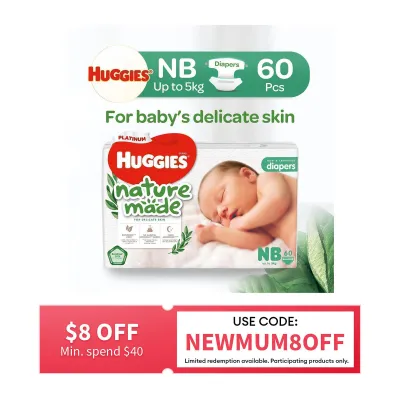
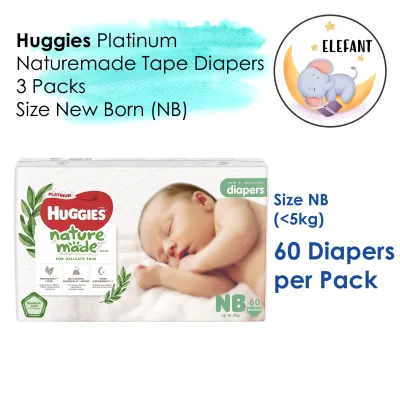
![[1 Carton] Huggies Platinum Naturemade Tape New Born 60 Pcs x 3 Packs (~5KG)](https://img.lazcdn.com/g/p/561025dc794146b2800938516395a0b0.jpg_400x400q80.jpg_.webp)
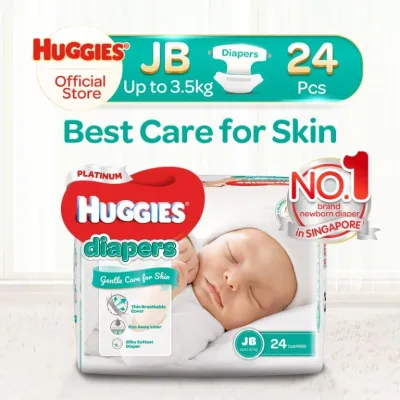
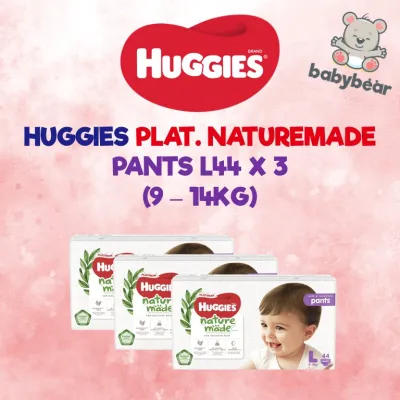
![[CHEAPEST AND 24 HOUR SHIP OUT!!] Huggies Nature made Drypers Tape Pants Diapers Justborn Newborn S M L XL (24/60/70/64/54/44))(0-3.5kg to 17kg) JB NB S M L XL](https://img.lazcdn.com/g/p/f0aabae93ef69646c7e12f6b3e7796ed.jpg_400x400q80.jpg_.webp)
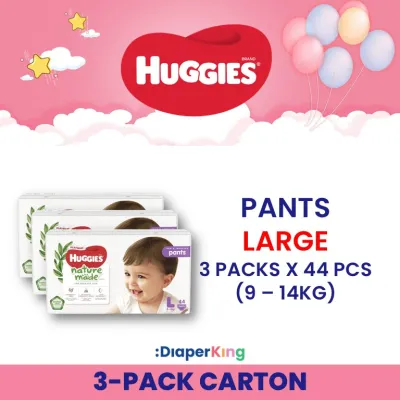
Prices are valid at publication and may change. Please refer to the product page for the latest price.
Next, examine the waistband elasticity and fastening tab placement. Newborns have soft, rounded tummies that expand and contract as they feed and breathe. Look at the manufacturer’s descriptions of their waistband mechanics. Some designs feature highly elastic back bands to catch liquid run-off, while others rely on stretchy side tabs to secure the fit. Physically stretching the tabs during your trial will help you assess which mechanism feels more secure and accommodating.
Another essential feature is the wetness indicator line running down the center of the diaper. This line changes color when exposed to moisture, signaling that a change is needed without requiring you to unfasten the diaper. Compare how clearly this line is visible through clothing or sleepwear, and note how quickly the color transition occurs during your initial use.
How to Evaluate Absorbency and Leak Protection
Absorbency is a primary concern for parents, especially during long night stretches or active feeding periods. To evaluate this without relying on unverified marketing claims, start by reviewing the manufacturer’s stated core technology on the product label. Look for terms describing their absorbent layers, such as superabsorbent polymers or specialized channels designed to distribute liquid evenly. Understanding these materials helps you anticipate how the diaper manages moisture distribution.

Real-world leak protection depends heavily on how the diaper interacts with your baby’s movements and output. During use, closely monitor the leg cuffs for any gaps. If the elastic cuffs do not sit snugly in the groin creases, liquid can easily escape. Watch for signs of pooling on the surface or moisture escaping from the back, commonly referred to as a blowout. These observations will tell you if the diaper’s absorbency speed matches your baby’s sudden output volume.
Always cross-reference these real-world observations with the recommended weight limits printed on the packaging. While a diaper might technically fit a baby within a certain weight range, a baby near the upper limit of that range may experience leaks if their output exceeds the diaper’s holding capacity. Keeping track of your baby’s weight helps you determine when a leak is a fit issue versus a capacity issue.
Comparing Softness and Skin Sensitivity Factors
A newborn’s skin is incredibly thin and susceptible to irritation, making the tactile feel of a diaper a major decision factor. To compare softness, obtain sample diapers from both brands and physically feel the inner lining that touches the baby’s skin, as well as the outer cover. Assess the texture for any roughness, stiffness, or synthetic feel. A softer, more cloth-like texture generally minimizes friction during movement.
Beyond tactile feel, read the ingredient and material lists on the packaging carefully. Manufacturers often add lotions, mild fragrances, or specific botanical extracts to the inner lining to soothe skin. However, these additives can sometimes trigger reactions in highly sensitive infants. Check for labels indicating whether the diapers are elemental chlorine-free, fragrance-free, or hypoallergenic, and decide which formulation aligns with your preferences.
After putting a diaper on your baby, monitor their skin closely during changes. Watch for localized redness, chafing around the thighs and waist, or the development of skin irritation. If you observe persistent redness or skin irritation that does not resolve with standard barrier creams, establish a clear rule to stop using that specific brand immediately. Consult a qualified pediatrician to address the skin reaction and seek professional guidance on suitable materials.
Finding the Right Fit for Your Baby's Body Shape
Babies come in all shapes and sizes, meaning a diaper that fits one newborn perfectly might leak constantly on another. Begin by comparing the overall cut of Huggies and Pampers. Lay an unfastened diaper from each brand side-by-side to observe the width of the crotch area and the height of the rise. Some brands favor a narrower, more contoured cut, while others offer a wider, more rectangular shape.
When you remove a diaper, inspect your baby’s skin for any physical indicators of fit quality. Red marks or deep indentations around the thighs, waist, or tummy suggest that the elastic tension is too tight or the diaper is too small, even if the baby’s weight falls within the recommended range. Conversely, loose gaps around the legs indicate the cut may be too generous for your baby’s current proportions.
Always consult the manufacturer’s weight chart on the box as a starting point, but treat it as a flexible guideline. A baby with chunky thighs may need to transition to a larger size sooner to avoid tight leg cuffs, whereas a baby with a long, lean torso might require a diaper with a higher rise to prevent back leaks. Adjusting your choice based on these physical proportions ensures a more reliable fit.
Calculating the True Cost per Diaper in Singapore
Diapering costs accumulate rapidly over the first few months, making financial planning essential for Singapore households. To compare the cost-effectiveness of Huggies and Pampers accurately, avoid comparing the total price of the packs directly, as pack counts vary significantly. Instead, calculate the exact unit cost per diaper by dividing the total pack price in S$ by the precise number of diapers inside. This unit price provides a clear, standardized metric for comparison.
Next, compare these unit prices across various local retail channels. Check authorized online stores, major local supermarkets, and physical pharmacy chains across Singapore. Prices can fluctuate based on retail promotions, exclusive distributor partnerships, or seasonal sales. Tracking these prices across different platforms helps you identify which brand offers more consistent value for your budget.
While bulk-buying or setting up recurring delivery subscriptions on ecommerce platforms can lower the unit cost, exercise caution. Newborns grow exceptionally fast, often outgrowing the newborn size within a few weeks. Before purchasing large quantities, verify the storage requirements to prevent moisture absorption in Singapore’s humid climate, and check the return or exchange policies of the retailer in case you need to swap unopened packs for a larger size.
How to Decide: A Practical Choice Framework
To finalize your decision, use a structured framework based on your baby’s immediate needs and your personal observations. Consider choosing Huggies if your baby’s body shape aligns well with their specific cut, or if you find their waistband design and wetness indicator visibility more practical for your daily routine. This option is often favored by parents who prioritize a secure back elastic and a structured fit.
Alternatively, consider choosing Pampers if their material feel, inner lining texture, and verified ingredient formulation better suit your baby’s skin sensitivity and your preference for overall softness. This choice is highly suitable for infants who benefit from a lighter, more flexible material feel that minimizes friction against delicate skin.
Regardless of which brand seems more appealing on paper, always verify your choice first by purchasing the smallest available pack of each brand. Use these small packs to conduct a direct, real-world test on your baby. Evaluate the fit, absorbency speed, and skin reaction over a few days before committing to bulk purchases or long-term subscriptions.
Frequently Asked Questions (FAQ)
Can I alternate between Huggies and Pampers for my newborn?
Yes, alternating between Huggies and Pampers is generally acceptable and safe, provided your baby shows no signs of skin irritation, redness, or fit issues with either brand. Many parents choose to use one brand during the day and another at night to optimize for different features. If you decide to alternate, keep a brief log of which brand is used during specific times. This record-keeping makes it much easier to identify the potential cause if a sudden diaper rash or persistent leak issue develops.
When should I transition from newborn to size 1 diapers?
You should transition your baby from newborn to size 1 diapers when their weight consistently approaches or exceeds the manufacturer’s recommended upper limit for the newborn size. Additionally, watch for physical indicators during daily use. If you experience frequent leaks despite proper application, notice deep red marks on your baby’s thighs or tummy, or find that the fastening tabs struggle to close securely near the hips, it is time to move up to the next size.

Community discussion
Share your experience or ask a question. Comments are reviewed before publication.