
Selecting the right size M tape diaper is a pivotal milestone for parents. At this stage, babies typically become more active, rolling over, pushing up, or preparing to crawl, which puts diaper fit and absorbency to a rigorous test. Huggies, Pampers, and Mamypoko are three prominent brands that parents frequently compare, each offering a distinct approach to managing moisture and securing a snug fit.
Rather than searching for a single universal winner, finding the ideal diaper requires matching a brand’s specific design features to your baby’s anatomy and daily routine. A diaper that works perfectly for a slender, highly active baby during the day might not provide the overnight capacity needed for a heavy wetter. By understanding how these brands differ in construction, absorbency mechanics, and fit indicators, you can make an informed decision that keeps your baby dry and comfortable.
Comparing Structural Design Features in Size M Tape Diapers
The physical architecture of a tape diaper directly dictates how well it contains messes and conforms to a baby’s movements. When examining size M options from Huggies, Pampers, and Mamypoko, the first point of comparison is the leg cuff construction. Leg cuffs act as the primary barrier against side leaks, utilizing double-layered elastic gathers. Huggies often incorporates deep, pocketed barriers designed to catch runny stools, while Mamypoko typically features tall, soft leg gathers that extend high up the thigh to secure a wide coverage area. Pampers generally focuses on highly flexible, low-profile leg elastics that minimize bulk while maintaining a close seal against the skin.
Products mentioned in this guide
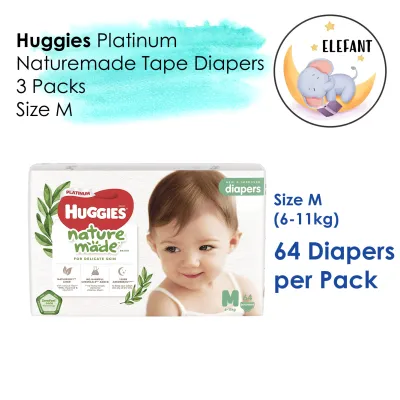

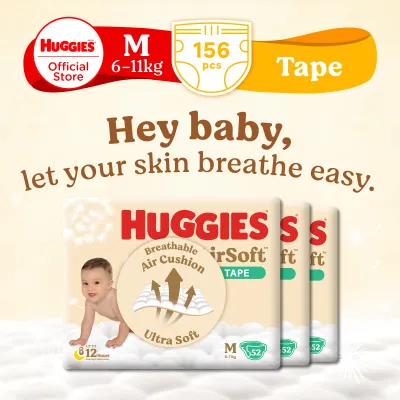
![[1 Carton] Huggies Airsoft Gold Tape Medium 52 Pcs x 3 Packs (6-11 KG)](https://img.lazcdn.com/g/p/6a2f48daba9481849ec7b4b80f5cec24.jpg_400x400q80.jpg_.webp)
![[CARTON SALES] HUGGIES Platinum Naturemade Tape Diapers (Size M/L/XL/XXL Available!)](https://img.lazcdn.com/g/p/d125232e1f73a22802e4d1b9bddbf366.jpg_400x400q80.jpg_.webp)
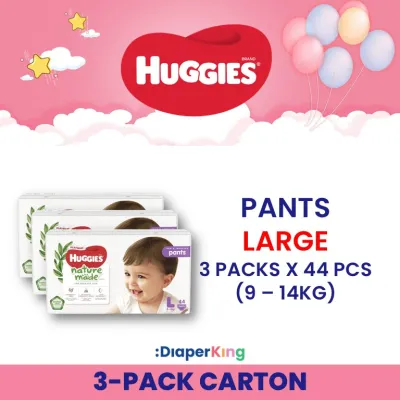
![[One Carton] Huggies Naturemade Tape & Pants - Newborn / S / M / L / XL / XXL Sizes](https://img.lazcdn.com/g/p/a024eb43fe20186d4208ac49cd154a96.jpg_400x400q80.jpg_.webp)
Prices are valid at publication and may change. Please refer to the product page for the latest price.
Waistband flexibility and fastening mechanisms also vary significantly among these brands. Huggies tape diapers are widely recognized for their stretchy waistbands, which often include a rear pocket designed to prevent blowouts when the baby is lying down. This elasticated back panel allows the diaper to expand and contract as the baby breathes and moves. In contrast, Pampers frequently utilizes stretchy fastening tabs rather than an elasticated back waistband, relying on the lateral stretch of the side panels to achieve a secure fit. Mamypoko tape diapers often feature a broad, soft waistband that distributes pressure evenly across the baby’s lower back and abdomen, utilizing sturdy, rounded tape tabs that can be refastened multiple times without losing grip.
The absorbent core is the engine of the diaper, and its material composition influences both thickness and texture. Pampers is known for its thin core technology, which utilizes specialized channels to distribute liquid evenly and prevent sagging when wet. This design results in a highly flexible, lightweight diaper that feels less bulky between the baby’s legs. Mamypoko diapers often feature a thicker, more traditional pulp-and-polymer core designed for high-volume retention, giving the diaper a plush, cushiony feel. Huggies strikes a balance between these two approaches, offering a structured core with a textured inner liner designed to quickly draw moisture away from the skin while maintaining its shape under pressure.
Matching Absorbency to Your Baby’s Urination Patterns
Absorbency needs change dramatically depending on the time of day and your baby’s developmental stage. During daytime hours, babies are typically changed every two to three hours, making rapid fluid acquisition more critical than long-term storage capacity. For daytime wear, a thinner diaper like Pampers, which quickly channels liquid away from the surface, can keep an active baby comfortable and unrestricted. For overnight use, however, parents often require a diaper that can reliably hold multiple wettings over ten to twelve hours. Mamypoko’s thicker core design is highly favored by parents of heavy overnight wetters, as its high-capacity polymer distribution is built to retain larger volumes of liquid without leaking.

Understanding how a diaper core behaves under pressure is essential for preventing compression leaks. When a baby sits up, rolls over, or crawls, their body weight presses down on the wet diaper. If the absorbent core cannot lock moisture away securely, this pressure can force liquid back to the surface or out through the leg cuffs—a phenomenon known as wet-back or compression leaking. Huggies addresses this by utilizing an absorbent polymer blend that locks fluid into a gel state, minimizing the risk of moisture re-emerging under the pressure of your baby’s movements. Parents should regularly feel the outside of the diaper during active play; a cold, damp exterior often indicates that the core is reaching its saturation limit and requires a change.
To optimize absorbency, parents must also consult the manufacturer’s weight guidelines printed on the packaging. Size M tape diapers generally cater to babies weighing between 6 and 11 kilograms, but this range is a general guide rather than a strict rule. If your baby is approaching the upper limit of a brand’s weight recommendation and you notice frequent leaks or a heavily sagging core shortly after urination, it may be a sign that their bladder volume has outgrown the size M absorbency capacity. Checking the packaging for specific absorption indicators or weight boundaries helps ensure you are using the correct size for your baby’s current developmental phase.
Evaluating Fit, Comfort, and Skin Health Indicators
A diaper can have excellent absorbency, but if the fit is incorrect, leaks and skin irritation are almost inevitable. One of the most common signs of an improper fit is the appearance of red marks or deep indentations on your baby’s thighs, hips, or waist. These marks indicate that the elastic gathers or fastening tabs are too tight, restricting circulation and causing friction against the delicate skin. If you consistently notice red lines after removing a Huggies, Pampers, or Mamypoko diaper, it is time to adjust the fastening tabs outward or transition to a larger size, even if your baby’s weight falls within the recommended range.
Conversely, a diaper that is too loose will create gaps that allow liquid and solid waste to escape. When your baby is crawling, rolling, or sitting, inspect the areas around the leg cuffs and the back waistband. There should be no visible gaps or sagging spaces. The leg cuffs should be gently tucked outward (flared like butterfly wings) rather than curled inward, as inward-facing elastics fail to create an effective seal and can cause chafing. If you observe gaps during movement, the diaper’s cut may not be compatible with your baby’s body shape, or the fastening tabs may need to be secured at a more snug angle.
In warm, humid climates, skin health is closely tied to a diaper’s breathability. High humidity can trap moisture and heat inside the diaper, creating an environment ripe for diaper rash and bacterial growth. Parents should monitor the skin on the baby’s bottom and groin area for signs of redness, warmth, or persistent dampness. A diaper with a highly breathable outer cover and a textured inner liner, such as those found in premium Huggies or Pampers lines, allows air to circulate more freely, helping to keep the skin dry. Regularly checking the skin’s condition immediately after removing a wet diaper will give you a clear indication of how well the brand’s materials are managing microclimate humidity.
Conditional Decision Guide: Which Brand Fits Your Baby Best?
Selecting the right brand involves evaluating your baby’s physical build, daily activity level, and skin sensitivity against each diaper’s unique strengths. Because no single diaper fits every baby perfectly, parents can use a conditional framework to guide their purchasing decisions and manage their diapering budget effectively in S$.
Consider choosing Huggies size M tape diapers if your baby has a rounder belly or a chubby build that benefits from a highly elasticated back waistband. The rear pocket design is particularly useful if you frequently experience blowouts during floor play or tummy time. The structured fit of Huggies provides excellent stability for babies who are constantly rolling and shifting positions.
Opt for Pampers size M tape diapers if your baby is slender, highly active, and prefers a lightweight, low-profile diaper. The thin core and flexible side panels allow for maximum freedom of movement, making it an excellent choice for daytime wear when frequent changes are easy to manage. The smooth, soft inner materials are also well-suited for babies who are sensitive to bulky or stiff diaper textures.
Select Mamypoko size M tape diapers if your primary concern is overnight leak protection or if your baby is a heavy wetter. The generous absorbent core and tall leg barriers provide a high-capacity reservoir that reliably contains large volumes of fluid over extended periods, reducing the need for disruptive nighttime diaper changes.
Before committing to a bulk purchase, always verify if your baby has specific skin sensitivities that require hypoallergenic or fragrance-free options. If your baby’s weight falls right on the boundary between sizes, or if you notice persistent leaks despite a correct fit, purchase a small trial pack first to test how the diaper performs under real-world conditions.
Frequently Asked Questions (FAQ)
When Should I Transition From Size M Tape to Pants Diapers?
The transition from tape diapers to pants diapers is typically driven by your baby’s mobility rather than weight alone. When your baby begins to roll away, crawl, stand, or actively resist lying down during diaper changes, securing the tape tabs symmetrically can become extremely challenging. Pants diapers can be quickly pulled up while the baby is standing or moving, simplifying the changing process. Additionally, check the manufacturer’s sizing charts, as many brands offer a weight overlap between size M tape and size M pants, allowing for a smooth transition when your baby’s activity level increases.
How Can I Tell if a Size M Tape Diaper is the Wrong Fit?
You can diagnose a poor fit by performing a few quick visual and physical checks during diaper changes. First, apply the two-finger rule: you should be able to comfortably slide two fingers between the diaper’s waistband and your baby’s tummy. If the space is too tight, the diaper is too small; if it is too loose, leaks may occur at the waist. Second, ensure the fastening tabs are aligned symmetrically with the numbered guides on the front landing zone. Finally, if leaks consistently occur from the leg cuffs despite them being flared outward, or if the diaper sits too low on your baby’s hips, the diaper is likely too small or the cut is incompatible with your baby’s body shape.

Community discussion
Share your experience or ask a question. Comments are reviewed before publication.