
Quick Answer: How Huggies Overnites Stack Up for Leak Protection
When your baby starts sleeping through the night, a standard daytime diaper often fails to keep up, leading to midnight clothing changes and disrupted sleep. The Huggies overnite diaper is engineered specifically to address this challenge, offering a highly concentrated absorbent core and robust physical barriers that outperform standard daytime options. While it stands out as one of the most reliable options for heavy wetters due to its massive liquid capacity, deciding whether it is the absolute best choice for your child depends on several variables. Factors such as your baby’s physical build, preferred sleeping position, and skin sensitivity play a critical role in determining overnight success. For instance, while Huggies excels at locking away high volumes of moisture, some parents find that premium Japanese brands provide superior breathability in tropical climates, while local high-capacity alternatives offer better everyday value.
Huggies Overnites are designed as a dedicated night diaper, not just a thicker daytime diaper. They feature targeted distribution layers and double grip strips to keep the diaper secure as the baby moves. Standard daytime diapers are designed for quick changes every two to four hours and prioritize low bulk. Overnight diapers, particularly Huggies, prioritize holding capacity and moisture isolation for up to 12 hours. However, no diaper is 100% leak-proof for every baby. A diaper that works perfectly for a rounder baby with chunky thighs might leak on a taller, leaner baby because of gaps around the legs. Therefore, understanding the structural design and how it compares to other market alternatives is essential for making an informed choice.
How the Huggies Overnite Design Works for Heavy Wetters
To understand why the Huggies overnite diaper is highly regarded for night-time leak protection, one must look at its specific structural engineering. Unlike standard diapers that distribute absorbency evenly, these overnight diapers feature a specialized core concentrated with superabsorbent polymers (SAP) blended with high-quality cellulose fluff. SAP is a material capable of absorbing up to 300 times its weight in liquid, locking it into a dry gel. This chemical transformation is crucial because it prevents rewetting—a common issue where the physical pressure of a sleeping baby squeezing against a wet diaper forces moisture back onto their skin, causing discomfort and leaks.
Products mentioned in this guide
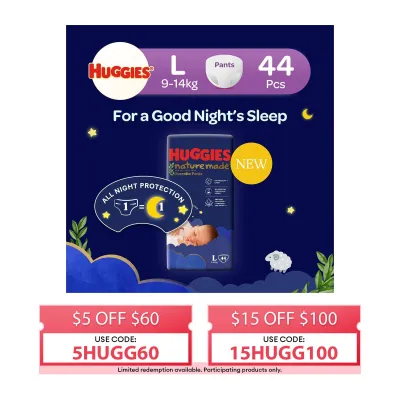
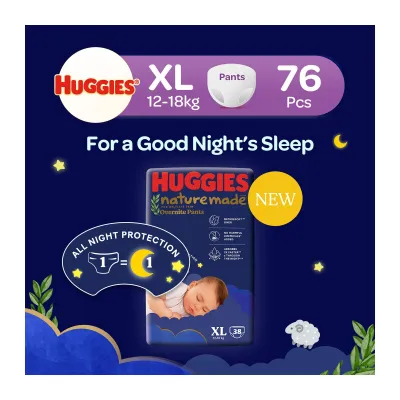
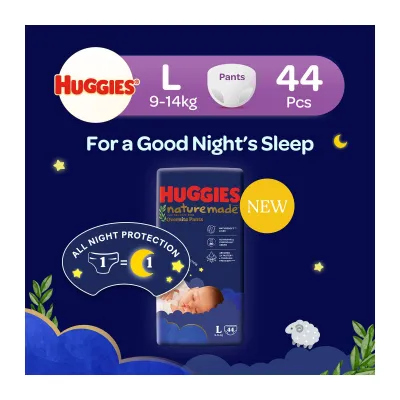
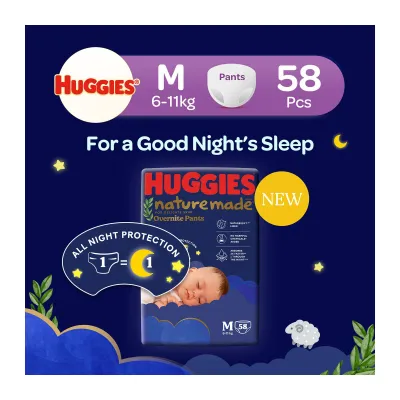
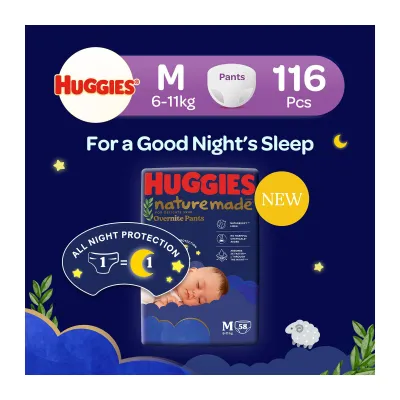
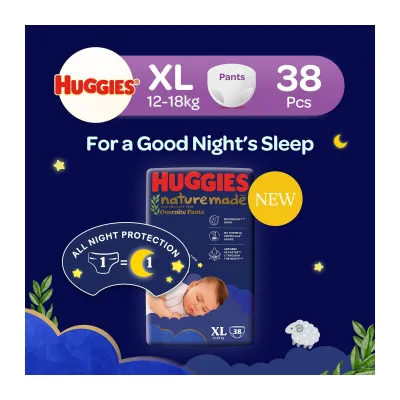
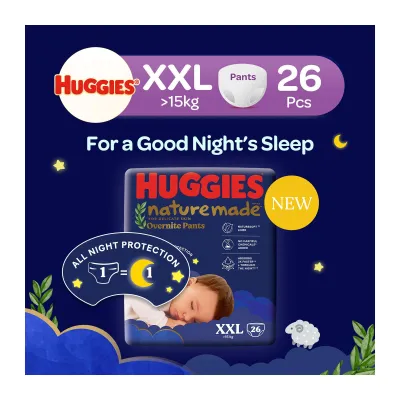
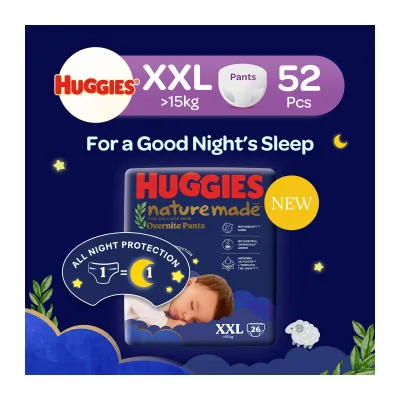
Prices are valid at publication and may change. Please refer to the product page for the latest price.

Another critical element is the proprietary leak-lock system. This system consists of dual outer and inner leg cuffs. The inner leg gathers stand vertically to act as a dam, capturing sudden, heavy flows of urine before they can pool and escape. The outer elastic cuff lies flat against the baby’s thigh, creating a secondary seal that conforms to their movements. This double-barrier design is especially effective for babies who shift positions frequently throughout the night, as the elastic stretches and contracts without breaking the seal.
The snug-fit waistband is another standout feature, particularly for babies who sleep on their backs. Huggies incorporates a pocketed waistband at the rear of the diaper. This pocket acts as a physical barrier that catches rising liquid or runny stools when the baby is lying completely flat. Additionally, the waistband features wide, stretchy tabs with double-grip strips. These strips fasten securely at two distinct points on each side, preventing the diaper from sagging or shifting downward as it grows heavier with liquid over a 12-hour period.
For parents in Singapore, it is important to verify the specific version of Huggies Overnites being purchased. Because these are often imported from North American or European production lines, they may feature slight structural differences compared to the standard Huggies lines distributed officially in local supermarkets. Imported versions typically focus heavily on maximum dense absorbency and tape-style fastening, whereas local regional lines often emphasize pant-style designs and lighter, highly breathable materials suited for tropical climates. Checking the packaging details ensures you get the exact design features required for your baby’s sleeping habits.
Key Features to Compare When Evaluating Night Diapers
When searching for the ideal overnight diaper, comparing brands based on marketing claims alone is rarely sufficient. Parents should evaluate diapers across five objective performance criteria to determine which design best suits their baby’s overnight needs.
Absorbency Capacity and Speed The total volume of liquid a diaper can hold is only half the equation; the speed at which it draws moisture away from the surface is equally critical. When a baby urinates heavily, a slow-absorbing core allows liquid to pool on the top sheet, leading to immediate leaks through the leg cuffs or waistband. High-quality overnight diapers use advanced acquisition distribution layers (ADL) to funnel liquid rapidly down into the lower SAP core, keeping the layer closest to the baby’s skin dry.
Leak Barriers and Leg Cuffs The physical construction of the leg gathers determines how well the diaper seals around the thighs. Hydrophobic materials are used in these barriers to repel water, forcing it back toward the absorbent core. The elastic tension must be perfectly balanced: it needs to be tight enough to maintain a continuous seal as the baby curls up or rolls over, yet gentle enough to prevent deep red marks, chafing, or skin irritation on chunky thighs.
Waistband Fit and Stretch A diaper’s waistband must accommodate the physical expansion of the baby’s stomach as they breathe and move during sleep. For tummy sleepers, a diaper needs a secure, high-rise front waistband with extra absorbent material concentrated at the top. For back sleepers, a strong, elasticized rear waistband with a pocket is necessary to prevent liquid from escaping up the back. The fastening tabs must also remain securely anchored even when subjected to the weight of a fully saturated diaper.
Breathability and Skin Health In a warm, humid climate like Singapore, trapping moisture inside a diaper for 12 hours is a recipe for irritant contact dermatitis, commonly known as diaper rash. High-performance overnight diapers utilize breathable backsheets with microscopic pores. These pores are large enough to allow hot air and water vapor to escape, reducing the temperature and humidity inside the diaper, but small enough to prevent liquid water from passing through.
Wetness Indicators and Bulkiness While a wetness indicator strip that changes color is a convenient feature for quick checks, some specialized overnight diapers omit this feature. This is because the chemical indicators can sometimes limit the breathability of the outer cover or add unnecessary stiffness. Furthermore, parents must consider how bulky the diaper becomes when wet. A diaper that swells excessively can restrict a baby’s natural movement, cause discomfort, or pull the waistband down, creating gaps that lead to leaks.
Huggies Overnites vs. Mainstream Night Diaper Categories
To help parents make an informed decision, we compare Huggies Overnites against the three primary categories of overnight-capable diapers available in the Singapore market. Each category represents a distinct design philosophy tailored to different infant needs and environmental conditions.
Versus Japanese Premium Diapers
Japanese premium diapers, such as Merries, Moony, and Goon, are highly favored in Singapore due to their exceptional softness and advanced breathability. These brands prioritize skin health and comfort, utilizing materials that feel like cashmere against a baby’s delicate skin. Their outer covers are engineered with highly sophisticated ventilation channels that excel at releasing heat and humidity, making them ideal for Singapore’s tropical climate where sweating can exacerbate diaper rash.
However, when compared directly to Huggies Overnites for extreme heavy wetters, a clear trade-off emerges. Japanese premium diapers are generally designed for overall comfort and regular daytime or nighttime wear, rather than being exclusively engineered as high-capacity overnight options. The absorbent core in Japanese diapers tends to be fluffier and more distributed, which can reach its saturation limit faster than the dense, highly concentrated SAP core of Huggies Overnites. For a baby who drinks a large bottle of milk right before bed and sleeps for 11 to 12 hours, a Japanese premium diaper may feel damp to the touch on the outside or suffer from minor leaks by early morning, whereas the Huggies Overnite core remains dry on the exterior and locks the liquid away securely.
Versus Local High-Capacity Diapers
Local high-capacity options include the “extra dry” or dedicated overnight variants of mainstream brands easily found in Singapore supermarkets, such as MamyPoko Extra Dry or Huggies Platinum Overnight Pants. These products are specifically designed for the regional market, offering a balanced combination of high absorbency, reliable leak protection, and excellent breathability suited for warm nights.
The primary advantage of local high-capacity diapers is their convenience and cost-effective pricing. They are widely available at local supermarkets, pharmacies, and neighborhood shops, meaning parents rarely face stock shortages. Additionally, their cost-per-piece is significantly lower than imported specialty lines. However, while these regional overnight variants perform exceptionally well for average to moderately heavy wetters, they often lack the specialized structural reinforcements found in Huggies Overnites. For instance, Huggies Overnites feature a much wider adhesive tab system, double-grip strips, and a deeper rear pocket. For highly active sleepers who roll, crawl, or sleep in unusual positions, the physical security of the Huggies Overnite fastening system provides superior protection against shifting and subsequent leaks.
Versus Other Western Diaper Lines
Other major Western diaper brands, such as Pampers Overnights or specialty eco-friendly brands like The Honest Company, present another point of comparison. These brands often utilize advanced “absorbent channel” technology. Instead of a solid block of absorbent material, the core is divided into several vertical channels that distribute liquid evenly across the entire length of the diaper, preventing the gel from clumping or sagging in one spot.
The choice between Huggies Overnites and other Western lines typically comes down to your baby’s unique body shape and physical proportions. Huggies diapers are historically cut with a wider, more generous hourglass shape, making them highly suitable for babies with rounder bellies, wider hips, and chunkier thighs. This cut ensures that the leg cuffs sit comfortably in the leg creases without pinching. In contrast, other Western brands often feature a narrower, longer cut. For babies who are taller and leaner, a wide-cut diaper like Huggies can sometimes leave loose gaps around the thighs, leading to side leaks. For these leaner babies, the narrower fit of alternative Western brands often provides a more secure, leak-free seal.
Practical Fit and Usage Tips to Prevent Night Leaks
Even the most advanced overnight diaper can fail if it is not fitted or used correctly. Parents struggling with persistent night-time leaks can implement several practical, low-risk adjustments to maximize the performance of any diaper brand they choose.
Sizing Up for Nighttime Use One of the most effective strategies to combat overnight leaks is to use a diaper that is one size larger than your baby’s daytime size. For example, if your baby comfortably wears a Size 4 during the day, try using a Size 5 specifically for sleeping. A larger diaper naturally contains a larger absorbent pad and a higher volume of superabsorbent polymers, significantly increasing the total liquid capacity. When sizing up, however, you must carefully inspect the fit around the legs and waist. If the diaper is too large, it will create loose gaps that allow urine to escape before it can reach the absorbent core. The diaper should feel snug but comfortable, with no visible spaces between the elastic and the skin.
Active Cuff Management A common oversight during late-night diaper changes is failing to adjust the leg ruffles. When a diaper is pulled up and fastened, the outer leg cuffs (or gussets) often get tucked inward against the baby’s skin. This completely compromises the physical barrier. Every time you put on a diaper, run your index finger around the elastic leg bands to pull the outer ruffles fully outward. These ruffles are designed to act as a physical gutter; when flared out correctly, they catch liquid that escapes the inner barrier and direct it back into the absorbent core.
Anatomical Positioning for Boys For baby boys, front waistband leaks are incredibly common, especially if they sleep on their stomachs. This is almost always caused by the penis pointing upward or to the side inside the diaper. When fastening the diaper, make a conscious effort to point the penis downward. This ensures that urine is directed straight into the center and lower portions of the absorbent core, where the capacity is greatest, rather than upward toward the non-absorbent waistband.
Utilizing Diaper Booster Pads If your baby is an exceptionally heavy wetter and even a sized-up overnight diaper leaks, you can consider using a diaper booster pad. These are ultra-thin, adhesive-free pads designed to be placed directly inside the diaper. They do not have a waterproof plastic backing, meaning that once the booster pad reaches its maximum capacity, any additional liquid flows directly through into the main diaper. This effectively doubles the absorbency of the diaper without requiring a massive, ill-fitting size. Always check the manufacturer’s guidelines on both the diaper and the booster pad to ensure compatibility and to verify that the combination does not compromise the overall fit or breathability.
Bedtime Fluid Management Adjusting the timing of your baby’s evening fluids can naturally reduce the volume of urine produced overnight. Try offering the final milk feed or water slightly earlier in the evening routine, rather than right before putting them in the crib. This allows your baby time to urinate once more during a final daytime diaper change before going to sleep. It is vital to emphasize that you should never restrict your baby’s hydration dangerously or deny them fluids when they are genuinely thirsty. Always consult with your pediatrician or a qualified healthcare professional to establish a healthy, safe fluid schedule that aligns with your baby’s age and developmental milestones.
Availability and Value Considerations in Singapore
For parents living in Singapore, purchasing Huggies Overnites requires a bit of planning. Because Huggies Overnites are primarily manufactured for Western markets, they are not always stocked on the shelves of standard neighborhood supermarkets or convenience stores. Instead, parents can readily find them through official brand stores on major e-commerce platforms, specialty maternity and baby retailers, or parallel import shops that source products directly from overseas.
Due to their specialized design and import status, Huggies Overnites carry a price premium compared to standard daytime diapers. In Singapore, a standard daytime diaper might cost between S$0.25 and S$0.45 per piece, whereas specialized overnight diapers like Huggies Overnites typically range from S$0.60 to S$1.00 or more per piece, depending on the size and the retailer. While this represents a higher upfront cost, parents should calculate the value based on cost-per-diaper rather than pack price. Since you only use one overnight diaper per day, a single pack of 30 diapers can last an entire month. If using one premium overnight diaper eliminates the need for middle-of-the-night changes, interrupted sleep, and daily washing of wet bedsheets, the investment is often highly cost-effective.
To offset this premium, parents should keep an eye out for bulk bundle promotions during major online shopping events, such as mid-year sales, year-end campaigns, or large-scale baby fairs held at the Singapore Expo. Purchasing diapers by the carton during these promotional periods often yields significant discounts and free delivery, making high-capacity overnight protection much more budget-friendly.
Final Verdict: Choosing the Right Night Diaper for Your Baby
Selecting the ideal overnight diaper is a highly individual decision that depends on your baby’s unique sleep habits, physical build, and skin sensitivity. There is no single “best” diaper for every child, but rather the best diaper for your specific situation.
Choose Huggies Overnites if:
- Your baby is an exceptionally heavy wetter who consistently leaks through standard diapers before morning.
- You prioritize maximum 12-hour liquid capacity, a secure elastic waistband, and reinforced double-grip fasteners over a thin, lightweight profile.
- Your baby has a rounder physical build with chunky thighs that fit well within the wider hourglass cut of Huggies diapers.
Choose Japanese Premium Diapers if:
- Your baby has highly sensitive skin that is prone to diaper rash, heat rash, or eczema in Singapore's humid climate.
- You prioritize extreme softness, air circulation, and a lightweight feel over maximum, heavy-duty liquid capacity.
- Your baby is an average to moderate wetter who does not regularly saturate their diaper to the point of leaking.
Choose Local High-Capacity Diapers if:
- You want a reliable, everyday overnight solution that is easy to purchase at local supermarkets with consistent stock levels.
- You are operating on a budget and require a highly economical cost-per-piece for daily, long-term use.
- Your baby is a moderate wetter who does not require specialized, imported heavy-duty structural reinforcements.
Verify First if:
- Your baby has a unique body shape, such as exceptionally lean legs or a very narrow waist, which may cause gaps in wider-cut diapers.
- Your baby has known skin allergies to specific materials or fragrances. In these cases, always purchase a small trial pack or request individual samples to test the physical leg cuff seal and skin compatibility firsthand before committing to bulk carton purchases.

Community discussion
Share your experience or ask a question. Comments are reviewed before publication.