
Choosing between Huggies NatureMade Size S and Pampers Pure Protection Size S for a newborn in Singapore comes down to matching your baby’s specific body shape, skin sensitivity, and your family’s daily routine. Because newborns have highly delicate skin and experience frequent changes, neither diaper is a universal winner. Instead, the ideal choice depends on how each diaper’s cut fits your baby’s build and how their skin reacts to the materials. By evaluating key physical indicators, material compositions, and absorbency designs, you can establish a reliable diapering routine that keeps your baby dry and comfortable in Singapore’s humid climate.
Material and Skin-Friendliness for Sensitive Newborn Skin
Newborn skin is exceptionally thin and highly susceptible to irritation, making the material composition of a diaper a primary consideration. Both Huggies NatureMade and Pampers Pure Protection lines market themselves as premium options featuring plant-based or natural fiber components. When evaluating these claims, look closely at the packaging to verify the exact percentage and location of these plant-based materials, as they are often blended with standard synthetic fibers to maintain structural integrity.
To minimize the risk of contact dermatitis, parents should inspect diaper packaging for specific labels such as fragrance-free, lotion-free, and elemental chlorine-free. Hypoallergenic claims are common, but because there is no single global standard for this term, it is essential to check for independent dermatological test labels or certifications listed on the pack. In Singapore’s warm and humid climate, trapped moisture can quickly exacerbate skin sensitivity, making a highly breathable outer cover crucial.
Products mentioned in this guide
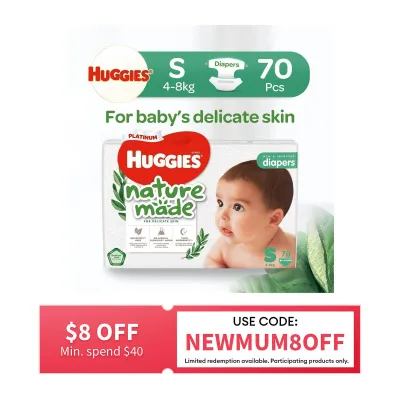
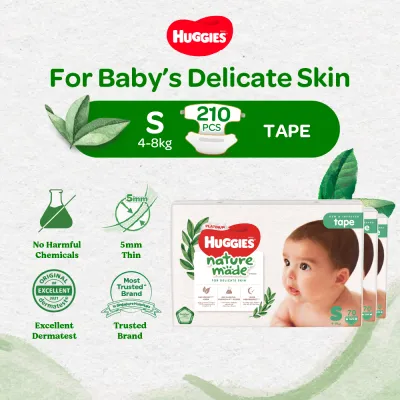
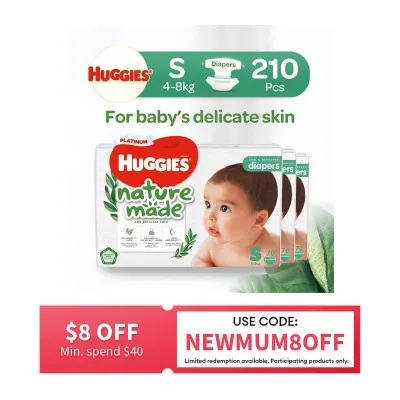
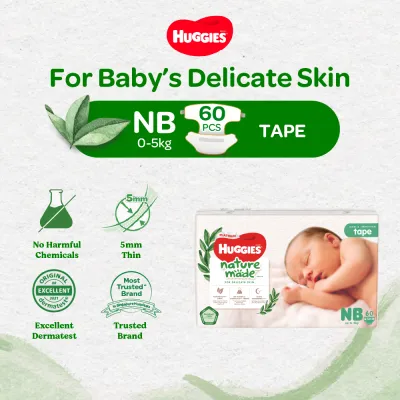
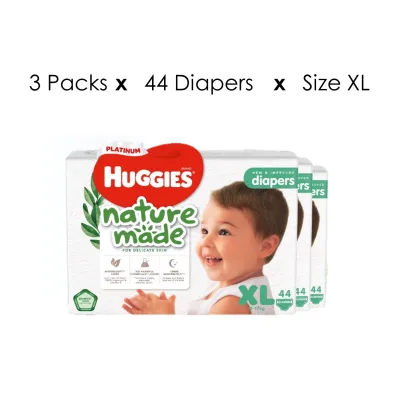
![[CHEAPEST AND 24 HOUR SHIP OUT!!] Huggies Nature made Drypers Tape Pants Diapers Justborn Newborn S M L XL (24/60/70/64/54/44))(0-3.5kg to 17kg) JB NB S M L XL](https://img.lazcdn.com/g/p/f0aabae93ef69646c7e12f6b3e7796ed.jpg_400x400q80.jpg_.webp)
Prices are valid at publication and may change. Please refer to the product page for the latest price.
When examining the packaging, look for a detailed ingredient list. While many premium diapers highlight what they exclude—such as parabens, latex, or elemental chlorine—it is equally important to verify what is included. Some diapers incorporate natural botanical extracts, like aloe vera or organic cotton fibers, in the top sheet. While these are intended to soothe the skin, every baby’s skin chemistry is unique, and even natural additives can occasionally trigger mild reactions in highly sensitive individuals.
Regardless of the brand you choose, monitor your newborn’s skin during every diaper change. Observable signs of irritation include localized redness, raised bumps, or dry patches around the waistband and leg cuffs. If you notice persistent redness or a worsening diaper rash that does not clear up with standard barrier creams, stop using the current diaper brand immediately and consult a pediatrician for professional guidance.
Absorbency and Leak Protection for Frequent Wetting
A newborn’s digestive and urinary systems require a diaper that can rapidly draw away both liquid urine and loose stools. Huggies NatureMade and Pampers Pure Protection utilize different top sheet textures and absorbent core technologies to manage this. Some designs feature a textured, pocketed, or mesh-like top sheet designed to trap runny stools, while others rely on a smooth, highly porous layer to quickly channel liquids into the core. Both lines include a convenient wetness indicator strip that changes color when wet, helping caregivers avoid unnecessary changes while preventing prolonged skin contact with moisture.

To assess how well a diaper performs for your specific baby, you can perform a simple home observation over a few days. Check the diaper after a typical two-to-three-hour wear window for signs of heavy sagging, which indicates the absorbent core is pooling liquid rather than distributing it evenly. Gently press a dry tissue against the inner liner of a freshly removed, wet diaper; if the tissue remains dry, the top sheet is successfully keeping moisture away from your baby’s skin. Additionally, inspect the outer surface and seams for any gel-like beads, which can occasionally escape if the absorbent core material ruptures.
The climate in Singapore introduces additional challenges for diaper performance. High ambient humidity means that any moisture trapped inside the diaper cannot evaporate easily, increasing the risk of heat rash and skin maceration. Therefore, a diaper’s ability to lock moisture deep within its superabsorbent polymer (SAP) core is just as important as its initial absorption speed. When conducting your home check, pay attention to whether the diaper feels damp to the touch on the outside, which can sometimes happen if the breathable outer layer allows water vapor to escape too quickly under high-humidity conditions.
Your baby’s feeding method significantly influences their stool consistency and the type of leak protection required. Breastfed newborns typically produce loose, watery stools that easily escape standard leg barriers, requiring a diaper with a deep back pocket or highly flexible inner cuffs. Formula-fed babies often have slightly firmer stools, where rapid liquid absorption remains the primary defense against leaks. Adjusting the diaper’s positioning and ensuring the inner leg guards are fully flared outward can help contain leaks regardless of stool consistency.
Fit, Sizing, and Umbilical Cord Comfort
Even the most absorbent diaper will leak if the physical fit does not match your newborn’s body shape. Size S diapers from different brands can vary noticeably in their overall cut, waistband elasticity, and leg cuff tension. Some brands are cut narrower and longer, making them highly suitable for slender, long-bodied babies, while other brands feature a wider, more accommodating seat that fits babies with rounder bellies and chunkier thighs.
Always consult the manufacturer’s weight guidelines printed on the packaging as a starting point, but remember that weight is only one variable. A baby weighing four kilograms might fit perfectly in a Size S diaper from one brand but experience leaks in another due to differences in torso length or leg circumference. Adjusting the fastening tabs symmetrically and ensuring they are secured firmly—but with enough space to comfortably slip two fingers under the waistband—will help you achieve a safe and reliable fit.
For early newborns, protecting the healing umbilical cord stump from friction and moisture is a critical safety step. Look for diapers that feature a dedicated umbilical cord cutout at the front waistband, or choose a highly flexible waistband that can be easily folded downward without compromising the diaper’s secure fastening. Ensuring this area remains clean, dry, and exposed to air helps prevent irritation and potential infection during the first few weeks of life.
Caregivers should actively look for physical red flags that indicate a poor fit or the need to transition to a different size or brand. Deep red marks or indentations on your baby’s thighs or waist suggest the elastic is too tight, even if the baby’s weight falls within the manufacturer’s recommended range for Size S. Conversely, frequent back blowouts or visible gaps around the legs when the baby moves indicate the diaper is too loose, requiring a snugger fit or a brand with more robust elastic barriers.
Calculating Value and Finding Reliable Retailers in Singapore
Because newborns require up to ten to twelve diaper changes a day, managing ongoing costs is a practical necessity for Singaporean families. To determine the true value of Huggies NatureMade S versus Pampers Pure Protection S, avoid comparing the flat price of a single pack. Instead, divide the total pack price by the number of diapers inside to find the cost per unit. Buying in bulk through jumbo boxes or multi-pack bundles often lowers this unit cost, but it is wise to test a single small pack first to ensure the diaper fits your baby before investing in a large supply.
To ensure you are receiving genuine, high-quality products, purchase diapers only through authorized retail channels in Singapore. These include official brand stores on major ecommerce platforms, established local supermarkets, and reputable pharmacy chains. Buying from unauthorized parallel importers or unverified online sellers carries the risk of receiving counterfeit goods or diapers that have been stored in hot, humid warehouses, which can degrade the adhesive tabs and compromise the absorbent core’s performance.
When purchasing diapers, always inspect the physical packaging for integrity, ensuring there are no punctures or broken seals that could expose the diapers to dust or moisture. Locate the manufacturing date and batch code, which are typically printed on the bottom or side of the plastic packaging. Diapers do not have a strict expiration date, but using packs manufactured within the last two to three years ensures the elastic bands, adhesive tapes, and wetness indicators function as intended.
How to Decide: A Conditional Choice Framework
To help you navigate this choice, consider how your newborn’s physical traits and your daily observations align with the characteristics of each brand.
Choose Huggies NatureMade S if your baby has a rounder build with chunkier thighs that require a wider cut and highly flexible leg cuffs. This option is also suitable if you prefer a diaper line that emphasizes natural fiber blends on the skin-contact layers and you observe that your baby’s skin remains clear and dry after consecutive wears.
Choose Pampers Pure Protection S if your baby has a longer, more slender build where a snugger, contoured fit is necessary to prevent gaps around the waist and legs. This choice is highly effective if you prioritize a top sheet designed to rapidly isolate wetness and you find the wetness indicator highly legible during late-night changes.
Verify first with a qualified pediatrician or dermatologist if your newborn was born prematurely, has extremely sensitive skin, or has been diagnosed with a medical condition such as severe eczema. In these cases, standard commercial diapers—even those marketed as natural or pure—may require a specialized medical-grade alternative or specific skin-barrier protocols to prevent severe irritation.

Community discussion
Share your experience or ask a question. Comments are reviewed before publication.