
Choosing between Huggies Dry Comfort, Pampers, and Mamypoko for everyday use in Singapore’s humid climate depends on matching your baby’s current weight, body shape, and activity level to each brand’s specific cut and design. While Huggies Dry Comfort is widely recognized for its structured fit and daytime dryness features, Pampers often emphasizes material flexibility, and Mamypoko is known for its high-capacity options. There is no single superior diaper; the right choice is the one that prevents leaks and skin irritation for your specific baby while fitting your household budget.
To find the right fit, caregivers must look beyond marketing buzzwords and evaluate how a diaper performs under real-world conditions. A diaper that works perfectly for a slim, highly active crawler might cause leaks or red marks on a rounder, younger baby. By understanding how to assess absorbency, fit, and overall value, you can confidently select a diaper that keeps your baby comfortable throughout the day.
Key Comparison Criteria for Everyday Diapers
When evaluating diapers for daily use, the primary goal is to maintain skin dryness and prevent leaks without restricting your baby’s natural movements. In Singapore’s warm and humid environment, managing moisture is particularly critical, as trapped wetness combined with friction can quickly lead to skin irritation.
Products mentioned in this guide
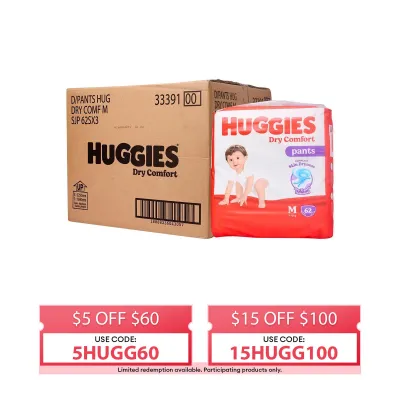
![[1 Carton] Huggies Dry Comfort Silver Pants Large 48 Pcs x 3 Packs (11-15 KG)](https://img.lazcdn.com/g/p/2dddfa5eaaab15d5ebab1d6963b2beca.jpg_400x400q80.jpg_.webp)
![[1 Carton] Huggies Dry Comfort Silver Pants X-Large 40 Pcs x 3 Packs (14-18 KG)](https://img.lazcdn.com/g/p/67428ec55ded7b30d9fb8e8ae5dcc292.jpg_400x400q80.jpg_.webp)
![[1 Carton] Huggies Dry Comfort Silver Pants XX-Large 34 Pcs x 3 Packs (>17 KG)](https://img.lazcdn.com/g/p/0109271fd5a2036ff3630125febbe2bb.jpg_400x400q80.jpg_.webp)
![[1 Carton] Huggies Dry Comfort Silver Pants Medium 62 Pcs x 3 Packs (7-12 KG)](https://img.lazcdn.com/g/p/40d8f4ffacf560482140f3c9ddcf8a97.jpg_400x400q80.jpg_.webp)
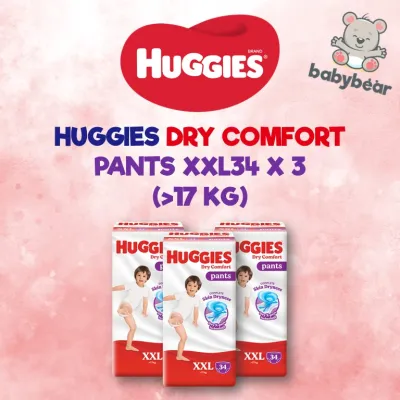
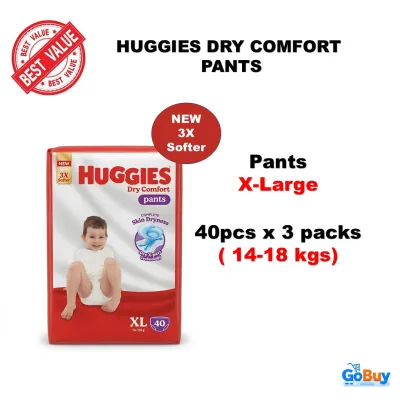
![HUGGIES DRY COMFORT BABY DIAPERS PANTS - SIZE M / L / XL / XXL [CARTON DEAL]](https://img.lazcdn.com/g/p/773795c89677c34e1ea4a52d28e17e2a.jpg_400x400q80.jpg_.webp)
Prices are valid at publication and may change. Please refer to the product page for the latest price.
Absorbency must always be balanced against your actual changing frequency. While diaper packaging often boasts long hours of dryness, practical hygiene dictates changing your baby’s diaper every three to four hours during the day, or immediately after bowel movements. Therefore, a diaper’s ability to quickly draw moisture away from the skin is far more important than its total holding capacity for daytime wear.
Fit and mobility are equally vital as your baby hits developmental milestones like rolling, crawling, and walking. A well-designed diaper should feature elasticated leg cuffs that flare outward to form a secure barrier against leaks, alongside a flexible waistband that stretches with your baby’s tummy. If the diaper is too tight, it will leave deep red indentations; if it is too loose, gravity and movement will cause it to sag and leak.
Finally, monitoring skin reactions is the ultimate test of a diaper’s suitability. Breathability is not just a marketing term; it refers to the diaper’s ability to let hot air escape while keeping liquid contained. Caregivers should regularly inspect the skin around the waistband and thighs for signs of sweat buildup, chafing, or localized redness.
Evaluating Huggies Dry Comfort for Daily Use
Huggies Dry Comfort is designed as a reliable, everyday option that focuses on keeping babies dry during active daytime hours. To evaluate this diaper for your baby, start by inspecting the product packaging to verify the specific dryness layers, core technology, and wetness indicator features available for your chosen size. Note that features can vary significantly between tape and pants formats, as well as across different size brackets.

During daily use, pay close attention to how the diaper’s structure holds up when your baby is moving. An effective everyday diaper should maintain its shape even when partially wet, distributing liquid evenly across the core rather than bunching up in the center. If you notice the diaper sagging heavily between your baby’s legs after only a short period of play, it may indicate that the core is saturated or that the fit is not supporting the weight of the liquid.
Fit issues are often the root cause of unexpected leaks, so it is essential to monitor how Huggies Dry Comfort wraps around your baby’s unique body shape. Cross-reference the brand’s official size chart with your baby’s current weight, but keep in mind that weight is only a starting guideline. If your baby has chubby thighs or a rounder tummy, you may need to transition to a larger size earlier than the weight range suggests to prevent tightness and ensure adequate coverage at the back.
Comparing Pampers and Mamypoko Alternatives
To determine if an alternative brand might better suit your baby’s needs, it helps to understand the general design tendencies of Pampers and Mamypoko. Pampers diapers are frequently characterized by their lightweight, thin profile and flexible materials. When examining Pampers packaging, verify their claims regarding material softness and specific skin-contact liners to see if they align with your baby’s skin sensitivity and need for a low-profile, highly flexible fit during high-movement play.
Mamypoko, on the other hand, is widely recognized for its robust structural design and emphasis on high-capacity absorption. If you are considering Mamypoko, check whether their tape or pants-style options match your baby’s current developmental stage. Their diapers often feature deep pocket designs and thick waistbands designed to contain heavy wetness, making them a popular choice for parents prioritizing maximum containment.
When comparing these alternatives, observe how each brand’s sizing and cut run relative to your baby’s physical build. A diaper that fits a long, lean baby perfectly may cause leaks on a baby with a shorter torso and wider hips. Trying small trial packs of different brands allows you to directly compare the physical dimensions, leg cuff elasticity, and waistband height against your baby’s current shape before committing to a bulk purchase.
Calculating Real Value and Cost Per Diaper
Finding the most cost-effective diaper requires looking past the price tag on a single pack and calculating the actual cost per piece. To do this, find the current retail price in S$ at authorized local supermarkets, official brand stores, or trusted online marketplaces, and divide that price by the total number of diapers inside the package. Because diaper packs contain fewer pieces as the size increases (for example, a Size S pack contains more diapers than a Size XL pack of the same price), this calculation must be repeated every time your baby graduates to a new size.
Beyond the upfront purchase price, caregivers must factor in the “hidden costs” associated with a poorly fitting diaper. If a cheaper diaper brand frequently leaks, you will find yourself changing the diaper more often than necessary, using extra baby wipes, and running more frequent laundry cycles to clean soiled clothing and bedsheets. A slightly more expensive diaper that fits perfectly and prevents leaks can often turn out to be the more economical choice over time.
To optimize your diaper budget, evaluate bulk-buy promotions, bundle deals, and subscription discounts offered by authorized retailers in Singapore. Many online platforms provide recurring delivery discounts that lower the cost per piece significantly. However, avoid assuming that a specific retailer always has the lowest price; compare the calculated cost per piece across multiple sources before making a bulk purchase.
Decision Framework: Choosing the Right Fit
Selecting the right diaper is a process of matching your baby’s physical needs and daily routine to the specific strengths of each brand. Use the following guidelines to help structure your decision:
Choose Huggies Dry Comfort if your baby is highly active during the day, and you find that its structured core, dryness layers, and specific fit align well with their movement patterns without causing red marks or sagging.
Choose Pampers if your baby has highly sensitive skin that benefits from a thinner, exceptionally soft, and flexible material, and if their movement patterns require a diaper that stretches easily around the waist and thighs.
Choose Mamypoko if your baby is a heavy wetter, or if their body shape is better accommodated by a wider cut, high-capacity core, and robust waistband design that prioritizes maximum containment.
Regardless of the brand you choose, safety and comfort must always come first. If your baby exhibits persistent skin redness, chafing, or frequent leaks that do not resolve with a change in size or diapering frequency, stop using the product immediately. In such cases, consult a pediatrician or qualified healthcare professional to rule out underlying skin conditions and receive tailored advice for your baby’s skin health.
Frequently Asked Questions (FAQ)
How do I know if a diaper is causing a rash?
A diaper-related rash typically presents as localized redness, small red bumps, or dry, chafed skin directly where the diaper material or elastics contact your baby’s skin, such as the inner thighs, buttocks, or waistband. This irritation is often caused by friction or prolonged exposure to trapped moisture. To isolate the cause, ensure you are changing the diaper immediately when wet, verify that the leg cuffs are flared outward, and try switching to a different brand or a larger size to reduce friction. If the redness spreads, develops open sores, blisters, or does not improve after a few days of frequent changes and barrier cream application, stop using the diaper and consult a pediatrician for professional medical advice.
Should I use different diaper brands for day and night?
Using different diaper brands for day and night can be a highly practical and budget-friendly strategy for many families. Daytime diapering requires a focus on mobility, flexibility, and a lighter fit so your baby can crawl, walk, and play comfortably without restriction. Overnight diapering, however, requires sustained absorbency to handle multiple wetness cycles over ten to twelve hours of sleep without waking the baby. If your everyday diaper keeps your baby dry and leak-free through the night, there is no need to switch. However, if you experience frequent nighttime leaks, using a dedicated high-capacity diaper or simply sizing up by one size for overnight use can prevent sleep disruptions and extra laundry.

Community discussion
Share your experience or ask a question. Comments are reviewed before publication.